


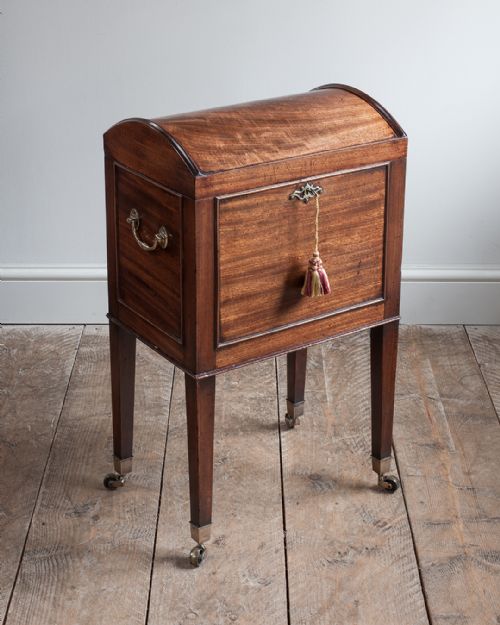


Mahogany Cellaret Chest
A mahogany cellaret chest holds your bottles securely, offering the timeless elegance of Georgian and Regency craftsmanship for modern dining rooms.
Mahogany Cellaret Chest
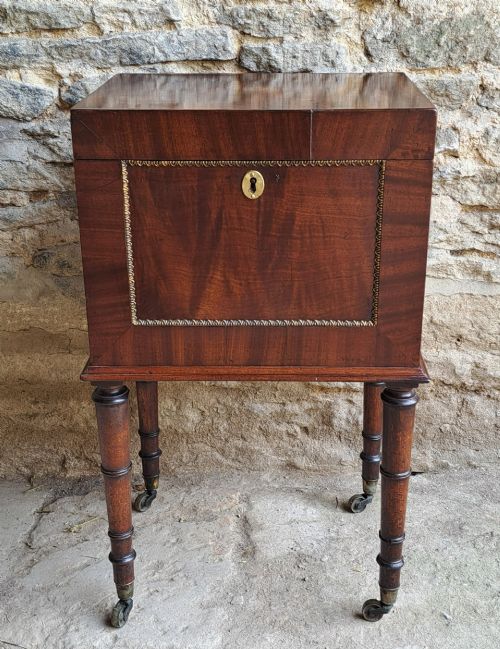
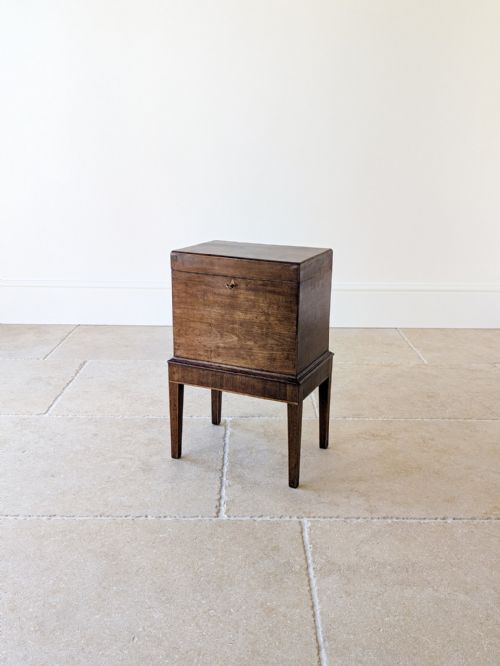
A mahogany cellaret chest is a designated storage box for wine and spirits, designed to keep bottles cool and accessible during dining. When searching for a mahogany cellaret chest, you encounter various forms originating primarily from the Georgian, George III, and Regency periods, alongside early twentieth-century revivals.
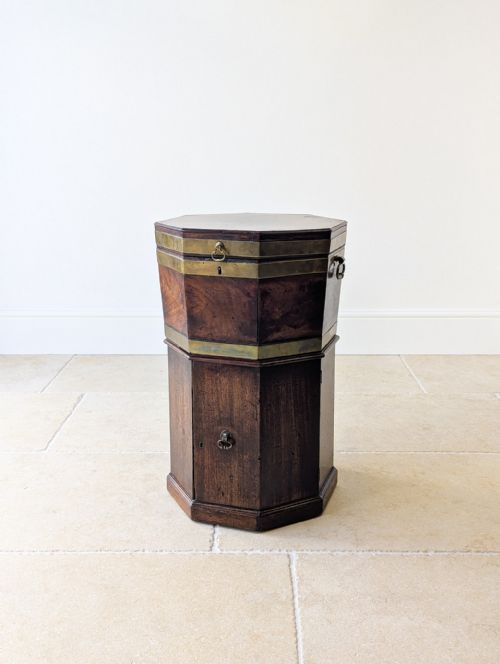
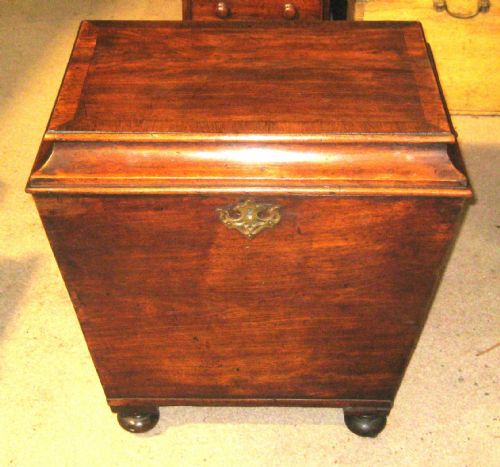
The pieces on this page span several distinct silhouettes, including octagonal boxes, serpentine-fronted designs, and sarcophagus-style wine coolers. These items reflect the domestic habits of elite households in the eighteenth and nineteenth centuries, functioning as movable cellars positioned near the dining table.
Makers utilised rich timbers and classical proportions to elevate utility into high art, producing both large floor-standing containers and smaller tabletop or box variants. While many date to the late eighteenth century, later interpretations demonstrate the enduring appeal of the form.
How they were made
Makers constructed these chests primarily from solid and veneered mahogany, frequently selecting stock with deep figuring and warm tones. Satinwood banding and delicate stringing often accent the primary timber on refined examples from the Georgian era.
Structural reinforcement and decorative contrast came from heavy brass fittings, including carrying handles, strapwork, and sturdy bandings. Ormolu mounts appear on select pieces, while lead linings historically served to hold ice and water for chilling wine.
Mahogany Cellaret Chest Retail Price Guide 2026
Typical asking prices for mahogany cellaret chest among the pieces listed under this phrase on Sellingantiques today, from the lower quarter to the upper quarter. They describe what is for sale here now, not the wider market.
Some nineteenth-century cellarets feature internal wooden dividers spaced specifically to fit the exact girth of historic wine bottles.
What varies in quality
Quality in a mahogany cellaret chest rests upon the selection of timber and the precision of cabinetmaking joints. Finer examples display carefully matched flame mahogany veneers and intricate satinwood bandings that demonstrate superior workshop execution.
The sophistication of the hardware dictates another tier of distinction, with hand-chased brass mounts and heavy cast handles elevating the piece. Original internal divisions and sound lead linings further separate standard functional containers from masterworks of the period.
Robert Strahan and Co
The Mahogany Cellaret Chest Glossary
- Cellaret
- A lockable container used for storing and cooling bottles of wine near the dining table. They evolved from simple wooden boxes into architectural sarcophagi during the Georgian period.
- Sarcophagus style
- A design form shaped like an ancient stone coffin with a steeply domed lid and tapered body. This classical silhouette gained immense popularity in Regency dining room furniture.
- Serpentine front
- A convex-concave-convex curved cabinet front that requires advanced woodworking skill to shape. It adds dynamic movement and visual rhythm to mahogany case pieces.
- Satinwood
- A lustrous, yellowish-gold exotic timber utilised for contrasting stringing and geometric banding. Cabinetmakers favoured it for decorative borders on dark mahogany surfaces.
- Ormolu
- Gilded bronze ornamentation applied to furniture for rich decorative contrast. It signifies high-status commissions from the late eighteenth and early nineteenth centuries.
Mahogany Cellaret Chest: Frequently Asked Questions
What is a mahogany cellaret chest?
A mahogany cellaret chest is a specialised antique storage box designed to hold and cool wine bottles. Wealthy households utilised them in the dining room before fitted sideboards and modern refrigeration became common.
Craftsmen built these containers from dense tropical hardwoods, often incorporating metal linings to hold ice. Today, collectors value them as decorative accent pieces or practical drinks cabinets.
How were cellarets originally used?
Servants placed wine bottles inside the chest alongside ice or cold water to maintain temperature before serving. The lockable lid ensured that expensive vintages remained secure from household staff.
During meals, the box sat on the floor beneath the sideboard or beside the dining table for easy access. After dinner, hosts could lock the contents away safely.
How do I date a cellaret?
Dating relies on examining the timber grain, construction methods, and stylistic cues like brass hardware and leg forms. Georgian examples often feature straightforward box shapes with bracket feet or simple stands.
Later Regency and revival pieces adopt classical architectural motifs such as paw feet and sarcophagus lids. Cabinet construction details, including hand-cut dovetails, also point to specific eras.