




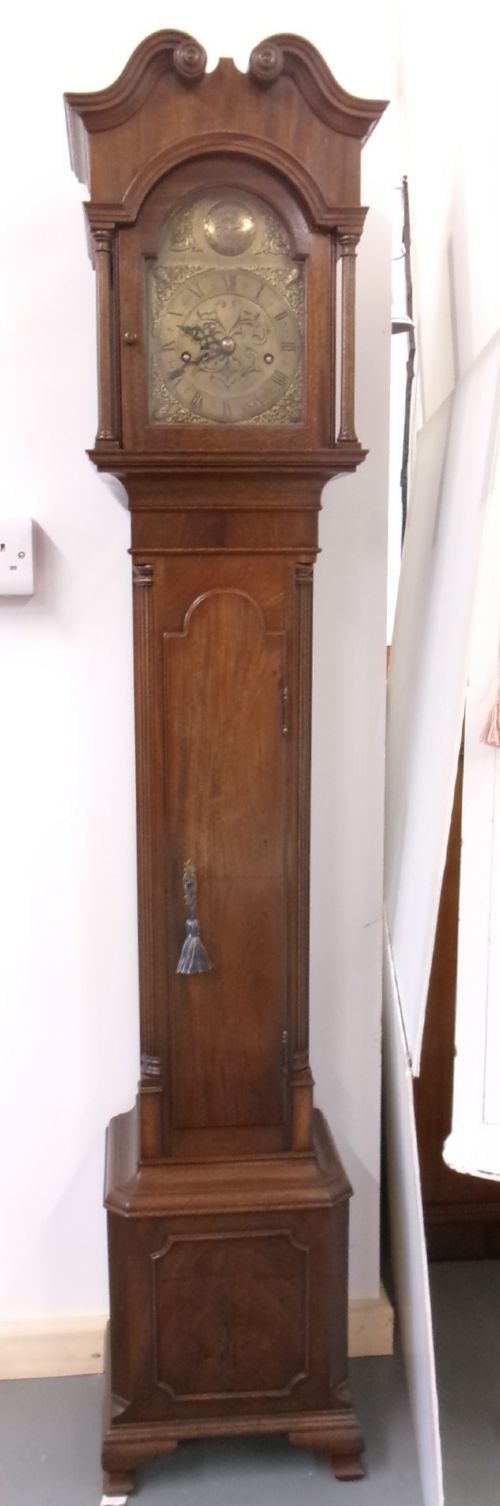
Carved Longcase Clock
A carved longcase clock anchors a room with mechanical precision and centuries of cabinetmaking tradition.
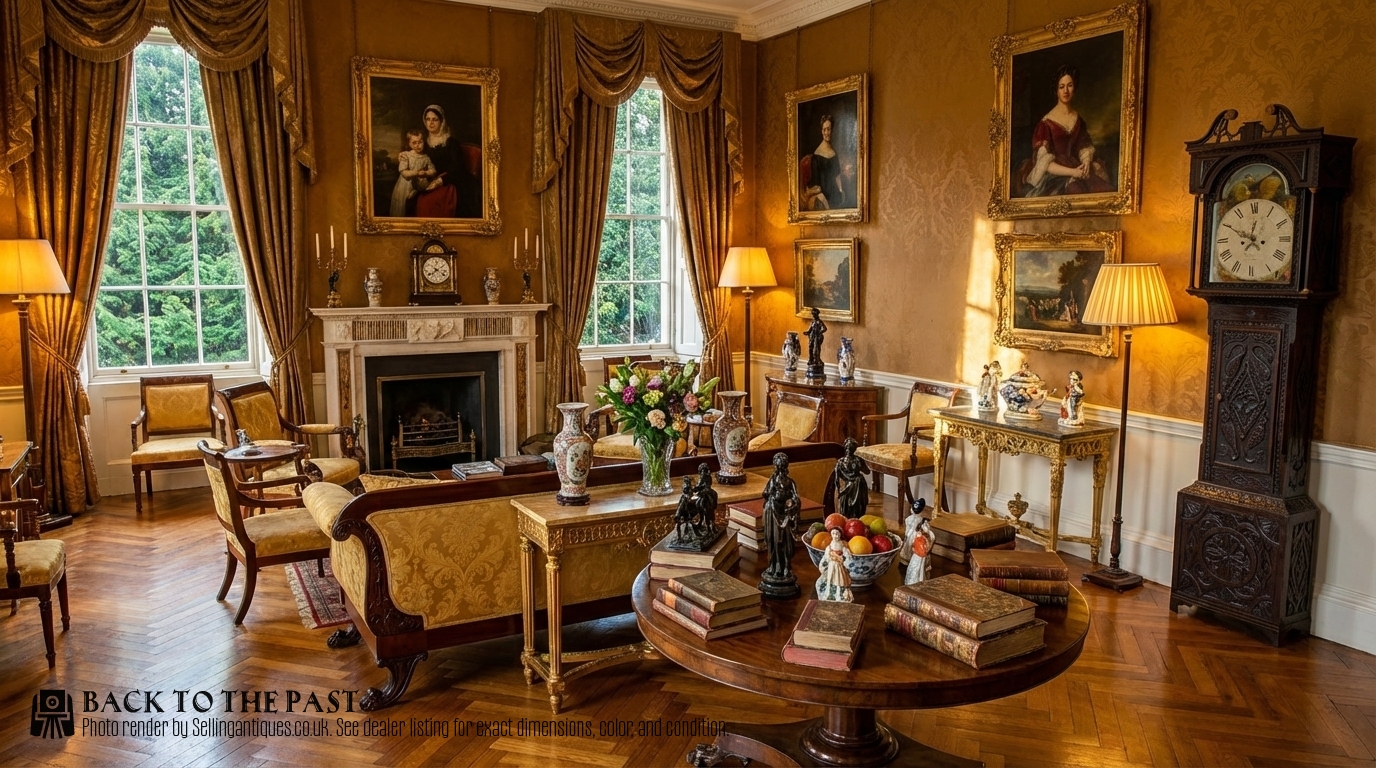
Carved Longcase Clock
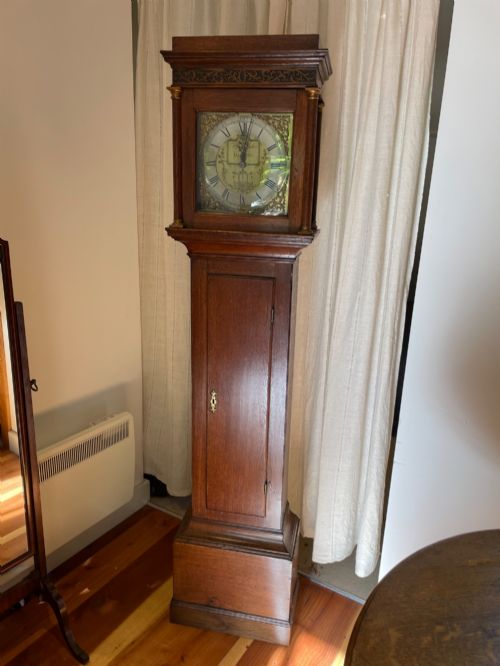
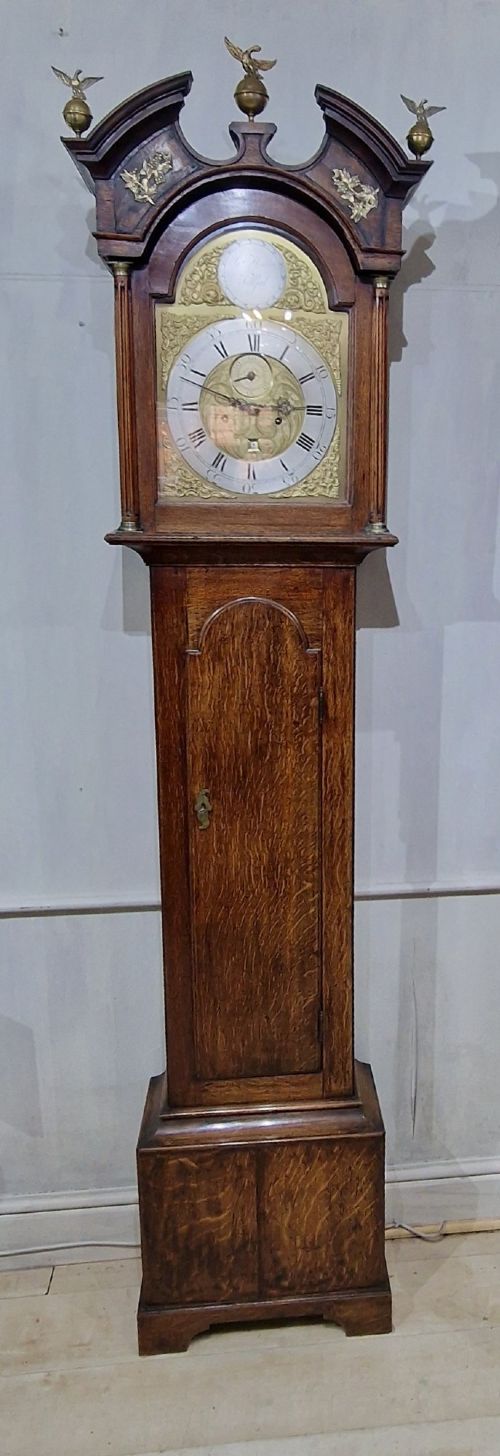
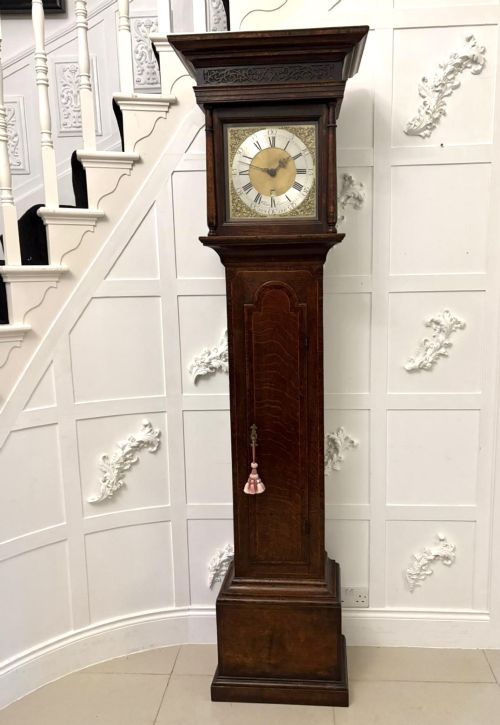
A carved longcase clock combines a tall wooden housing with a weight-driven movement and a visible dial. These standing timepieces appear frequently in eighteenth-century oak and George III mahogany, alongside later Victorian and Edwardian iterations.
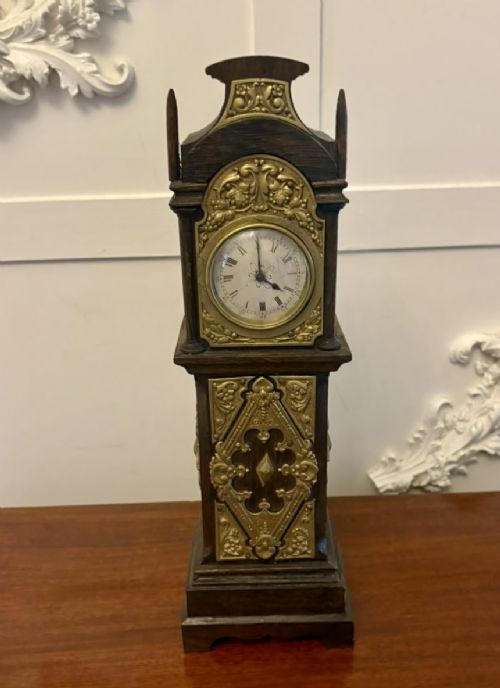
Buyers encounter regional variations ranging from simple provincial oak cases to grander London examples with brass dials and complex chiming movements. Smaller scale grandmother and granddaughter variants also feature among the heavier floor-standing clocks.
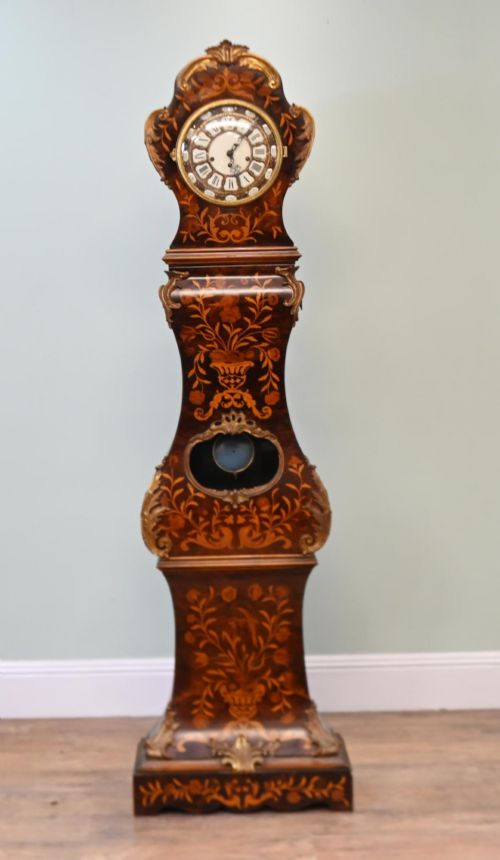
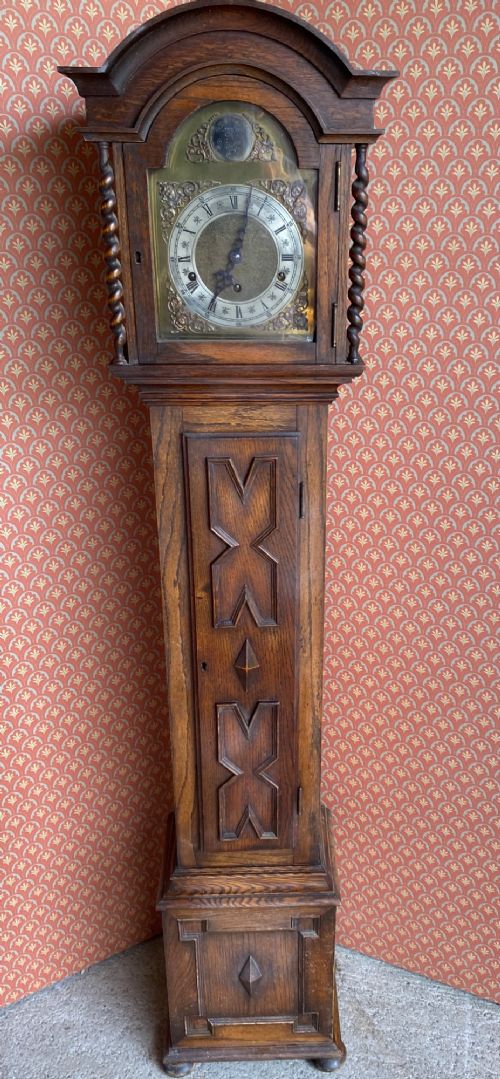
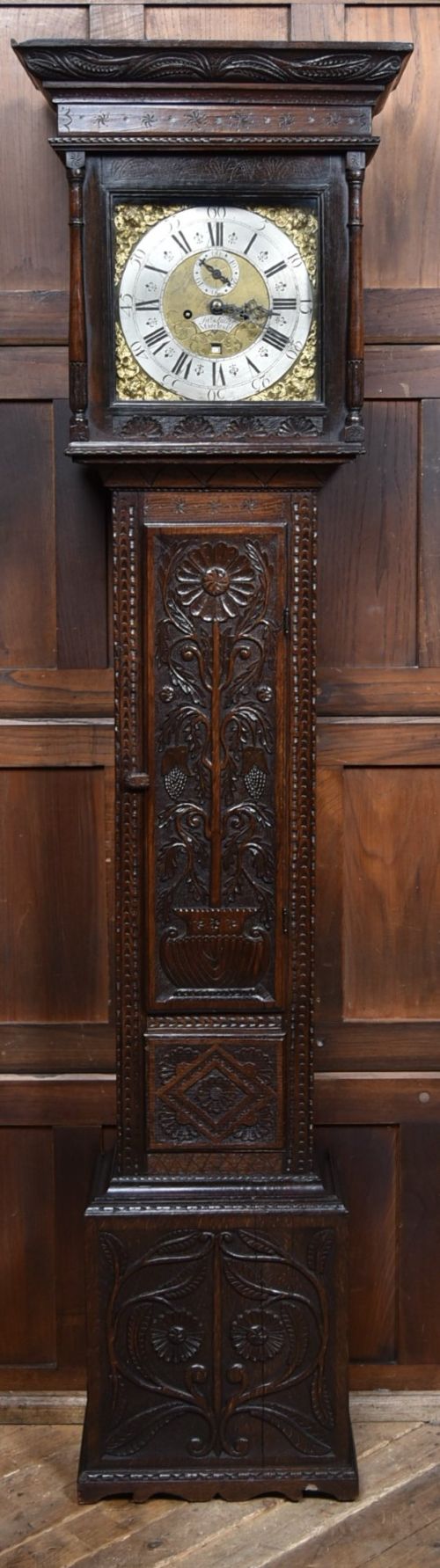
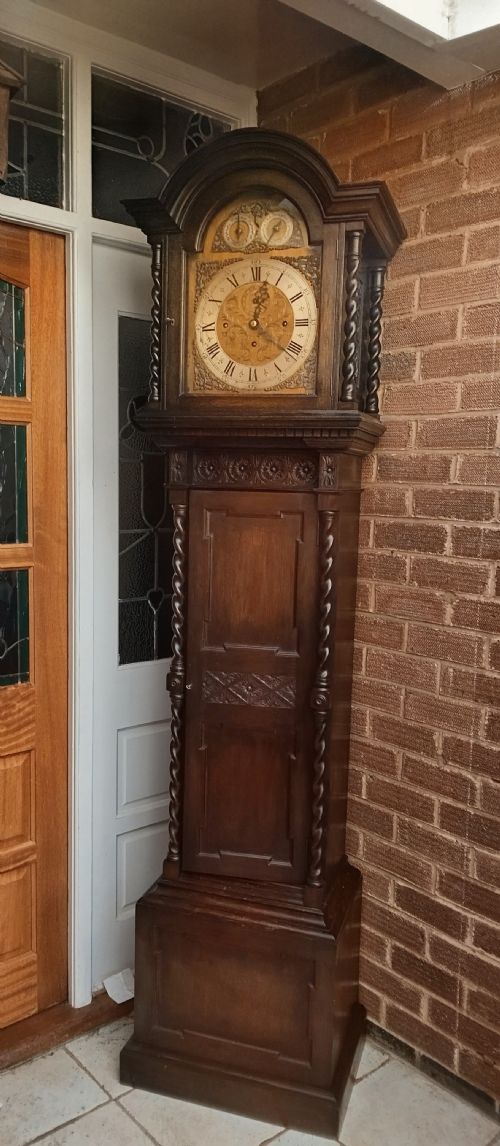
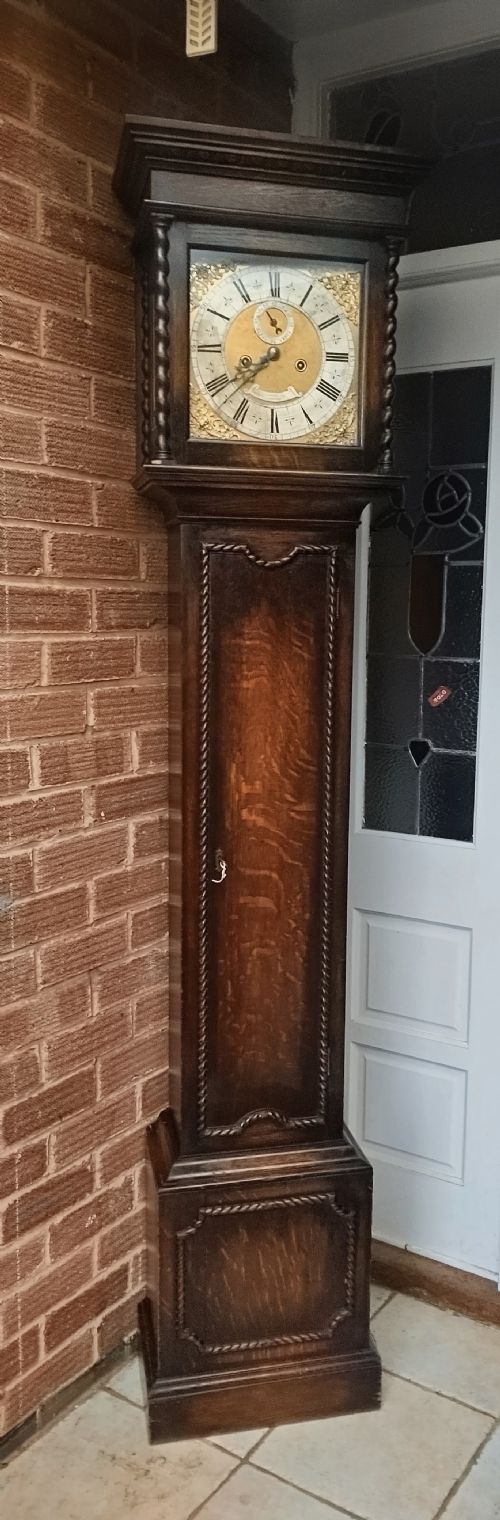
The carved detail typically frames the hood door, trunk sides or base plinth, distinguishing these standing clocks from plain examples through deliberate ornamental enrichment of the timber.
Assessing the Workmanship
Quality rests in the harmony between the clock movement and the cabinetwork, separating standard production from exceptional provincial or metropolitan commissions. The crispness of the hand-carved detail and the selection of figured timber indicate the original investment in the piece.
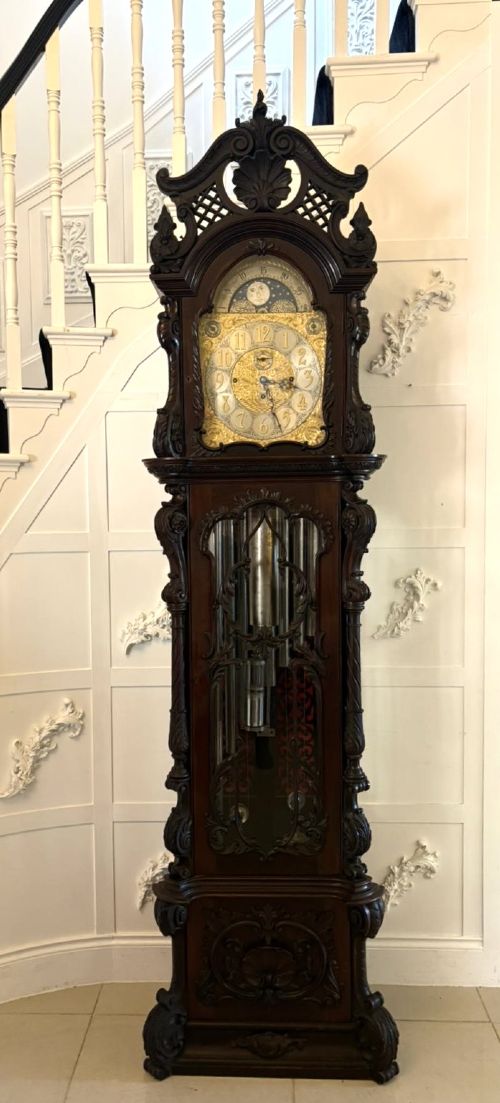
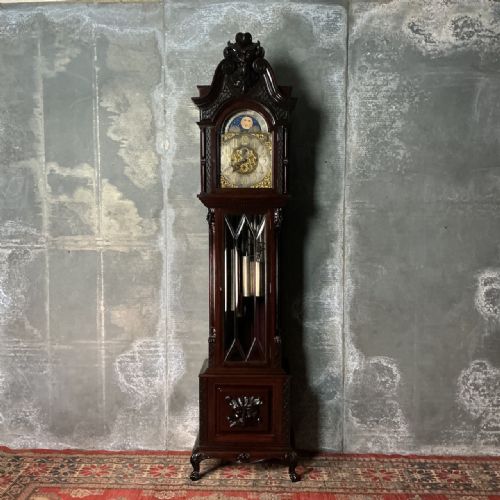
Dial execution also marks the standard, with engraved brass faces and complex moon phases or musical mechanisms representing higher tiers of horological and cabinetmaking achievement compared to plain painted dials in simpler cases.
Carved Longcase Clock Retail Price Guide 2026
Typical asking prices for carved longcase clock among the pieces listed under this phrase on Sellingantiques today, from the lower quarter to the upper quarter. They describe what is for sale here now, not the wider market.
The listings span from the seventeenth century through to the Art Deco period, utilising oak, mahogany, walnut and brass.
Jn° Smith Macclesfd·Richard Corless of Stockport·James Hendrie Falkirk·Andrew Thom·Edin Burgis of London·David Craig Ford Path head·Henricus Baker of Appleby·Robotham of Leicester·Hugh Lough Penrith·James Pepper Biggleswade·J Hadruen Kendal
The Carved Longcase Clock Glossary
- Longcase clock
- A tall pendulum clock enclosed in a wooden case designed to stand directly on the floor. These pieces are often referred to colloquially as grandfather clocks.
- Grandmother clock
- A smaller, more slender version of the traditional longcase clock, typically produced during the early twentieth century. They occupy less floor space while retaining weight-driven or spring movements.
- Moon phase
- A mechanical display on the clock dial that tracks the lunar cycle through a rotating painted disc. This complication appears on better eighteenth and nineteenth-century dials.
- Brass dial
- The metal faceplate of the clock, frequently engraved, silvered or mounted with cast spandrels in the corners. These metal faces predate the widespread adoption of painted iron dials.
- Quarter chiming
- A movement mechanism that sounds the quarters of the hour on multiple bells or gongs. Such setups require heavier weights and more intricate train gearing within the trunk.
Carved Longcase Clock: Frequently Asked Questions
How do I wind a longcase clock?
Winding involves using a crank key to raise the weights inside the trunk via the winding holes on the dial face. Care must be taken not to overwind the movement.
Most eight-day movements require attention weekly, while thirty-hour versions need daily or more frequent winding depending on the specific gear train configuration.
Where should I place a longcase clock?
These clocks require a stable, dry interior wall away from direct sunlight, central heating vents and exterior doors. Fluctuations in temperature and humidity affect both the timber case and the internal brass mechanics.
Positioning the clock on a level floor ensures the pendulum swings evenly and the escapement maintains accurate timekeeping without hanging up.
What is the difference between a grandfather and a grandmother clock?
Grandfather clocks are the standard full-size floor-standing timepieces dating primarily from the eighteenth and nineteenth centuries. They possess large movements and tall proportions.
Grandmother clocks are significantly smaller variants, typically standing under six feet tall and built during the early twentieth century to fit more compact domestic spaces.
How do I read the date on an antique clock?
Dating relies on stylistic clues in the case construction, dial architecture, signature engraving and movement type rather than a single stamped year. Oak cases with square brass dials generally point to the eighteenth century.
Later Victorian and Edwardian examples incorporate machine-tooled components, distinctive veneers and revived historical styles like Chippendale or Jacobean ornamentation.