
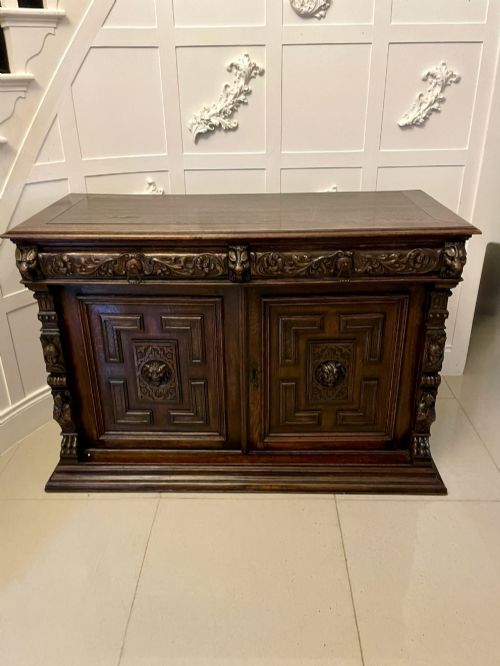
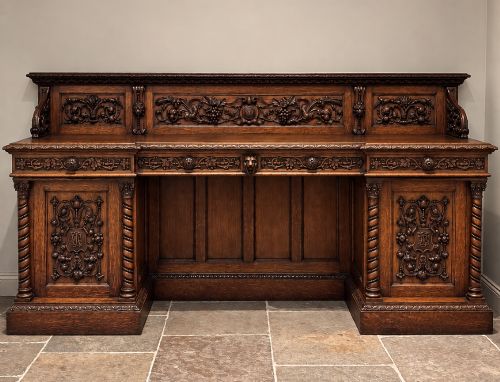


Carved Lion Mask Cabinet
These carved lion mask cabinet pieces are heavy timber storage items built to command a room, offering both dramatic relief work and functional display space.
Carved Lion Mask Cabinet
A carved lion mask cabinet sits firmly within the heavier traditions of nineteenth-century furniture design, often taking the form of robust sideboards, bookcases, and cabinets on stands. Buyers seeking this phrase encounter pieces predominantly made from dark oak, frequently styled around Flemish or Renaissance revivals that celebrate deep relief carving.
The selections span from mid-Victorian examples down to Edwardian adaptations, alongside occasional Regency forms in mahogany. While sideboards and side cabinets dominate the available range, open bookcases and Davenport desks also appear with these powerful sculptural feline motifs.
Originating largely from the nineteenth century, these heavy case pieces suit rooms requiring substantial storage coupled with strong historical character. The presence of the mask marks them out from plain vernacular furniture, shifting the visual weight squarely onto the central drawer, door, or frieze.
How they were made
Construction relies heavily upon solid oak and mahogany, worked with hand chisels to create the characteristic projecting lion masks and strapwork panels. Cabinetmakers utilised dense timbers to withstand the deep undercutting required for figurative and zoomorphic relief work.
Surface decoration frequently includes boxwood or ebony inlay alongside applied brass hardware to complement the dark grain of the primary wood. Joinery techniques from the period ensured that heavy doors and shelving units remained stable despite seasonal humidity changes.
Oak remains the dominant material across these cabinet listings, accompanied by mahogany, walnut, brass hardware, and occasional boxwood and ebony inlay.
What varies in quality
Depth and crispness of the carved relief separate the standard production items from truly exceptional work. A mask rendered with sharp muscular detail and deep undercutting displays a level of sculptural ambition absent from flatter, more mechanical moulding.
The choice and figuring of the timber itself dictate the hierarchy of these items, with pollard oak and dense figured mahogany marking out the more costly commissions. Original brass mounts and untouched patination further distinguish pieces that retain their original architectural integrity.
The Carved Lion Mask Cabinet Glossary
- Lion mask
- A carved feline facial motif frequently applied to furniture friezes, drawer fronts, and furniture corners during revivalist periods. It draws on classical architectural traditions to project strength and authority.
- Flemish Renaissance Revival
- A nineteenth-century style drawing inspiration from sixteenth-century Low Countries design, characterised by heavy scrolling, strapwork, and bold figural carving. This aesthetic often incorporates the lion masks seen on these cabinets.
- Pollard oak
- Timber taken from trees that have been pollarded, producing a highly knotted and mottled grain pattern. Cabinetmakers valued this wood for high-end decorative surfaces and prominent panels.
- Sideboard
- A large dining room case piece used for storing tableware and serving food, often featuring deep drawers and cupboards below a broad surface. In nineteenth-century examples, these frequently carried heavy sculptural ornamentation.
Carved Lion Mask Cabinet: Frequently Asked Questions
What rooms suit a carved lion mask cabinet?
These substantial items command space, making them well-suited to dining rooms, large studies, or hallways where heavy timber furniture anchors the interior.
Their dark woods and strong sculptural carvings require balanced natural light to showcase the relief work without darkening the room excessively.
How do I care for nineteenth-century oak furniture?
Maintain the timber by avoiding direct sunlight and excessive heat fluctuations, which can cause the heavy oak panels to split over time.
Apply a traditional beeswax polish sparingly to nourish the grain and preserve the deep dark patination accumulated over the decades.
How can I tell a Victorian revival piece from an earlier one?
Look closely at the construction methods, tool marks on the interior secondary woods, and the consistency of the revival style.
Nineteenth-century makers often combined historical motifs like Flemish strapwork with contemporary carcass construction techniques that differ from seventeenth-century originals.
What is the difference between a credenza and a sideboard?
A credenza is traditionally a low-standing cabinet designed for display and storage, often lacking the tall backboards associated with standard dining sideboards.
Both forms utilise heavy timber and decorative carving, but the credenza typically presents a more horizontal profile along the wall.