


Flemish Carved Oak Cupboard
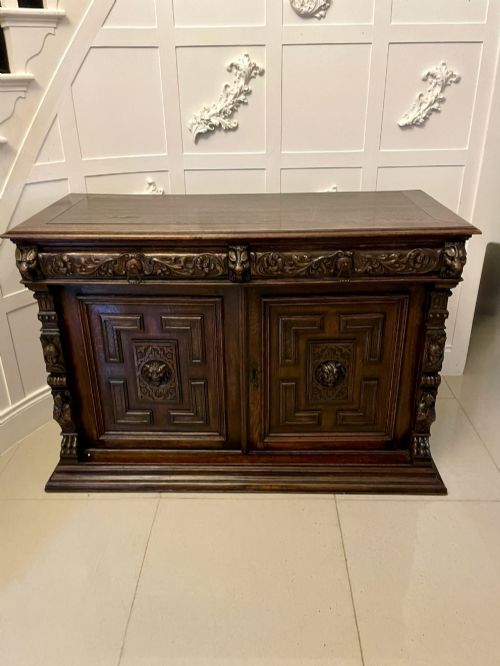
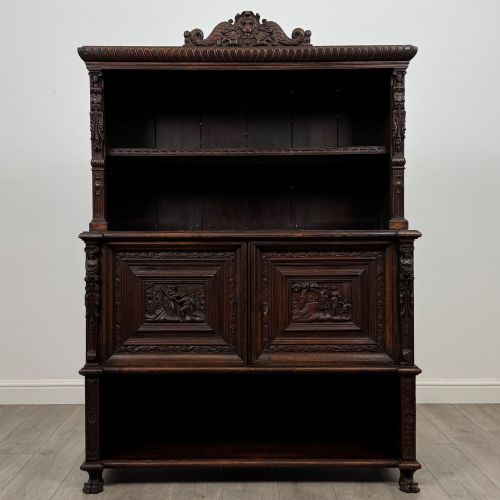
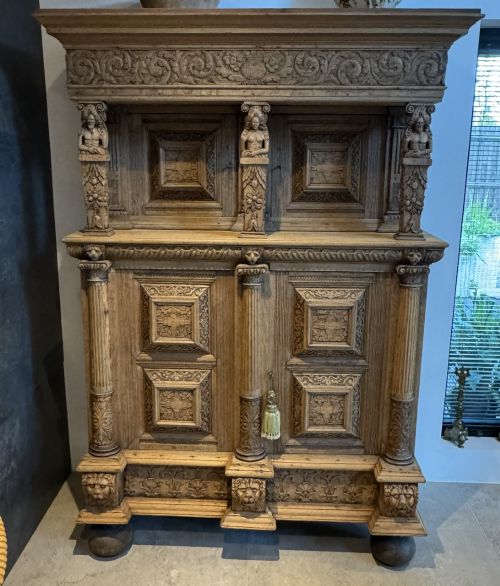
A flemish carved oak cupboard brings dense, rich historic timber and deep relief into a room.
Flemish Carved Oak Cupboard
A flemish carved oak cupboard encompasses robust cabinets, sideboards, and hall cupboards originating across centuries from the sixteenth to the nineteenth. The examples seen most frequently on this page date to the nineteenth century, particularly around eighteen eighty, heavily influenced by renaissance revival and baroque styles.
Forms vary from grand sideboards and armoires to cabinets on stands and narrow bookcases over cupboards. They frequently feature deep architectural mouldings, panel doors, and figural details such as lion masks.
Origins span continental workshops, with pieces reflecting traditional flemish and dutch cabinet making traditions. Buyers encounter everything from early seventeenth century kasts to elaborate victorian interpretations.
How they were made
Construction relies primarily upon solid oak timbers joined with traditional methods, occasionally supplemented by fruitwood inlay, rosewood, or ebony highlights. Iron and brass fittings provide structural hardware and hinges, whilst glass and stained glass panels appear in upper doors.
Carving defines the surface work, executed in deep relief to create dramatic shadow and texture across panels, friezes, and cornices. The wood is traditionally finished to emphasise the natural grain and deep brown tone of the timber.
Styles represented across the inventory include flemish baroque, renaissance revival, and continental baroque.
What varies in quality
Depth and crispness of the carving distinguish finer pieces from simpler workshop output. Skilled hand carving displays sharp undercut details in foliage and figures, whereas lesser examples remain flat and formulaic.
The choice of secondary timbers and the integrity of the original construction dictate overall standing. Proportion, balance, and the integration of period hardware complete the distinction between standard production and exceptional examples.
The Flemish Carved Oak Cupboard Glossary
- Kast
- A large traditional dutch or flemish wardrobe or cupboard with panelled doors. These substantial pieces provide deep storage and often feature architectural cornices.
- Renaissance Revival
- A nineteenth century style drawing on sixteenth century motifs. It uses heavy symmetry, columns, and classical ornamentation.
- Flemish Baroque
- A decorative style characterised by dramatic movement, exuberant carving, and rich sculptural details. It frequently incorporates scrolls and cherubs.
- Lion Mask
- A carved sculptural representation of a lion's face used as a decorative motif on furniture corners or drawer pulls. This element appears frequently on nineteenth century stands.
- Court Cupboard
- An antique open or enclosed cupboard used for displaying plate or storing provisions. These pieces often feature tiered upper sections.
Flemish Carved Oak Cupboard: Frequently Asked Questions
How do I date a flemish carved oak cupboard?
Dating relies on examining construction marks, timber shrinkage, and the specific stylistic vocabulary of the carving. Sixteenth and seventeenth century pieces show hand-riven timbers and simpler joinery compared to nineteenth century revival pieces.
Revival pieces often incorporate machine-cut elements alongside hand carving and reflect nineteenth century interpretations of earlier baroque and renaissance aesthetics.
Where should I place a large cupboard?
These substantial pieces require strong walls and adequate floor space to balance their visual weight. Hallways, dining rooms, and spacious living areas suit their scale best.
Keep them away from direct heat sources and strong sunlight to protect the historic oak timber from drying out and splitting over time.
How do I care for antique oak furniture?
Maintain the wood by applying traditional beeswax periodically and buffing with a soft cloth. Avoid modern silicone polishes that build up and attract dust.
Maintain stable room humidity to prevent the solid oak panels and joints from expanding or contracting too severely with seasonal changes.
What is the difference between a cabinet and a kast?
A cabinet generally refers to a general storage piece with doors or drawers, whereas a kast is a specific large, heavy cupboard tradition from the low countries. Kasts often feature massive proportions and distinct architectural cornices.
Both serve primary storage functions but represent different regional cabinet making lineages and domestic traditions.