





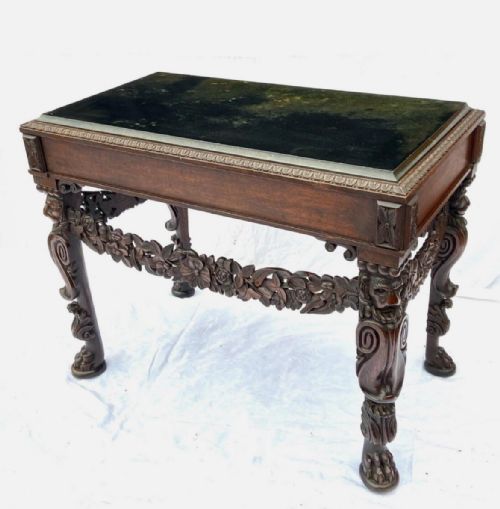


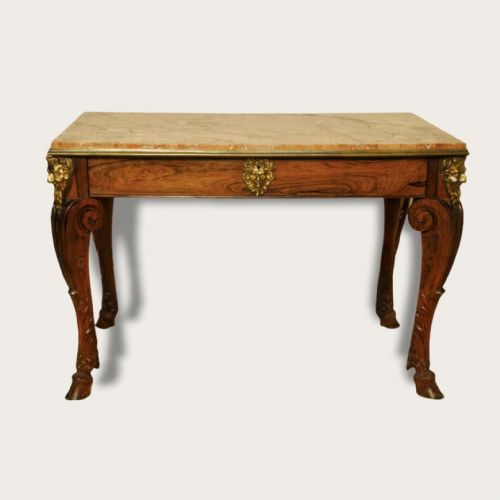
Carved Lion Console Table
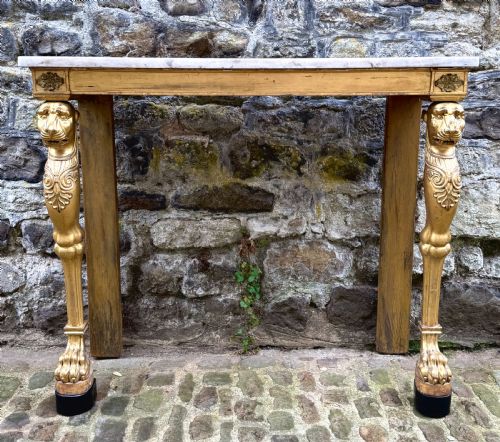
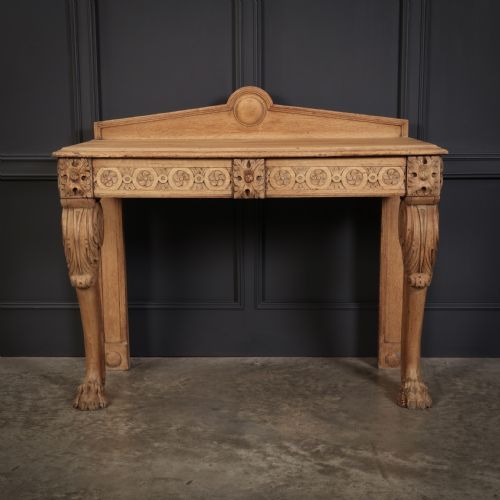
A carved lion console table brings commanding animal presence and structural weight to a hallway, drawing the eye instantly.
Carved Lion Console Table
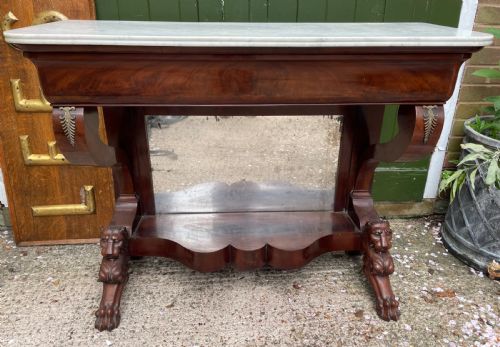
A carved lion console table is a heavy side or serving piece designed to sit flush against a wall, frequently topped with marble or flame mahogany.
The selections available here span from the 18th century through the Victorian era, embracing styles such as Regency, Italian Baroque Revival, and Swedish Empire.
You are most likely to encounter oak or mahogany versions featuring characteristic lion masks and paw feet, alongside gilded or painted finishes.
How they were made
Cabinetmakers shaped dense hardwoods such as oak, mahogany, and padouk, applying hand-carved detailing to legs, aprons, and supports.
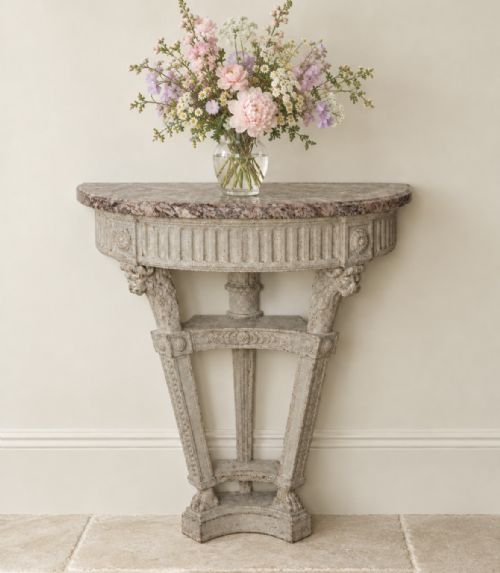
Giltwood and gesso pieces received delicate layers of gold leaf over prepared wooden bases, while high-end surfaces incorporated fitted slabs of Breccia or Carrara marble.
Brass fittings, ormolu mounts, and subtle painted finishes completed the construction of these substantial architectural furnishings.
Listings feature oak, mahogany, rosewood, and padouk woods alongside marble and giltwood surfaces.
What varies in quality
The depth and animation of the wood carving dictate the piece's artistic merit, distinguishing brisk, muscular animal forms from flat or stiff execution.
The choice and thickness of the top marble slab, whether Breccia or Carrara, reflects the original commission's expense and status.
Structural integrity relies upon the joinery of the heavy timber frame and the original integration of the lion supports to the apron.
Jean Joseph Chapuis·Mack Williams And Gibton
The Carved Lion Console Table Glossary
- Console table
- A table designed to be fixed against a wall, traditionally supported by two ornamental brackets or legs rather than four freestanding ones. These pieces frequently anchor entrance halls and drawing rooms.
- Breccia marble
- An ornamental stone composed of angular rock fragments embedded in a fine-grained matrix, prized for its variegated and dramatic natural patterning. It frequently caps grand 19th-century Italian furniture.
- Giltwood
- Timber that has been coated with gold leaf or gold paint to simulate solid gold enrichment. It requires gentle handling to preserve the delicate metallic surface.
- Ormolu
- Finely chased and gilt bronze used for decorative mounts on high-end furniture. The technique was particularly popular during the Neoclassical and Empire periods.
- Paw feet
- Carved furniture terminals shaped to resemble the foot of a lion, bear, or other beast. They anchor heavy legs with a sense of grounded power.
Carved Lion Console Table: Frequently Asked Questions
Where should I place a console table?
These tables are traditionally positioned in entrance halls, formal dining rooms, or living spaces against a flat wall. They serve as a surface for lamps, mirrors, or decorative objects.
Because of their depth and wall-anchored nature, they command attention without obstructing central room traffic pathways.
How do I care for a marble top?
Marble surfaces require prompt wiping of acidic liquids like wine or citrus to prevent etching. Use a damp cloth and mild soap for routine cleaning rather than harsh chemicals.
Periodic application of a specialist stone wax helps protect the polished finish from everyday wear.
Are these tables freestanding?
Console tables are historically designed to rest against a wall for stability, sometimes requiring structural fixing at the rear. The back edges are often finished more simply than the prominent front facade.
Placing one entirely in the middle of a room exposes the unadorned reverse side.
How do I identify a Regency piece?
Regency furniture displays neoclassical restraint, classical motifs, and rich materials like mahogany and giltwood. Look for architectural symmetry and disciplined ornamentation.
Proportions during this period lean towards bold, clean lines inspired by ancient Roman and Greek design.