


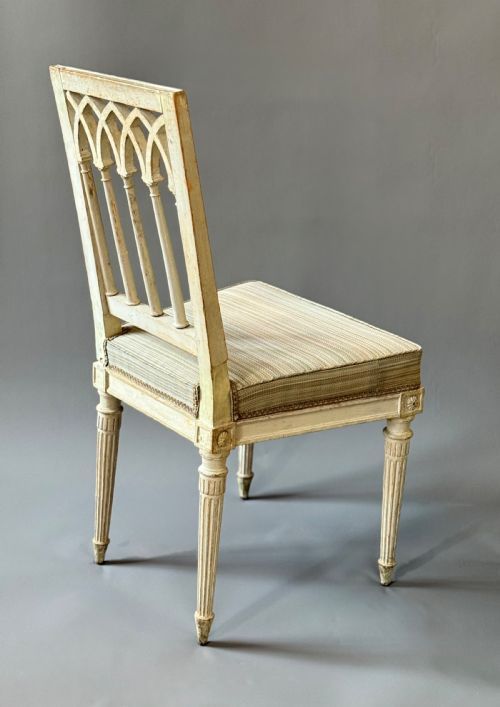
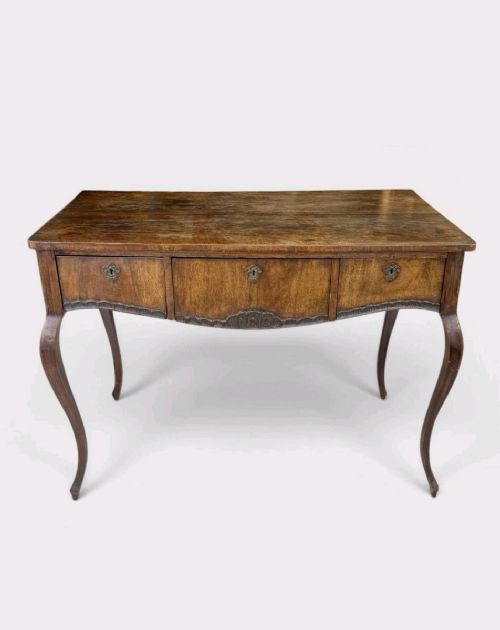
Carved Leg Desk
A carved leg desk brings substantial timber and decorative woodwork together into a practical workspace.
Carved Leg Desk
A carved leg desk is a functional writing surface supported by legs shaped with decorative woodworking, appearing in periods from the Victorian era through the early twentieth century. These pieces span standard writing tables, pedestal desks, and bureau forms constructed in timber.
The versions most common on this page combine mahogany, oak, or walnut with turned or carved supports. They range from compact nineteenth century library tables to larger partner and pedestal formats.
How they were made
Makers utilised solid hardwoods like mahogany, oak, and walnut, frequently selecting burr veneers for prominent surfaces such as top panels and drawer fronts. Structural frames relied on traditional joinery to support the weight of drawers and writing loads.
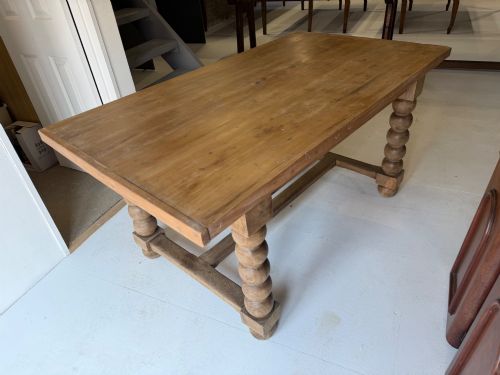
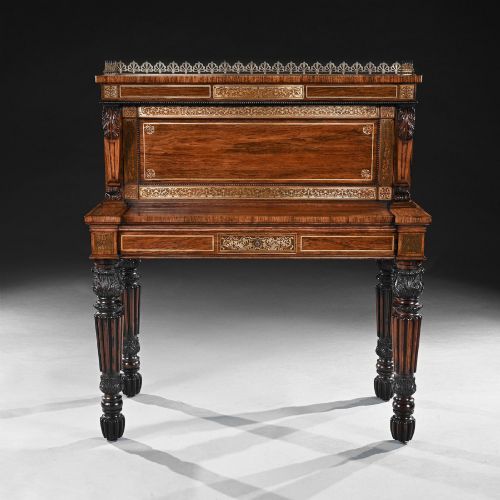
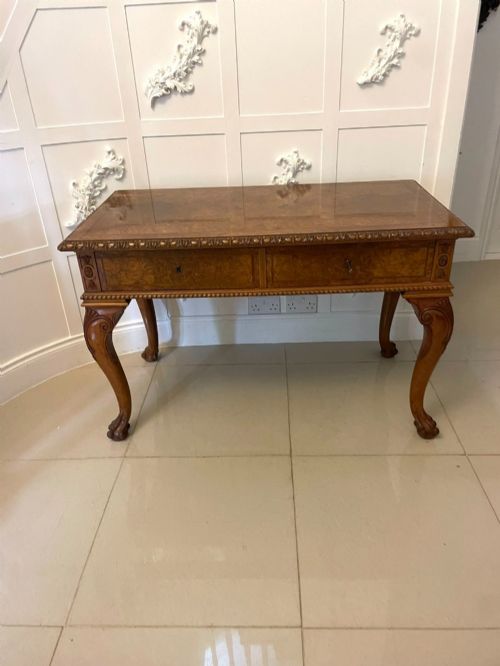
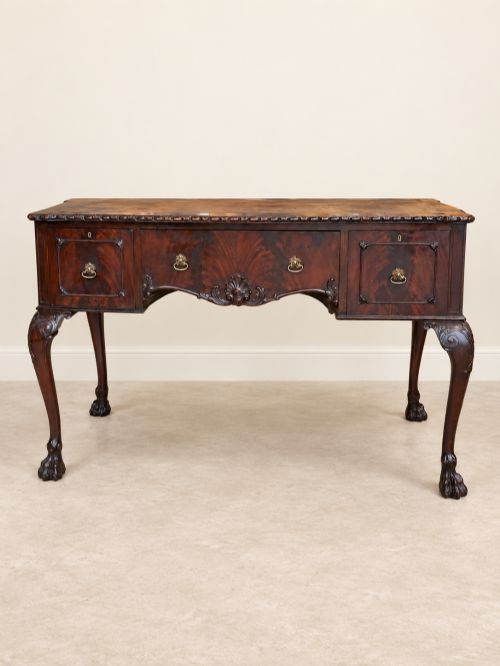
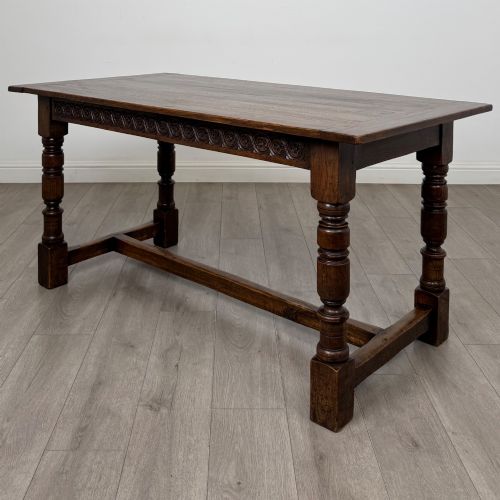
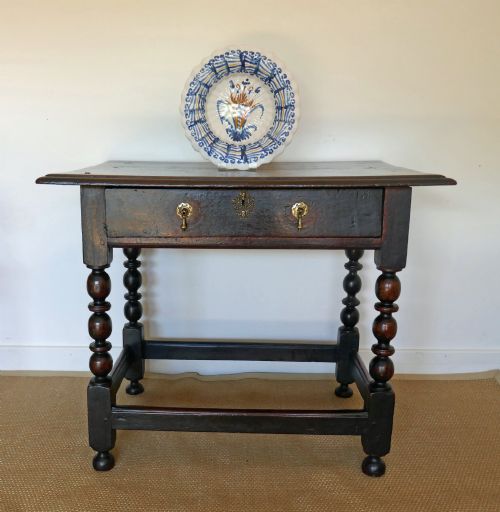
Legs and supports received manual carving or turning, incorporating details like cabriole shapes, paw feet, and bobbin turnings directly into the timber. Secondary materials such as leather inserts and brass hardware completed the construction.
Listings feature desks spanning the 18th century through the 1920s, constructed primarily in mahogany, oak, and walnut.
What varies in quality
The standard of a carved leg desk rests on the depth and precision of the woodwork on the legs and frame, alongside the selection of timber figures. Superior examples display crisp, hand-chiselled details rather than shallow or soft profiling.
Interior construction also separates standard pieces from finer ones, visible in the dovetailing of drawers, the choice of secondary timbers, and the integration of original brass handles and leather writing surfaces.
Gillows Oxford Street Workshop·Charles Tozer
The Carved Leg Desk Glossary
- Cabriole leg
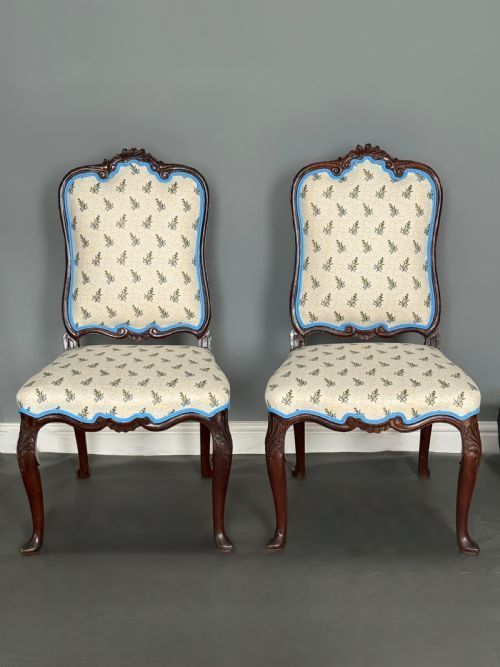
- A furniture leg that curves outward at the knee and tapers inward toward the foot, often ending in a pad or paw shape. This form derives from classical furniture design and appears frequently on walnut and mahogany pieces.
- Pedestal desk
- A heavy writing desk built with two separate supporting stacks of drawers that hold up the main top slab. These designs provide substantial storage space on both sides of the kneehole.
- Burr walnut
- Timber cut from the gnarled growth on a walnut tree, yielding highly decorative swirling grain patterns. Cabinet makers prized this material for veneering prominent desktop and drawer surfaces.
- Partners desk
- A large double-sided desk designed for two people to work opposite one another, featuring drawers and cupboards accessible from both ends. They are typically executed in mahogany or oak.
Carved Leg Desk: Frequently Asked Questions
How do I clean the leather top?
Wipe the leather surface gently with a slightly damp cloth, avoiding excess moisture and harsh chemical cleaners.
Nourish the hide periodically with a suitable leather balm to maintain suppleness and prevent cracking over time.
Can I use a antique desk daily?
These desks were built for regular working use from solid hardwoods and robust joinery, making them well-suited for contemporary offices.
Protect the timber and leather surfaces from heavy impacts and direct heat sources to preserve the finish.
What woods were commonly used?
Makers relied heavily on mahogany, oak, and walnut for both structural frames and decorative veneer work.
Some examples incorporate burr walnut or rosewood on primary display surfaces to create distinctive grain patterns.
How do I date a carved leg desk?
Examine the construction methods, timber types, and hardware styles used throughout the frame and drawer interiors.
Design motifs such as cabriole legs, bobbin turnings, or specific revival styles often align with Victorian, Edwardian, or earlier production periods.