
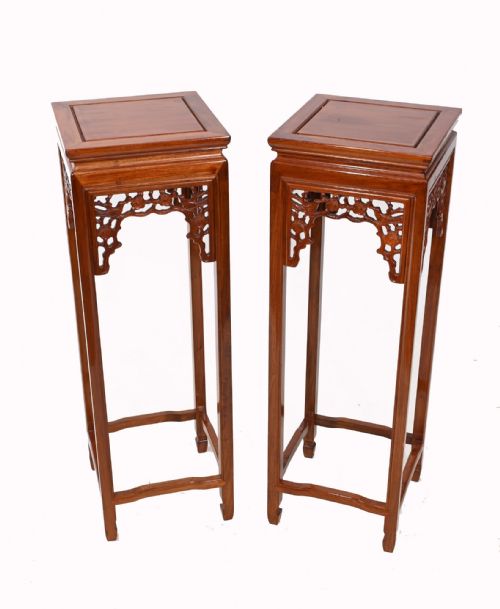
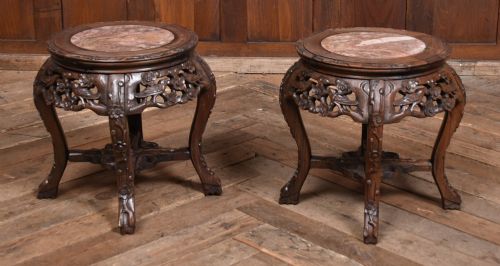
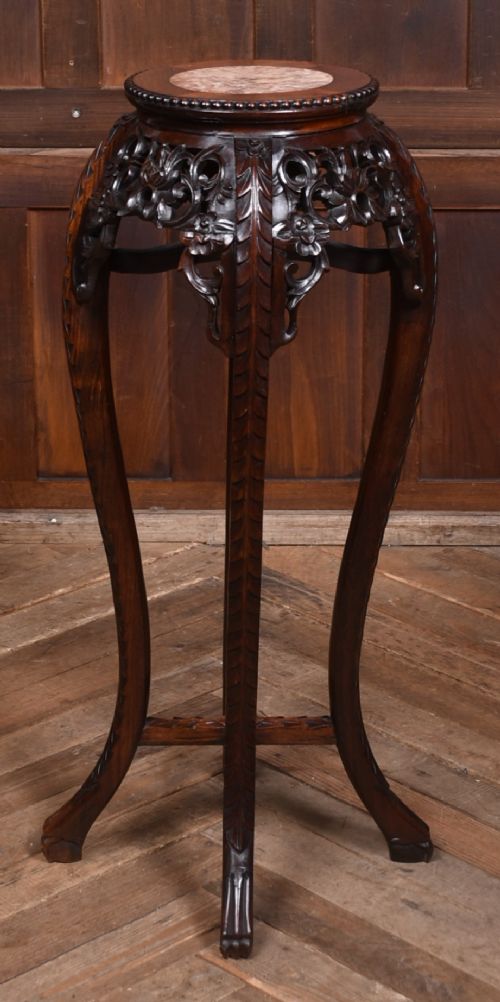


Carved Hardwood Urn Pedestal
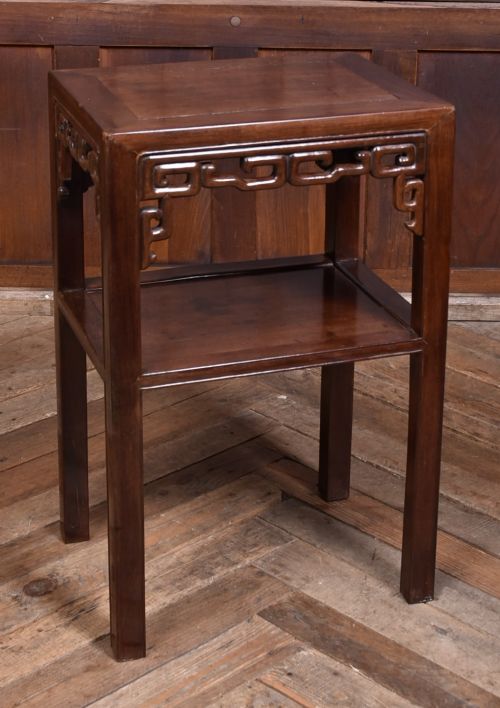
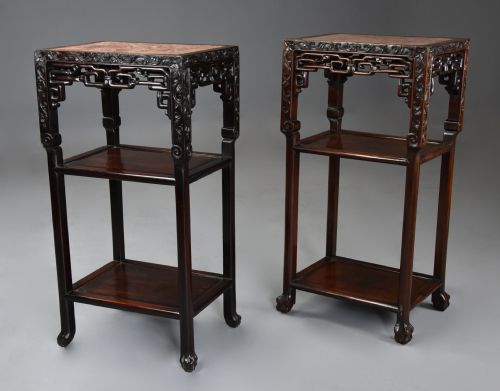
These carved hardwood urn pedestal designs serve to elevate heavy planters and decorative vessels, bringing focus to detailed oriental craftsmanship in interiors.
Carved Hardwood Urn Pedestal
A carved hardwood urn pedestal brings a sturdy display surface into domestic spaces, functioning as a plant stand, jardiniere table, or vase support. Buyers searching for a carved hardwood urn pedestal encounter a dominant selection of Chinese export pieces alongside Japanese Meiji and Anglo-Indian works.
Materials and construction methods
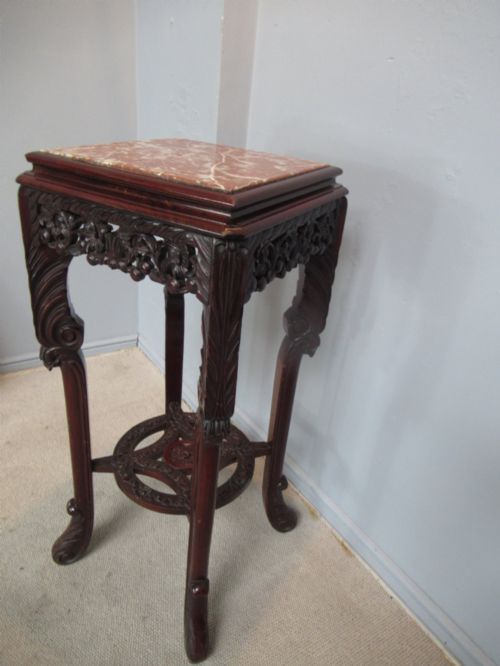
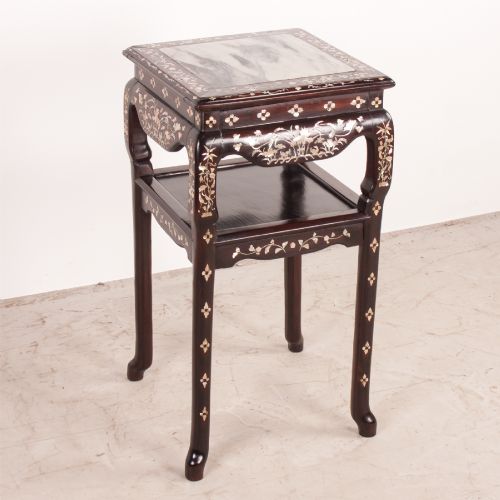
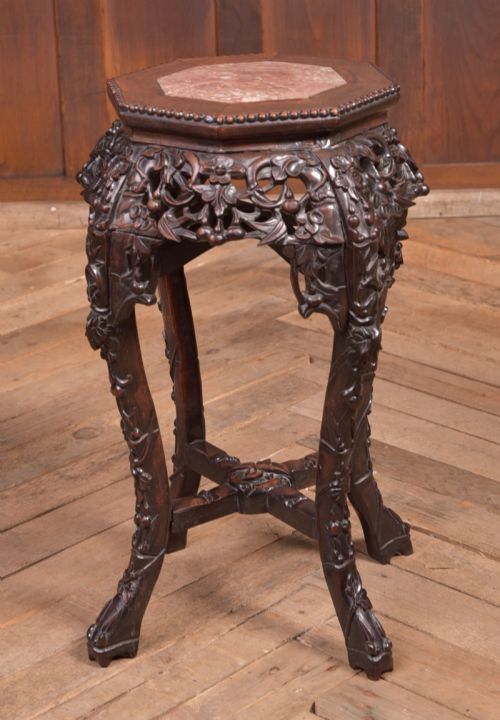
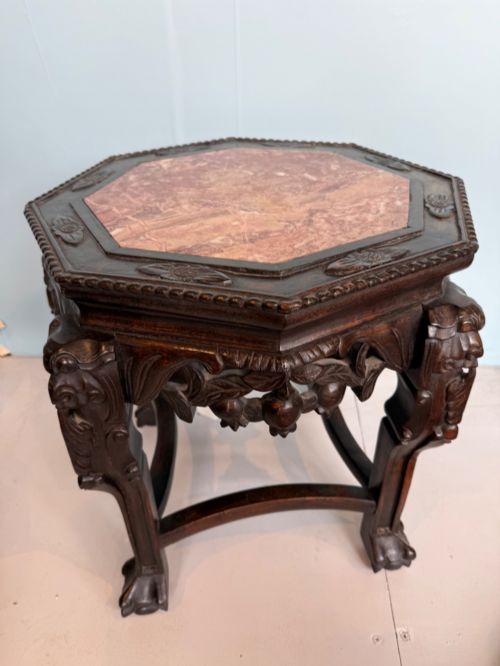
Maker workshops construct these pedestals from dense exotic timbers including padouk, rosewood, hongmu, and ebonised wood, often augmented by inset rouge or white marble tops. Artisans join structural elements using traditional interlocking joinery designed to bear significant downward weight without warping.
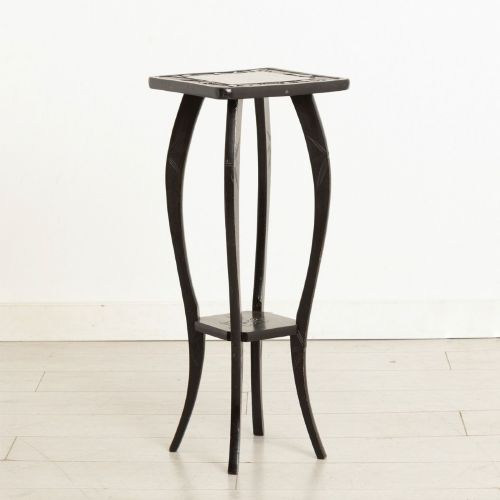
Surfaces receive intricate hand-carved detailing depicting foliage, dragons, or traditional motifs, sometimes accented with mother of pearl inlay. Ebonised finishes and clear polishes protect the timber while highlighting the natural grain and depth of the dense wood.
Listings feature nineteenth-century and Edwardian pieces, predominantly constructed from rosewood, padouk, and ebonised wood with marble inserts.
Evaluating craftsmanship and design
Quality rests in the crispness of the hand-carved relief and the structural integrity of the timber joints under load. Superior pieces maintain tight joins in the carved aprons and legs, while lesser items show loosening from atmospheric changes.
The inclusion of undamaged inset marble slabs and carefully fitted mother of pearl inlay separates fine examples from standard production pieces. Heavier padouk and rosewood frames indicate a higher grade of material selection by the maker.
Liberty of London
The Carved Hardwood Urn Pedestal Glossary
- Jardiniere stand
- A tall table designed specifically to hold a large ornamental plant pot or flower bowl. These pieces usually feature a water-resistant top surface such as marble.
- Torchère
- A tall, slender stand or candlestick holder adapted to support a vase or lamp. The form provides height and focuses attention on a single decorative object.
- Padouk
- A heavy, durable tropical hardwood prized for its reddish-brown colour and stability. Makers utilise this dense material for intricate carving.
- Ebonised wood
- Timber treated with chemical stains or black finishes to imitate ebony. This technique appears on nineteenth-century stands influenced by Japanese design.
Carved Hardwood Urn Pedestal: Frequently Asked Questions
What is a carved hardwood urn pedestal used for?
These pieces function primarily to elevate heavy ceramic vessels, urns, and indoor plants to comfortable viewing heights. They provide a stable, decorative platform within a room.
Historically, homeowners placed them in hallways, parlours, and drawing rooms to display prized oriental porcelains and exotic flora. Today, they serve the same decorative purpose in contemporary domestic interiors.
How do I identify a nineteenth century Chinese stand?
Nineteenth century Chinese stands typically employ dense hardwoods like rosewood or padouk, featuring deep, undercut hand-carving inspired by Qing Dynasty traditions. Many incorporate inset marble tops to protect the wood from moisture.
Examining the underside and joinery reveals traditional construction methods without modern metal fasteners. The timber patination and weight offer further confirmation of age and origin.
Are marble top stands durable for daily use?
The inset marble slabs provide a tough, heat-resistant and water-resistant surface that withstands potted plants and heavy vases easily. The stone insert prevents water damage to the underlying wooden frame.
Care involves wiping the marble clean and occasionally waxing the surrounding hardwood. The heavy stone also adds beneficial weight, anchoring the tall pedestal against accidental knocks.
What is the difference between a plant stand and a torchère?
Plant stands usually feature lower, broader platforms with sturdy legs designed to support heavy ceramic jardiniere pots. Their proportions prioritise stability under substantial weight.
Torchères are taller and more slender, originally intended for lighting devices or single display vases. Their graceful columns focus attention upward rather than supporting heavy spreading foliage.