
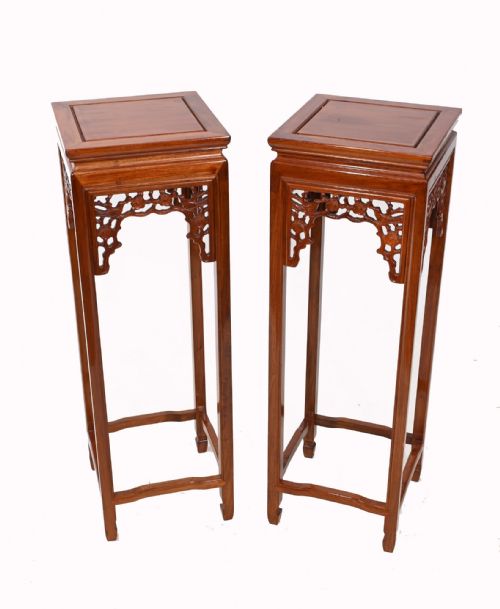
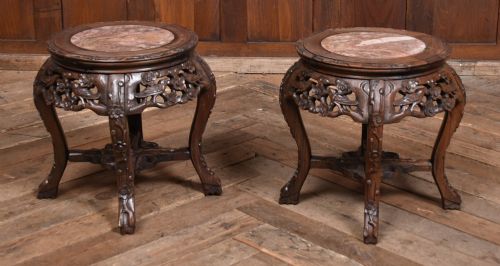
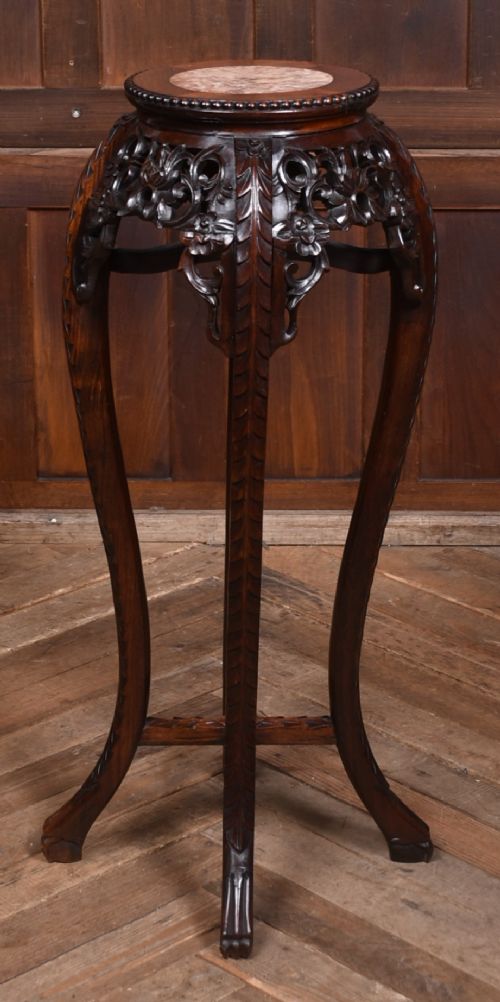


Carved Hardwood Pedestal Table
A carved hardwood pedestal table brings dense timber, intricate relief work, and varied display surfaces into a room.
Carved Hardwood Pedestal Table
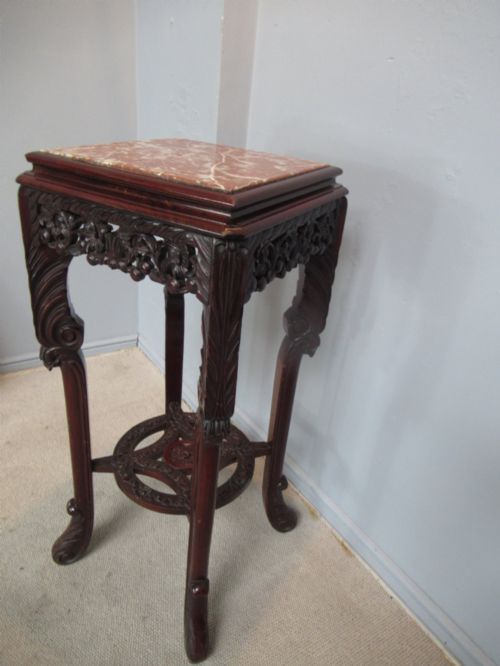
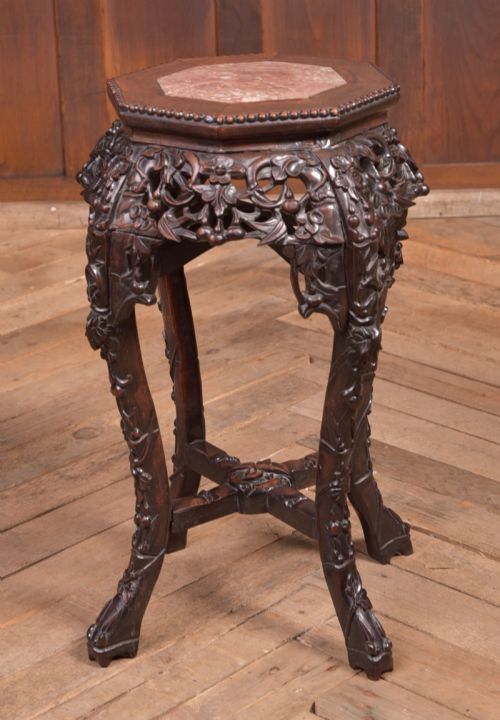
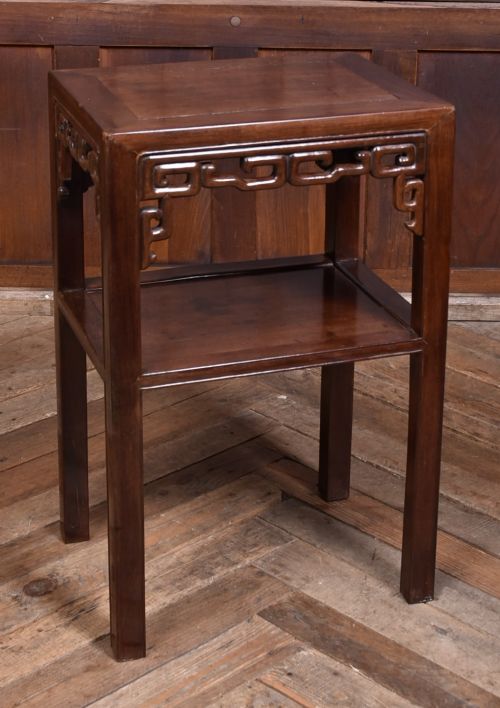
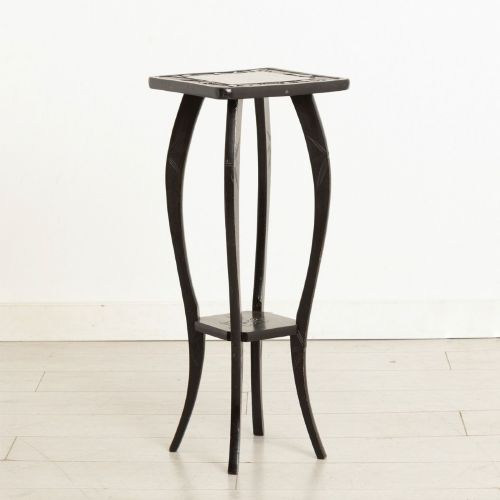
A carved hardwood pedestal table spans compact plant stands, jardiniere supports, and low occasional tables designed for display. These pieces emerge predominantly from nineteenth-century Chinese workshops and Anglo-Indian regional centres, utilising dense timbers suited to deep chisel work.
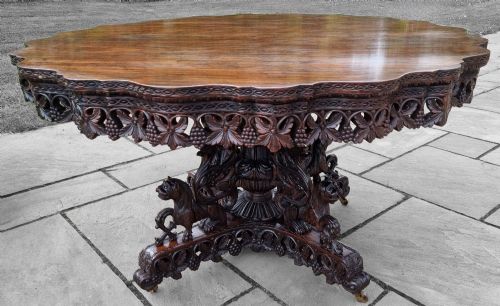
Buyers encounter numerous variants on this page, ranging from marble-topped vase stands to tilt-top occasional tables and partners desks. The forms reflect both traditional Eastern craftsmanship and items tailored for Western export markets during the Victorian period.
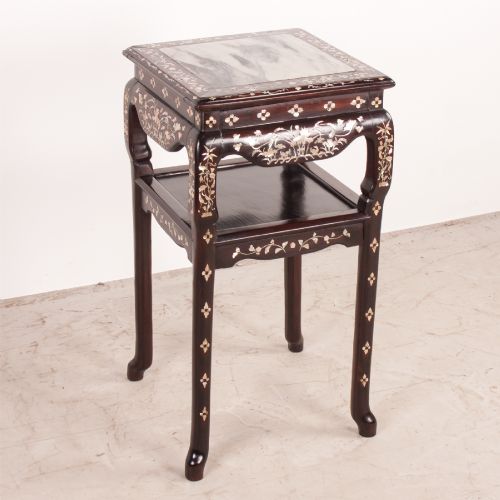
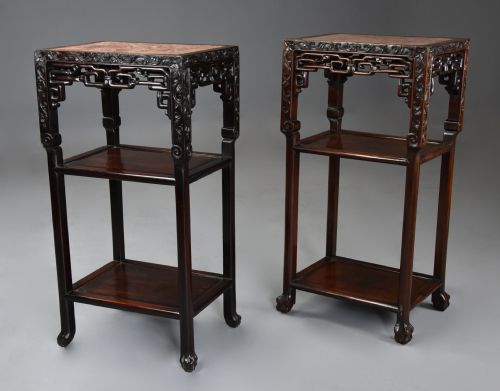
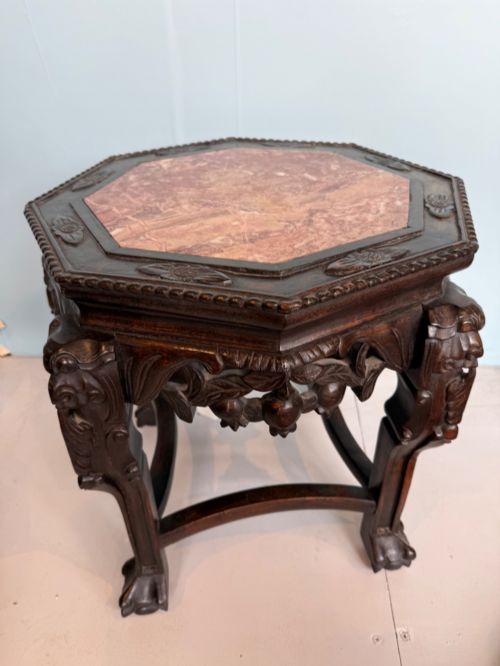
Smaller pot stands and pedestal tables dominate the selection, often featuring inset rouge marble panels or mother-of-pearl inlay. Taller centre tables and desks appear less frequently, offering substantial padouk or rosewood construction alongside elaborate dragon motifs.
Materials and Construction
Craftsmen built these tables using dense tropical hardwoods such as padouk, rosewood, and teak, which accept crisp, microscopic detail without splitting. Many pieces incorporate inset marble slabs or brass fittings to provide stable, heat-resistant surfaces for heavy ceramic planters and lamps.
Joinery relied on traditional mortise and tenon frames designed to accommodate the natural movement of heavy timber over decades. Carvers worked directly into the solid wood, cutting through multiple layers to create high-relief dragons, foliage, and geometric borders.
Watch out for defiant wooden dragons glaring up from plant stands, keeping a stern, scaled eye on your ferns.
Distinctions in Execution
Quality rests primarily on the depth and sharpness of the hand carving, where superior examples display undercut foliage and expressive animal figures rather than shallow, mechanical scoring. The choice of timber also dictates the tier, with heavy padouk and figured rosewood commanding greater presence than stained secondary woods.
The integration of inset elements, such as perfectly fitted rouge marble tops and secure mother-of-pearl inlay, separates masterwork productions from simpler utility pieces. Structural rigidity in the pedestal columns and legs ensures the heavy tops remain balanced without developing a tilt.
Liberty of London
The Carved Hardwood Pedestal Table Glossary
- Jardiniere stand
- A tall, slender table designed specifically to elevate a large ceramic flower pot or plant bowl. These pieces usually feature a circular top with an inset marble or wood panel.
- Padouk
- A heavy, durable tropical hardwood displaying a reddish-brown hue that deepens with age. It appears frequently in nineteenth-century Anglo-Indian and Chinese export furniture.
- Tilt-top table
- A table constructed with a mechanism that allows the surface to pivot into a vertical position when not in use. This design originated to save space in smaller residential rooms.
- Chinese export
- Furniture manufactured in China specifically for Western markets during the nineteenth and early twentieth centuries. These objects often combine traditional Asian motifs with European room forms.
Carved Hardwood Pedestal Table: Frequently Asked Questions
What were carved hardwood pedestal tables used for?
These tables served primarily to elevate heavy decorative objects, including porcelain vases, bronze vessels, and potted plants, allowing them to catch the light. In larger formats, they functioned as writing surfaces or centre tables in formal rooms.
Their sturdy pedestal construction provided stability for items that required prominent display away from walls.
How do I care for a marble-topped table?
Marble surfaces require simple dusting with a soft cloth and prompt wiping of liquid spills to prevent staining. Avoid harsh chemical cleaners that can etch the polished stone surface.
The wooden base benefits from occasional application of quality wax to nourish the grain without building up a heavy residue.
Where were these tables manufactured?
The pieces originate largely from Chinese workshops, including Qing Dynasty production centres, and Anglo-Indian regional hubs such as Bombay. Many were created explicitly for the Victorian export market.
Makers utilised locally available dense hardwoods to satisfy European demand for exotic, heavily carved furnishings.
How can I identify the age of a pedestal table?
Dating relies on examining the timber species, tool marks left by hand chisels, and the integration of components like marble inserts. Nineteenth-century examples typically show dense, patinated hardwoods and traditional joinery methods.
Later pieces from the early twentieth century often exhibit standardised turning and slightly different finishing techniques.