
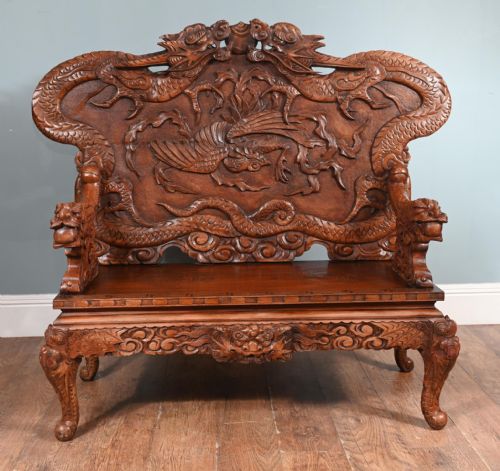


Carved Hardwood Head
A carved hardwood head brings intense human character into a room through deep chisel work and dense timber grain.
Carved Hardwood Head
A carved hardwood head encompasses various cultural objects, from architectural treen wall masks and tribal sculptures to figural headrests dating across the nineteenth and twentieth centuries. These pieces reflect distinct global carving traditions, utilising dense timbers shaped by skilled hands into striking facial studies and busts.
The selections available range from nineteenth-century colonial architectural fragments to African tribal art and twentieth-century decorative pieces. Buyers frequently encounter figural masks and sculptural studies that showcase regional portraiture and traditional motifs.
Materials and construction
Makers employed traditional hand chisels, gouges, and knives to shape the timber directly from the block, finishing surfaces with natural oils or polishing to highlight the grain. Tool marks frequently remain visible beneath the patina, recording the physical process of the carve.
Some wooden heads double as architectural wall masks, silently watching over rooms from high corners where builders placed them centuries ago.
Assessing quality and execution
Quality rests primarily on the anatomical precision, depth of undercut, and expressive power of the carving rather than mere age. Master carvers achieved realistic bone structure, proportion, and psychological intensity, whereas lesser examples rely on flat planes and rigid symmetry.
The condition of the timber grain and the integrity of the original surface finish heavily influence the piece. Superior examples retain their crisp edge definition and rich, unpolished patination earned through decades of handling and age.
The Carved Hardwood Head Glossary
- Hardwood
- Slow-growing deciduous timber with dense cellular structure that resists denting and takes a fine chisel edge. This material provides the necessary stability for intricate facial detailing.
- Treen
- Small handmade wooden household objects and utilitarian items collected for their craftsmanship. Wall masks and architectural fragments often fall into this broader category.
- Patina
- The surface sheen and colour developed over decades through handling, light exposure, and natural oxidation. A genuine patina offers clues to the age and history of a wooden sculpture.
Carved Hardwood Head: Frequently Asked Questions
What is a carved hardwood head?
A carved hardwood head is a sculptural wooden piece depicting a human face or bust, created within various regional and tribal traditions during the nineteenth and twentieth centuries.
These items range from architectural wall masks to standalone tribal art and ethnographic figures, each reflecting the distinct artistic style of its origin.
How were these wooden heads displayed?
Many of these pieces functioned as architectural elements, wall masks, or standalone sculptural studies placed on surfaces within domestic interiors.
Their substantial weight and dense timber construction allowed them to rest securely on desks, shelves, or walls without requiring complex mounting hardware.
How do I care for carved hardwood?
Hardwood sculptures require stable indoor humidity away from direct heat sources to prevent the timber from drying and splitting over time.
Occasional dusting with a soft, dry cloth maintains the surface without stripping the natural oils and historic patina accumulated on the wood.
How do I determine the period?
Dating relies on examining tool marks, timber shrinkage, style markers, and the depth and character of the surface patina.
Comparing the carving technique to documented regional examples helps narrow down the century and cultural origin of the piece.