


Carved Hardwood Hall Table
A carved hardwood hall table brings sculptural depth and practical surface space to an entryway, drawing on centuries of Asian and colonial design traditions.
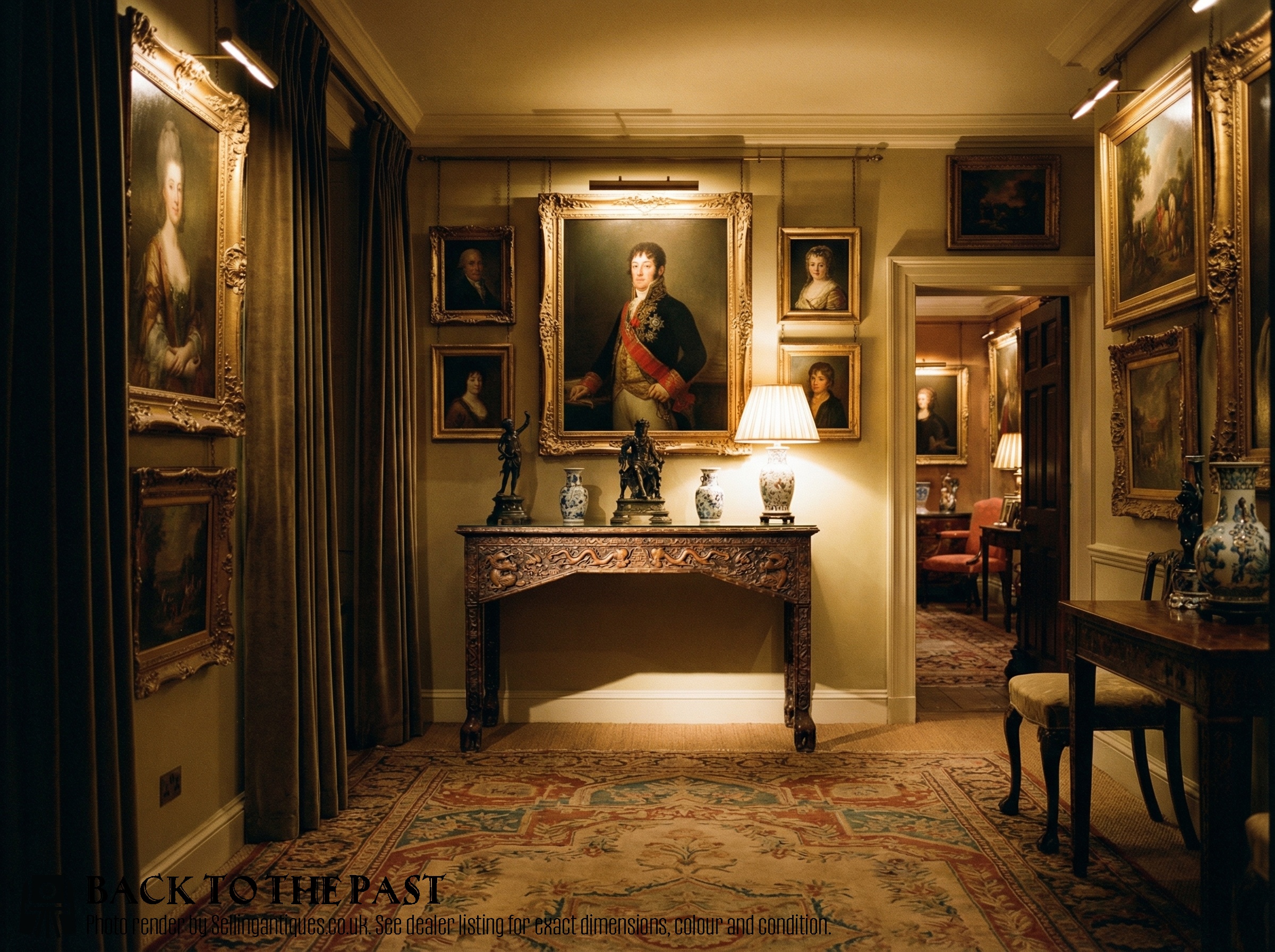
Carved Hardwood Hall Table
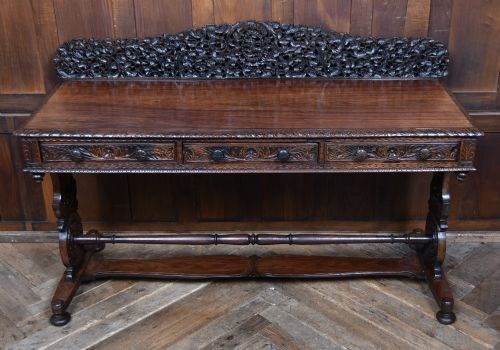
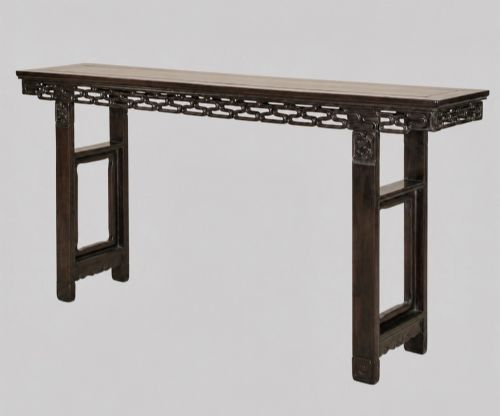
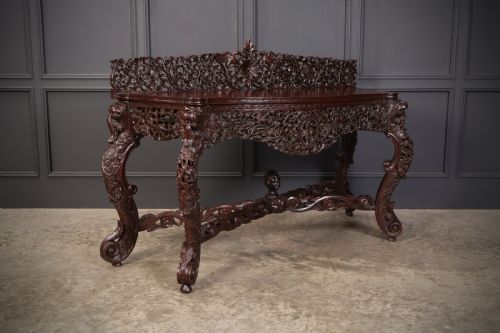
A carved hardwood hall table is typically encountered as a console, altar table, or centre table originating from the nineteenth century. These forms draw on Qing Dynasty, Chinese Traditional, and Anglo-Burmese Colonial aesthetics, translating architectural woodwork into domestic furniture.
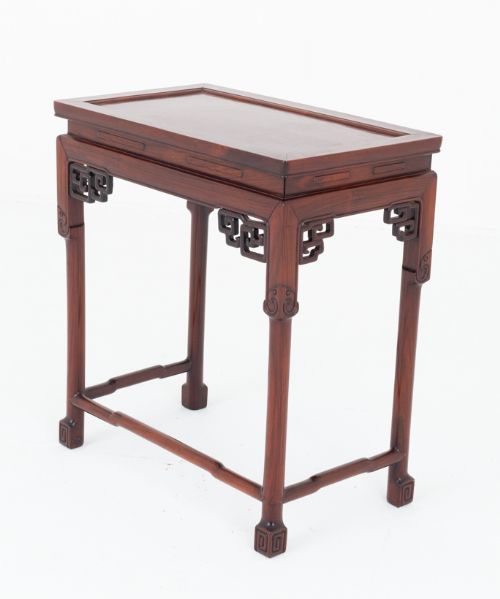
Buyers browsing these listings meet pieces shaped by diverse regional workshops across China, Burma, and India. The selection encompasses long console tables, demi-lune hall tables, and occasional tables designed to anchor an entrance space.
The materials and carving styles reflect specific nineteenth-century trade and production centres, ranging from formal Chinese altar tables to robust Anglo-Burmese console tables. Each piece serves the dual purpose of display and structural presence in a hallway.
Materials and construction
These tables are built from dense timbers such as hardwood, teak, padauk, elm, amboyna, and hongmu, chosen for their weight and grain. Cabinetmakers worked these resistant materials by hand, executing deep relief carving that defines dragons, foliage, and traditional motifs.
Secondary elements occasionally incorporate marble or glass inserts to create contrasting surfaces within the wooden framework. Joinery techniques employed by period artisans ensured stability across large console and altar tables without relying on modern fasteners.
Distinctions in quality
The standard of a carved hardwood hall table rests upon the crispness and depth of the manual carving across the apron and legs. Finer examples display meticulous undercut detailing where floral or mythical motifs detach visually from the dense timber background.
Proportion and structural integrity also separate tiers of production, as superior pieces maintain balanced lines and tight joinery across heavy hardwoods like hongmu and padauk. The choice of exotic secondary timbers, such as amboyna, further distinguishes higher-grade occasional and console furniture.
The Carved Hardwood Hall Table Glossary
- Altar table
- A traditional rectangular table with upturned flange ends, originally used for ceremonial purposes before finding a place in domestic interiors.
- Demi-lune
- A half-moon shaped table designed to stand flat against a wall, frequently utilised in narrow hallways and entrance spaces.
- Padauk
- A heavy, durable tropical hardwood with a distinctive reddish hue, favoured in Burmese colonial furniture production for deep carving.
- Hongmu
- A translation meaning red wood, categorising dense and prized Chinese hardwoods used for formal furniture during the Qing Dynasty.
- Console table
- A wall-mounted or freestanding table supported by legs or brackets, intended for display rather than dining.
Carved Hardwood Hall Table: Frequently Asked Questions
What is a carved hardwood hall table used for?
These tables provide a functional surface in entryways and hallways for keys, lamps, and decorative objects while adding architectural weight to the room.
Historically adapted from altar tables and console designs, their narrow profiles suit circulation spaces without obstructing movement.
How do I identify a Qing Dynasty table?
Qing Dynasty pieces often feature characteristic motifs such as dragons, scrolling foliage, and traditional framing techniques executed in dense hardwoods.
Consulting the specific proportions and carving styles helps distinguish these Chinese items from nineteenth-century Anglo-Burmese or Anglo-Indian colonial productions.
Where were these tables manufactured?
The pieces originate from workshops across China, Burma, and India during the nineteenth century, reflecting local material availability and regional artistic traditions.
Export trade and colonial presence during this era facilitated the creation of hybrid styles like Anglo-Burmese and Chinoiserie furniture.
How do I care for antique hardwood furniture?
Maintain the timber by keeping the table away from direct heat sources and sudden humidity changes that can affect dense woods like padauk and hongmu.
Dust regularly with a dry cloth and avoid harsh chemical polishes to preserve the natural patina developed over the nineteenth century.
What is the difference between a console and a centre table?
A console table is designed to stand flat against a wall, often featuring finished carving primarily on the front and sides.
By contrast, a centre table is finished on all four sides to stand freely in the middle of a room or grand hallway.