
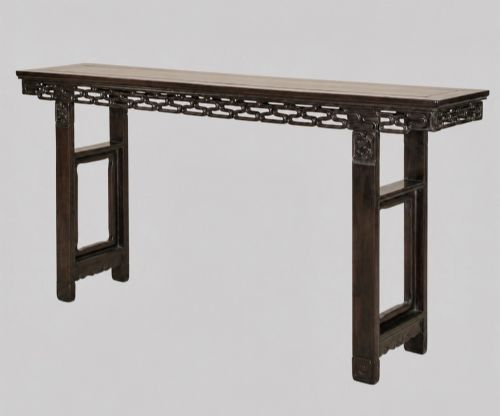
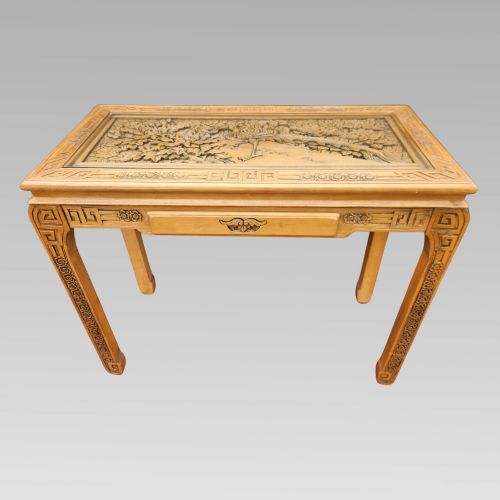


Chinese Carved Sofa Table
A chinese carved sofa table brings substantial presence and deep relief work into a room, offering functional surface space rooted in traditional craftsmanship.
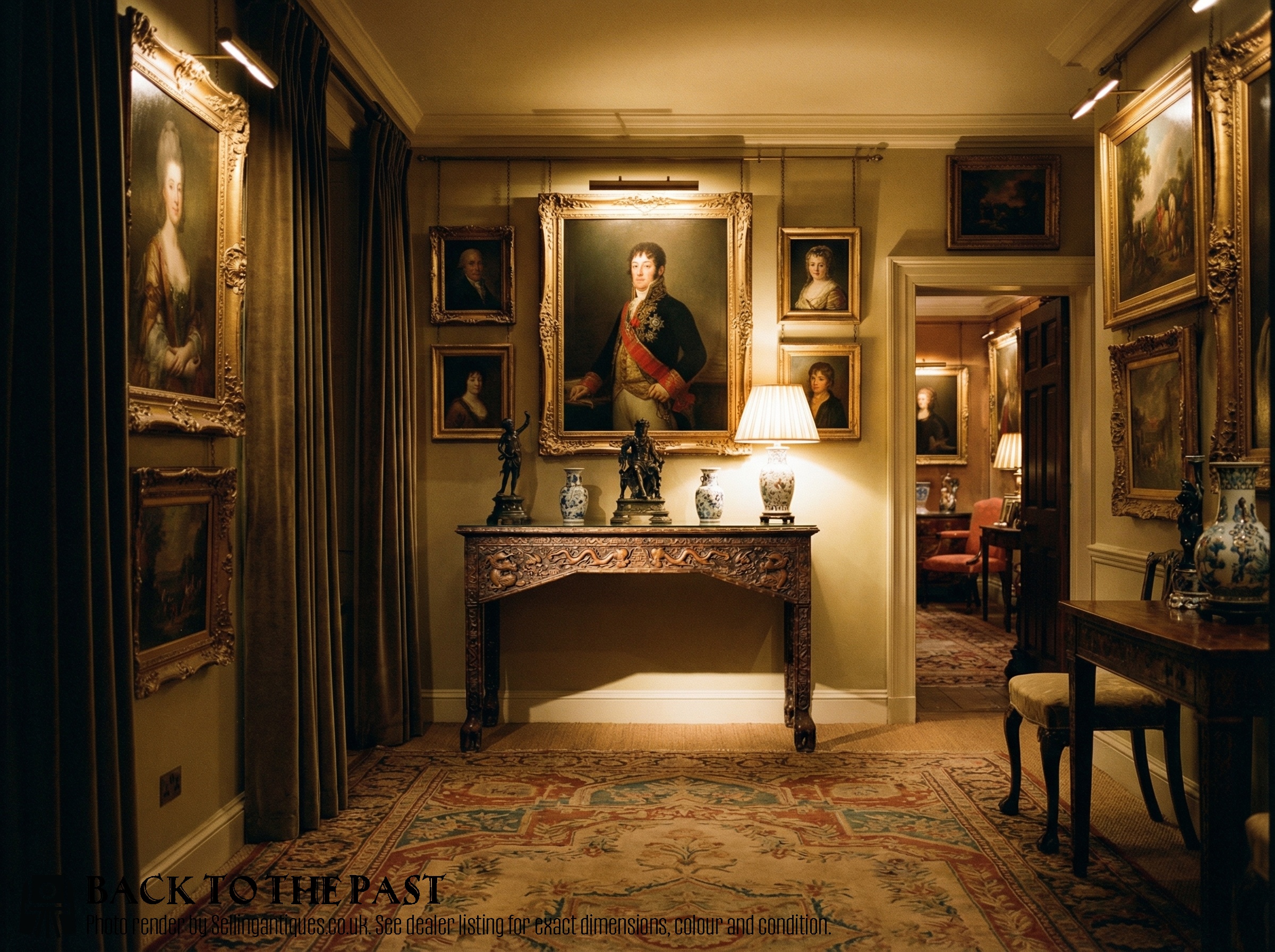
Chinese Carved Sofa Table
When you search for a chinese carved sofa table, you encounter console tables, altar tables, and occasional centre tables originating from various periods including the Qing Dynasty and the nineteenth century. These forms generally serve linear placements against walls or function as substantial accent furniture in larger living spaces.
The pieces available span traditional Chinese designs, Chinese export items, and occasional interpretations like Chippendale revival or Chinoiserie styles. Elm, hardwood, and lacquered wood dominate the structural forms, often accompanied by marble inserts or brass details.
Materials and construction
Makers utilised dense timbers such as hardwood, camphorwood, and elm to build rigid frames capable of supporting heavy surface items like marble slabs and glass panels. These woods allow for deep, intricate chiselling along aprons and legs without compromising structural integrity.
Surface treatments range from clear finishes highlighting the natural grain of hardwood to black lacquered coatings applied to wood panels. Artisans also incorporated brass hardware and fitted stone inserts into the timber frames during construction.
Several tables manage to look simultaneously austere and heavily ornate, proving that a console can shout and whisper at the exact same time.
Assessing the execution
The depth and clarity of the chisel work dictate the visual calibre of each piece, distinguishing sharp, deliberate motifs from softer, shallower incisions. Superior examples display balanced proportions across the apron and legs, whereas lesser items show rigid or unrefined joinery.
The selection of materials heavily influences the overall grade, with dense hardwoods and well-fitted marble tops representing more robust craftsmanship than simpler pine or secondary timber constructions.
The Chinese Carved Sofa Table Glossary
- Altar table
- A long, narrow console table traditionally utilised for ceremonial displays, featuring distinctive upturned ends or elaborate carved aprons beneath the surface. These forms provide a sturdy architectural footprint.
- Console table
- A table designed to stand flat against a wall, supported by console brackets or vertical legs. They function well in hallways and reception spaces.
- Hardwood
- Dense, durable timber harvested from broad-leaved trees, frequently utilised in traditional Asian furniture making for its strength and fine grain. It resists warping over decades of use.
- Chinoiserie
- European decorative style reflecting Chinese artistic influences, popular across various historic periods. It incorporates characteristic motifs and ornamental lacquer techniques.
Chinese Carved Sofa Table: Frequently Asked Questions
Where should I place a console table?
These tables fit naturally in entrance halls, long corridors, or against living room walls where surface space is required without blocking traffic flow.
Their narrow depth allows them to sit comfortably behind sofas or beneath large wall mirrors and artwork.
How do I clean a lacquered surface?
Dust the wood gently using a soft, dry cloth to prevent scratching the delicate finish. Avoid harsh chemical cleaners and excessive moisture.
Maintaining a stable indoor humidity level protects both the lacquer and the underlying timber from cracking.
What is an altar table?
An altar table is a long, elevated surface historically placed against the interior walls of traditional buildings for ritual objects. They feature prominent legs and ornate carved aprons.
Today, collectors appreciate them for their clean lines and striking proportions in modern interiors.
Are marble inserts original?
Many nineteenth and eighteenth-century tables incorporate marble or stone slabs inset directly into the wooden top to provide a cool, durable surface. These additions are typical for formal console and altar tables.
Checking the fit against the surrounding timber helps confirm the integrity of the tabletop.