






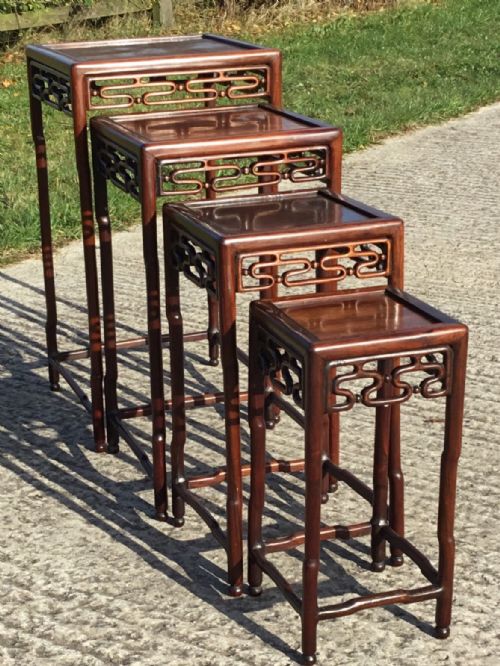

Carved Hardwood End Tables
These carved hardwood end tables bring dense timber and intricate hand carving into a room, offering practical surfaces with distinct regional character.
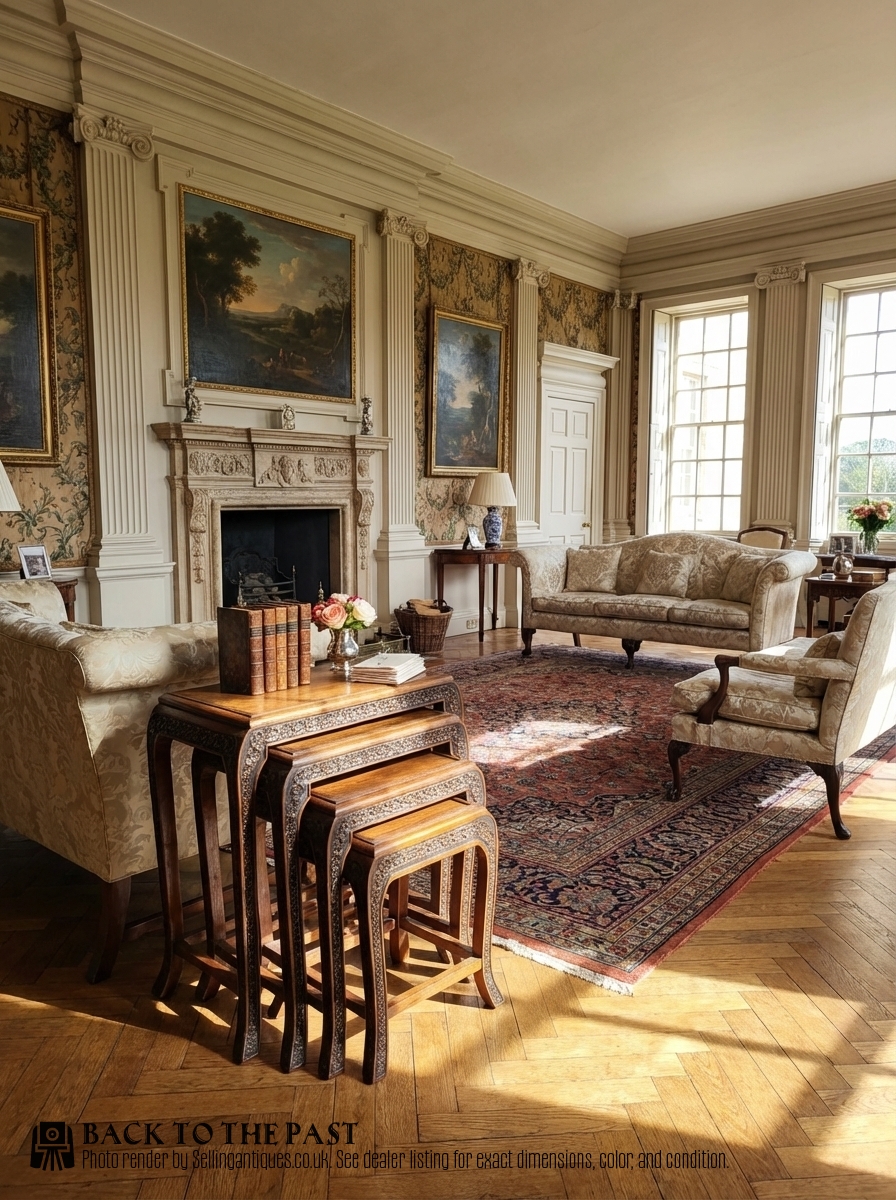
Carved Hardwood End Tables
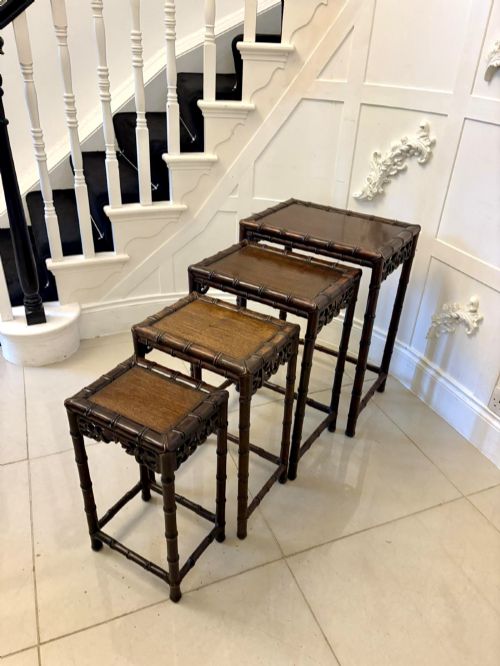
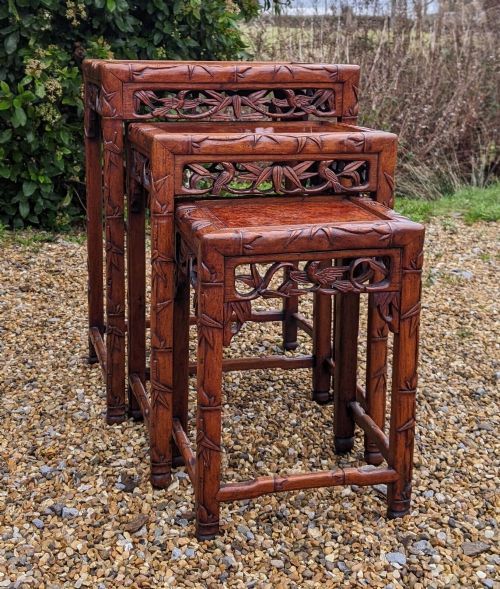
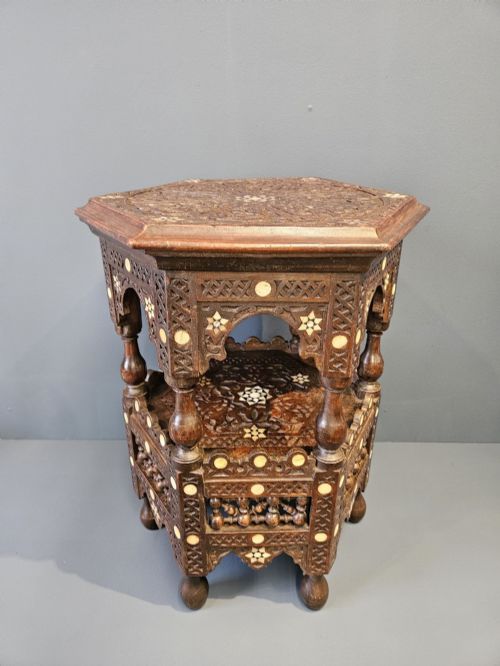
When you search for carved hardwood end tables, you encounter compact surfaces designed for placement beside seating or against walls, frequently taking the form of nests of four, octagonal lamp stands, or low kang tables. These items originate from diverse traditions, spanning Chinese workshops of the Qing Dynasty, Anglo-Indian studios, and Moorish revival furniture makers.
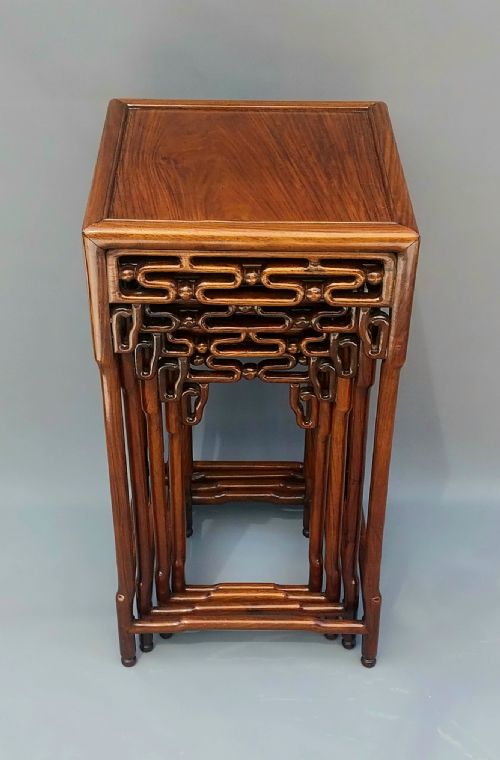
The selection here leans heavily towards nests of tables that slide neatly together, alongside occasional tables, side stands, and plant supports. Materials range from dense rosewood and teak to huanghuali and hongmu, often enhanced with marble inserts or bone inlay.
How they were made
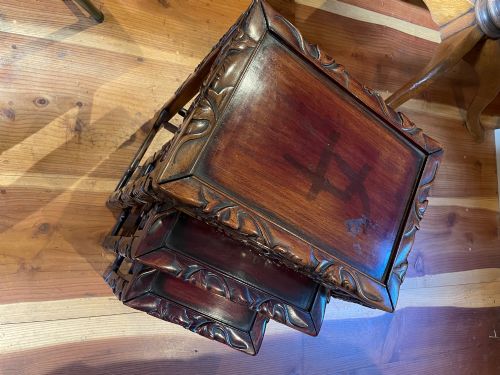
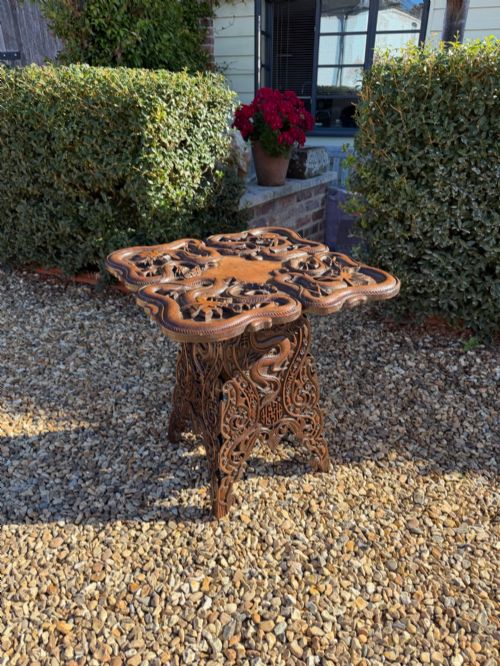
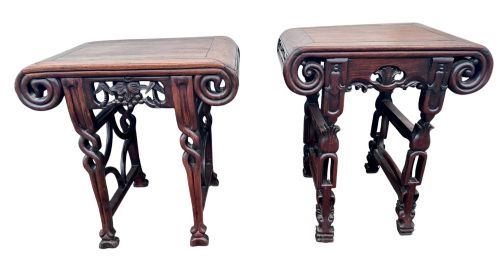
Cabinetmakers utilised dense timbers such as rosewood, teak, and huanghuali wood, selected for their deep natural colour and heavy weight. These materials allowed artisans to carve intricate leaf motifs, scroll ends, and figural details directly into the solid structure without compromising the strength of the joints.
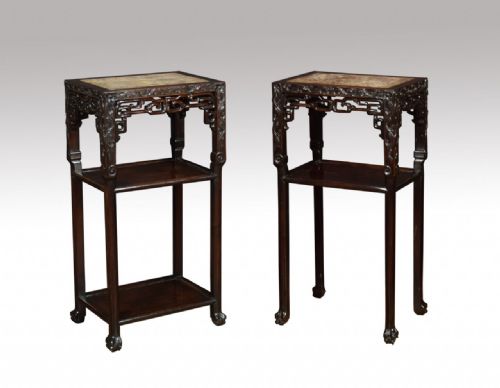
Surface decoration frequently involved deep relief carving, complemented occasionally by inset rouge marble tops or delicate bone inlay. Joinery relied on traditional methods suited to exotic hardwoods, ensuring stability across nests of graduated tables and standalone lamp stands.
Carved Hardwood End Tables Retail Price Guide 2026
Typical asking prices for carved hardwood end tables among the pieces listed under this phrase on Sellingantiques today, from the lower quarter to the upper quarter. They describe what is for sale here now, not the wider market.
Camel tables with carved animal heads stand ready to support your evening cup of tea without wandering off.
What varies in quality
The standard of carving dictates much of the distinction between pieces, with sharper detailing and deeper undercut foliage marking out superior examples. Artisans who spent more time refining the wooden surfaces achieved a crispness that simpler production lacks.
Timber selection also plays a role, as rich grain patterns and uniform colour in woods like rosewood or huanghuali elevate the overall appearance. The integrity of inset marble panels and the precision with which nesting tables slide together further separate the ordinary from the exceptional.
The Carved Hardwood End Tables Glossary
- Kang table
- A low platform table traditionally used on a heated brick bed in northern China for dining or writing. In Western interiors, these serve as compact coffee or end tables.
- Quartetto
- A matched set of four graduated tables designed to nest one beneath another when not in use. This clever space-saving format gained immense popularity during the nineteenth century.
- Hongmu
- A translation meaning red wood, applied by Chinese cabinetmakers to dense tropical hardwoods of reddish hue. It encompasses several heavy timber species prized for durability.
- Bone inlay
- The technique of recessing small pieces of carved bone into timber surfaces to create contrasting geometric or floral patterns. It appears frequently on Anglo-Indian pieces.
Carved Hardwood End Tables: Frequently Asked Questions
What is a nest of tables?
A nest of tables consists of a set of graduated pieces designed to slide neatly beneath one another to save floor space. They provide flexible surface area that can be expanded when entertaining.
Historically constructed in sets of four from dense hardwoods, these items offer both practical utility and intricate regional carving when placed in a living space.
How do I identify Chinese Qing Dynasty tables?
Chinese Qing Dynasty tables often feature specific timber choices such as huanghuali, rosewood, or hongmu, combined with traditional joinery and motifs like scroll ends. Carving styles reflect classical Asian iconography and regional workshop traditions.
Many examples take the form of low kang tables or graduated nests, occasionally incorporating inset marble tops for added decorative contrast.
Where should I place an octagonal lamp table?
An octagonal lamp table works well beside a sofa, armchair, or in the corner of a room where a compact surface is required. Its multi-sided shape helps soften the geometric lines of surrounding furniture.
These pieces often feature detailed hand carving and sturdy hardwood construction, making them suitable for holding lighting or small decorative objects.
What is an Anglo-Indian table?
An Anglo-Indian table combines traditional British furniture forms with indigenous Indian carving techniques and exotic timber species like teak or rosewood. These items were often produced during the nineteenth century for export.
They frequently showcase dense floral motifs, leaf carvings, or contrasting bone inlay, reflecting a distinct cross-cultural aesthetic.