

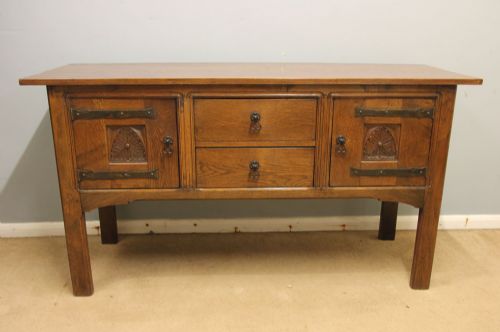
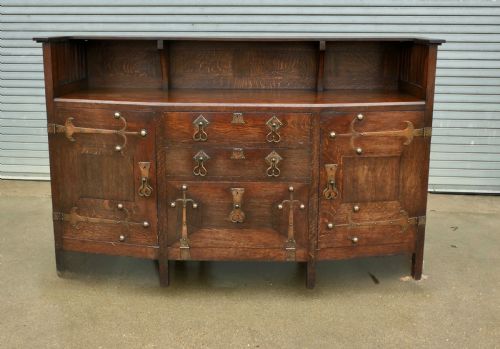

Carved Gothic Revival Server
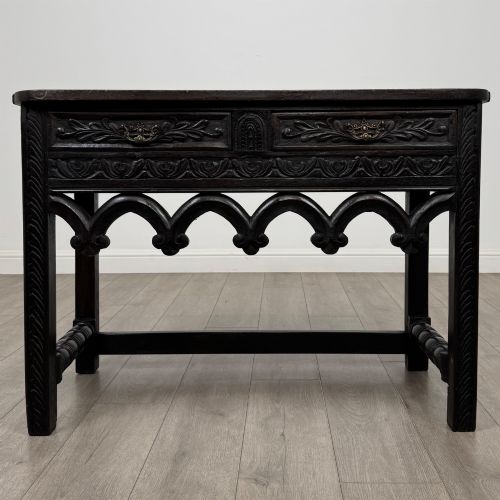
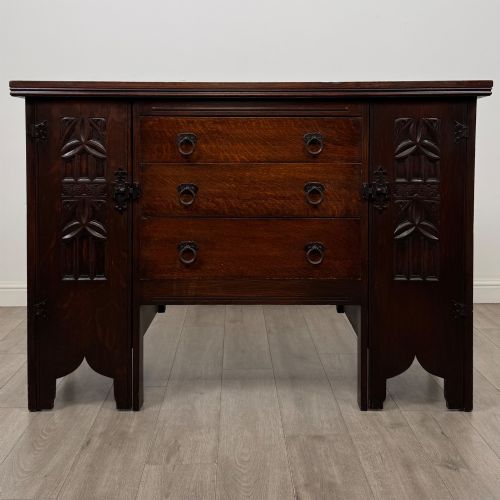
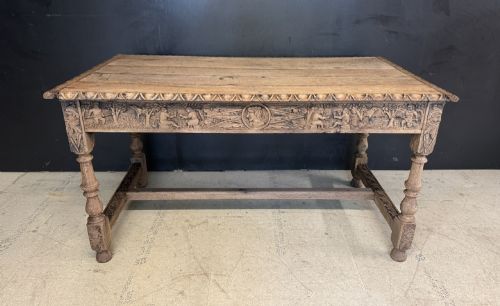
A carved gothic revival server brings weighty architectural presence into a room, offering deep relief carving and sturdy timber storage.
Carved Gothic Revival Server
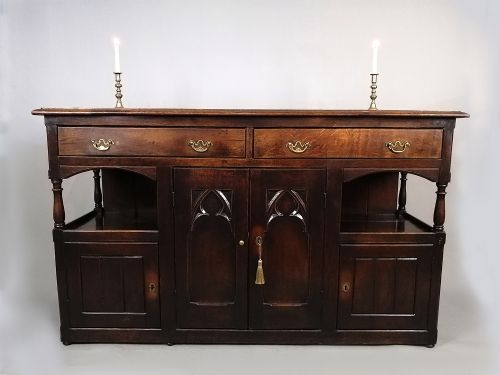
A carved gothic revival server is a substantial storage piece rooted in nineteenth-century cabinet-making, drawing heavily on medieval ecclesiastical motifs. These pieces typically manifest as sideboards, dresser bases, buffets, and serving tables designed to anchor dining rooms and grand hallways.
Most examples found here date from the Victorian era and the later decades of the nineteenth century, executed predominantly in solid oak. They serve both practical storage and display functions, often incorporating cupboards, drawers, and occasionally mirror backs or raised plate racks.
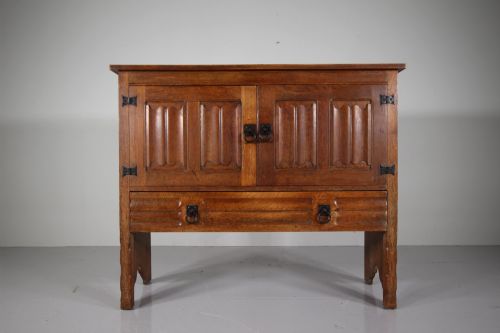
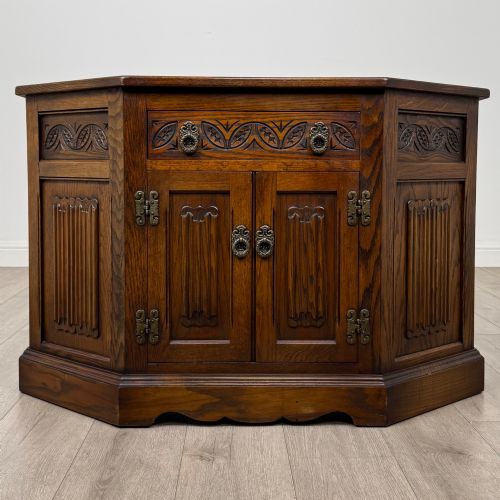
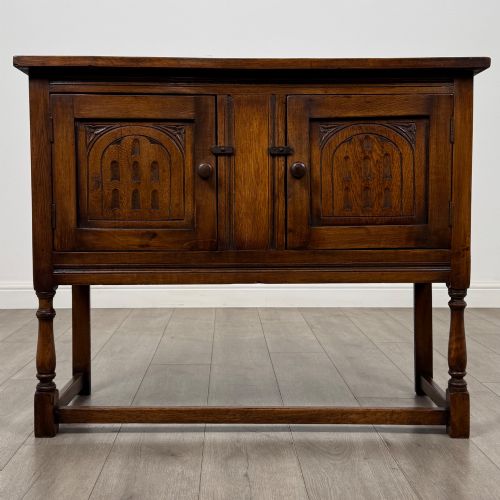
The aesthetic merges revival styles such as Jacobean, Tudor, and Arts and Crafts with quintessential gothic elements like pointed arches, linenfold panelling, and intricate foliage. Buyers seek them to introduce historic character and uncompromising joinery into domestic interiors.
Materials and methods of construction
Oak dominates the construction of these servers, selected for its density, durability, and ability to hold crisp, deep hand-carving. Secondary timbers like pitch pine appear in specific functional components, while brass and iron hardware such as hinges and drop handles provide robust structural reinforcement.
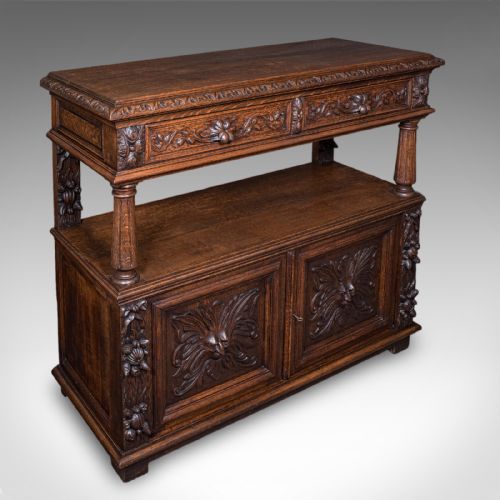
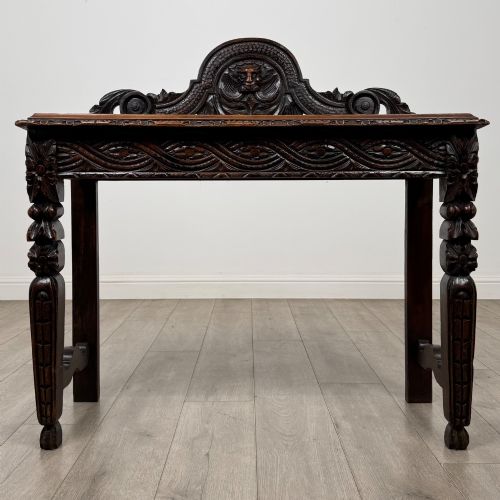
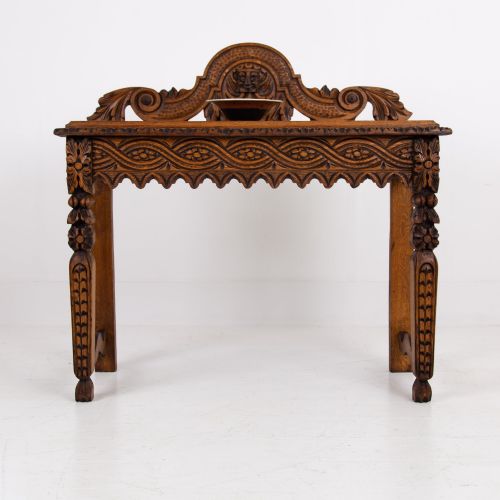
Cabinet-makers relied on traditional joinery methods including mortise and tenon frames, panel-in-groove construction, and hand-cut dovetails for drawers. Surface finishes varied from polished natural oak to painted treatments, while decorative accents frequently included carved figural motifs like Green Men alongside geometric strapwork.
Stare closely at the foliage; a grinning wooden face peers out from the oak leaves.
Distinctions in quality and execution
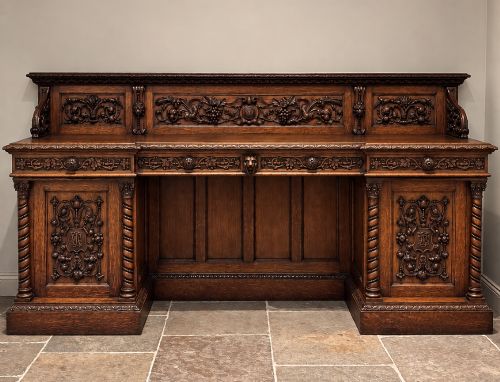
The calibre of a carved gothic revival server depends largely on the depth, sharpness, and ambition of the hand-carving across the facade. Superior pieces display sculptural relief work with distinct undercut details on foliage, tracery, and figural elements, whereas lesser examples rely on shallow, machine-routed patterns.
Structural integrity and timber selection further separate standard production from exceptional craftsmanship. Heavier, well-seasoned oak boards with matching grain patterns across doors and drawer fronts indicate a superior commission, especially when paired with original forged brass or iron mountings.
Leonard Wyburd·Phillips Bristol
The Carved Gothic Revival Server Glossary
- Linenfold
- A style of wood carving that imitates vertical folds of draped fabric, commonly seen on panels of cupboards and cabinet doors. It provides a tactile, textile-like texture to flat wooden surfaces.
- Dresser base
- The lower section of a traditional dresser, comprising cupboards and drawers without the upper shelving superstructure. These frequently function independently as sideboards or serving tables.
- Green Man
- A sculptural motif representing a human face surrounded by or sprouting from vines, leaves, or branches. This ancient symbol frequently appears within nineteenth-century gothic revival architectural carving.
- Tracery
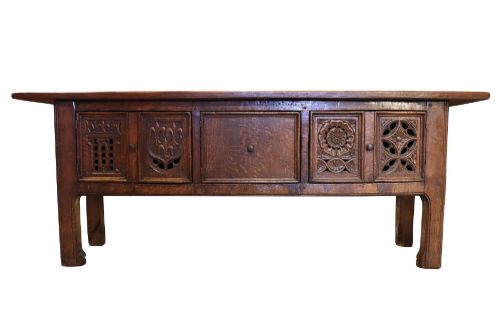
- Openwork ornamentation in stone or wood, characterised by intersecting ribs or bars that form geometric patterns. Cabinet-makers adapted this window-inspired technique for panel doors and friezes.
- Buffet
- A sideboard or serving table traditionally used for placing food or displaying plate. In the nineteenth century, these forms often incorporated heavy architectural proportions and tiered shelving.
Carved Gothic Revival Server: Frequently Asked Questions
Where were these servers placed originally?
These servers were typically positioned in grand dining rooms, entrance halls, or parlour spaces to assist with food service and store tableware.
Their robust timber construction allowed them to hold heavy silver platters and ceramics while anchoring the room's decorative scheme.
How do I distinguish a Victorian piece from later revivals?
Victorian examples generally exhibit heavier timber scantlings, hand-cut joinery marks, and deeper hand-carved relief work. Later twentieth-century interpretations often feature standardised machine milling and lighter overall proportions.
Examining the drawer linings and rear panels provides reliable clues regarding the period of manufacture.
Can these servers be used in modern interiors?
Their substantial presence and dark oak tones make them effective anchor pieces in contemporary living rooms, hallways, or large kitchens. They offer exceptional concealed storage for modern items while introducing historical architectural texture.
Styling them with minimalist lamps or plain ceramics helps balance the dense nineteenth-century ornamentation.
What is a green man carving?
A green man is a sculptural representation of a face emerging from foliage, symbolising rebirth and the spirit of vegetation. It is a recurring decorative feature on nineteenth-century gothic revival furniture.
Finding one on a sideboard indicates a maker drawing directly from medieval ecclesiastical iconography.