


Gothic Side Table
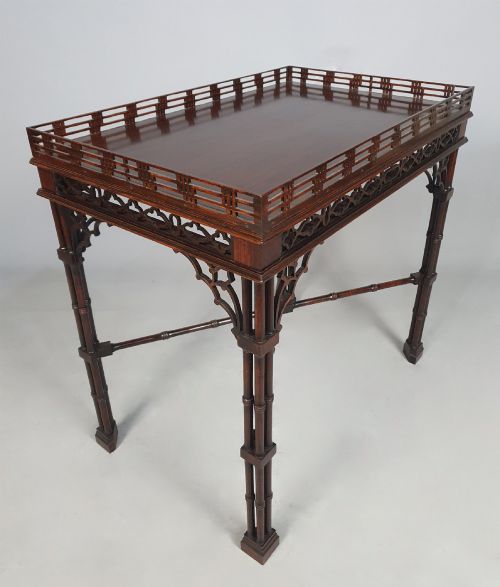
When you search for a gothic side table, you encounter robust timber furniture rooted in nineteenth-century revival styles.
Gothic Side Table
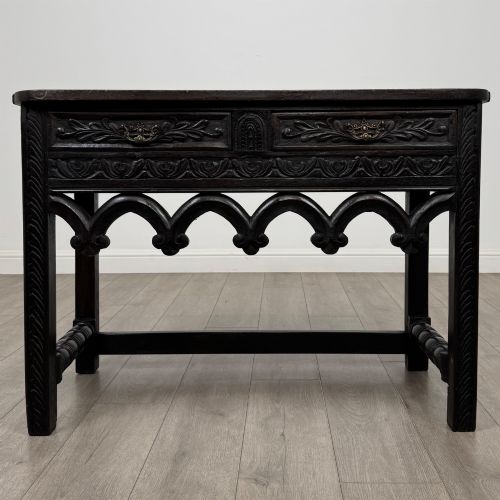
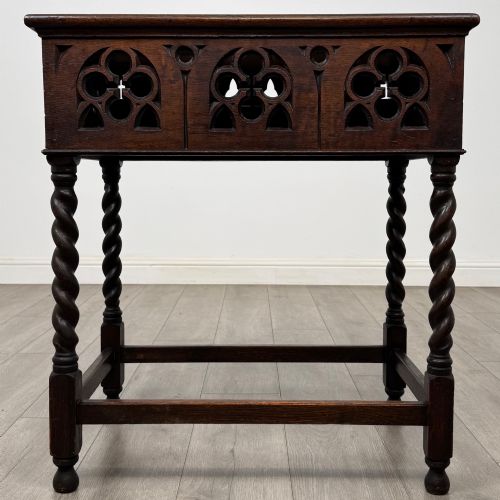
A gothic side table brings medieval architectural motifs into domestic spaces, drawing on nineteenth-century revivals of pointed arches, trefoils, and heavy carving. These occasional tables, consoles, and lamp stands served practical functions in Victorian and Edwardian reception rooms and halls.
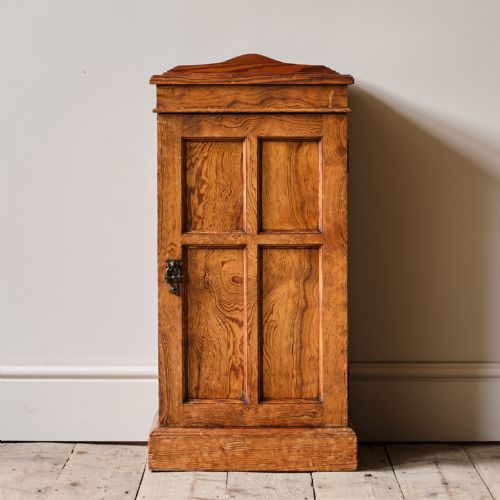
The materials reflect a strong preference for durable timbers, with oak dominating the selection alongside mahogany, walnut, and pitch pine. Many examples incorporate architectural elements such as columned supports, tracery panels, and occasionally marble tops.
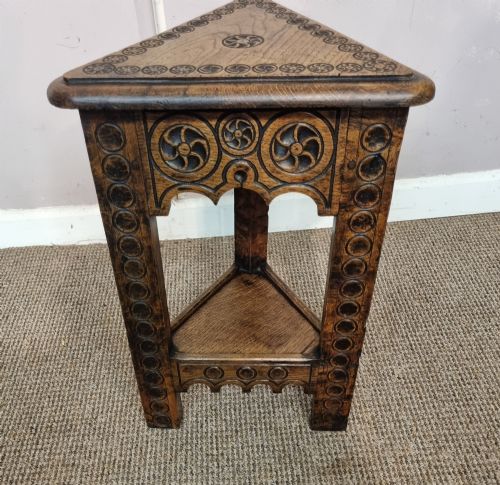
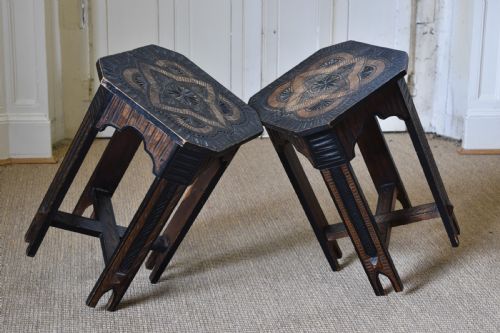
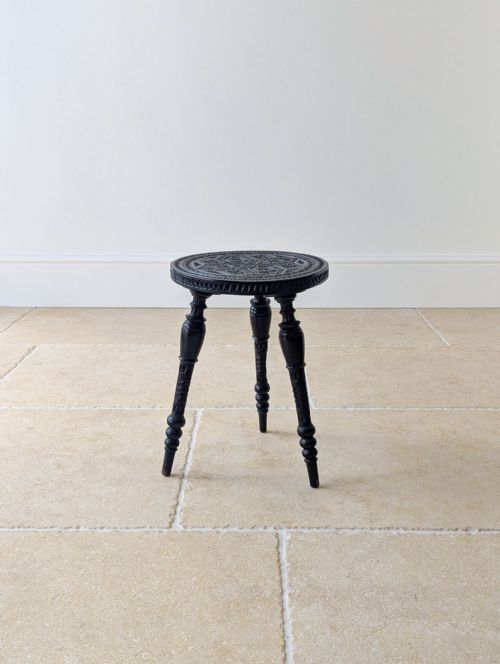
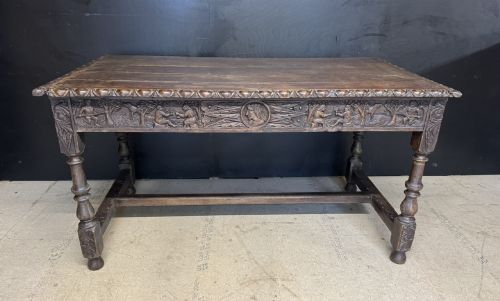
Most surviving pieces date from the Victorian era and the later Arts and Crafts movement, spanning the mid-nineteenth to the early twentieth century. These items range from simple chip-carved lamp tables to heavily carved writing desks and console tables.
What varies in quality
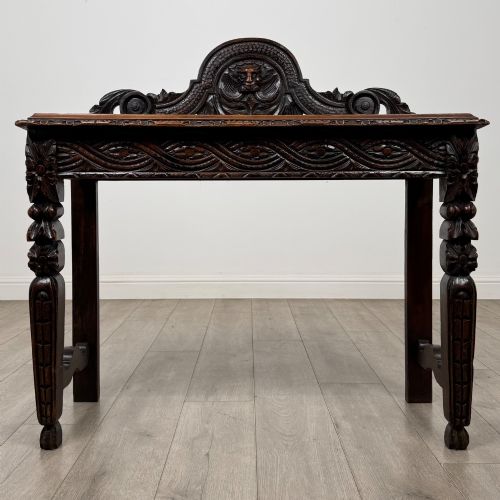
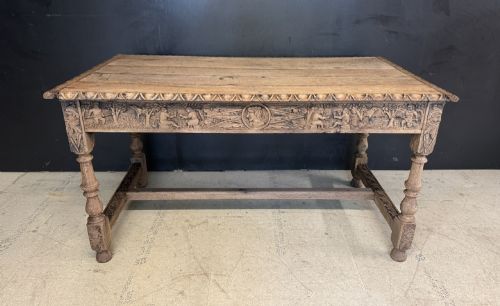
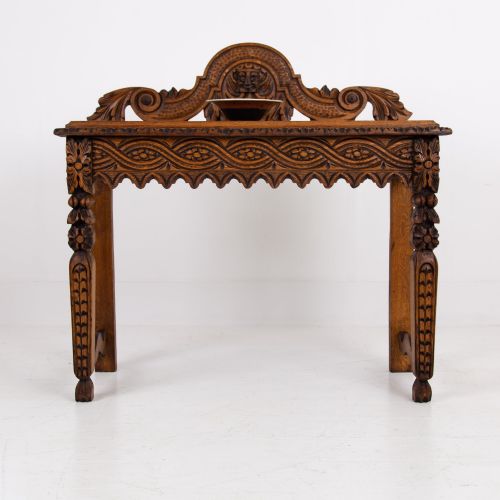
The depth and execution of the carving separate standard production pieces from finer workshop outputs. Crisp chisel work on tracery and figural elements such as Green Man motifs indicates superior craftsmanship.
Selection of timber grain and the integrity of the structural joinery also determine the standard of a piece. Heavier, denser woods and balanced proportions demonstrate greater durability and maker skill.
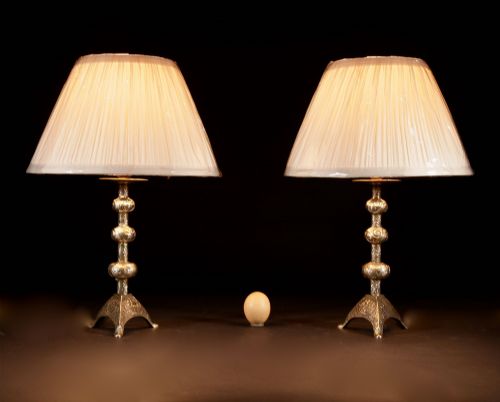
Object forms span side tables, occasional tables, console tables, bedside cabinets, stools, and table lamps.
Baillie Scott
The Gothic Side Table Glossary
- Gothic Revival
- An architectural and decorative style popular during the nineteenth century that revived medieval forms, including pointed arches and quatrefoils.
- Tracery
- Openwork stonework patterns translated into wooden furniture panels, typical of ecclesiastical and gothic design.
- Chip Carving
- A style of ornamentation where small chips are removed from a flat wooden surface to create geometric patterns.
- Console Table
- A table designed to be fixed against a wall, frequently supported by front legs or decorative brackets.
- Green Man
- A sculptural motif representing a human face surrounded by or entwined with leaves and vines, common in gothic woodwork.
Gothic Side Table: Frequently Asked Questions
What rooms suit a gothic side table?
These tables function well in hallways, living rooms, and studies as surfaces for lamps, books, or decorative objects. Their strong architectural presence anchors a room without demanding excessive floor space.
Matching the dark timber tones with neutral walls or eclectic interiors highlights the carved details. They integrate easily into traditional and modern schemes alike.
How do I identify a Victorian gothic table?
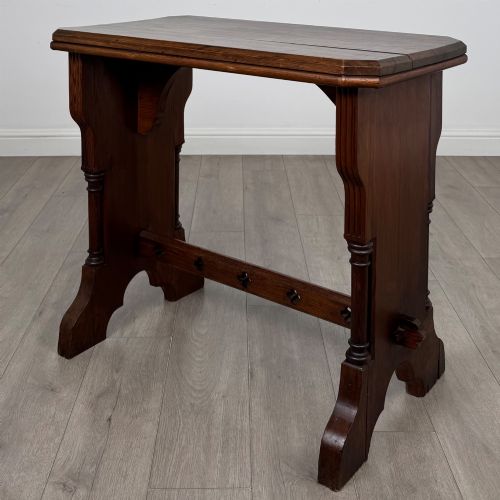
Look for characteristic architectural details such as pointed arches, chamfered legs, and heavy oak construction. Many pieces feature linenfold panels or carved foliage typical of nineteenth-century revival work.
Dates generally cluster around the Victorian period, supported by construction methods like machine-sawn timbers combined with hand-carved ornamentation.
Were these tables used for writing?
Certain forms incorporate drawers and flat working surfaces intended for correspondence and administrative tasks. These writing tables combine sturdy oak frames with functional storage compartments beneath the top.
Compact dimensions made them suitable for smaller reception rooms and bedrooms where full-sized desks were impractical.
What is the difference between gothic and arts and crafts tables?
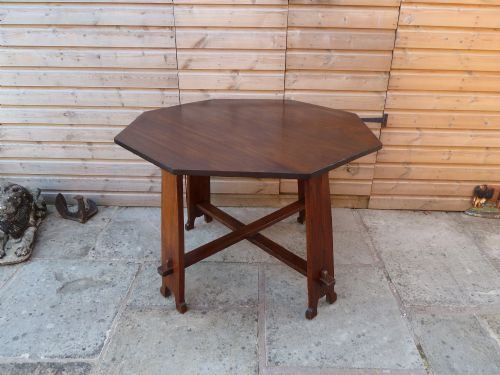
Gothic revival pieces lean heavily on medieval architectural ornamentation, featuring tracery, pointed arches, and deep relief carving. Arts and crafts examples tend to emphasise simpler construction, exposed joinery, and the natural qualities of the oak.
Both styles overlap chronologically around nineteen hundred, reflecting a shared rejection of industrial uniformity.