



Carved Gothic Bench
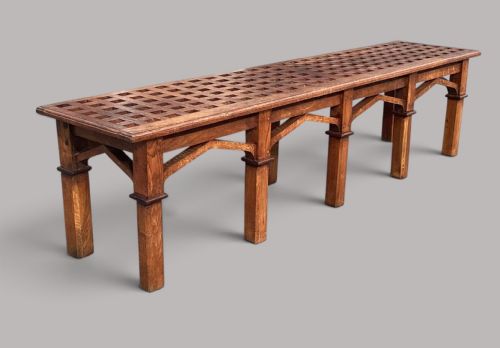
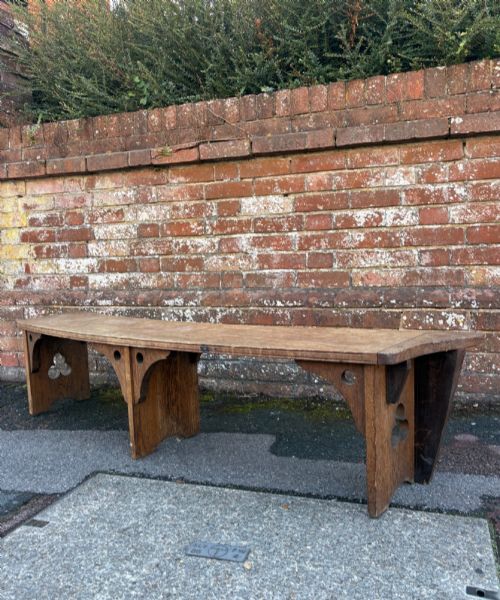
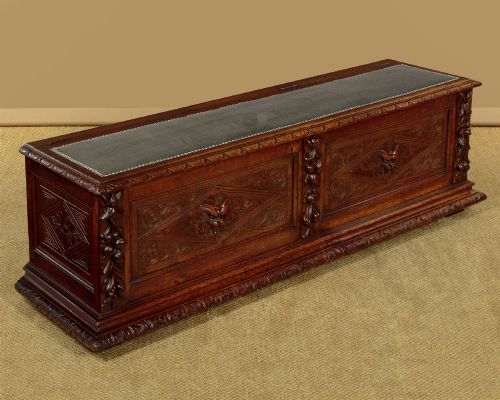
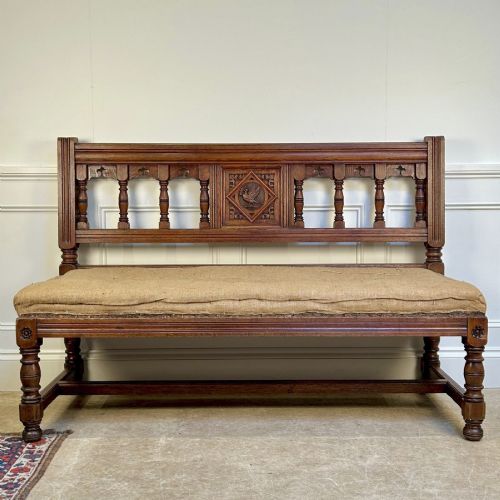
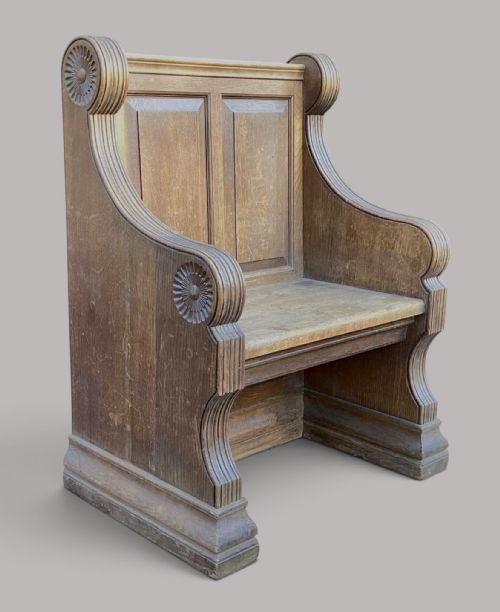
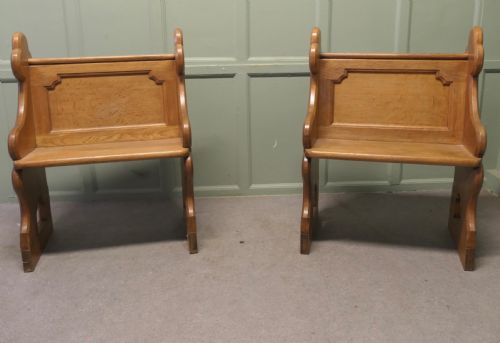
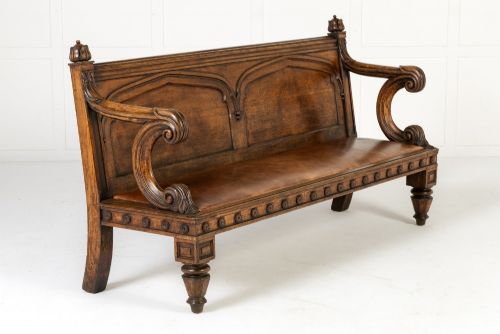
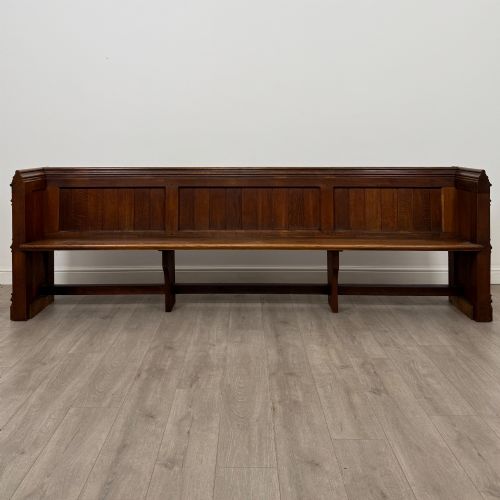
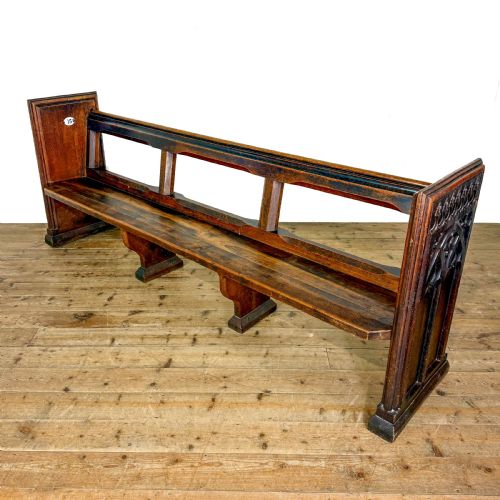
These pieces of a carved gothic bench combine ecclesiastical lines with domestic utility, offering heavy timber construction and pointed arch motifs for entrance halls and living spaces.
Carved Gothic Bench
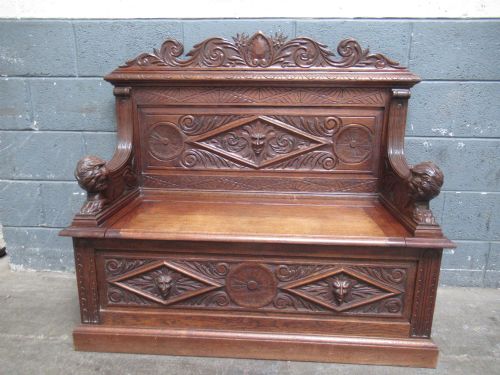
When you search for a carved gothic bench, you encounter heavy seating forms primarily rooted in the nineteenth century, including Victorian hall benches, settles, and window seats. These pieces draw heavily upon architectural styles such as Gothic Revival and Arts and Crafts, often featuring high panelled backs, lift-up seats, and architectural motifs.
The material record heavily favours solid English oak, though walnut, elm, and pine also appear alongside upholstered elements in leather, velvet, and fabric. Surviving examples range from simple church pews and monks benches to grander baronial settles and curved Pugin-style pieces dated between 1850 and 1920.
Materials and Technique
Cabinet makers built these benches predominantly from solid oak, utilising traditional joinery such as mortise and tenon frames to support substantial weight and daily use in entrance halls. Dense hardwoods allowed carvers to execute deep relief work, including trefoil cut-outs, linenfold panels, and the distinctive faces of Green Men.
Secondary structural details incorporate iron brackets, brass fittings, and occasional burr elm veneers, while upholstery components integrate horsehair stuffing beneath leather or velvet coverings fixed with brass tacks.
Occasional Green Men peer out from the oak panelling, keeping a watchful wooden eye on the hallway.
Craftsmanship and Proportion
The standard of a carved gothic bench rests upon the depth and crispness of the timber carving, distinguishing machine-cut commercial pieces from bespoke items shaped by skilled hands. Superior examples display harmonious architectural proportions where linenfold panels, trefoil supports, and tracery integrate seamlessly into the structural framework.
Material selection further divides the range, separating dense, quarter-sawn oak timbers with rich medullary rays from plainer pine or utility woods finished to imitate older periods.
GIllows
The Carved Gothic Bench Glossary
- Gothic Revival
- An architectural and decorative style popular in the nineteenth century that revived medieval forms like pointed arches and tracery.
- Settle
- A wooden bench with a high panelled back, solid arms, and often a storage box beneath the hinged seat.
- Monks Bench
- A convertible piece of furniture featuring a hinged back that folds down flat over the seat arms to form a table.
- Trefoil
- A three-lobed ornamental design shaped like clover leaves, frequently pierced through wooden backsplats and supports.
- Linenfold
- A style of wood carving that imitates folded parchment or linen, commonly used on the panels of cupboards and benches.
Carved Gothic Bench: Frequently Asked Questions
Where should I place a gothic bench?
These sturdy seats suit entrance halls, boot rooms, and wide corridors where their architectural frames provide both seating and storage. Many feature lift-up lids or coffer bases designed to hold shoes, boots, and household accessories.
In larger living spaces or libraries, they serve as focal points against plain walls, contrasting effectively with contemporary interior decor through their dark wood tones and carved panels.
How do I care for antique oak?
Maintain the timber by applying natural beeswax sparingly and buffing with a soft cloth to preserve the rich patina built up over generations. Avoid placing wooden benches near direct heat sources or in strong sunlight, which can dry out the grain and cause splitting.
Upholstered elements such as leather or velvet require gentle dusting and occasional conditioning appropriate to the specific fabric to prevent premature cracking or fading.
What is a monks bench used for?
A monks bench functions as dual-purpose furniture, operating primarily as a high-backed seat for hallways and reception rooms. The hinged back mechanism allows the upper section to pivot downward onto the arms, transforming the piece into a makeshift table.
Historically, this clever space-saving design maximised utility in smaller domestic interiors without sacrificing seating capacity or surface area.
How can I date a gothic bench?
Dating relies heavily on examining construction marks, timber shrinkage, tool marks, and stylistic indicators associated with nineteenth-century revival movements. Pieces from the 1850s to 1900 often exhibit machine-assisted preparation combined with hand-finished carving, whereas earlier items show entirely hand-sawn boards and trammel markings.
Comparing the specific proportions and decorative vocabulary, such as Arts and Crafts influences or strict Pugin geometry, helps narrow the decade of manufacture.