
Carved Gothic Armchair
A carved gothic armchair brings architectural presence and solid timber tradition into a room, drawing on centuries of revival design.
Carved Gothic Armchair
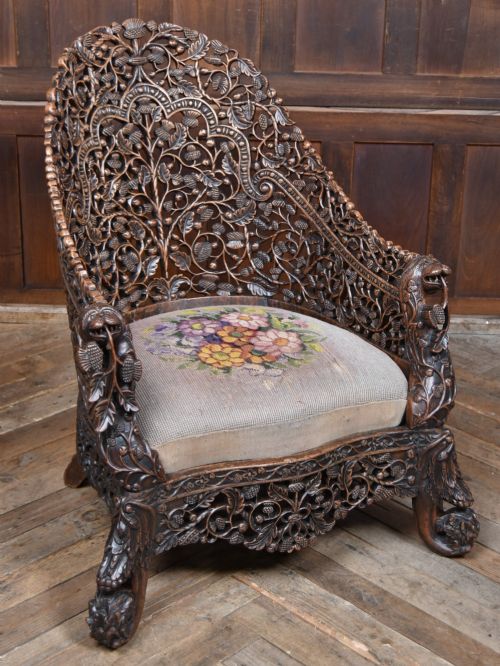
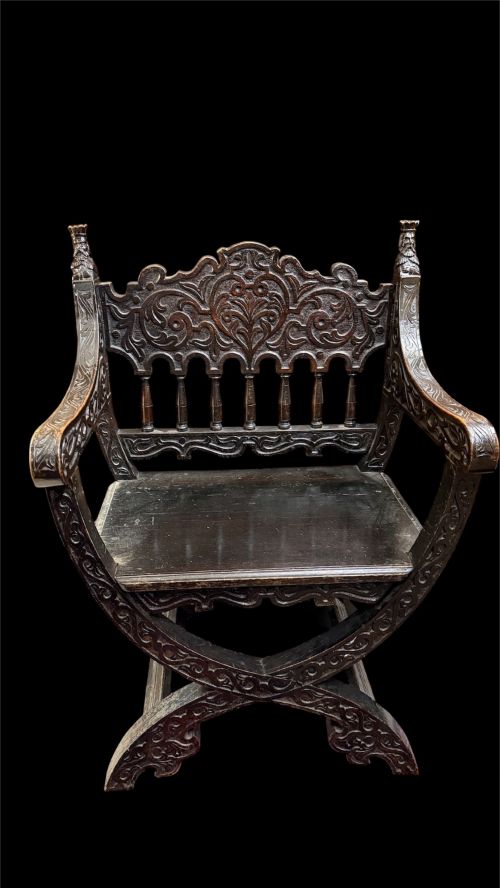
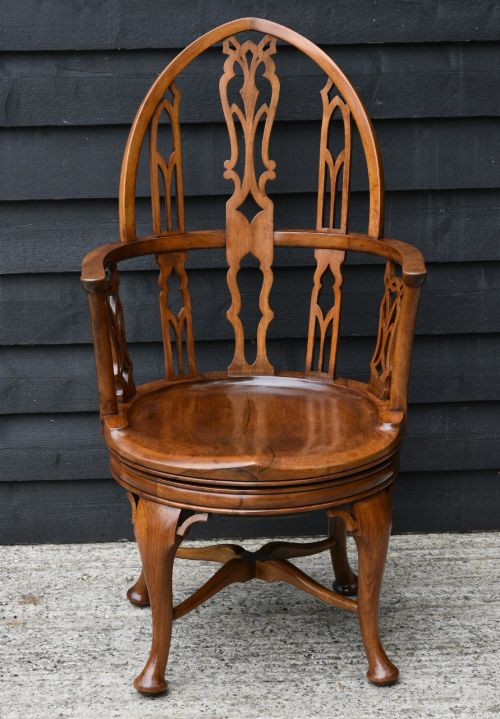
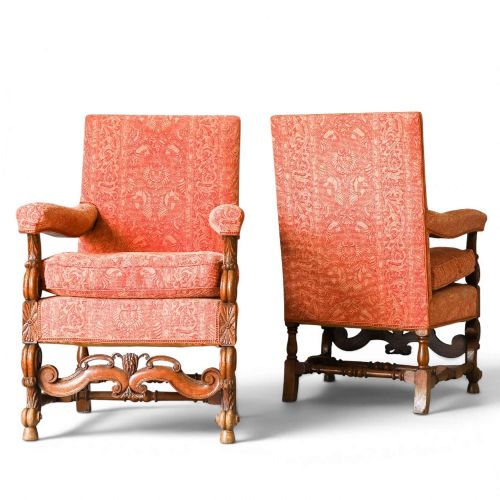
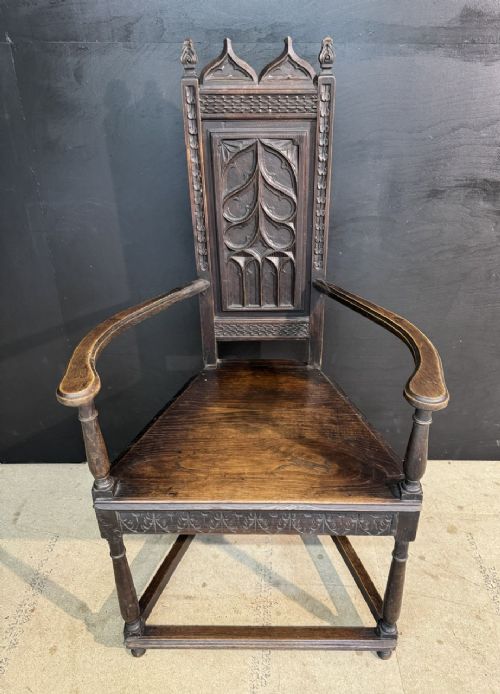
A carved gothic armchair is a substantial seating form defined by medieval architectural motifs, pointed arches, and deep relief carving. When you search for this phrase, you meet heavy timber frames spanning the 18th century, Victorian period, and Edwardian eras.
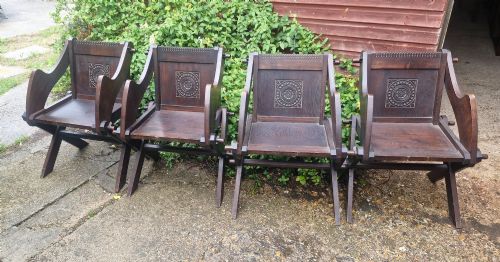
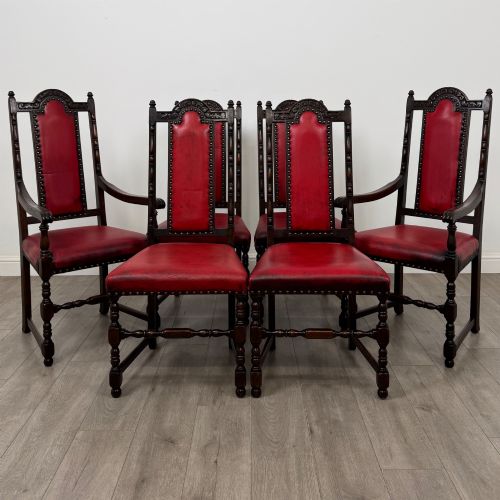
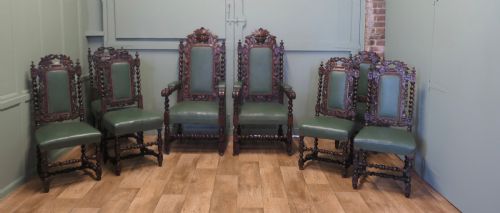
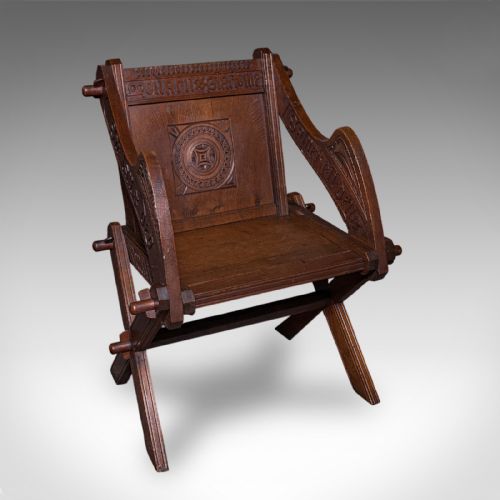
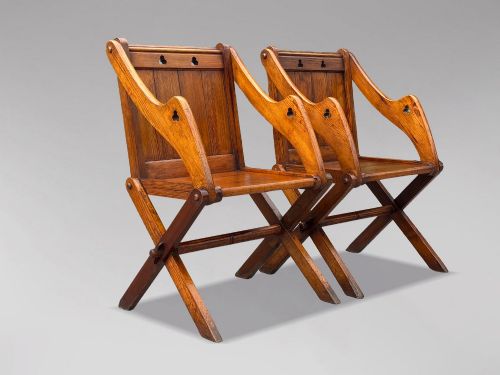
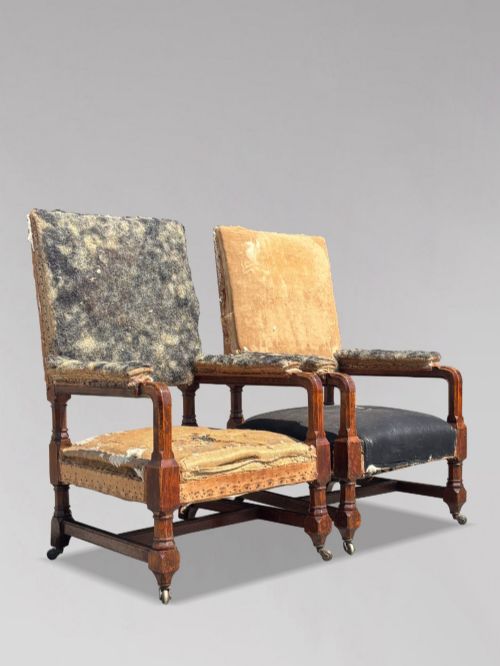
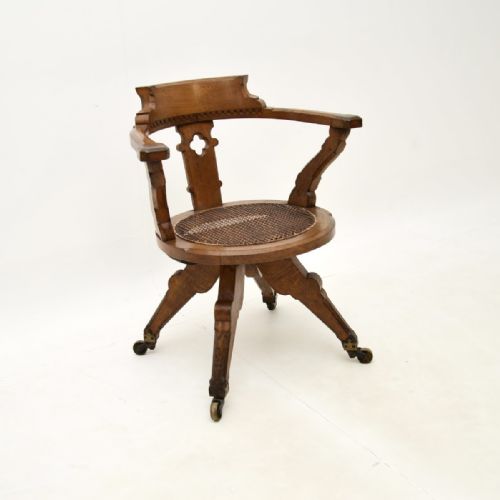
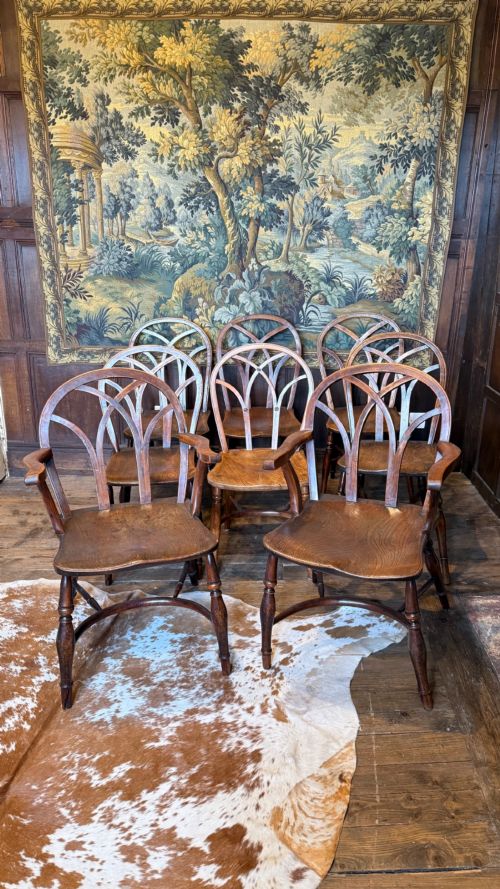
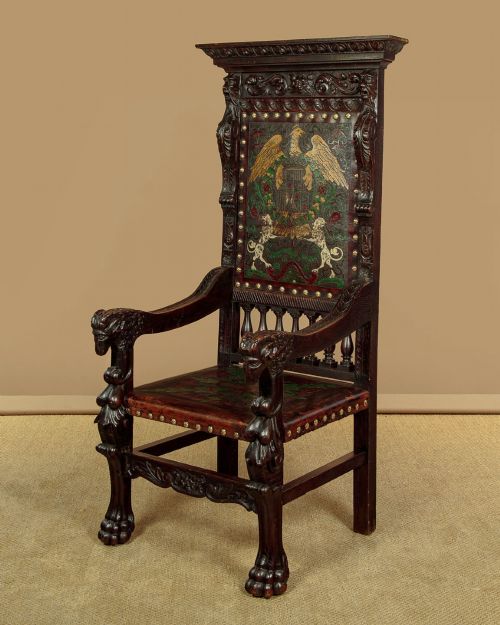
The version you are most likely to encounter on this page is an oak armchair executed in the Gothic Revival or Jacobean Revival style. These range from library armchairs and desk chairs to ceremonial throne chairs and Glastonbury forms.
Originating from a fascination with medieval design, these chairs often incorporate ecclesiastical details like tracery and linenfold panels. They serve as focal points in studies, hallways, and living spaces where a strong historical character is desired.
Materials and Construction
Oak dominates the construction of these chairs, complemented by walnut, pitch pine, and rosewood for specific regional or high-status variants. Joinery relies on traditional pegged mortise and tenon joints to support the heavy, carved frames.
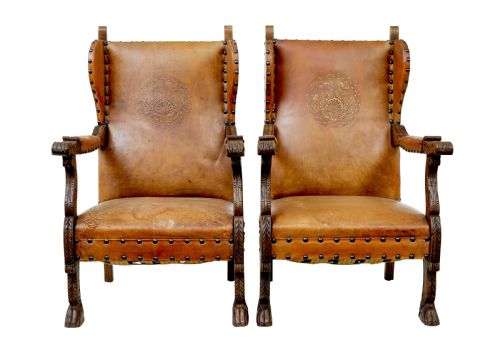
Surface ornamentation is achieved through hand carving directly into the solid timber, supplemented by turned spindles and structural members. Upholstery, where present, utilises embossed leather, tapestry, textile, and painted leather secured with brass tacks.
Keep an eye out for hidden Green Man faces peering out from the foliage carvings.
Judging Quality and Execution
Quality in a carved gothic armchair rests primarily on the depth, crispness, and vigor of the wood carving. Crisp relief work executed by a skilled hand contrasts sharply with shallow, mechanical stamping found on lesser pieces.
The choice of timber and structural integrity dictate longevity, with dense, well-figured oak providing superior weight and stability. Proportion and comfort also vary, as some utilitarian church and hall chairs sacrifice ergonomic seating angles for rigid architectural symmetry.
Gillows·Bruce James Talbert·S&H Jewell
The Carved Gothic Armchair Glossary
- Gothic Revival
- An architectural and decorative style popular in the 19th century that revived medieval forms, pointed arches, and structural traceries. It manifests in furniture through heavy proportions and pointed ornamentation.
- Turner's Chair
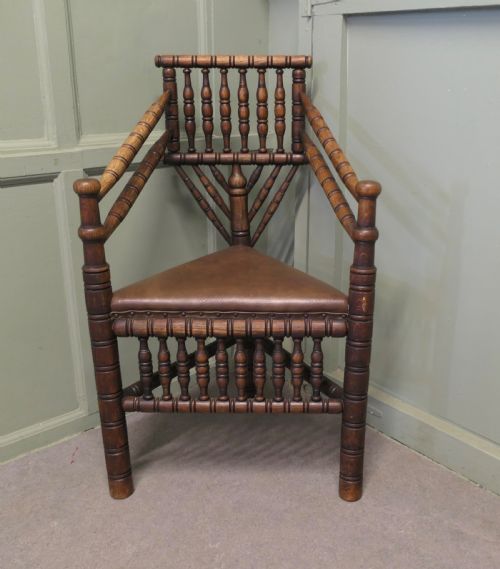
- Also known as a Saxon or roundabout chair, constructed entirely from turned wooden spindles and triangular seats. This ancient form relies on cylindrical components intersecting at various angles.
- Linenfold
- A style of wood panel carving designed to resemble folded linen fabric. It is commonly found on the backrests and lower panels of period oak seating.
Carved Gothic Armchair: Frequently Asked Questions
How do I date a gothic armchair?
Dating relies on examining the timber grain, tool marks left by the maker, and the specific nuances of the revival style employed. Mid-19th century pieces often display heavier proportions and steam-pressed or hand-cut Gothic tracery typical of Victorian revivalism.
Later Edwardian or 20th-century interpretations tend to use lighter framing and cleaner internal joinery. Comparing the secondary woods and wear patterns to known period examples helps confirm the age of the piece.
Were these chairs made for churches?
Many examples draw direct inspiration from ecclesiastical furnishings, and some were indeed commissioned for chapels, vestries, or institutional halls. Forms like chapel thrones and bishop's chairs were built specifically for clerical use.
However, the vast majority were produced for domestic Victorian libraries, studies, and grand hallways. They allowed homeowners to project an air of historical lineage and scholarly gravitas.
How should I care for old oak?
Solid oak requires stable environmental conditions with moderate humidity to prevent the timber from splitting or warping. Keep the chairs away from direct heat sources and strong sunlight, which can dry out the historic wood.
Feed the surface periodically with a quality beeswax to nourish the grain and preserve the patina. Avoid modern silicone polishes that build up a hazy film over the hand-carved details.
Are desk chairs comfortable for daily use?
Gothic desk chairs, particularly revolving or swivel variants from the 19th century, offer surprising ergonomic adaptability. Their generous proportions and sturdy armrests support working postures, though wooden seats can feel firm during long hours.
Many users add a loose period-appropriate squab cushion to improve comfort without altering the historic appearance of the timber base. The swivel and tilt mechanisms on Victorian desk chairs should be operated gently to preserve their original ironwork.