


English Oak Elbow Seat
An english oak elbow seat brings solid timber and sturdy domestic craftsmanship into any room, shaped by centuries of farmhouse and library tradition.
English Oak Elbow Seat
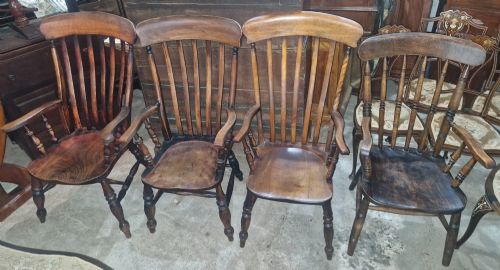
An english oak elbow seat spans sturdy farmhouse armchairs, spindleback fireside chairs, and heavy vernacular carvers designed for daily domestic use. These pieces appear across Victorian, Edwardian, and nineteenth-century periods, drawing on regional vernacular traditions from East Anglia to the West Country.
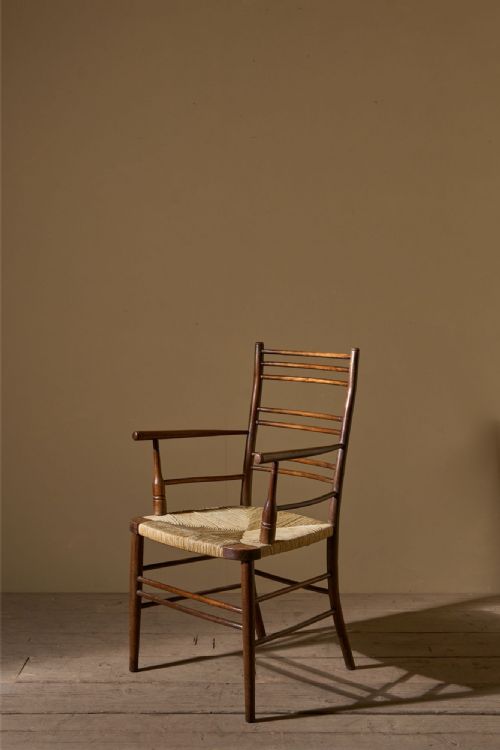
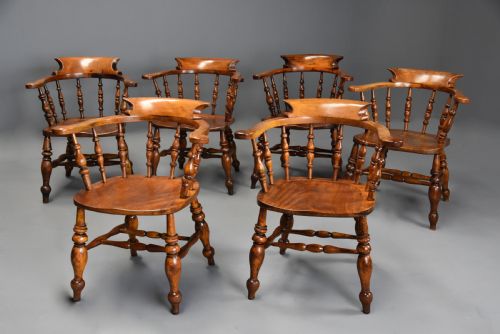
Buyers meet forms ranging from smokers bows and Windsor kitchen armchairs to gothic revival Glastonbury seats and joined Turner chairs. Oak dominates the construction, frequently paired with elm, beech, or ash for seats and structural turnings.
How they were made
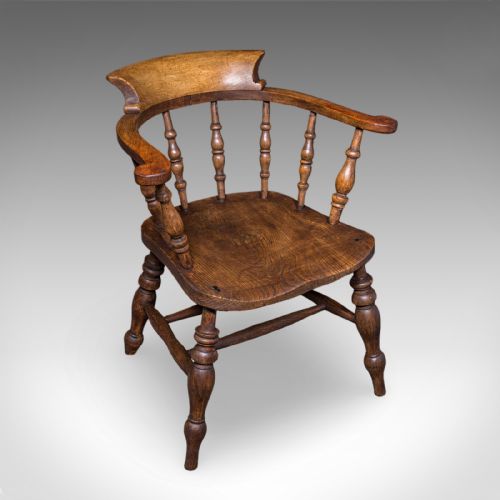
Joinery relies on solid timber construction using pegged mortise and tenon joints, spindle turnings, and steam-bent components for bows and arm rails. Carvers and Turner chairs utilise heavy turned oak posts and rails assembled with precision.
Seats combine solid sculpted elm, ash, or oak planks with woven rush and upholstered pads finished in fabric, velvet, or leather. Secondary timbers like beech and ash provide structural strength for spindles and legs.
Seat materials span solid carved timber, woven rush, and period upholstery including leather and velvet.
What varies in quality
Quality rests in the weight of the timber, the depth of the turnings, and the integrity of the original joints and pegged construction. Early joined chairs display crisp hand-turned detailing and thick planks shaped by hand.
Proportion and regional character separate standard utility seating from ambitious vernacular workshop pieces like Glastonbury or Saxon revival armchairs. Patina developed through decades of use enhances the surface texture of the timber.
The English Oak Elbow Seat Glossary
- Smoker's bow
- A low-backed Windsor armchair with a continuous curved arm rail and spindle supports, commonly found in nineteenth-century kitchens and country houses.
- Turner's chair
- A heavy armchair built entirely from turned wooden posts and rails, often associated with historic Saxon or vernacular revival styles.
- Glastonbury chair
- A folding-form armchair with X-framed legs and a sloping panel back, popularized during the Victorian Gothic Revival period.
- Vernacular
- Furniture designed and built by regional makers to satisfy local domestic needs rather than following metropolitan fashion.
- Lathe back
- A chair back featuring shaped vertical wooden slats, typical of nineteenth-century fireside and farmhouse seating.
English Oak Elbow Seat: Frequently Asked Questions
What is an English oak elbow seat?
An English oak elbow seat is a traditional wooden armchair designed with arm rests, spanning vernacular farmhouse chairs, Windsor kitchen seating, and revival library pieces.
These chairs reflect regional British cabinet-making traditions across the nineteenth and early twentieth centuries, utilising solid native timbers.
How were these chairs used historically?
They served as principal seating in farmhouses, country houses, schoolrooms, and studies for dining, reading, and fireside relaxation.
Sturdy construction allowed them to withstand heavy daily domestic work in kitchens and offices alike.
How do I live with an antique elbow seat?
These chairs fit easily into modern hallways, studies, and dining rooms as statement accent pieces or functional desk seating.
Their robust timber frames require minimal upkeep beyond regular dusting and occasional wax nourishment.
How can I tell the periods apart?
Victorian examples often embrace Gothic or Saxon revivals with heavy turnings, while Edwardian pieces lean towards lighter desk and office forms.
Nineteenth-century vernacular chairs display simpler regional turning patterns and thicker solid wood seats.