


Black Gothic Chair
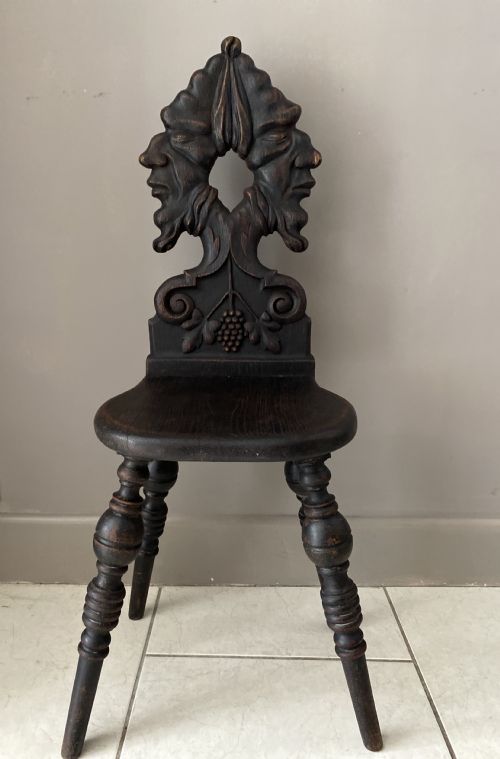
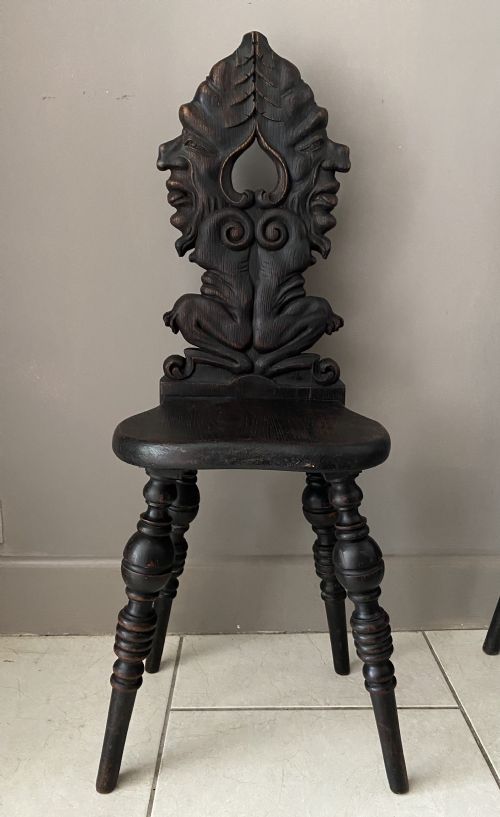
A black gothic chair brings dramatic vertical lines and dark timber into a room, offering both seating and striking architectural presence.
Black Gothic Chair
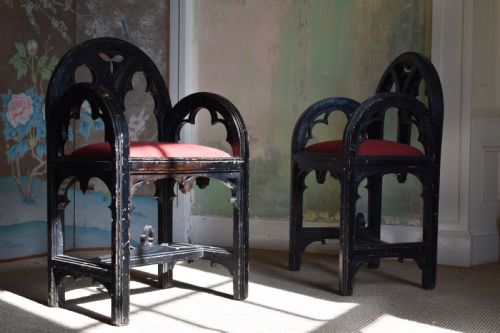
A black gothic chair draws on architectural motifs from medieval cathedrals, utilising pointed arches, tracery, and dark finishes to create a commanding silhouette.
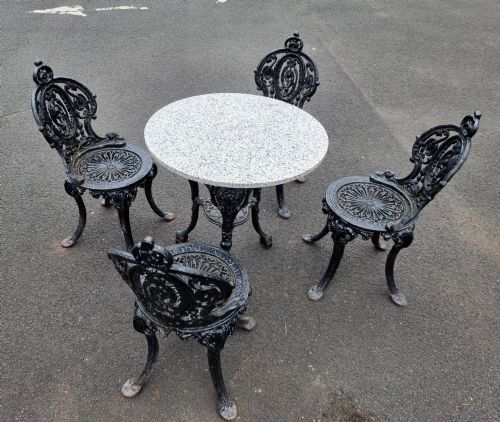
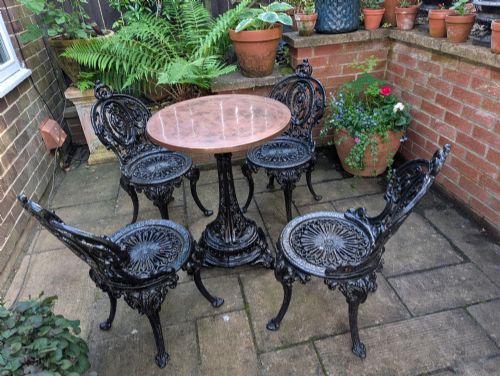
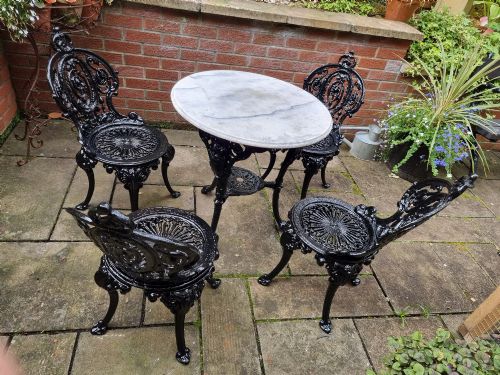
Buyers browsing for a black gothic chair will most frequently encounter nineteenth-century oak, ebonised wood, and cast-iron interpretations ranging from side chairs to prayer chairs.
The selections span distinct movements such as the Victorian Gothic Revival and the Aesthetic Movement, where dark wood and ebonisation amplify the austere aesthetic.
Materials and construction
Makers utilised solid oak, ebonised wood, and heavy cast-iron to build structures capable of supporting intricate carvings and rigorous daily use.
Upholstery elements incorporate leather, tapestry fabric, and standard fabric fixed to frames with brass details, while some garden sets utilise robust metalwork.
Listings feature items dated across the nineteenth century, including specific years like 1850, 1860, 1870, 1880, and 1930.
Judging quality and craftsmanship
Depth and precision in the hand-carving of tracery and figural elements separate standard production from exceptional examples.
The integration of materials, from the finish of ebonised surfaces to the integrity of the underlying timber, dictates the overall refinement of the piece.
Collier and Plucknett·Bruce J Talbert
The Black Gothic Chair Glossary
- Ebonised
- Wood finished to resemble ebony through staining or painting. This technique was favoured in the nineteenth century to create dramatic, dark furniture.
- Prie Dieu
- A low prayer chair featuring a distinct top rail designed for kneeling or resting arms during devotion. These often display Gothic carved details.
- Tracery
- Architectural stone or woodwork ornamentation characterised by openwork patterns. In chairs, it translates into intricate pierced backrests.
- Monks Bench
- A multifunctional seating form with a hinged back that folds down to form a table. They frequently appear in dark oak with medieval motifs.
Black Gothic Chair: Frequently Asked Questions
How do I style a black gothic chair?
Place the chair against a plain wall where its silhouette and carved details can stand out without visual competition from busy wallpapers.
Pair it with simpler wooden or upholstered furniture to let the dark finish anchor the room's design scheme.
Are these chairs comfortable for daily use?
Many examples prioritise formal posture and architectural presence over deep cushioning, particularly wooden side and hall chairs.
Library armchairs and upholstered prayer chairs offer softer seating while maintaining the distinctive dark aesthetic.
Can I use these cast iron chairs outdoors?
Heavy cast iron garden sets and tables from the nineteenth century are specifically built for outdoor placement and endure the elements well.
Regularly check the painted or dark surfaces for weathering to protect the metal structure over time.
How do I distinguish Victorian Gothic from Aesthetic movement pieces?
Victorian Gothic examples heavily emphasise medieval architectural motifs like pointed arches and deep oak carvings.
Aesthetic movement pieces lean towards ebonised finishes and cleaner lines influenced by Japanese design principles.