
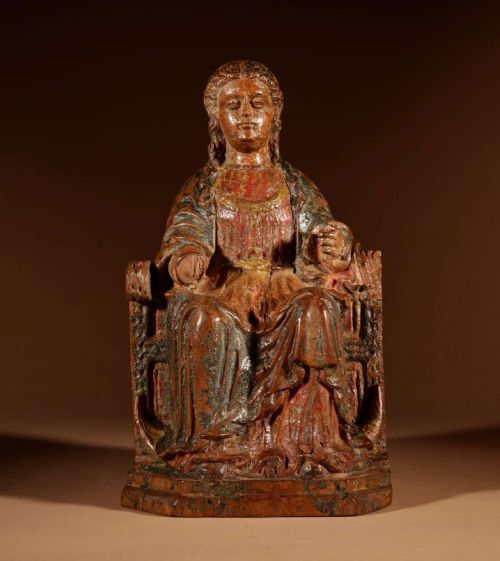
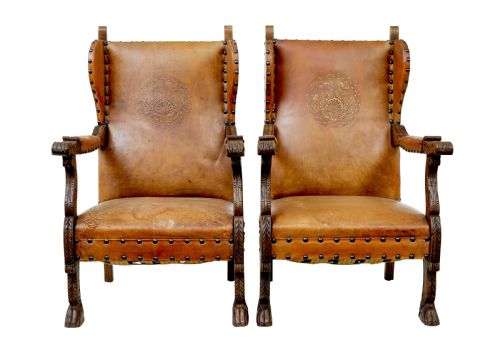
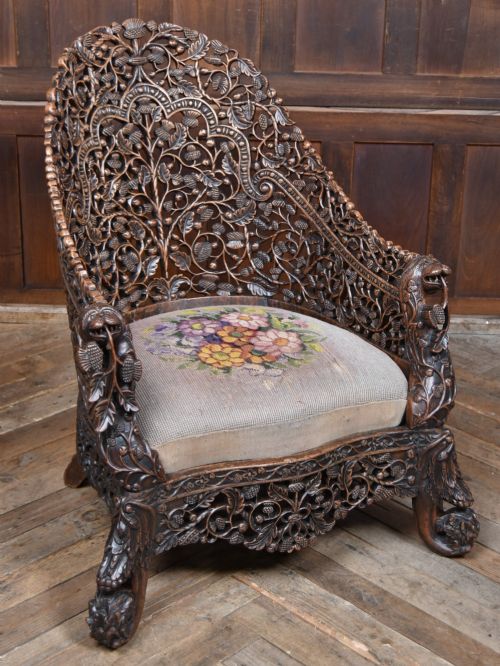
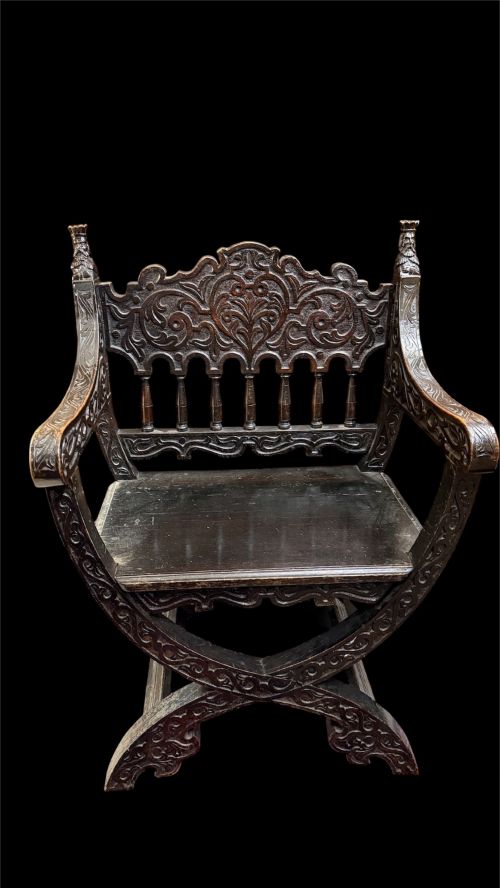




Antique Gothic Throne
An antique gothic throne brings ecclesiastical presence and heavy timber architecture into a domestic interior.
Antique Gothic Throne
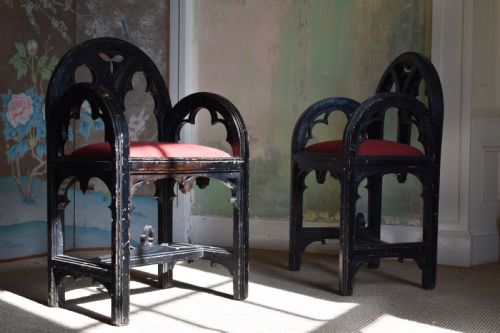
An antique gothic throne represents a commanding seat of authority, drawing heavily on medieval ecclesiastical and architectural forms. When searching for an antique gothic throne, buyers encounter substantial seating designed to project power and solemnity through tall backs and architectural motifs.
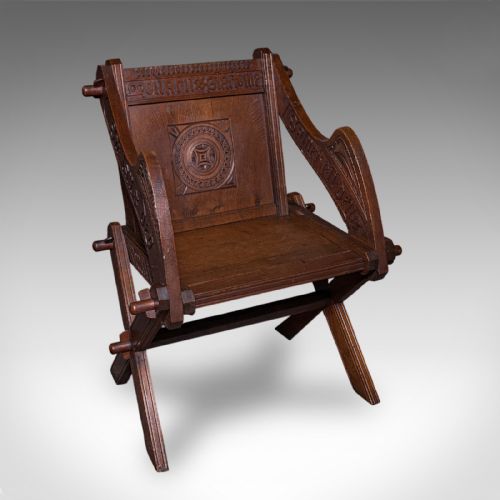
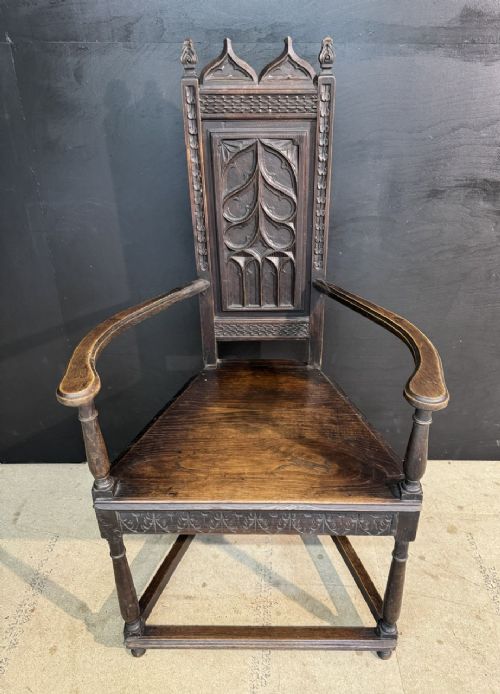
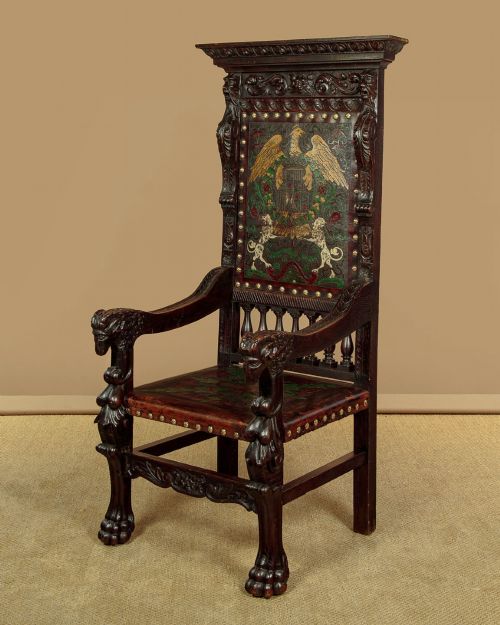
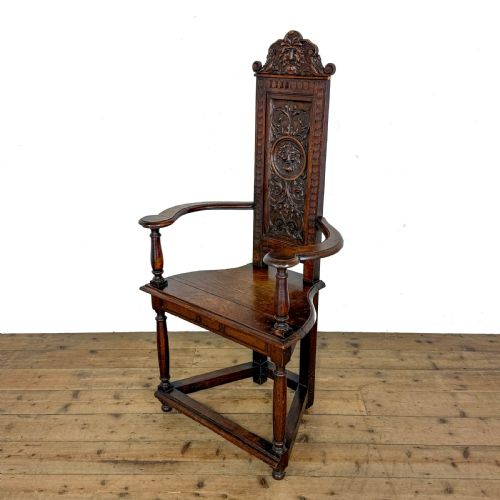
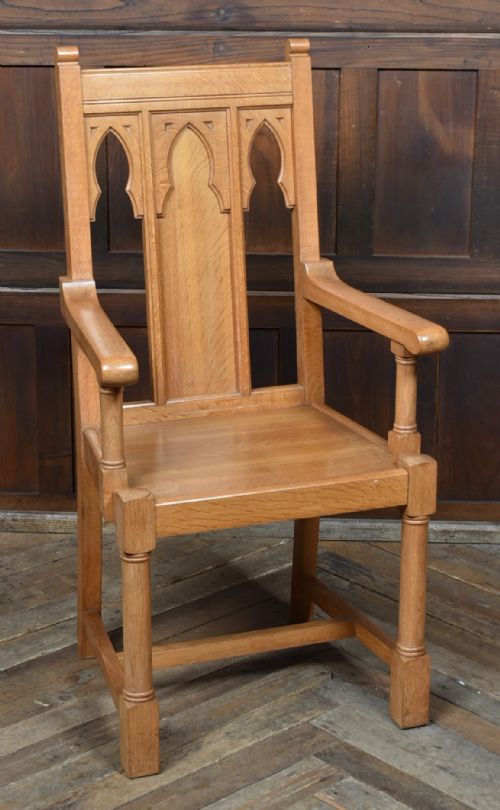
The pieces appearing on this page span primarily from the nineteenth century, including Victorian interpretations, alongside earlier examples and revival styles such as Jacobean and Renaissance. Forms range from oak wainscot and Glastonbury chairs to large chapel thrones featuring carved details like Green Men and heraldic panels.
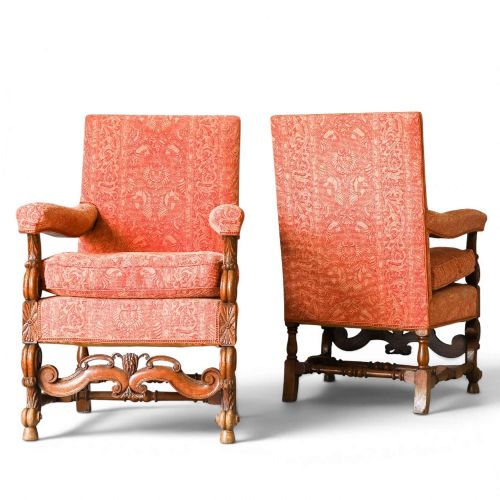
Most examples rely on heavy timber construction, predominantly oak, paired with functional or decorative seating surfaces in leather, fabric, or plain wood. These pieces function as dramatic focal points in halls, libraries, and studies rather than casual lounging seats.
Materials and Construction
Construction centres on solid timber framing, with oak appearing as the dominant material alongside walnut, pitch pine, and beech. Joinery relies on traditional methods to support heavy architectural elements, high panelled backs, and substantial armrests.
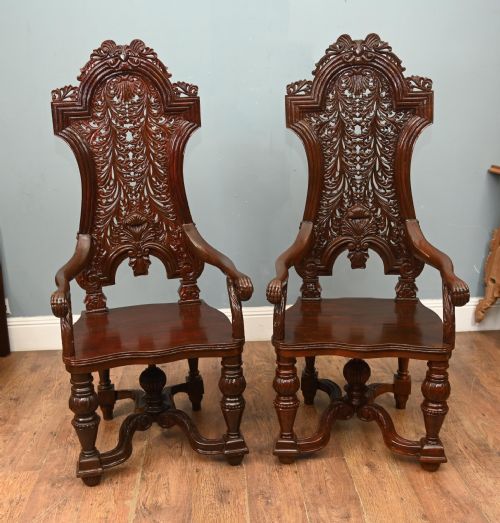
Decoration is achieved through deep hand carving of linenfold panels, tracery, foliage, and figural elements such as Green Men and hounds. Leather panels, tapestry, and embossed fabric provide contrasting textures, often secured with decorative brass studs.
Listings feature oak predominantly, supported by walnut, pitch pine, and beech, spanning from the sixteenth century through the nineteenth-century gothic revival.
Assessing Quality and Execution
Quality rests in the depth, crispness, and ambition of the carving. Superior examples display spirited hand-chiselled relief work on structural timbers rather than shallow or mechanical decoration.
Proportion and material selection dictate the standing of a piece. Dense, well-figured oak with integrated structural joinery separates ambitious ecclesiastical commissions from simpler domestic vernacular seating.
A.W.N. Pugin
The Antique Gothic Throne Glossary
- Wainscot chair
- A solid wooden armchair of panelled construction, common in the seventeenth century and later revived.
- Glastonbury chair
- A folding armchair design with an X-frame base and slanted panel back, often associated with gothic revival movements.
- Caquetoire
- A light, high-backed armchair originating in the sixteenth century, designed for conversation.
- Green Man
- A sculptural architectural motif depicting a face carved from or entwined with leaves and foliage.
Antique Gothic Throne: Frequently Asked Questions
Where should I place an antique gothic throne?
These commanding seats suit spaces with high ceilings and substantial proportions, such as entrance halls, libraries, or large studies. Their architectural presence allows them to anchor a room as a singular focal point.
Because of their tall backs and heavy timber construction, they require adequate floor space and work best away from delicate modern furnishings.
How do I distinguish a Victorian revival piece from an older original?
Examine the tool marks, timber shrinkage, and joint construction for clues to the age of the wood. Nineteenth-century makers frequently utilised medieval motifs while employing machine-assisted preparation alongside hand carving.
Secondary woods, nail types, and the uniformity of the patina often help differentiate nineteenth-century revival pieces from surviving pre-reformation examples.
How do I care for leather and wood on these chairs?
Maintain the timber by applying appropriate microcrystalline wax sparingly to nourish the dry oak or walnut surfaces. Avoid placing the furniture near direct heat sources that can split old wood.
Original leather panels and embossed details benefit from gentle cleaning and minimal intervention to preserve their historic texture and finish.