


Pair Gothic Armchairs
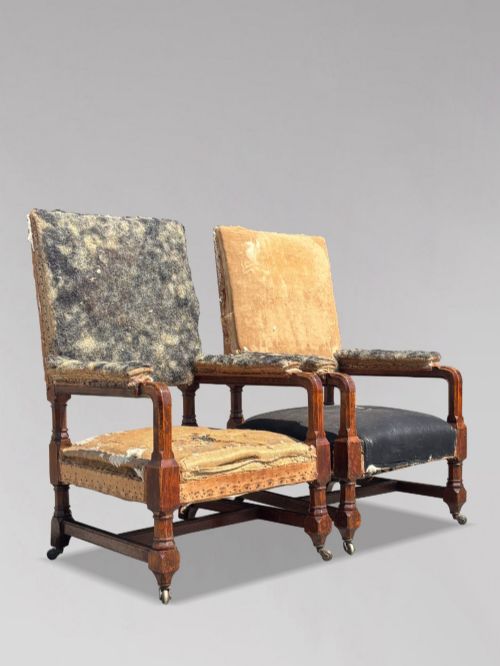
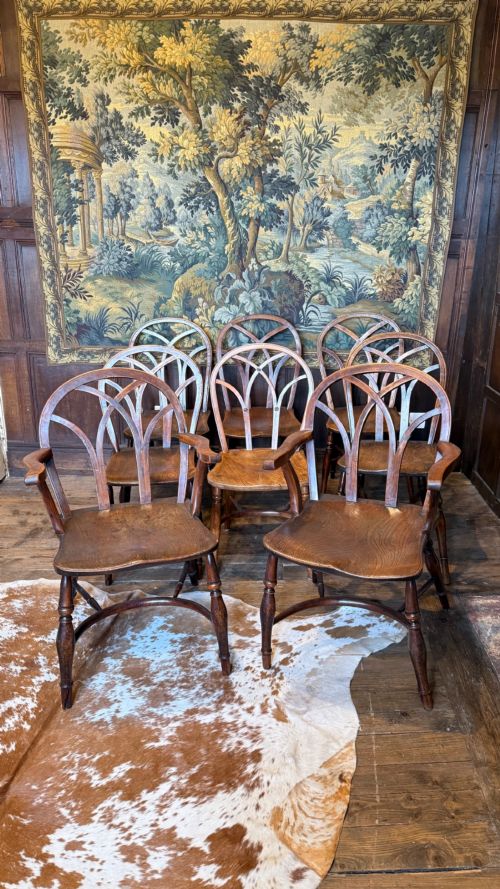
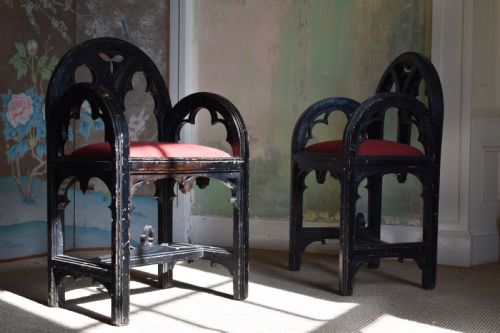
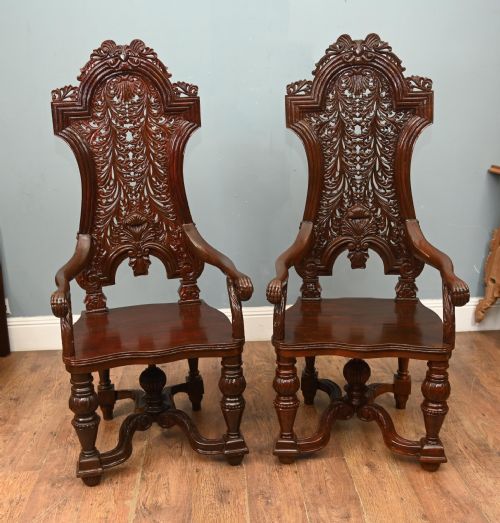
Pair gothic armchairs bring architectural presence and heavy timber construction into a room, offering seated comfort rooted in medieval design revivals.
Pair Gothic Armchairs
When you search for pair gothic armchairs, you encounter heavy seating built primarily during the nineteenth century under the influence of Gothic Revival, Victorian Gothic Revival, and Arts and Crafts Gothic Revival styles. These seats take various forms, including traditional armchairs, Glastonbury chairs, throne chairs, and library armchairs, constructed to dominate a space with strong vertical lines and pointed arch motifs.
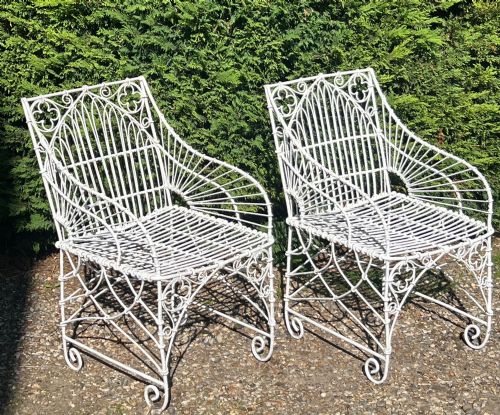
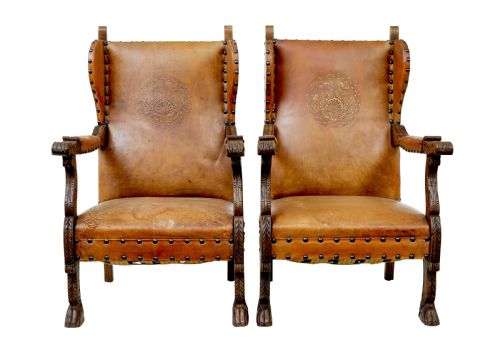
The most frequent examples on this page are nineteenth-century oak armchairs featuring carved woodwork, upholstered leather panels, or buttoned hide. Alongside these traditional timbers, the selection includes pieces executed in walnut, pitch pine, painted finishes, and iron, originating from periods spanning from the eighteenth century into the twentieth century.
How They Were Made
Joinery relies heavily on solid oak and walnut, worked by hand with mortise and tenon joints to bear the weight of massive frames and high backs. Carvers shaped the timber with linenfold panels, tracery, crockets, and grotesque carvings such as green men or lions, drawing directly from medieval ecclesiastical and domestic architecture.
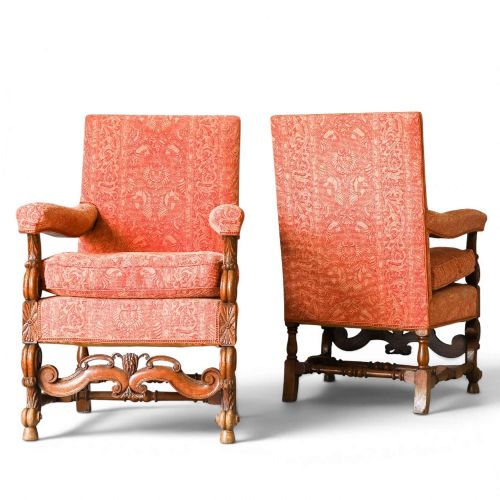
Upholstery uses thick hide, embossed leather, or heavy fabric secured with brass studs, often buttoned to provide firm support within the rigid wooden skeletons. Iron and pitch pine appear in alternative variants, showing how makers adapted structural metals and secondary softwoods to the same medieval vocabulary.
Green men stare woodenly from high oak crests, watching over libraries with leafy grins.
What Varies in Quality
The depth and crispness of the hand carving dictate the distinction between ordinary production and exceptional cabinet work. Sharply undercut tracery and expressive figural carving require skilled labour, whereas shallow machine work or soft detailing yields a flatter appearance.
Timber selection and structural integrity separate robust survivals from compromised frames. Dense golden oak and properly seasoned walnut retain their rigidity under heavy use, while inferior pieces suffer from loose joinery or replaced timber components.
A.W.N. Pugin
The Pair Gothic Armchairs Glossary
- Gothic Revival
- A nineteenth-century architectural and decorative movement that revived medieval forms, pointed arches, and ecclesiastical motifs. It influenced domestic furniture design significantly across Britain and Europe.
- Glastonbury Chair
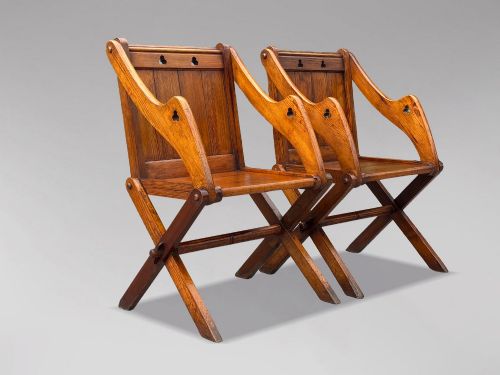
- A type of ecclesiastical armchair with an X-framed folding structure, sloping arms, and a panelled back. Named after Glastonbury Abbey, this form became popular during the Victorian Gothic revival.
- Curule
- An ancient X-framed seat design adopted during revival periods. These chairs feature crossing legs that form a distinctive supportive base.
- Green Man
- A sculptural architectural ornament depicting a human face surrounded by or sprouting from foliage. It frequently decorates the crest rails and arm supports of nineteenth-century throne chairs.
- Tracery
- Openwork stonework patterns in Gothic windows adapted by cabinetmakers for wooden chair backs and panels. This geometric ornamentation defines the architectural aesthetic of the style.
Pair Gothic Armchairs: Frequently Asked Questions
What is a Glastonbury chair?
A Glastonbury chair is a specific type of ecclesiastical armchair featuring an X-shaped folding frame, sloping armrests, and an inscribed wooden back panel. These pieces derive their name from an ancient monastic seat discovered in Somerset.
Cabinetmakers of the nineteenth century revived this form in oak, creating sturdy seating that reflects medieval ecclesiastical joinery. They stand out from standard armchairs through their distinctive interlocking leg construction.
Where were these chairs used?
Original examples served in libraries, great halls, studies, and ecclesiastical settings where monumental seating suited the interior architecture. Their imposing presence made them natural focal points in grand Victorian rooms.
Today, buyers place them in studies, hallways, or living spaces as statement seating. Their heavy timber construction pairs well with traditional architectural details and high ceilings.
How do I date a Gothic armchair?
Dating relies on examining the timber species, the character of the fixings, and the specific nuances of the revival style. Mid-nineteenth-century pieces often display hand-cut joinery and heavy oak framing associated with early Gothic Revival phases.
Later variants from the end of the nineteenth century or the early twentieth century may incorporate Arts and Crafts simplicity or machine-assisted carving techniques. Comparing the patination of the wood helps confirm the age of the piece.
Are these chairs comfortable?
These seats were built with upright postures in mind, featuring high backs and solid wooden arms designed for formal sitting. Many versions soften this rigidity with padded leather upholstery or buttoned hide.
While they lack the deep slump of modern lounge furniture, upholstered library armchairs and padded throne chairs offer substantial support. Cushioning varies depending on whether the primary surface is bare carved oak or padded leather.