

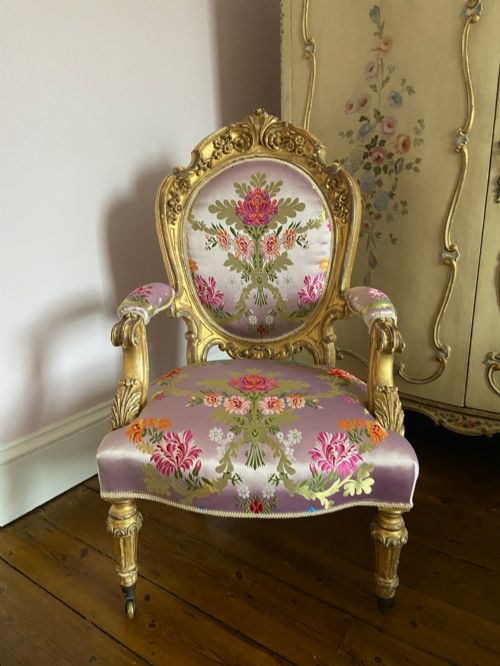
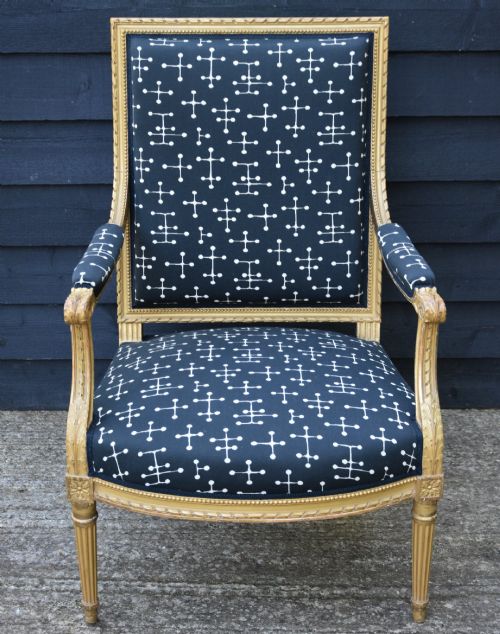
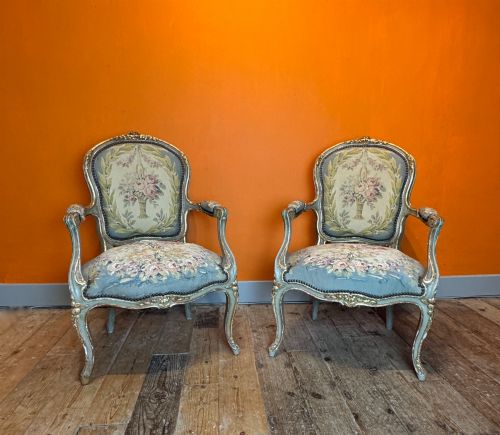
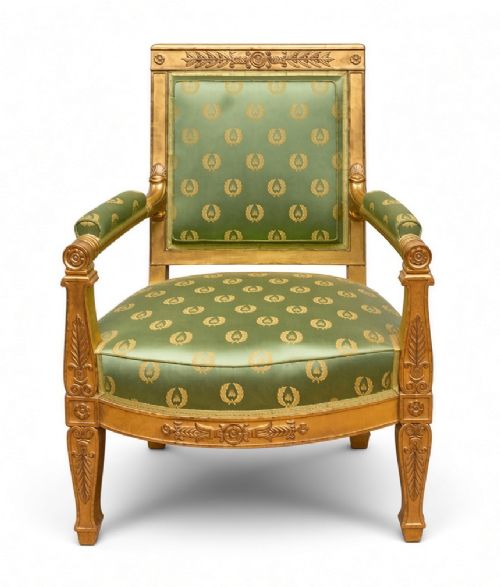
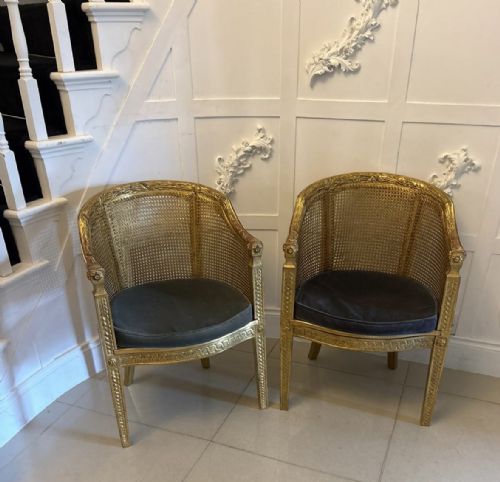
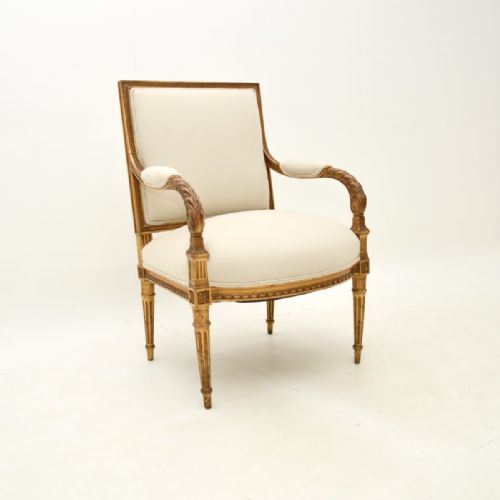
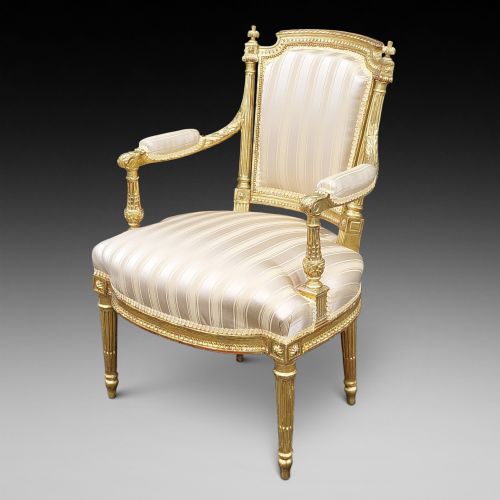
Carved Giltwood Salon Chairs
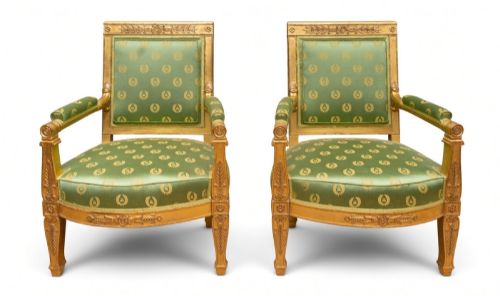
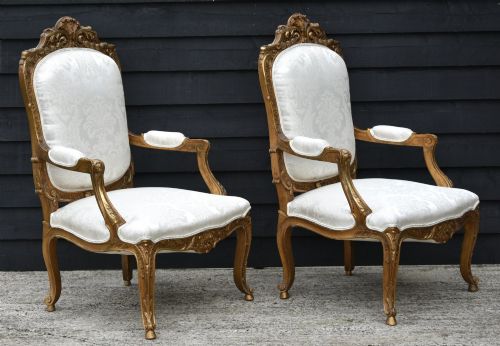
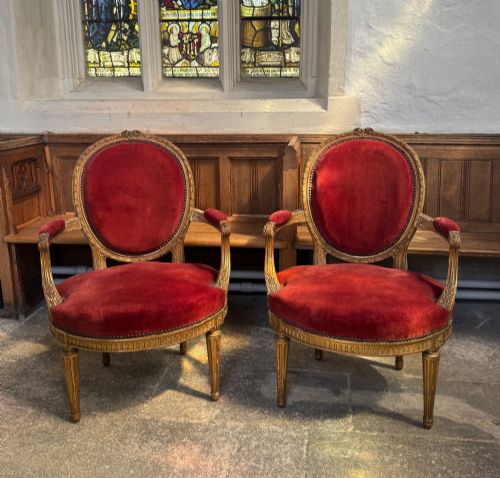
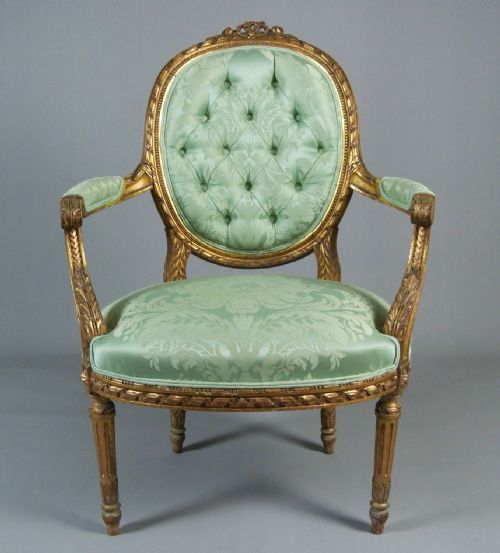
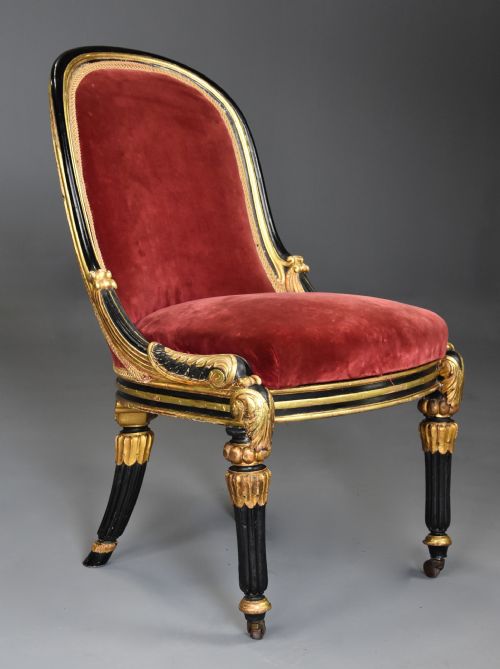
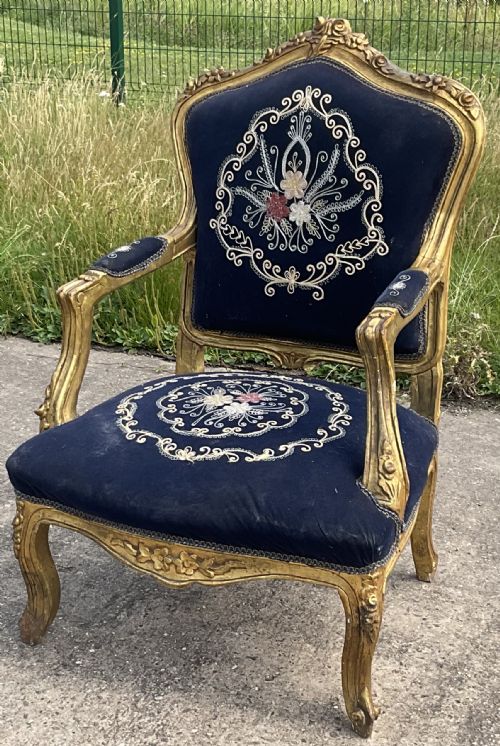
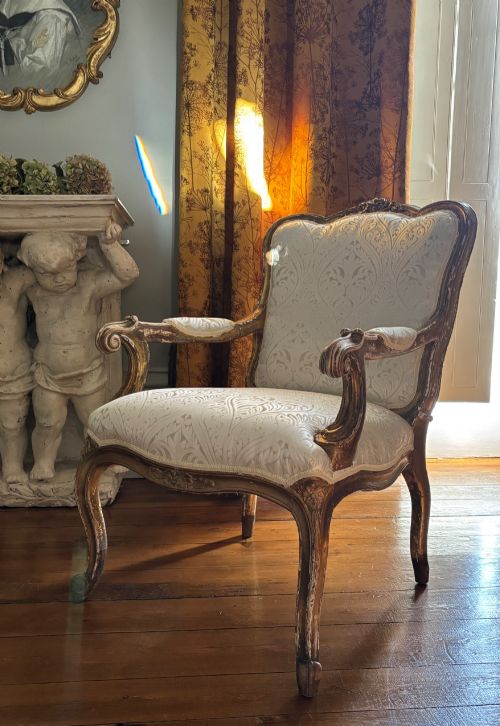
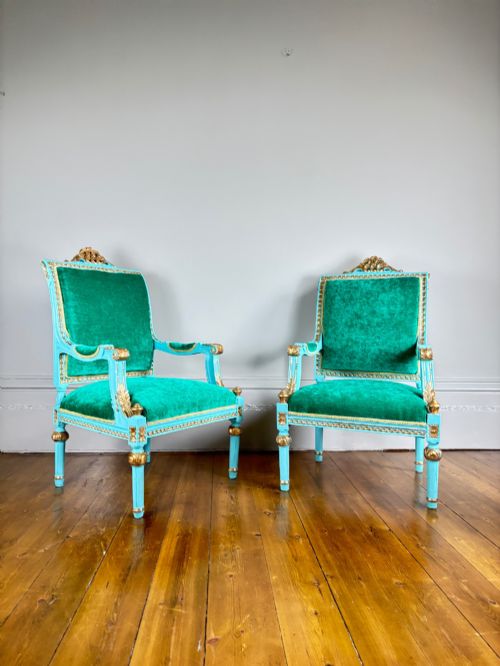
These carved giltwood salon chairs bring gilded French and English seating from the eighteenth century onwards into reception spaces.
Carved Giltwood Salon Chairs
Carved giltwood salon chairs encompass formal seating designed for drawing rooms and reception spaces, appearing frequently as French armchairs, fauteuils, and side chairs. Buyers search for these pieces to introduce period seating into domestic interiors, selecting from various revival aesthetics.
The selections on this page span the eighteenth century, the Regency era, and the nineteenth century, with strong representation from Louis XVI style and Rococo revival pieces. Makers utilised beech and timber frames, finishing them with giltwood, parcel gilt, or painted surfaces.
Forms range from bergères and open armchairs to throne chairs and fireside seats, often upholstered in velvet, silk, or tapestry fabric. French examples dominate the selection, accompanied by English and continental pieces.
How they were made
Craftsmen shaped frames from beech and other timber, applying carved ornamentation to crest rails, arms, and cabriole or tapered legs. Woodcarvers worked directly into the timber before applying the gilding layers.
Giltwood surfaces received thin sheets of metal leaf applied over a prepared gesso and bole ground, creating the characteristic reflective finish. Upholsters completed the chairs using textiles such as silk, velvet, and tapestry, secured over traditional stuffing.
Listings feature beech and timber frames finished in giltwood, silk, velvet, and tapestry fabric across multiple centuries.
What varies in quality
Depth and crispness of the wood carving dictate the visual impact of the frame, separating standard production from exceptional cabinet work. Sharp relief work along the acanthus leaves and floral motifs indicates skilled hand execution.
The integrity of the giltwood surface and the authenticity of the underlying gesso layers determine the preservation state of the piece. Selection of high-grade upholstery textiles, including period-appropriate silks and tapestries, matches the luxury of the carved frames.
Jacob Desmalter·Thomas Chippendale·Blaise Maucuy·Holland and Sons
The Carved Giltwood Salon Chairs Glossary
- Giltwood
- Wood that has been coated with gold leaf or metal leaf over a prepared base. This finish provides the bright, reflective surface characteristic of formal period seating.
- Bergère
- An enclosed upholstered armchair featuring upholstered sides set into a wooden frame. These seats usually include a loose cushion over a tight seat base.
- Parcel Gilt
- A decoration method where only specific carved portions of a painted or stained wooden surface are highlighted with gold leaf. This technique creates contrast between the base colour and the gilded details.
- Louis XVI Style
- A neoclassical design style characterised by straight vertical lines, symmetry, and classical motifs such as fluted columns and ribbon twists. Chairs in this style often display oval backs and straight tapered legs.
Carved Giltwood Salon Chairs: Frequently Asked Questions
What is a giltwood salon chair?
A giltwood salon chair is a formal seat featuring a wooden frame covered in thin gold leaf, designed for use in reception rooms and drawing spaces.
These chairs date from the eighteenth century through the nineteenth century, encompassing various French and English revival styles.
How do I identify Louis XVI style?
Louis XVI style pieces display straight lines, geometric symmetry, and classical motifs, contrasting with the curved asymmetry of earlier Rococo designs.
Look for fluted tapered legs, rectilinear frames, and oval or shield-shaped chair backs.
What is the difference between a fauteuil and a bergère?
A fauteuil is an open-armed armchair with exposed wooden sides between the armrest and the seat rail.
A bergère is a closed armchair with upholstered panels filling the space beneath the armrests, offering a more enclosed seat.
How do I care for giltwood furniture?
Giltwood requires gentle maintenance, avoiding moisture, harsh cleaning chemicals, and direct sunlight that can damage the delicate gold leaf surface.
Dust the carved wooden elements lightly with a dry, soft brush to preserve the metallic finish.