
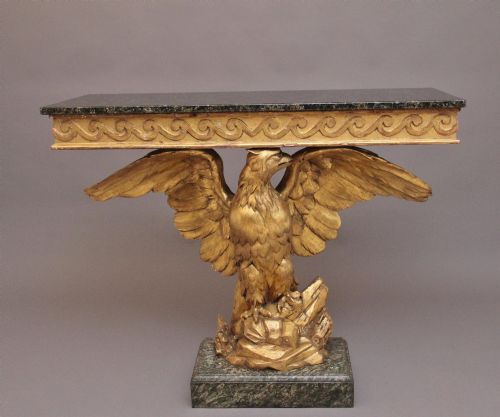
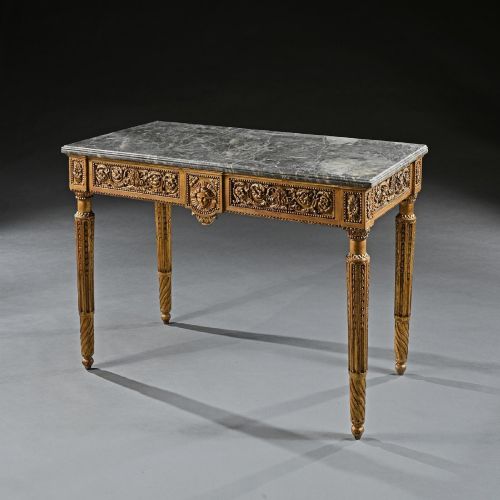
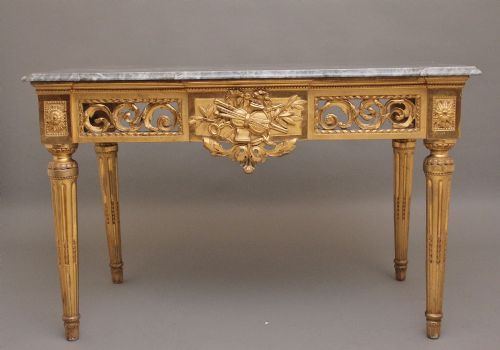
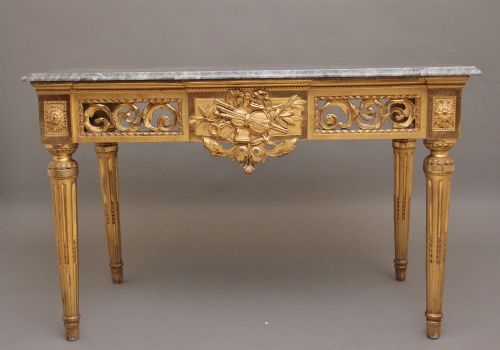
Carved Giltwood Pier Console
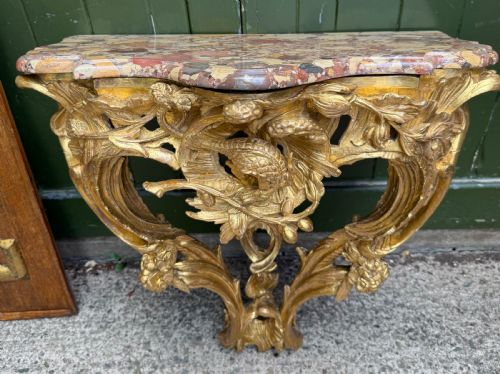
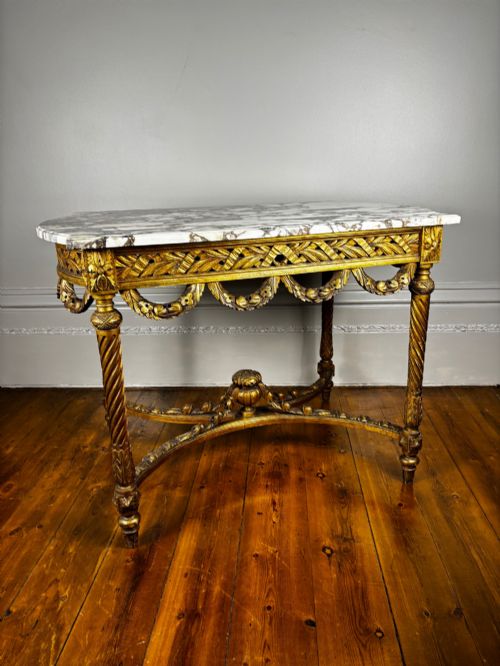
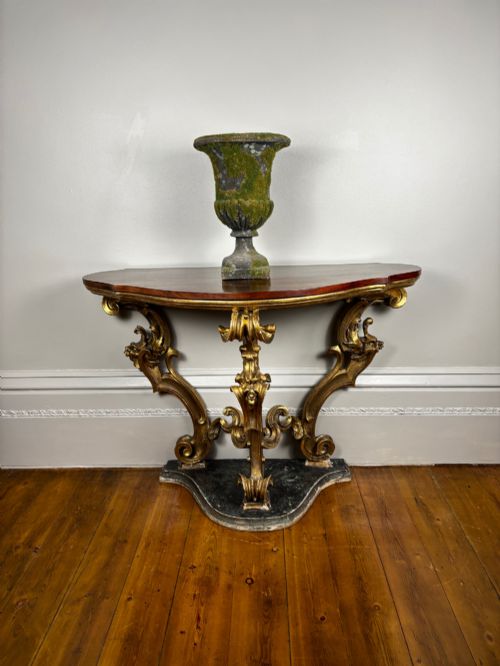
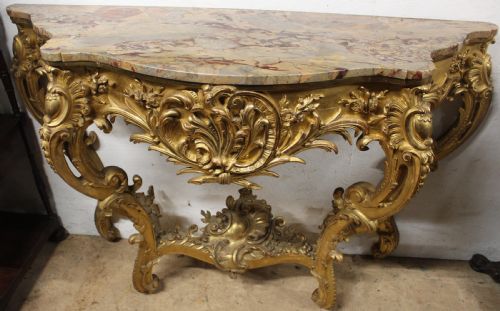
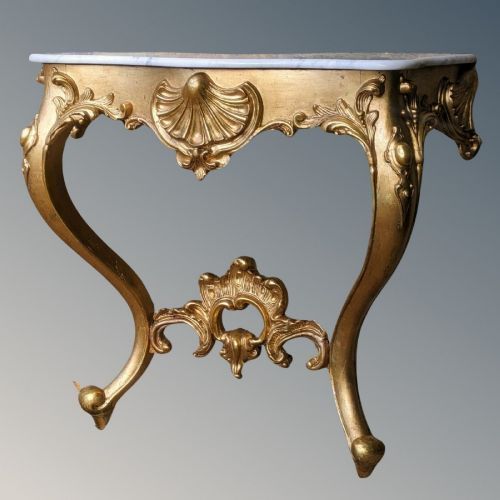
A carved giltwood pier console brings dramatic eighteenth and nineteenth century architectural presence into a room, framed in brilliant gold leaf and topped with heavy stone.
Carved Giltwood Pier Console
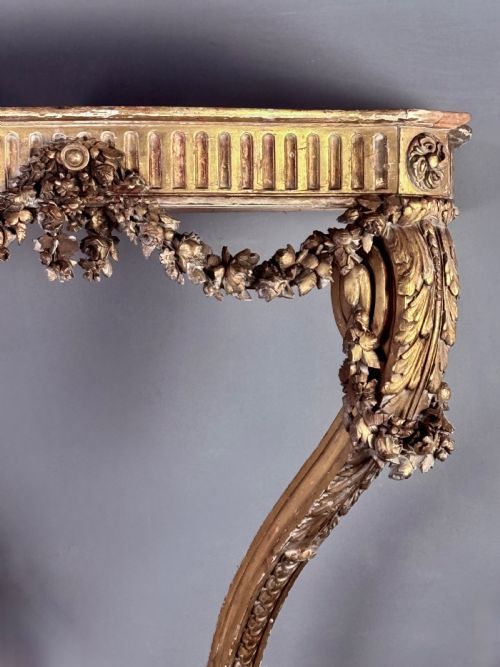
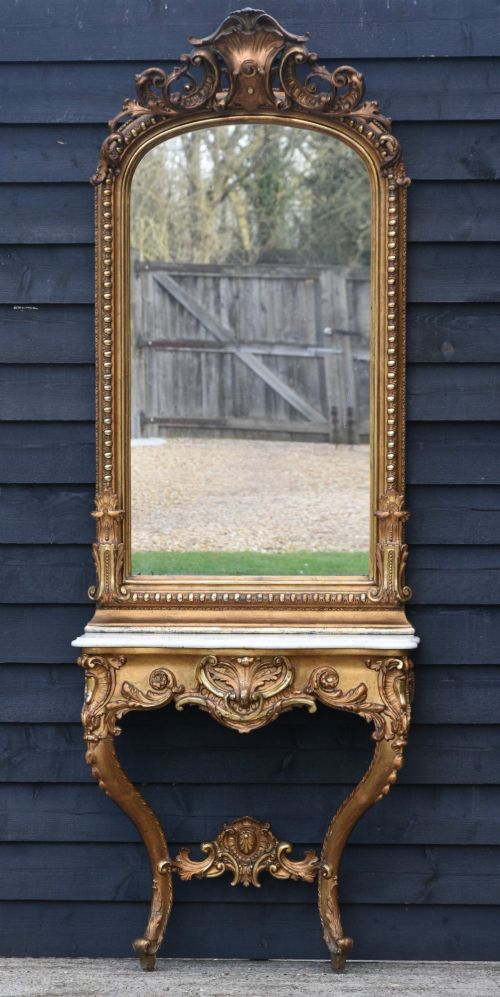
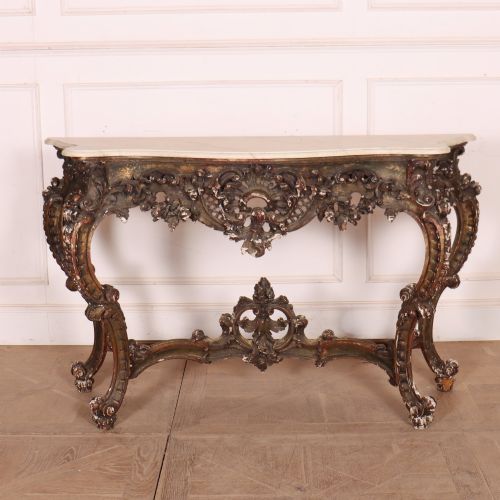
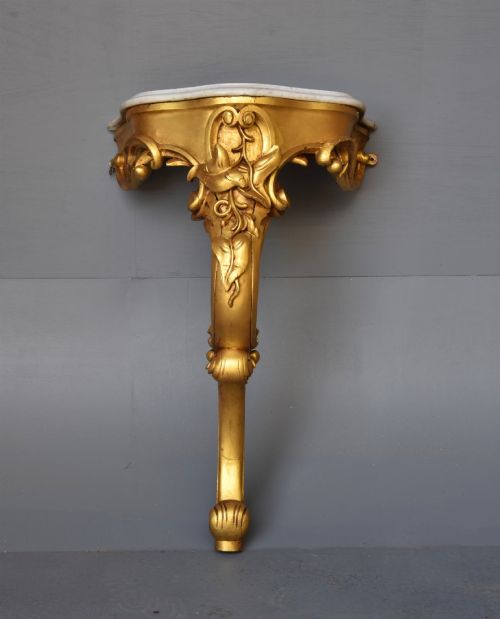
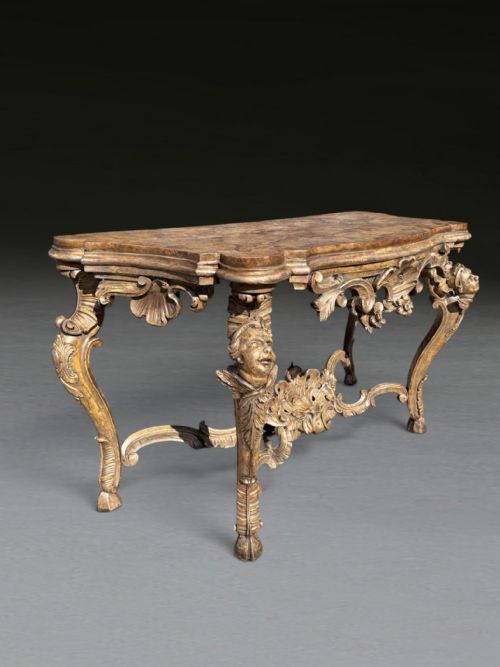
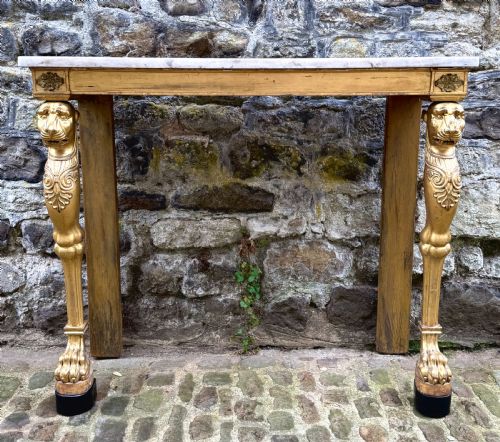
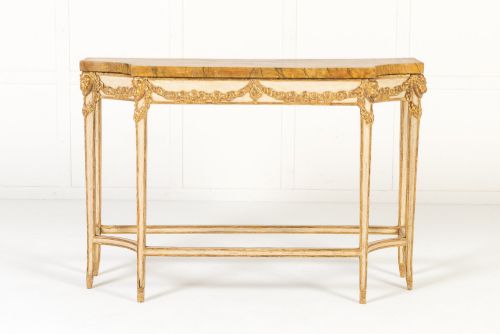
A carved giltwood pier console sits flat against a wall, frequently positioned beneath a matching mirror between windows. These statement pieces date from the eighteenth and nineteenth centuries, originating from French, Italian, and English workshops. The most common examples met here combine heavily carved wooden frames with marble tops, executed in Rococo, Neoclassical, or Revival styles.
The forms range from compact serpentine front tables to monumental pairs supported by carved animal paws or scrolling foliage. Many examples retain their original mirror plates, creating a complete architectural ensemble designed to reflect light and expand the sense of space in a grand room.
Materials and construction
Makers carved structural frames from timber such as wood, applying layers of gesso to build up crisp relief details before gilding with gold leaf. This delicate metallic skin often covers a base of paint or bole, which shows through as the surface ages.
Heavy marble slabs form the characteristic table tops, utilising varieties like Carrara, Breccia, and Rouge marble. These stone surfaces rest directly upon the carved wooden aprons, often shaped in serpentine or demi-lune outlines to match the contours of the base.
Listings feature pieces spanning from the eighteenth century through the 1920s, dominated by French Rococo Revival and Italian Neoclassical designs.
Distinguishing quality
The depth and crispness of the wood carving dictate the distinction between standard production and masterwork execution. Superior pieces exhibit undercut foliage and deeply modelled figures that catch the light, whereas lesser examples rely on flat, moulded composition ornaments.
The choice and thickness of the marble top also indicate the standing of the piece, with substantial figured stone slabs outweighing thin or plain replacements. Furthermore, the integrity of the original gold leaf surface, free from heavy modern repainting, determines the historical value.
Felix Alfred Ternisien
The Carved Giltwood Pier Console Glossary
- Giltwood
- Timber coated with gold leaf applied over a prepared gesso ground. This traditional finish provides a warm, luminous metallic sheen that ages with a distinctive patina.
- Pier console
- A table designed to stand against the wall space between two windows. These tables frequently accompany tall wall mirrors sharing the same decorative style.
- Gesso
- A plaster mixture applied to wood frames to create a smooth, absorbent base for gilding. Carvers cut fine details directly into this hardened layer.
- Serpentine
- A furniture outline featuring a double curve that bends outward in the centre and concaves at the sides. This fluid shape appears frequently on eighteenth century table fronts.
- Breccia
- A marble variety composed of broken rock fragments embedded in a fine-grained matrix. It creates a mottled, highly decorative surface pattern on antique table tops.
Carved Giltwood Pier Console: Frequently Asked Questions
Where should I place a pier console?
These tables belong flat against a wall, ideally in a hallway, drawing room, or dining space where they command attention without obstructing traffic. They often anchor the space beneath a large wall mirror or artwork.
Because of their shallow depth, they provide display space for lamps or decorative objects without dominating the floor plan.
Are the marble tops original?
Many tables retain their heavy stone tops, which range from plain white Carrara to heavily figured coloured marbles. Replacement marble slabs occur frequently due to the weight and fragility of the original stone.
Examine the underside of the stone and its fit against the wooden apron to assess whether the top has survived intact from the period of manufacture.
How do I identify a revival style?
Revival pieces from the nineteenth and early twentieth centuries emulate earlier eighteenth century French and Italian aesthetics. Look at the construction joints, backing timbers, and wear patterns to distinguish a period reproduction from an original antique.
Stylistic cues like exaggerated Rococo curves or dense Neoclassical motifs often point toward nineteenth century interpretations.