
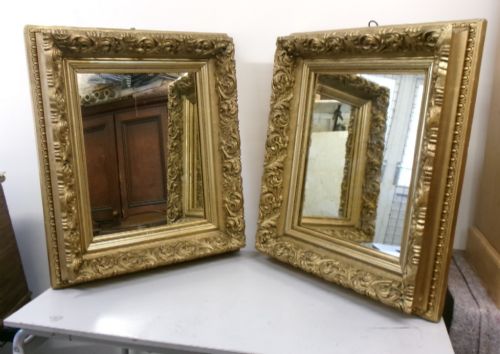
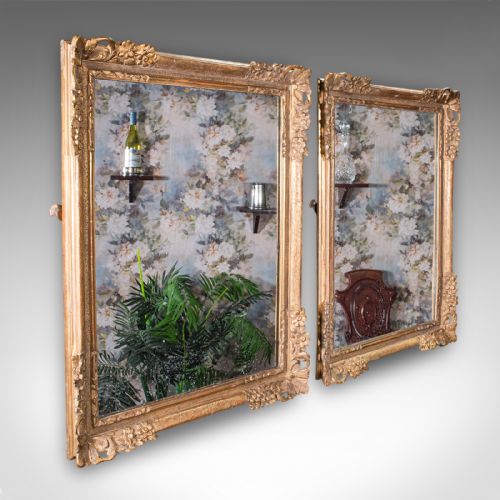
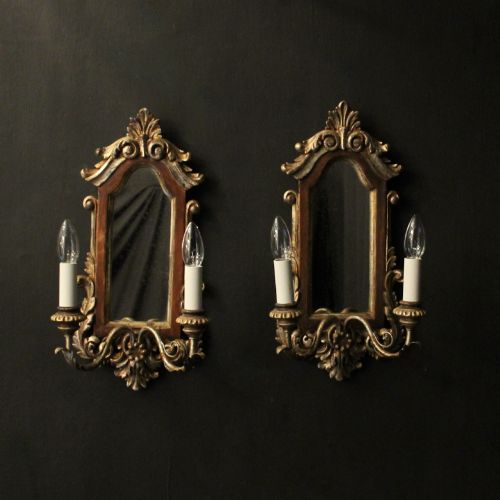
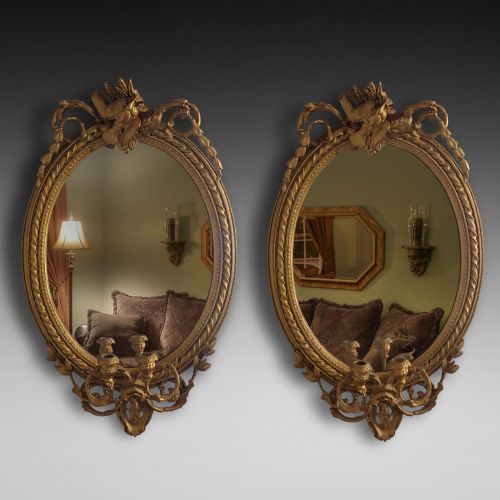
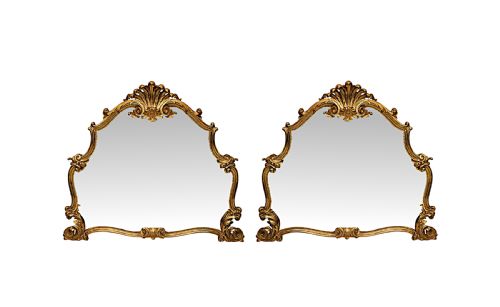
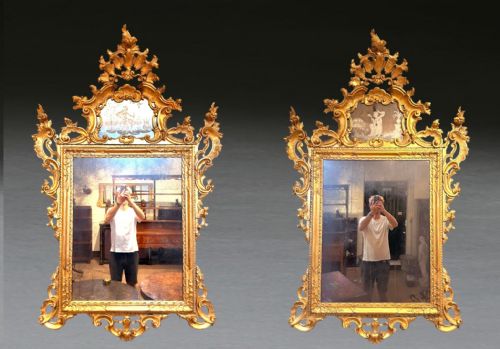
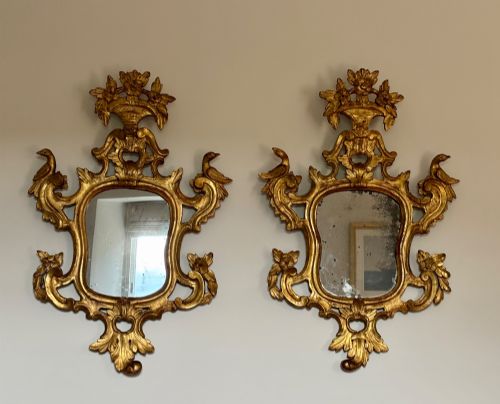
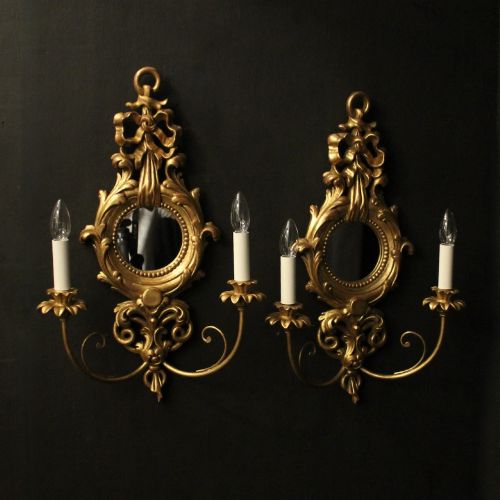
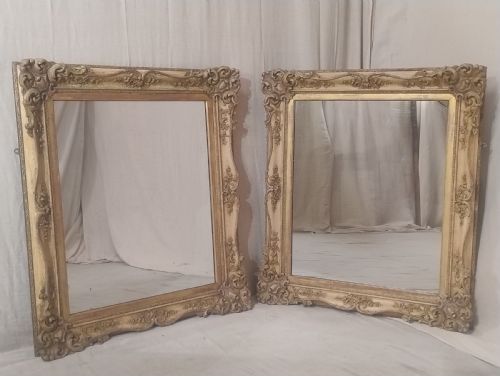
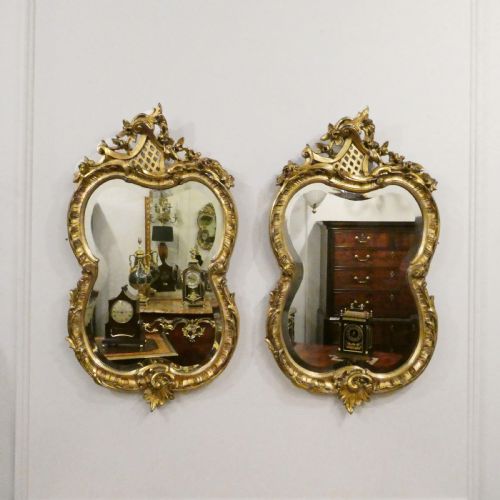


Carved Giltwood Mirror Pair
These carved giltwood mirror pair selections bring symmetry and rich historical character to a room through centuries of European craftsmanship.
Carved Giltwood Mirror Pair
A carved giltwood mirror pair consists of two matching reflective wall ornaments shaped from timber and finished with gold leaf or metallic paint. These symmetrical objects historically adorned grand drawing rooms, formal halls, and mantelpieces to amplify light and space.
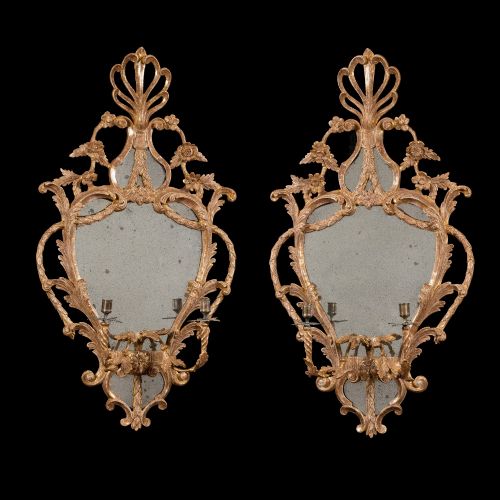
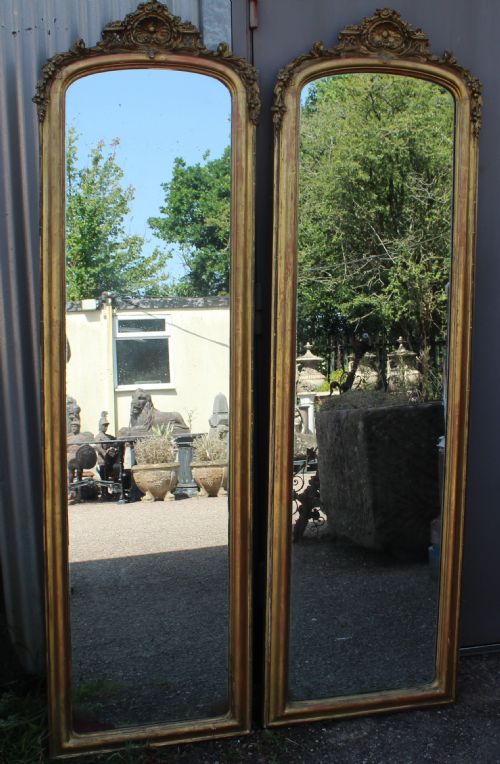
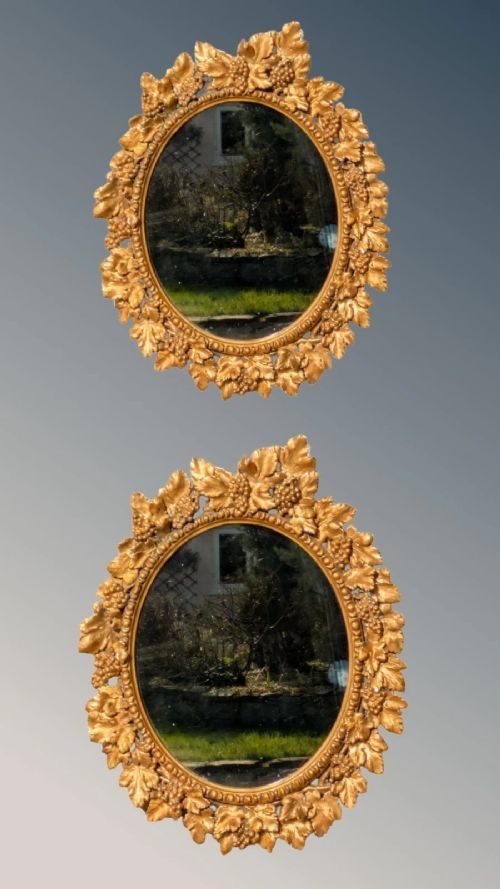
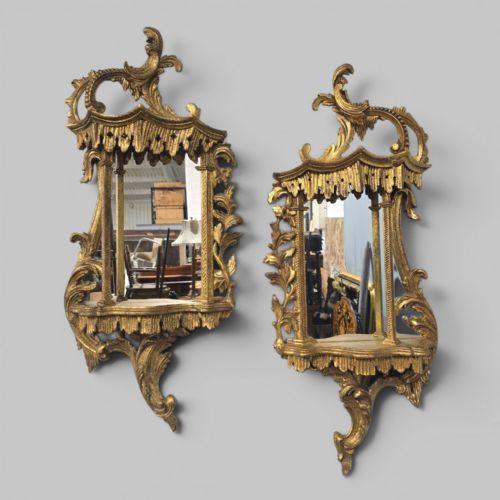
The selections available here span from the eighteenth century through to the early twentieth century, taking forms such as girandoles with candle branches, tall pier glasses, and oval wall frames. Italian workshops, French chateaux influences, and English Georgian or Regency designs dominate the origins recorded in the inventory.
Buyers seeking this specific phrase most frequently encounter nineteenth-century interpretations alongside eighteenth-century originals and revival pieces. These dual items offer balanced interior arrangement, traditionally hung above sideboards, consoles, or fireplaces.
Materials and Construction Methods
The structural foundation relies on carved wood, frequently pine, walnut, or composition materials, shaped into intricate scrolls, leaves, and architectural mouldings. Artisans applied a layer of gesso to smooth the wooden substrate before laying down thin sheets of gold leaf or gilt paint.
Reflective surfaces utilise traditional mirror glass, sometimes bevelled or arranged in multiple plates, secured within heavy frames. Metal components such as brass brackets or candle arms appear on girandole variants to support lighting fixtures.
Some girandoles were designed to bounce the glow of a single candle around a dark hallway, proving that historic rooms loved clever lighting tricks.
Distinctions in Execution and Preservation
The depth and sharpness of the hand-carved ornamentation separate exceptional examples from simpler decorative output. Crisp undercut foliage and balanced proportions indicate skilled handwork rather than mass-produced composition mouldings.
The integrity of the original gilt surface and the clarity of the ageing mirror glass dictate the desirability of an item. Traces of original bole beneath worn gold leaf demonstrate genuine age, whereas clumsy modern regilding alters the historical character.
Strahan of Dublin·Butti and Son
The Carved Giltwood Mirror Pair Glossary
- Giltwood
- Timber decorated with gold leaf or gold paint over a prepared gesso ground. This finish provides a warm, reflective metallic sheen that mellows over the centuries.
- Girandole
- A decorative wall mirror featuring attached candle sconces or arms. These branches allowed the reflective surface to multiply the light of candles in a room.
- Pier Glass
- A tall, narrow mirror designed to hang on the wall space between two windows. They frequently sat above matching console tables in formal interiors.
- Gesso
- A plaster-like mixture applied to carved wooden frames to create a smooth surface for gilding. It accepts fine detail work before the application of gold leaf.
- Parcel Gilt
- A decorating technique where only specific raised portions of an object are gilded while the underlying wood remains visible. This creates a striking contrast between natural grain and gold.
Carved Giltwood Mirror Pair: Frequently Asked Questions
How were they used historically?
These matching mirrors were traditionally positioned to balance a room and amplify natural daylight from windows or artificial candlelight from sconces.
Placed symmetrically above mantelpieces or console tables, they served as grand focal points in formal reception rooms.
Where should I hang a pair?
Symmetrical pairs work best when hung at eye level opposite one another or flanking a central architectural feature like a fireplace.
Ensure the wall fixings can support the substantial weight of carved wood and glass frames.
How do I identify eighteenth-century examples?
Early pieces often display hand-carved wooden frames with deep undercutting rather than moulded composition ornament.
Examinations of the reverse boards, fixings, and the natural oxidation of the mirror glass help confirm true age.
What is the difference between girandoles and standard mirrors?
Girandoles incorporate functional candle arms extending from the frame to project illumination into the room.
Standard wall mirrors lack these integrated branches and focus entirely on reflection and decorative framing.