
Carved Gilt Fauteuil
A carved gilt fauteuil brings the sculpted elegance of French and Italian court style directly into a modern salon or bedroom.
Carved Gilt Fauteuil
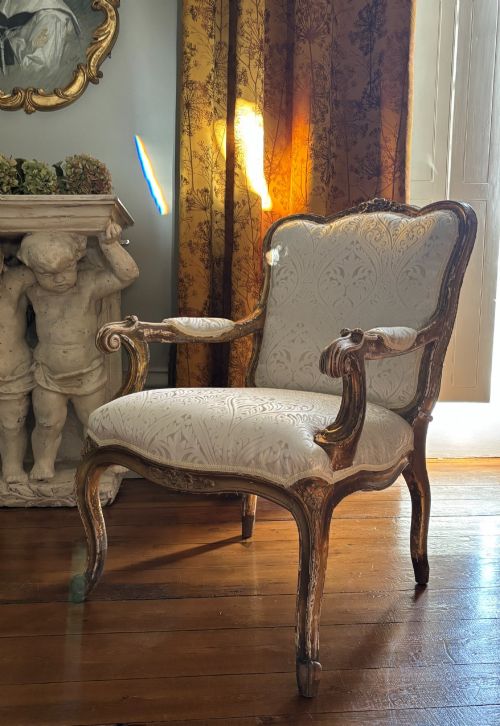
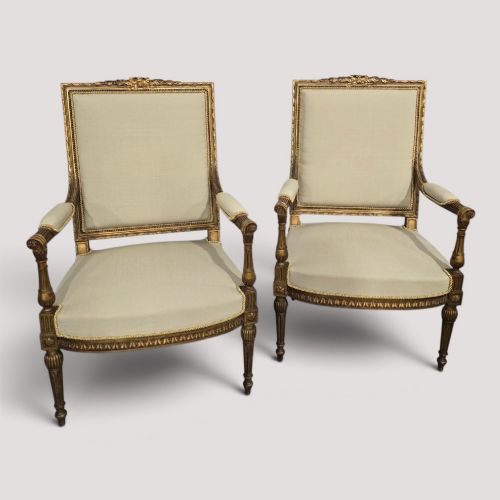
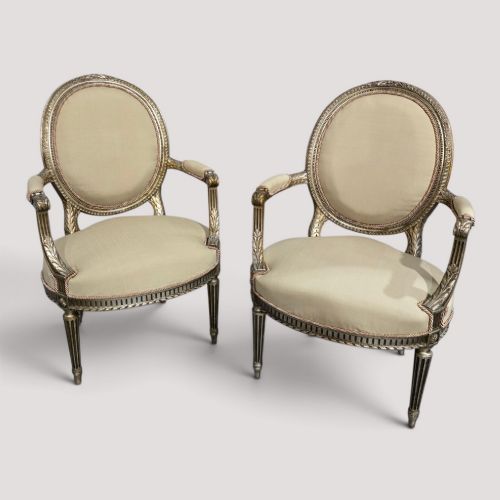
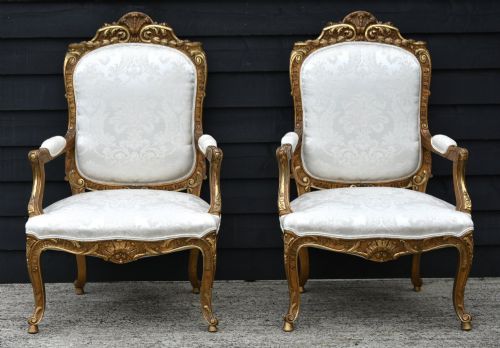
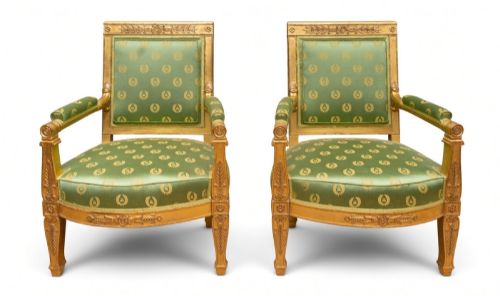
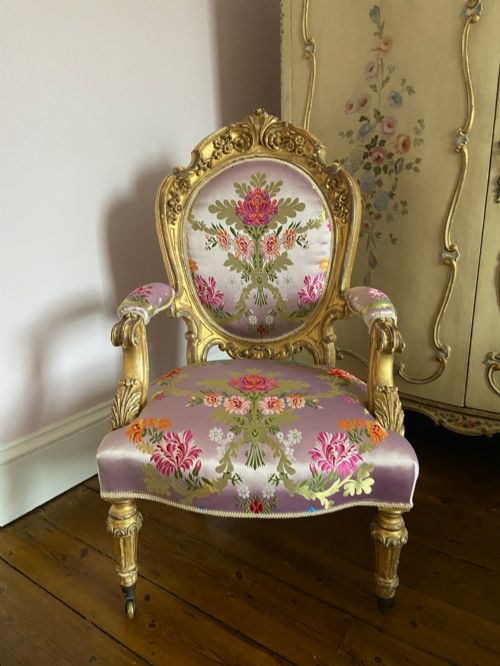
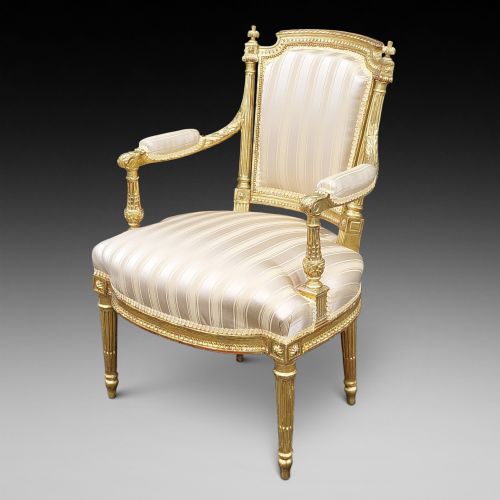
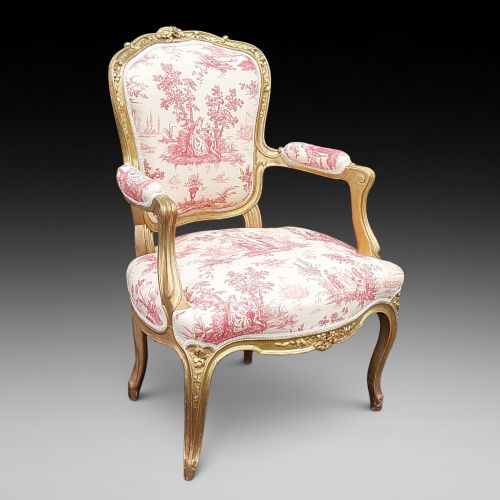
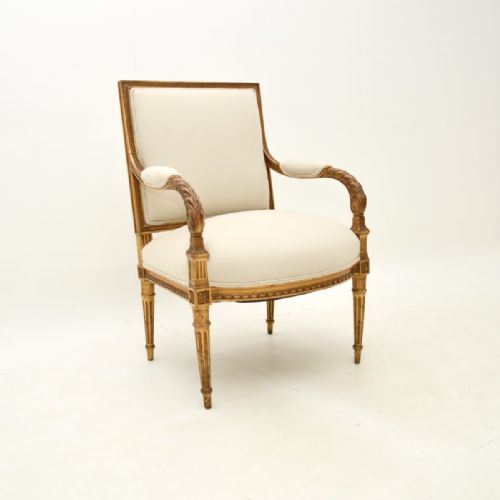
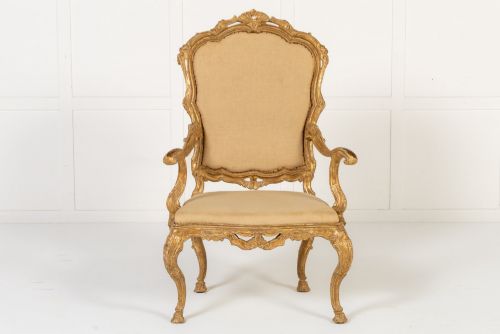
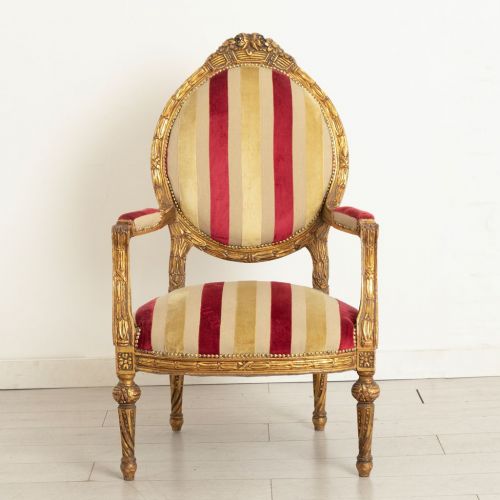
A carved gilt fauteuil represents an open-armed upholstered seat built in the European tradition, most commonly encountered here in 19th-century revivals of Louis styles. These pieces combine exposed wooden frames with gilded finishes and soft textile upholstery, functioning historically as luxurious seating for formal reception rooms.
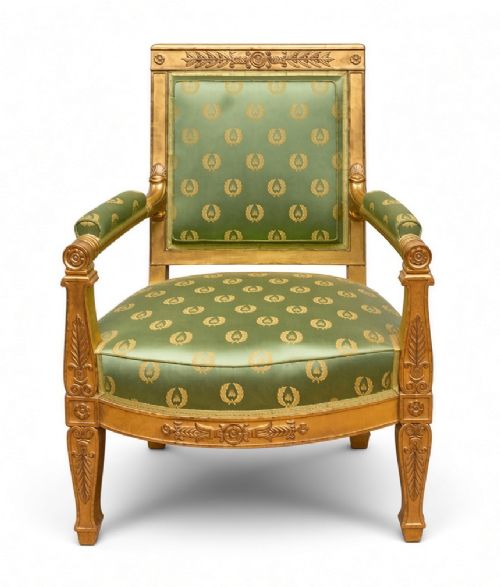
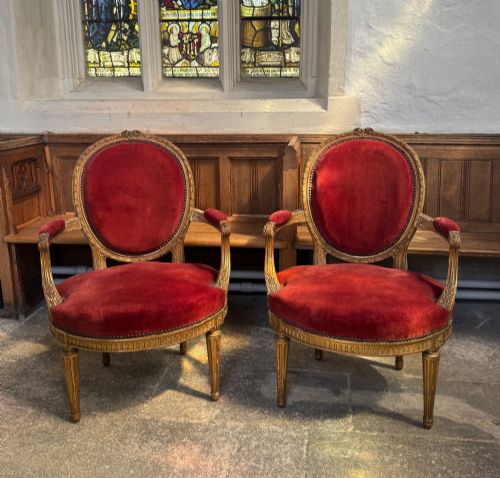
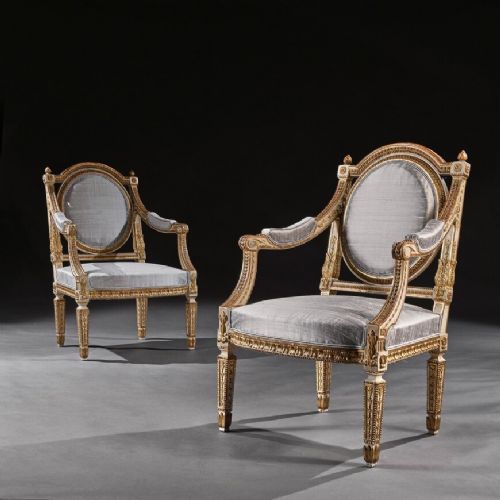
The selections available span from authentic 18th-century Italian pieces to late-Victorian interpretations, French Napoleon III salon chairs, and Restauration designs. Buyers will frequently encounter matching pairs rather than single chairs, alongside occasional larger salon suites and smaller bedroom chairs.
Makers and workshops across France, Italy, and England produced these chairs to emulate royal tastes, drawing heavily on Rococo, Neo-classical, and Regency design idioms. They serve today both as decorative focal points and as functional armchairs within period and eclectic interiors alike.
Materials and construction methods
Makers carved structural frames from solid timbers such as beech, walnut, and general hardwoods, providing the necessary strength for elaborate openwork scrolls and curved legs. Artisans applied thin sheets of gold leaf over a prepared gesso and bole base upon the wooden substrate to achieve the characteristic luminous metallic surface.
Upholstery completed the seat, utilising traditional stuffing techniques covered in textiles ranging from contemporary silk and velvet to antique tapestry. Parcel gilt variations combined exposed painted surfaces with gilded highlights to accentuate the carved floral and foliate motifs.
Listings feature items spanning multiple centuries, from 18th-century Italian pieces to 20th-century revival chairs.
Factors of distinction
The crispness of the hand-carved detail across the wooden frame separates superior examples from mass-produced or heavily worn pieces, where soft edges indicate either heavy wear or lesser initial workmanship. Original gilding that retains its depth and texture holds greater appeal than unsympathetic later overpainting.
Structural integrity of the joints and the quality of the underlying frame construction dictate longevity, particularly given the stress placed on open arm attachments. The choice of upholstery fabric, whether period tapestry or carefully matched silk, contributes significantly to the visual harmony of the finished chair.
Blaise Maucuy·Jacob-Desmalter·Holland and Sons
The Carved Gilt Fauteuil Glossary
- Fauteuil
- An open-armed upholstered armchair of French origin, typically featuring an exposed wooden frame and padded armrests designed to accommodate voluminous period attire.
- Giltwood
- Timber that has been coated with a thin layer of gold leaf, creating a brilliant decorative surface widely utilised in high-status European furniture.
- Louis XVI Style
- A neoclassical design movement characterised by straight tapering fluted legs, geometric symmetry, and classical architectural motifs.
- Rococo Revival
- A 19th-century artistic movement that imitated the asymmetrical C-scrolls, naturalistic floral carving, and exuberant curves of the mid-18th century.
- Parcel Gilt
- A decorative technique where only specific carved details or highlights of a wooden or painted surface receive a gold leaf finish.
Carved Gilt Fauteuil: Frequently Asked Questions
What is a carved gilt fauteuil?
A carved gilt fauteuil is an open-armed wooden armchair featuring a gilded finish and upholstered seat and backrest. These chairs originated in French royal courts and developed through various revival periods.
They combine decorative carved woodwork with comfortable padded seating designed for formal domestic interiors.
How were these armchairs used historically?
These chairs served as principal seating in formal salons, reception rooms, and bedchambers of wealthy European residences. Their open arm design specifically accommodated the wide skirts and elaborate fashions of the period.
They functioned both as functional seating for guests and as markers of social status and refined taste.
How should I live with a gilt armchair?
A gilt armchair works effectively as a statement piece in a modern living room, hallway, or bedroom. Positioning them away from direct sunlight protects the delicate gold leaf and sensitive textile upholstery.
Regular dusting with a dry cloth helps maintain the gilt surface without disturbing the antique finish.
How can I tell different periods apart?
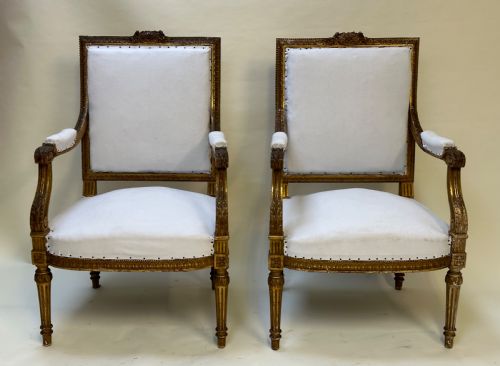
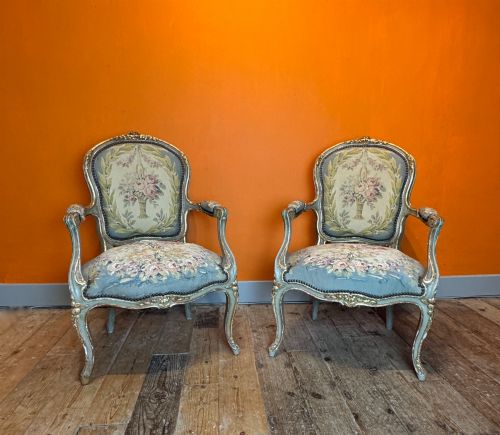
Identifying periods relies on examining the leg shapes and decorative motifs carved into the timber frame. Straight fluted legs generally indicate Neoclassical or Louis XVI influence, whereas curved cabriole legs point toward Rococo styling.
Later 19th-century revival pieces often combine these historical elements with heavier timber proportions characteristic of Victorian production.