

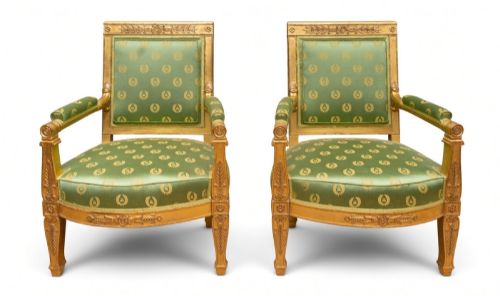
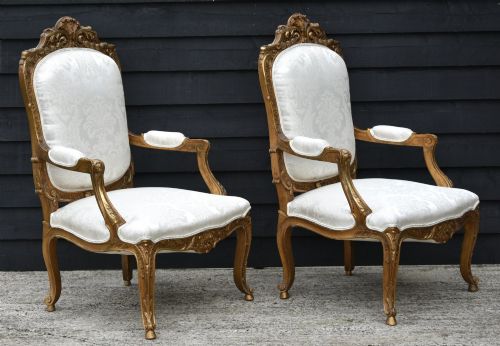
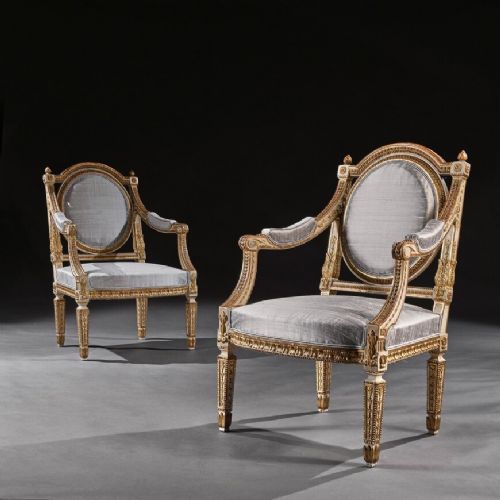
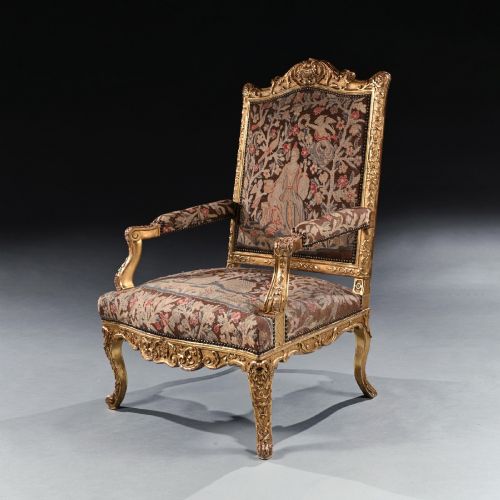
Carved Gilded Armchair
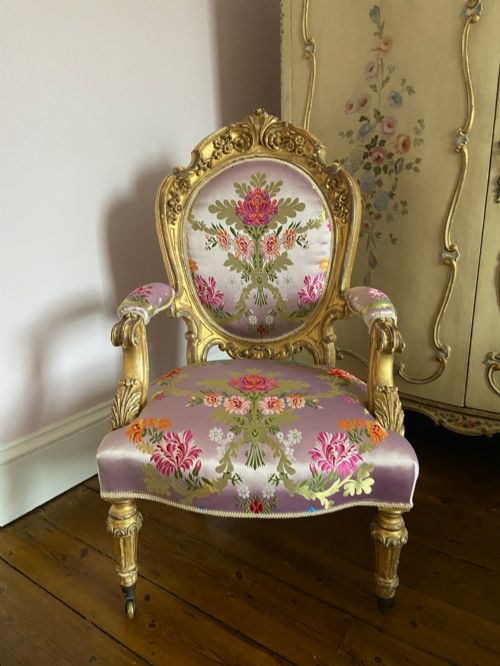
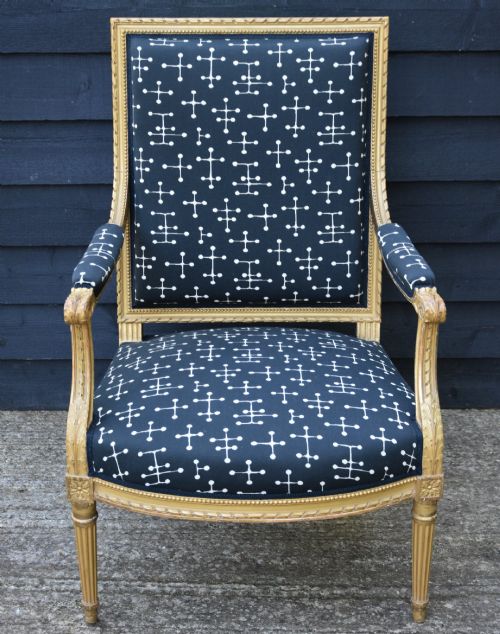
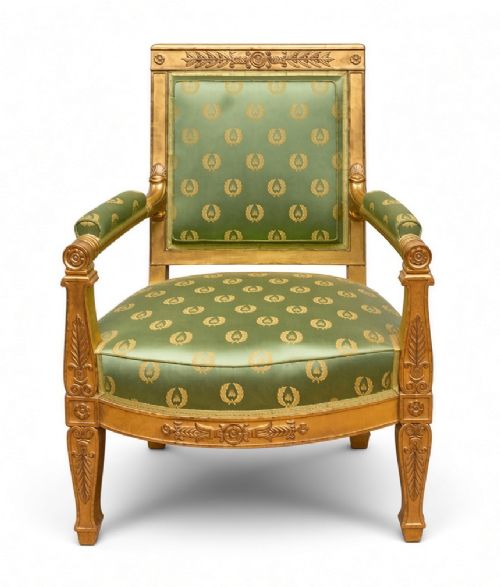
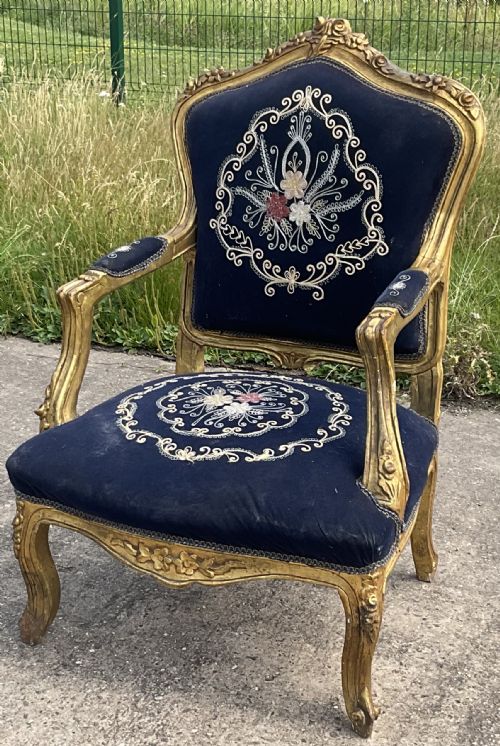
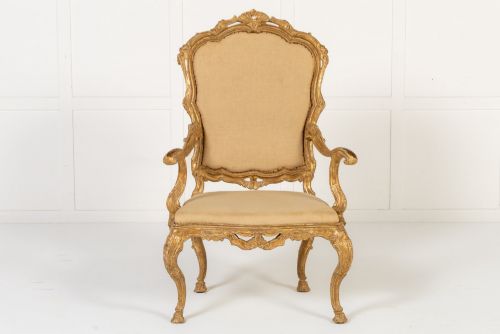
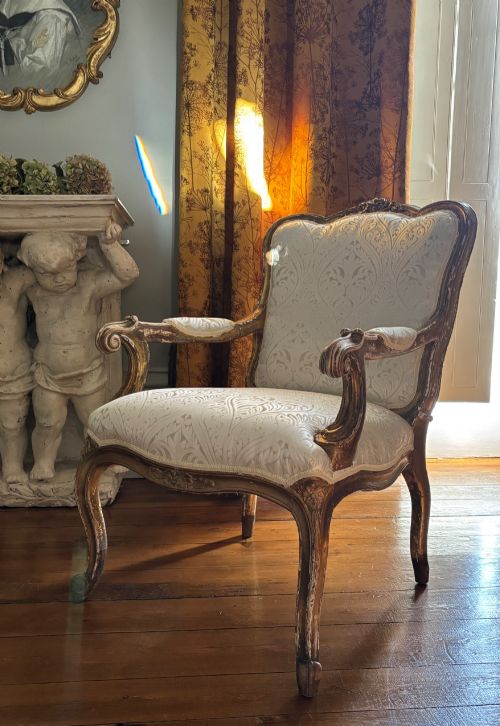
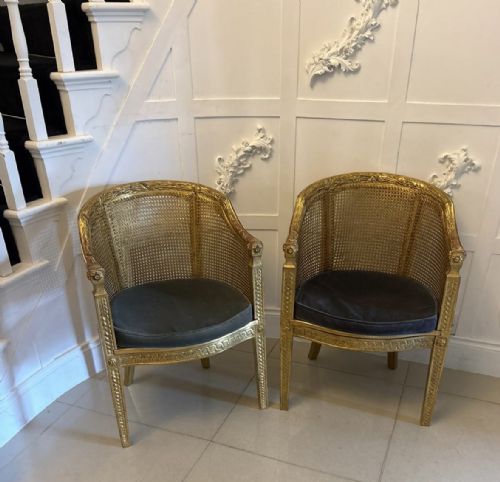
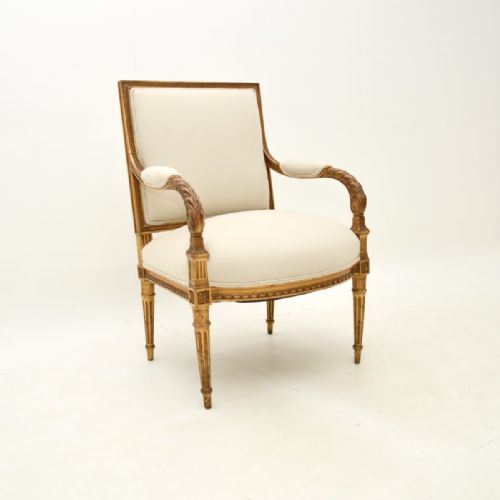
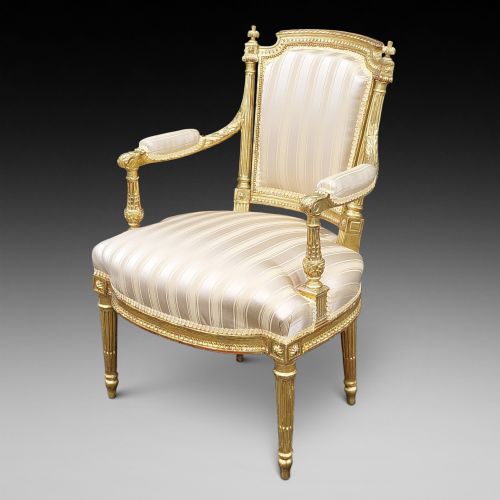
A carved gilded armchair brings giltwood and upholstery together in seating designed for display.
Carved Gilded Armchair
A carved gilded armchair sits at the intersection of seating and architectural ornament, emerging primarily through French and Italian workshop traditions. These seating forms span the eighteenth, nineteenth, and early twentieth centuries, capturing periods from the Régence and Louis XVI to Napoleon III and various Revivals.
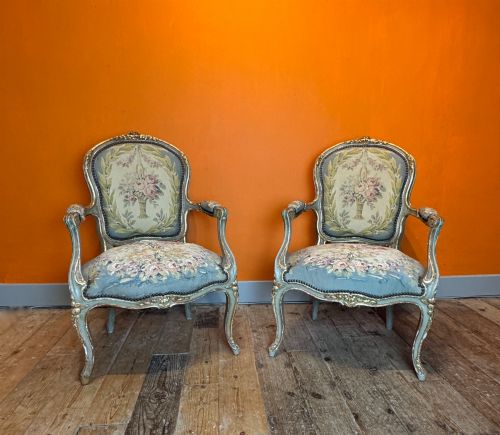
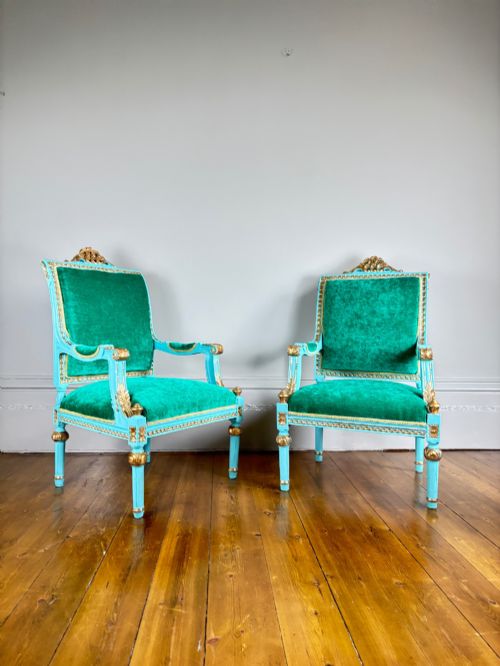
Buyers encounter open armchairs, bergères, fauteuils, and throne chairs upholstered in silk, velvet, fabric, or tapestry. Many examples survive as matched pairs or larger salon sets, reflecting their original purpose in formal reception rooms and domestic interiors.
The phrase covers distinct regional interpretations, notably French château pieces and Italian neo-classical designs alongside English iterations. Workshops utilised beech and walnut as foundational woods beneath the gilded surface.
Materials and Construction
Artisans carved structural frames from solid timbers such as beech and walnut, creating complex scroll arms, cabriole legs, and decorated crest rails. These wooden carcases received layers of gesso and bole before thin sheets of gold leaf were applied by hand.
Upholstery techniques varied from traditional webbing and stuffing to later sprung interiors, covered in silk, velvet, or tapestry. Parcel-gilt examples combined painted surfaces with exposed gilded highlights to articulate the carved ornament.
Several miniature children's salon chairs survive, proving that miniature aristocracy required proper gilding too.
Distinctions in Execution
The depth and crispness of the wood carving dictate the initial visual impact, separating sharp hand-tooled ornament from softer, mass-produced moulding. Deeply undercut acanthus leaves and floral motifs demonstrate superior craftsmanship in the underlying carcase.
The integrity of the original gilding and the quality of surface preparation determine lasting presence, alongside the appropriateness of subsequent textile selections. Pieces retaining original gold leaf and period-appropriate tapestry or silk sit distinctly apart from later re-gilt surfaces.
Jacob-Desmalter·Blaise Maucuy·Holland & Sons
The Carved Gilded Armchair Glossary
- Giltwood
- Wood that has been coated with gold leaf applied over a prepared gesso surface. This finish provides the characteristic metallic brilliance seen on formal seating.
- Fauteuil
- An open-framed armchair with upholstered back and armrests, originating in France. The wooden sides remain partially exposed to display the carved decoration.
- Bergère
- An enclosed upholstered armchair featuring padded sides and a tight seat cushion. These seats developed during the eighteenth century for increased comfort.
- Parcel Gilt
- A decorative treatment where only specific portions of a painted or stained wooden surface receive gold leaf. This technique highlights particular carved details.
- Tapestry
- Hand-woven textile featuring pictorial or decorative designs used historically for heavy upholstery. Such coverings often depict pastoral or floral scenes.
Carved Gilded Armchair: Frequently Asked Questions
How do I identify a true period piece?
Examine the timber construction, joinery methods, and the application of gesso beneath the gold leaf. Hand-carved elements display subtle irregularities absent in later machine-made reproductions.
Compare the style markers, such as specific leg profiles and crest rail motifs, against documented examples from the eighteenth and nineteenth centuries.
Were these armchairs meant for daily use?
Most formal salon chairs were created for display and occasional seating during entertaining rather than heavy domestic lounging. Their delicate carved frames and fine silk or velvet upholstery required careful handling in period drawing rooms.
Placing them in low-traffic areas helps preserve both the structural joinery and the fragile surface gilding.
Can I reupholster a gilded armchair?
Upholstery can be renewed using traditional materials and techniques that respect the antique frame. Selecting appropriate period textiles like silk damask or tapestry maintains the historic character of the chair.
Professional upholsterers ensure the tension does not stress the historic wooden joints during re-webbing.