

Gold Gilt Chair
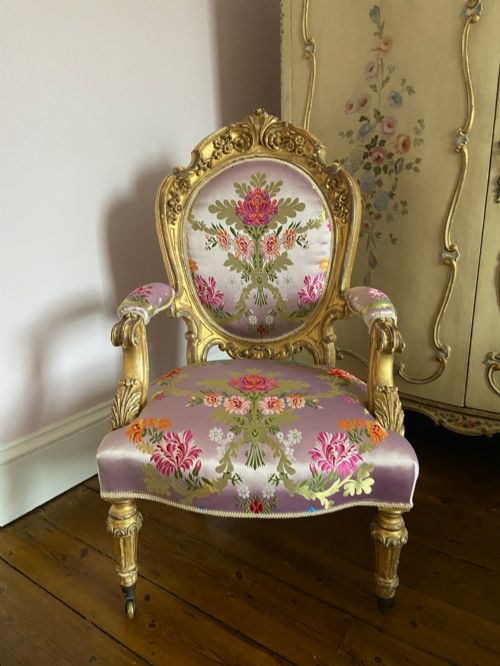
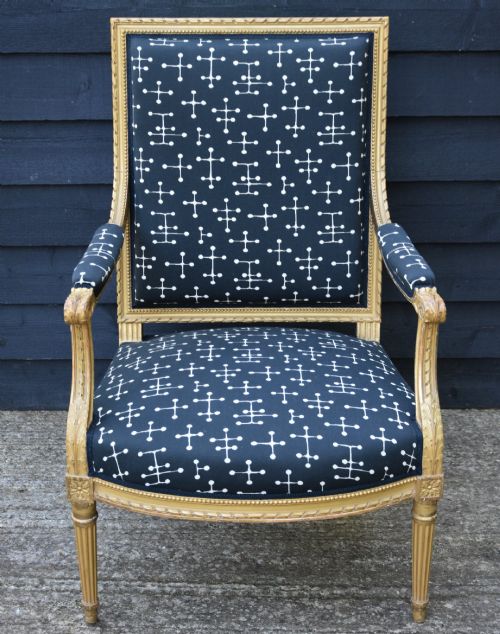
A gold gilt chair brings decorative carving and metallic brilliance to a room, offering seated elegance drawn from French and English revival periods.
Gold Gilt Chair
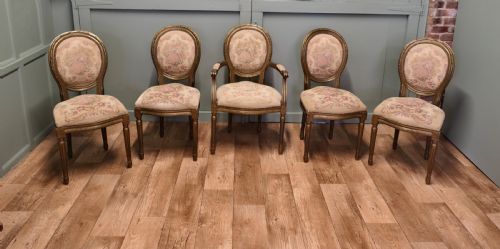
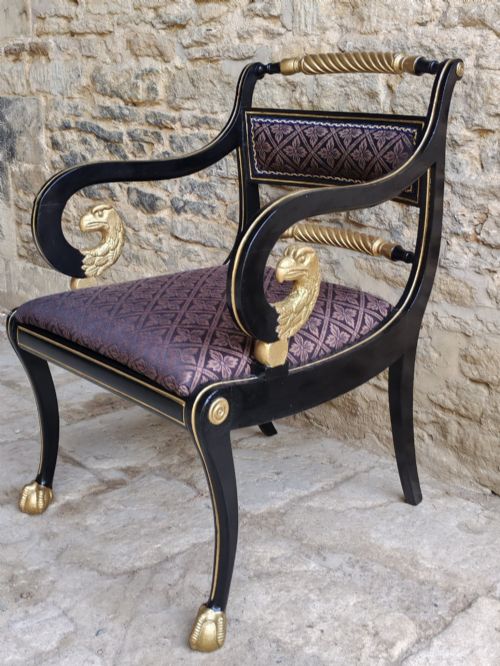
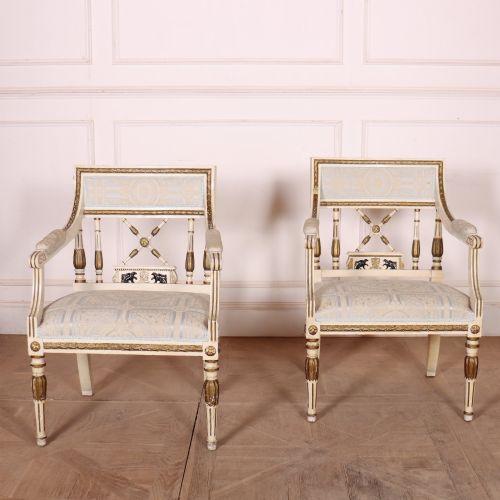
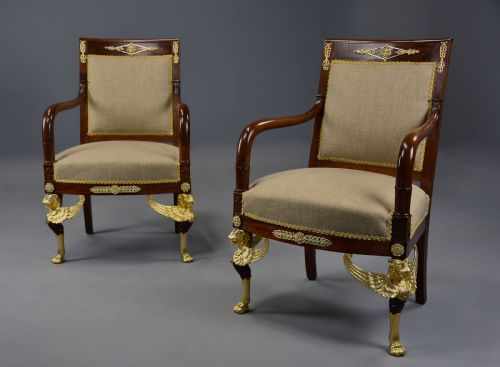
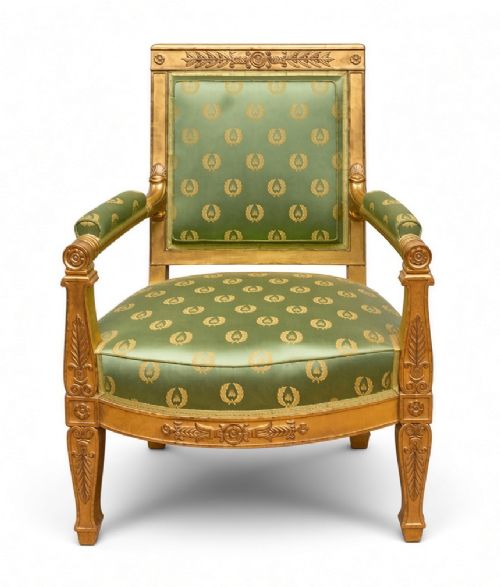
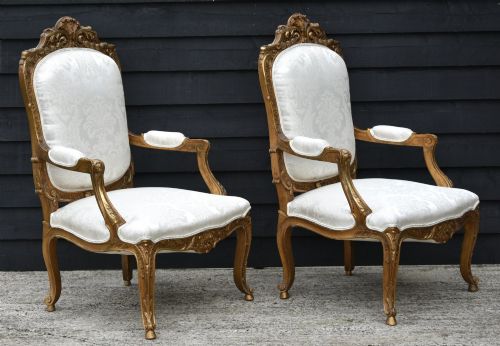
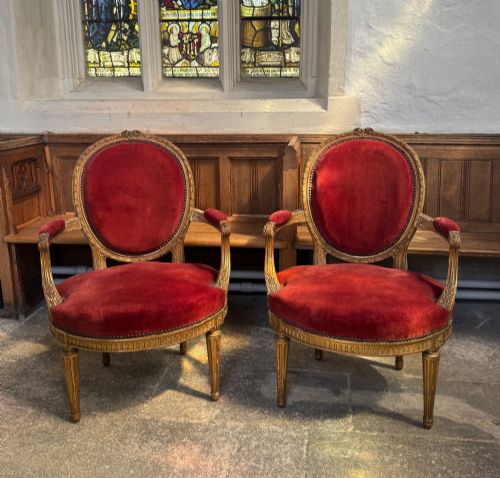
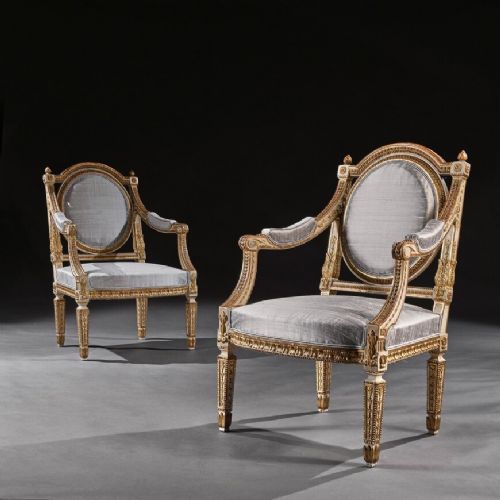
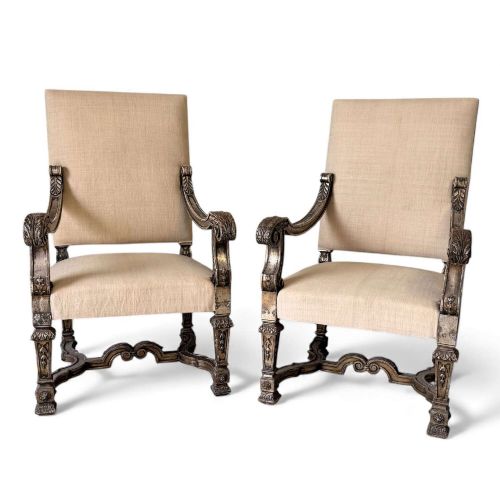
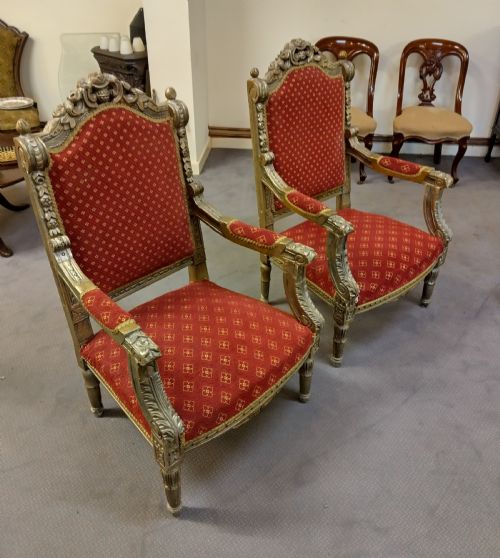
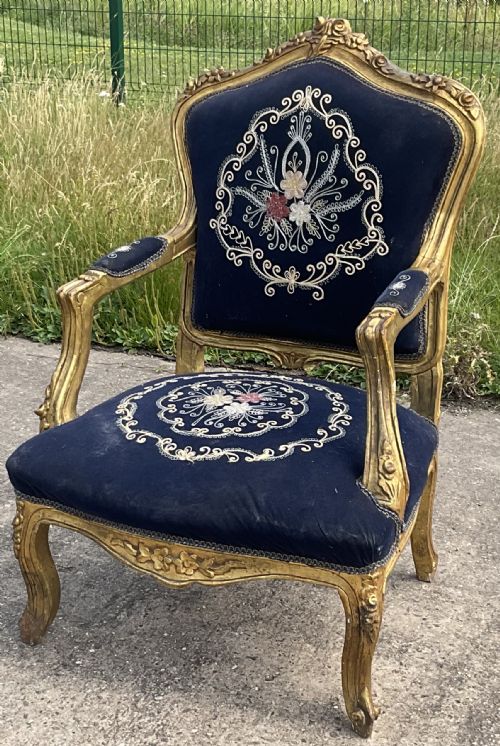
When you search for a gold gilt chair, you encounter seating built across the nineteenth and early twentieth centuries, drawing heavily on French court aesthetics like Louis XVI and Rococo revival styles. The pieces on this page comprise armchairs, open armchairs termed fauteuils, side chairs, and occasional chairs originating from French, English, Italian, and Swedish makers.
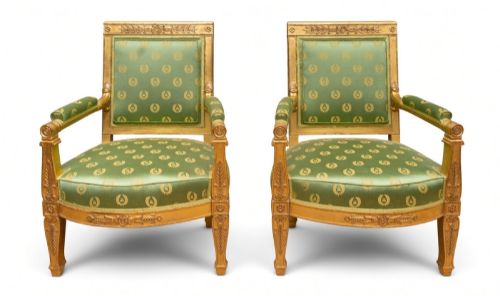
Most examples belong to the nineteenth century or the early decades of the twentieth, often reflecting historical revivals including Baroque, Empire, and Regency designs. You will regularly find pairs and larger suites alongside single salon and dining chairs upholstered in silk, velvet, or damask fabrics.
Materials and construction
The underlying frames are typically formed from timber such as beech, mahogany, or walnut, selected for stability before receiving their surface finish. Artisans applied gold leaf or gilt finishes over these wooden structures, frequently incorporating detailed hand-carved ornamentation along the crest rails, arms, and cabriole legs.
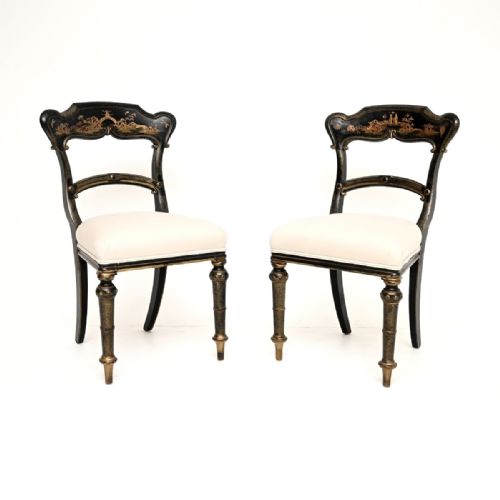
Upholstery forms an integral part of the construction, utilising materials like silk, velvet, and decorative fabric secured to support the seat and backrest. Brass elements and painted highlights occasionally appear alongside the primary giltwood framework to accentuate specific design motifs.
An oil painting titled The Sedan Chair shares space here with actual chairs, proving that even artists occasionally wanted to join the seating arrangement.
Distinguishing quality factors
The distinction between standard production and top-tier examples rests upon the crispness and depth of the wood carving. Fine pieces display sharply defined botanical or scroll motifs executed by hand, whereas lesser examples show softer, shallower detail from simplified machining or wear.
Construction integrity and the authenticity of the gilding further divide the range. Original giltwood surfaces exhibiting layered application contrast with later painted finishes, while structurally rigid frames with traditional joinery outlast those showing looseness in the joints.
Jacob Desmalter·Blaise Maucuy·Delapoer Downing
The Gold Gilt Chair Glossary
- Giltwood
- Wood that has been coated with gold leaf or a metallic gilt finish. This surface treatment gives the frames their characteristic reflective metallic appearance.
- Fauteuil
- An open-framed armchair with upholstered seat and back and exposed wooden arms. These chairs originate primarily from French stylistic traditions.
- Bergère
- An enclosed armchair featuring upholstered sides padded and built into the frame. They typically include a loose squab cushion over the seat.
- Rococo Revival
- A nineteenth-century design movement mimicking the curved lines, asymmetrical scrolls, and floral ornamentation of the eighteenth-century French style. Pieces from this period emphasise exuberant decorative carving.
- Louis XVI Style
- A neoclassical design vocabulary defined by straight tapered legs, geometric framing, and classical motifs. Chairs in this style present a more restrained rectilinear silhouette than their Rococo predecessors.
Gold Gilt Chair: Frequently Asked Questions
What is a giltwood armchair?
A giltwood armchair is a wooden seat finished with a layer of gold leaf, combining structural woodwork with metallic surface decoration. These pieces were designed to display status and artistic craftsmanship in formal reception rooms.
Examples on this page span various revival periods, featuring open or enclosed arms and upholstered padded components designed for ornamental display as much as for sitting.
How do I identify Louis XVI style chairs?
Louis XVI style chairs are distinguished by straight, fluted legs, rectangular or oval backs, and classical architectural detailing. They reject the curving asymmetry of earlier Rococo forms in favour of proportion and symmetry.
Scroll through the listings to observe how these pieces incorporate carved ribbon twists, acanthus leaves, and neat joinery characteristic of the neoclassical revival.
Were these chairs used as dining furniture?
While many gilt chairs served as salon or occasional seating, larger matching sets were produced specifically for formal dining spaces. These dining chairs combined decorative gilded frames with durable upholstered seats.
Sets ranging from small groups to larger suites of matching chairs demonstrate how these pieces accommodated extended dining arrangements in period homes.
How should I care for silk upholstery?
Silk upholstery requires careful protection from direct sunlight and moisture to prevent fibre degradation and fading over time. Gentle dusting with a soft brush helps maintain the fabric without straining the delicate threads.
Many period chairs feature replacement silk or velvet fabrics that require professional textile cleaning methods suited to historic or decorative materials.