

Carved French Provincial Commode
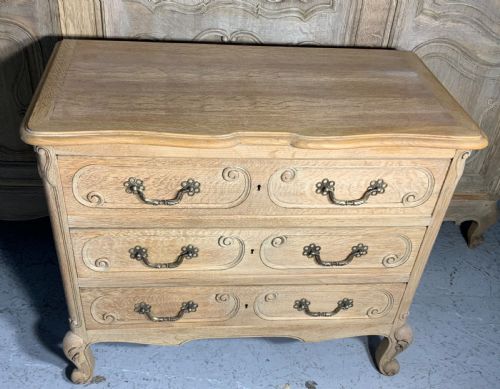
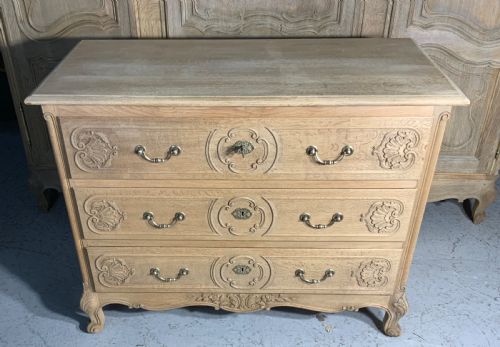
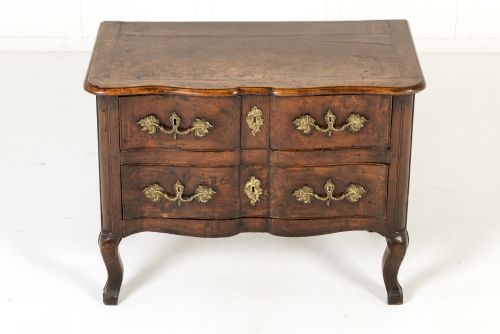
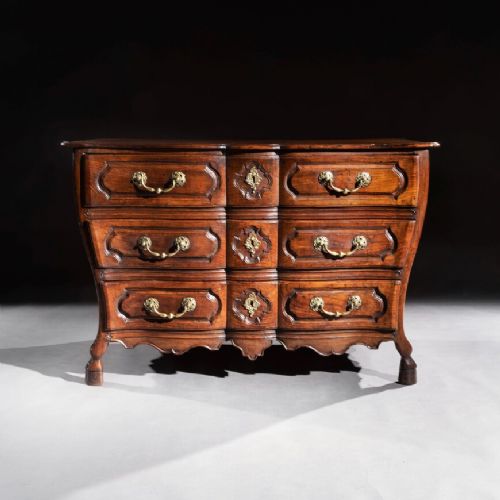
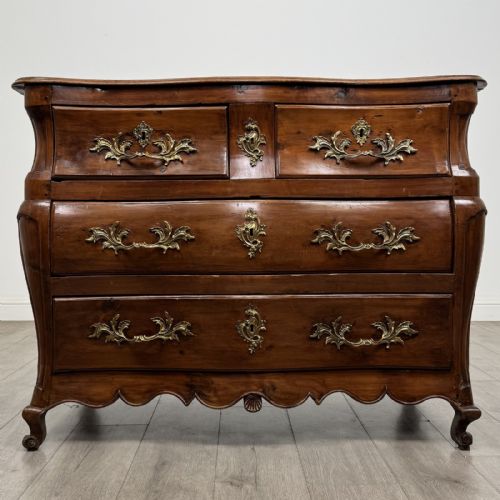
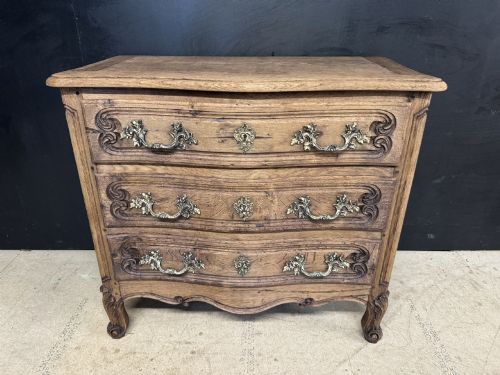
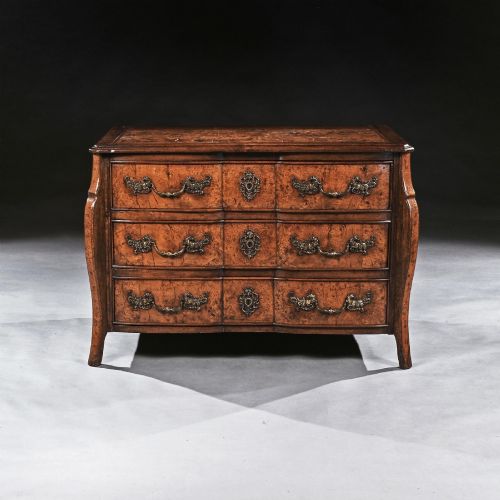
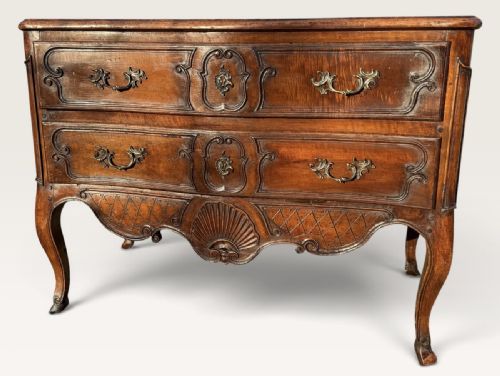
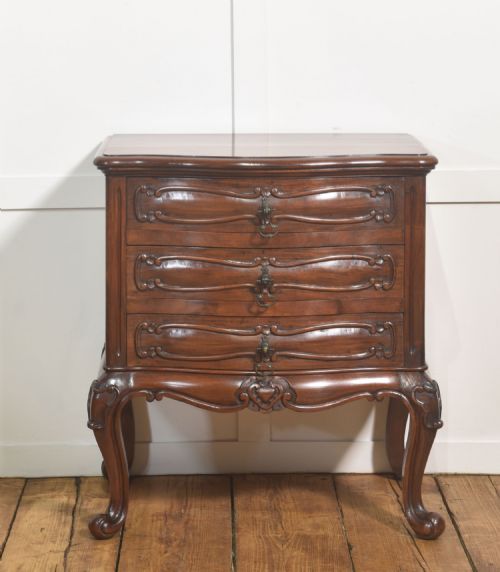
A carved french provincial commode brings rustic regional craftsmanship and sculptural serpentine fronts into a room.
Carved French Provincial Commode
When searching for a carved french provincial commode, buyers encounter low, sturdy chests of drawers originating from regional French cabinetmakers working outside Paris. These pieces span eighteenth-century originals to later nineteenth and twentieth-century revivals, including Louis XV and Gustavian interpretations.
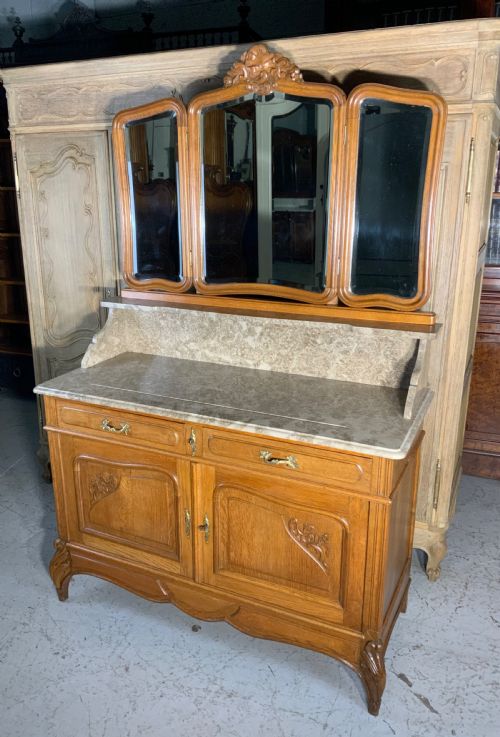
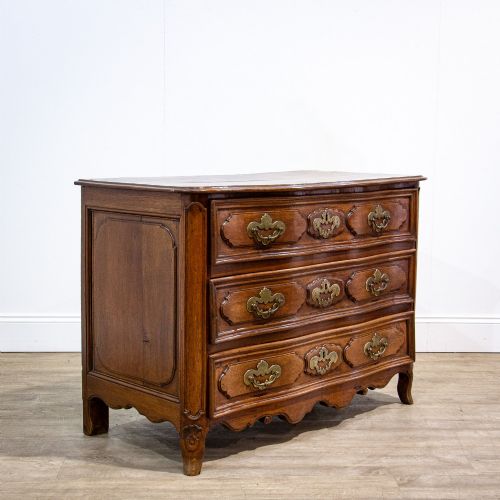
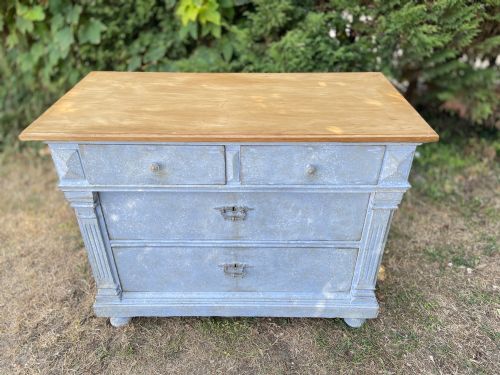
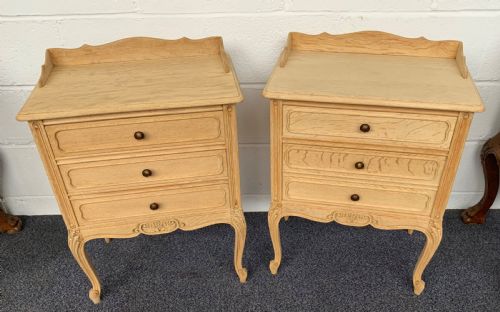
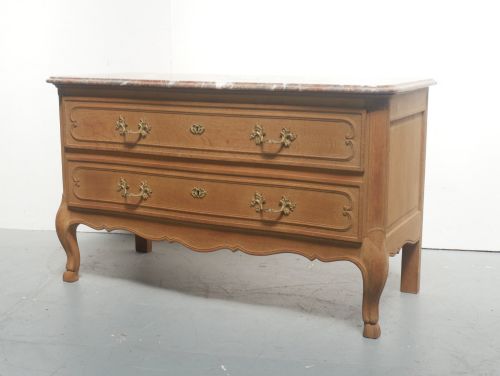
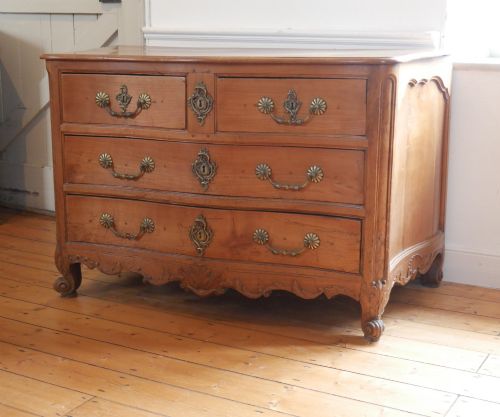
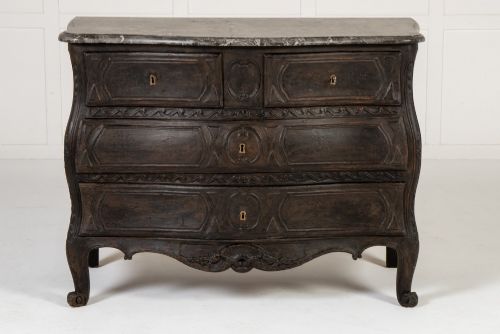
The most common examples on this page are eighteenth-century walnut or chestnut chests, alongside twentieth-century bleached oak and painted versions. Forms range from straight-fronted chests to bombe profiles and serpentine shapes, often paired with marble tops or matching bedside cabinets.
Materials and construction
Cabinetmakers built these pieces using solid regional timbers like oak, walnut, chestnut, cherry, and burr elm, frequently mounting them with heavy brass hardware. Surfaces were carved directly into the timber, left with a natural grain, painted, or ebonised.
Many eighteenth-century and revival pieces feature fitted marble tops in various shades, resting on dovetailed drawer construction and panelled carcasses designed for domestic storage.
Carved French Provincial Commode Retail Price Guide 2026
Typical asking prices for carved french provincial commode among the pieces listed under this phrase on Sellingantiques today, from the lower quarter to the upper quarter. They describe what is for sale here now, not the wider market.
Listings feature eighteenth-century walnut and cherry commodes alongside twentieth-century bleached oak chests and painted bedside cabinets.
Distinctions in quality
Quality rests upon the crispness of the hand-carving and the thickness of the solid timber used for the drawer fronts and structural frame. Pieces exhibiting fluid serpentine or bombe contours require greater skill from the joiner than flat-fronted variants.
The integrity of the timber, the presence of period brass handles, and the harmonious integration of fitted marble tops distinguish the finer examples from simpler provincial utility pieces.
The Carved French Provincial Commode Glossary
- Bombe
- A swelling, convex furniture shape curving outward toward the base. This profile demands advanced woodworking skill and appears frequently on eighteenth-century regional pieces.
- Serpentine
- A front profile shaped with a central concave curve flanked by two convex sweeps. This contour adds movement and visual lightness to heavy timber chests.
- Provincial
- Describing furniture made in the French regions outside Paris. These pieces often interpret fashionable court styles with simpler local materials and rustic charm.
- Bleached oak
- Timber treated to lighten its natural tone, a finish seen on several twentieth-century French items. It highlights the grain while modernising the appearance of heavy oak furniture.
Carved French Provincial Commode: Frequently Asked Questions
What is a french provincial commode?
A French provincial commode is a regional chest of drawers made in the French countryside rather than in Paris. These pieces adapt fashionable urban styles, such as Louis XV designs, into sturdier local timbers.
Cabinetmakers utilised solid walnut, oak, chestnut, and cherry, incorporating carved details and curved fronts suited to domestic life outside the capital.
How do I date an 18th century commode?
Dating an eighteenth-century commode involves examining the hand-cut dovetails, timber shrinkage, and tool marks inside the drawer construction. Regional pieces often display idiosyncratic joinery that differs from standardised factory production.
Stylistic cues like asymmetric rococo carving, shaped aprons, and original brass hardware also help anchor a piece to the period.
Where should I place a commode?
A commode functions well in a hallway, living room, or bedroom as a primary storage surface and display area. Marble-topped versions offer durable surfaces for lamps, ceramics, or decorative objects.
Their low profile allows them to sit beneath mirrors or artwork without overwhelming smaller wall spaces.