
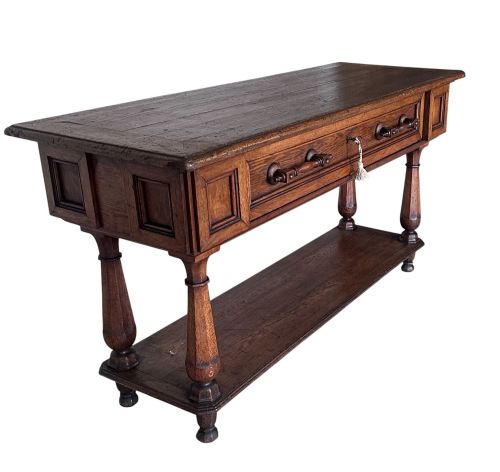
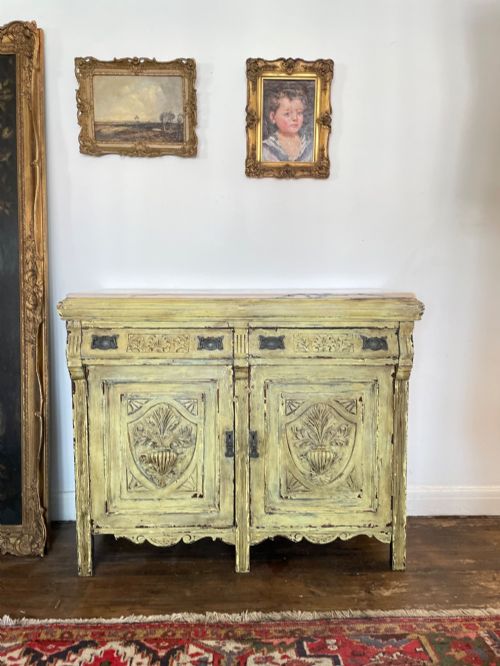
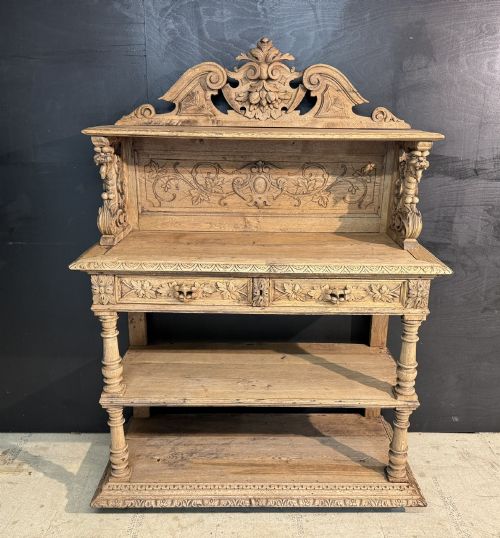
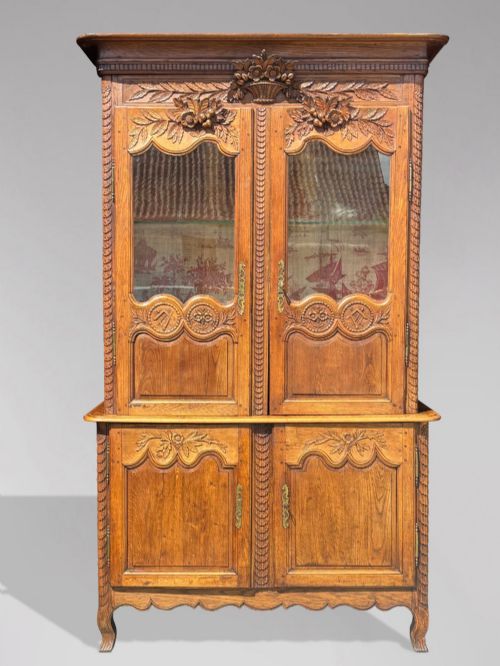
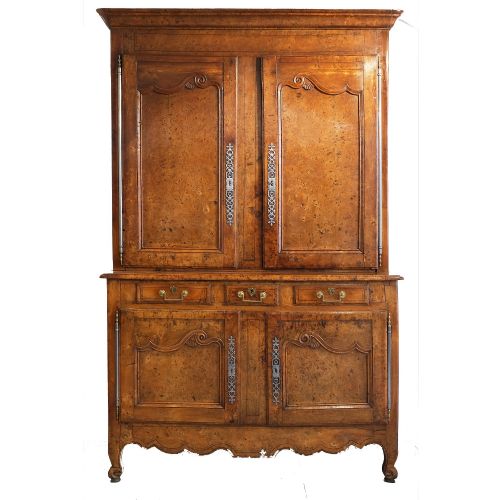
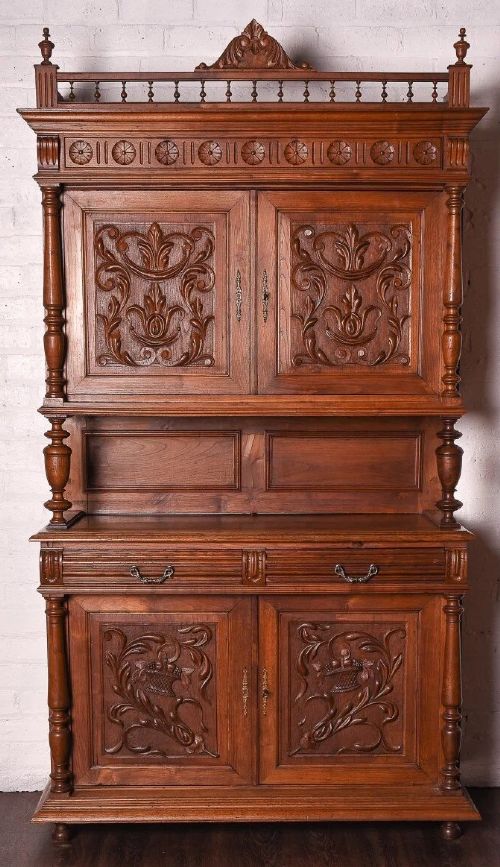
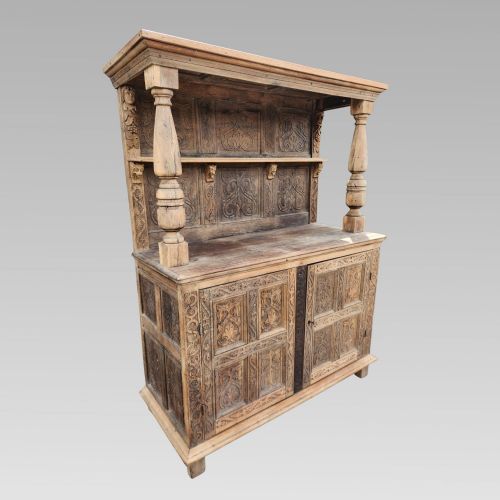
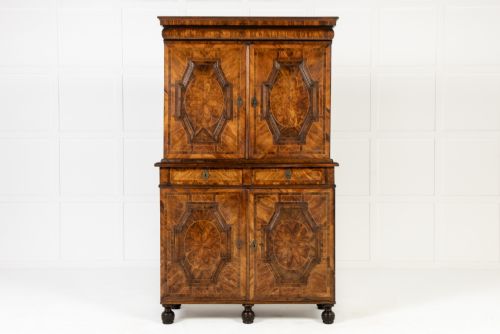


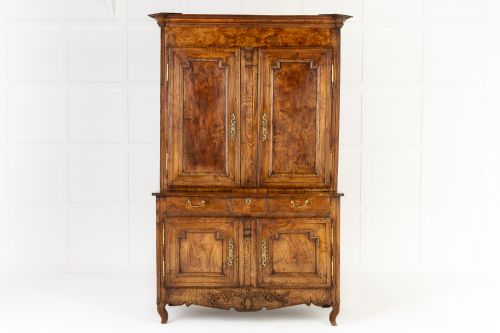

Carved French Provincial Buffet
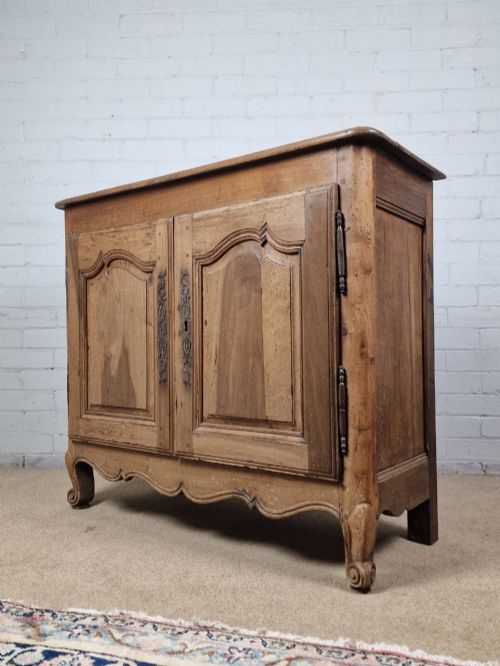
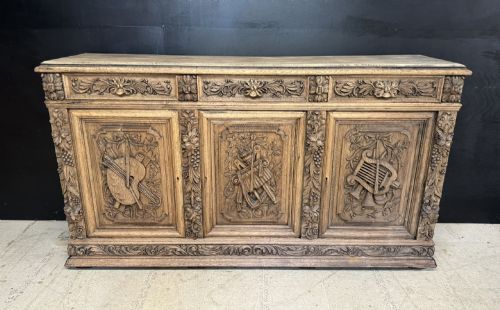
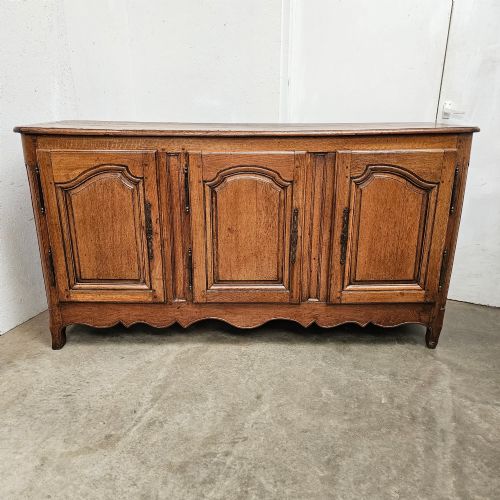
A carved french provincial buffet brings substantial regional character and timber warmth to a room, offering deep storage through heavy panelled doors.

Carved French Provincial Buffet
You are most likely to meet 18th-century and 19th-century examples fashioned from oak, walnut, and cherrywood. These utilitarian forms served regional households for storing provisions, linens, and tableware before finding a place in modern dining spaces and kitchens.
The regional origins dictate the decorative vocabulary, showing regional variations in carving depth and panel construction. Provincial workshops adapted metropolitan Louis XV and Baroque motifs into sturdier, earthier expressions tailored to local domestic needs.
How they were made
The construction relies heavily on solid timber boards joined by traditional framing techniques, frequently utilising oak, walnut, ash, and elm. Cabinetmakers built these pieces to endure generations of daily domestic use through robust mortise and tenon joints.
Carving was executed directly into the solid timber framework rather than applied in separate mouldings. Iron and brass hinges, alongside fitted locks and escutcheons, secure the heavy panelled doors and drawers.
Several survival examples retain the marks of game storage, whispering of old hunting kitchens and hearty rural feasts.
What varies in quality
The standard of a carved french provincial buffet depends on the crispness of the hand-carving and the integrity of the timber. Pieces retaining their original patinated surface and uncompromised structural timbers sit at the upper end of the scale.
Proportion and scale also separate utilitarian regional items from finer cabinetwork. Balanced door panels, well-chosen timber grain, and minimal timber replacement distinguish superior provincial examples.
The Carved French Provincial Buffet Glossary
- Buffet deux corps
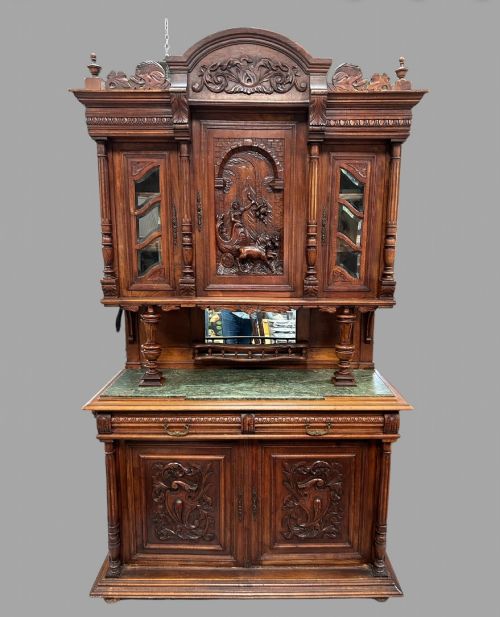
- A tall two-tier storage piece comprising a lower cupboard section surmounted by a smaller upper cabinet. This large format provided extensive storage for provincial households.
- Enfilade
- A long sideboard or buffet featuring a sequence of doors in a single horizontal line. These long storage units originated in French dining rooms for serving food.
- Parquetry
- Geometric wood inlay work arranged in patterns across table and cabinet tops. Artisans used contrasting timbers to create decorative surfaces.
- Escutcheon
- A protective plate surrounding a keyhole, usually fashioned from brass or iron. They prevented the surrounding wood from wearing down through repeated use of the key.
Carved French Provincial Buffet: Frequently Asked Questions
What is a buffet deux corps?
A buffet deux corps is a tall, two-tier cabinet consisting of a substantial lower cupboard base and a narrower upper section. These monumental pieces provided ample storage for household provisions and linens in provincial homes.
They stand as some of the most imposing storage furniture produced in French regional workshops during the eighteenth and nineteenth centuries.
How were these buffets used originally?
These pieces served as heavy-duty storage for food, tableware, and domestic goods in provincial dining spaces and kitchens. The wide tops also functioned as serving surfaces during large family meals.
Over generations, their robust construction allowed them to adapt easily to modern dining rooms and kitchens as primary storage cupboards.
Which timbers are most common?
Oak and walnut dominate the surviving examples from provincial French workshops. Cabinetmakers also utilised cherrywood, ash, elm, and fruitwood depending on local timber availability.
These dense hardwoods provided the structural strength required for large panelled doors and deep storage cavities.
How do I distinguish eighteenth-century pieces?
Eighteenth-century examples display hand-carved details integrated directly into the solid timber frame rather than applied mouldings. They frequently exhibit pegged joints, hand- forged iron hardware, and deep natural patination acquired over centuries.
Timber choice and regional carving styles also offer strong indicators of a piece's age and origin.