
Carved French Drawers
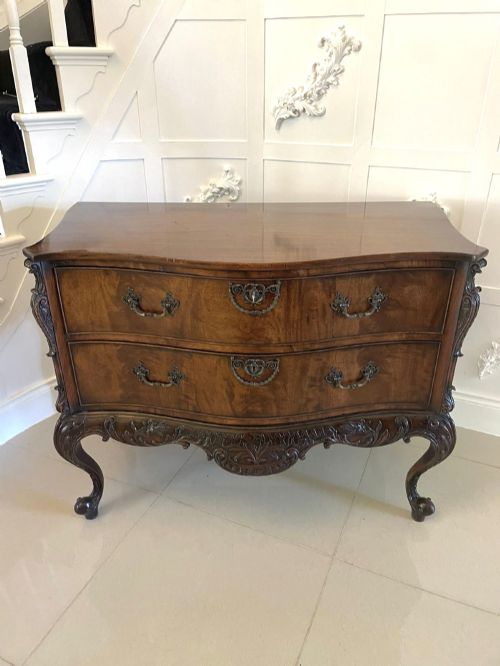
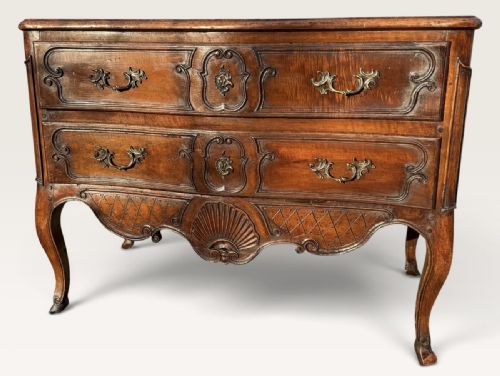
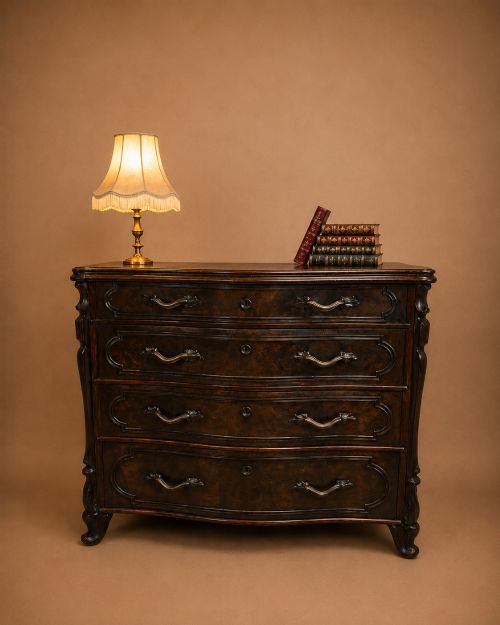
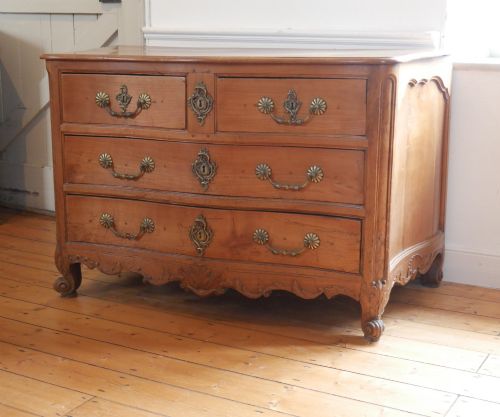
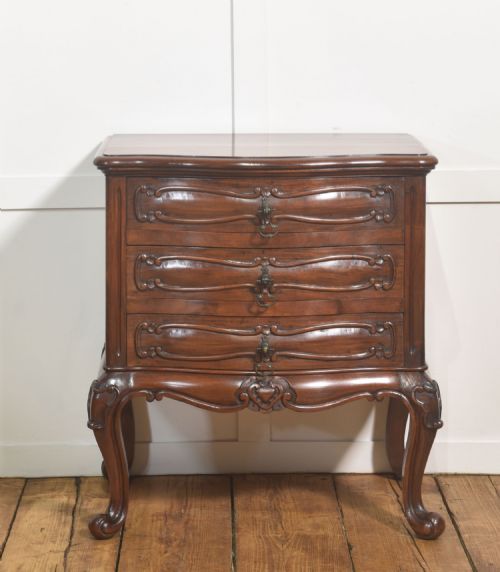
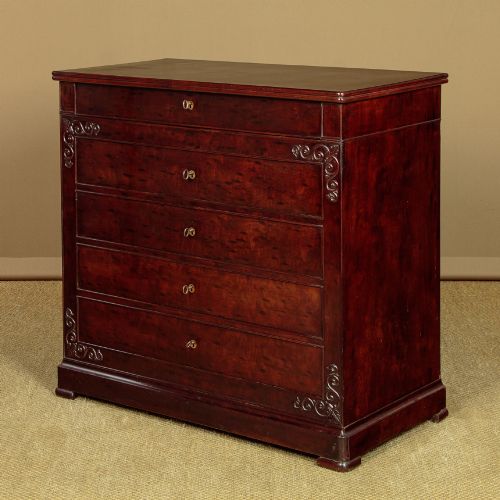
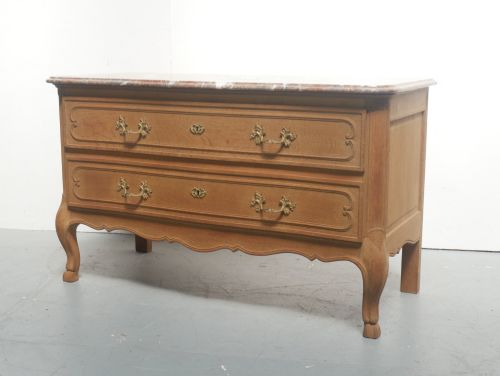
These carved french drawers offer substantial storage built with regional character across walnut, oak, and chestnut from the eighteenth and nineteenth centuries.
Carved French Drawers
Buyers seeking carved french drawers generally find commodes, chests of drawers, and bedside cabinets originating from provincial workshops or city makers. These pieces span the eighteenth century through the early twentieth century, taking forms such as serpentine commodes, bombe shapes, and flat-fronted chests.
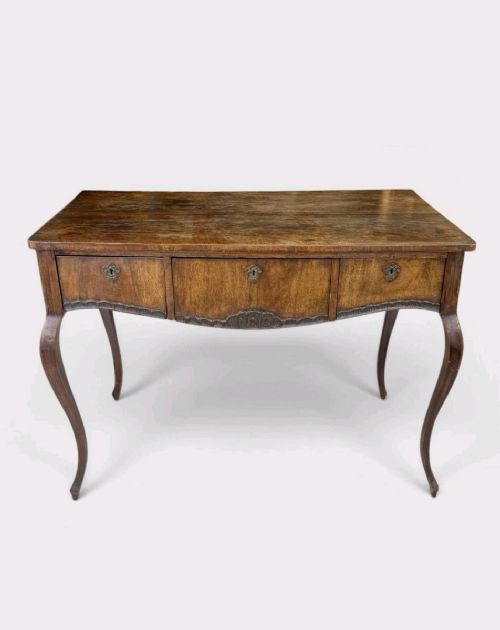
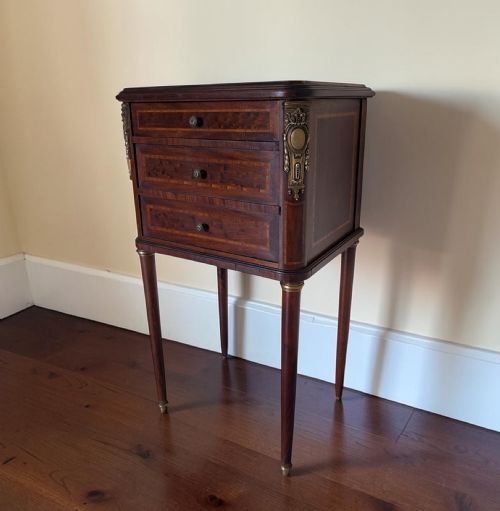
The selections on this page lean heavily toward nineteenth-century carved oak examples alongside eighteenth-century walnut and burr elm pieces. Alongside standard chests, inventory includes washstands, bedside tables, and writing tables featuring functional drawer arrangements.
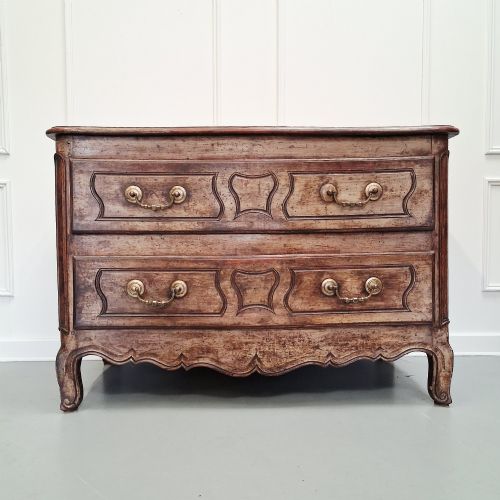
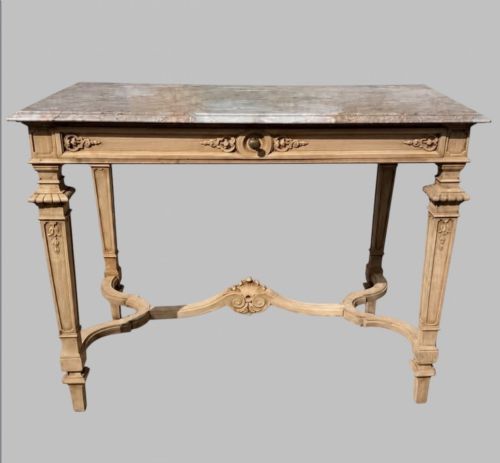
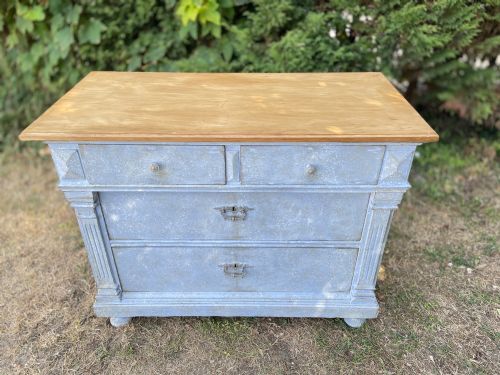
Regional styles dominate the selection, including Louis XV Provincial, Louis Philippe, and French Country designs. Buyers encounter both polished hardwood finishes and deliberately bleached oak surfaces that highlight the hand-carved detailing.
How they were made
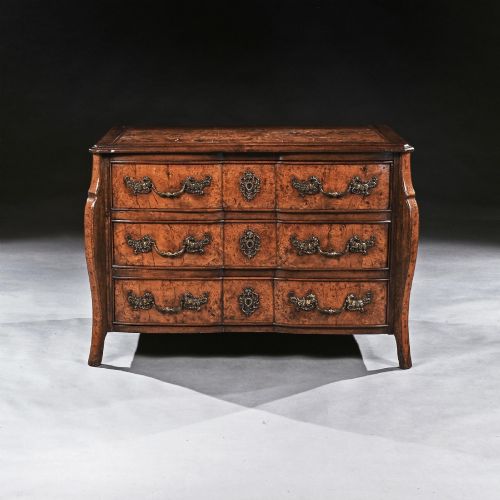
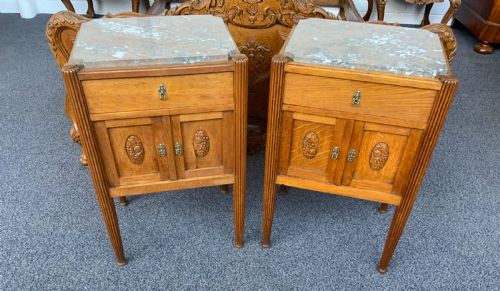
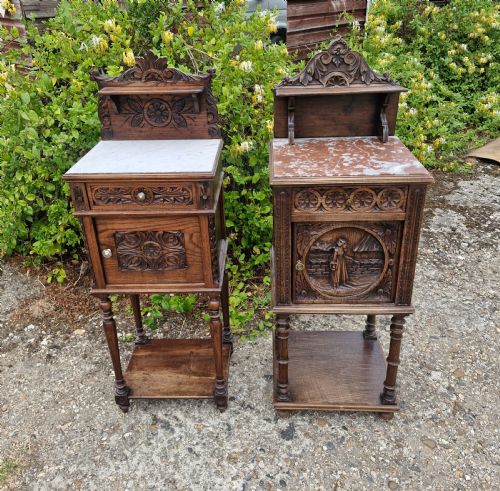
Cabinet makers utilised dense hardwoods such as oak, walnut, mahogany, and chestnut to construct these carcases, often applying burr elm veneers for decorative grain patterns. Selected pieces incorporate contrasting brass hardware, iron fittings, and inset marble tops.
Woodcarvers applied relief motifs directly into solid timber drawer fronts and frame panels, employing traditional joinery methods suited to provincial French workshops. Surfaces received polished finishes, ebonised treatments, or paint applications depending on the period and regional fashion.
Several bedside cabinets arrive in matching pairs, ready to argue over who gets the drawer with the smoothest glide.
What varies in quality
Quality rests on the depth and definition of the hand-carving integrated into the solid timber frame rather than applied mouldings. Superior examples display crisp relief work that follows the natural grain and contours of the wood.
Construction integrity separates finer pieces, evident in drawer linings, dovetailed joints, and the balanced movement of serpentine or bombe fronts. The selection of timber, particularly figured walnut or burr elm, dictates the visual weight and finish of the commode.
The Carved French Drawers Glossary
- Commode
- A low chest of drawers or cabinet originating in France during the seventeenth century. These pieces typically feature multiple drawer tiers and decorative hardware.
- Bombe
- A swelling, outward-curved commode shape popular in eighteenth-century French furniture design. This profile requires advanced woodworking skill to build.
- Serpentine
- A front contour characterised by a convex centre flanked by concave curves. This line appears frequently on eighteenth and nineteenth-century chests.
- Parquetry
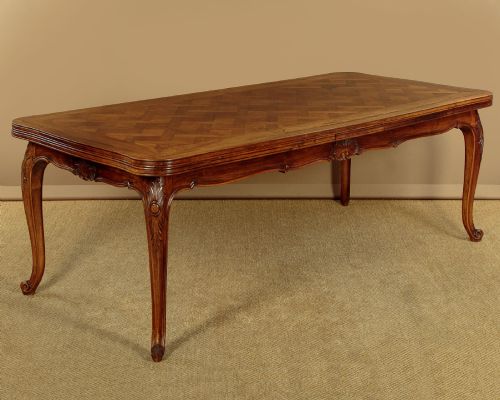
- Geometric wood veneer patterns arranged across table tops and drawer faces. It creates subtle contrast using different timber species.
- Bleached oak
- Timber treated to lighten the natural dark tone of mature oak. This finish became common on twentieth-century interpretations of older French furniture forms.
Carved French Drawers: Frequently Asked Questions
What is a french commode?
A French commode functions as a low chest of drawers, generally housing two to four deep drawers within a decorative wooden frame.
Historically placed in bedrooms or reception rooms, these pieces combined functional storage with prominent surface display areas for decorative objects.
How do I care for a marble top?
Marble tops on antique cabinets require gentle cleaning with warm water and soft cloths to preserve the polished surface.
Avoid acidic cleaning agents or harsh chemicals that can etch the stone and dull the natural finish over time.
How do I date a carved chest?
Dating relies on examining the timber species, construction joinery, hardware styles, and the specific regional design influences present.
Eighteenth-century examples often display hand-cut dovetails and native walnut, while later nineteenth-century pieces utilise machine-sawn elements and distinct revival styling.
Where were provincial chests made?
Provincial chests emerged from regional French workshops outside Paris, including regions like Normandy, Provence, and the Loire Valley.
Local cabinet makers adapted court styles from the capital into sturdier domestic furniture utilising local timbers such as oak, chestnut, and walnut.