




Carved Figure Side Table
A carved figure side table brings sculptural presence into a room, supporting surfaces with figures carved from walnut, mahogany, or giltwood.
Carved Figure Side Table
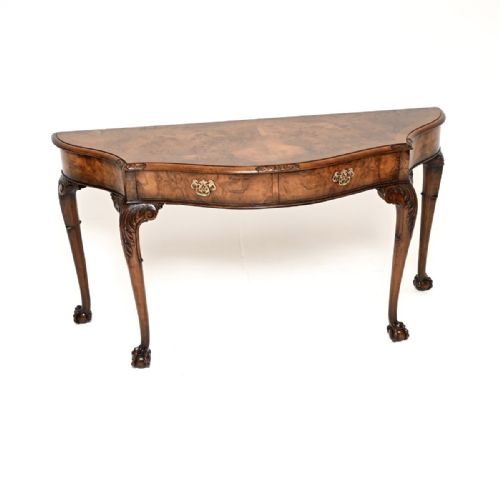
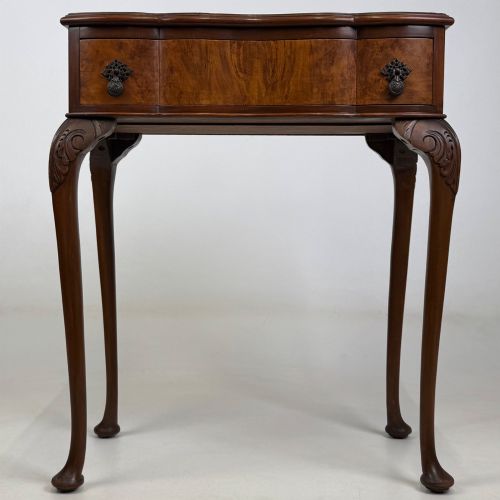
A carved figure side table spans console tables, occasional tables, and stands, drawing upon Victorian, Regency, and Queen Anne styles.
The pieces on this page range from nineteenth-century walnut figure stands to twentieth-century console tables incorporating carved supports.
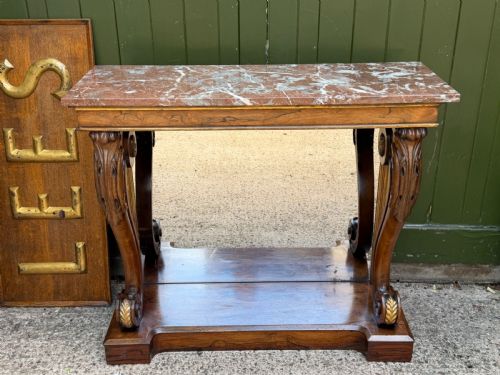
Buyers encounter variations including side tables, lamp tables, and work tables, alongside console tables featuring marble tops and carved wood bases.
Materials and construction
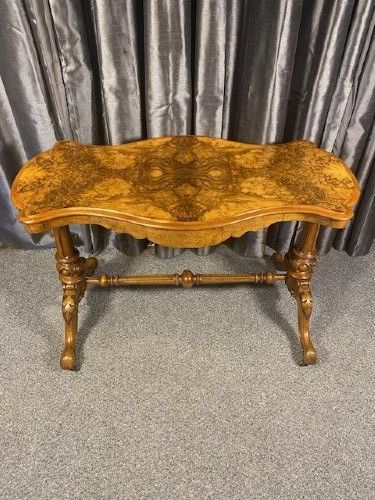
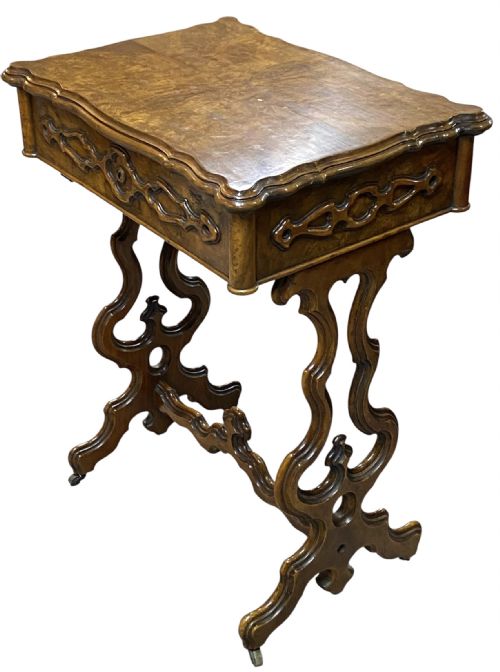
Cabinetmakers utilised timber like figured walnut, burr walnut, and mahogany for the main carcase and top surfaces.
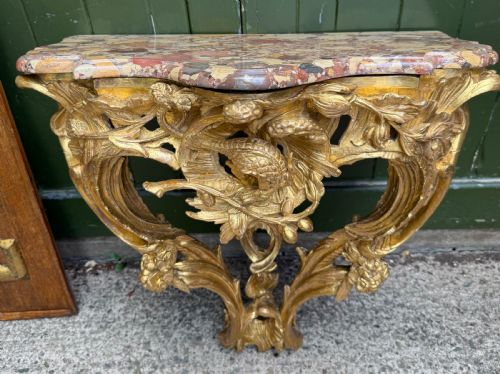
Carved wooden figures, giltwood details, and parcel-gilt highlights were shaped by hand before being integrated into console and occasional tables.
Marble inserts, particularly figured types such as breche d'alep, were fitted directly into wooden console frames.
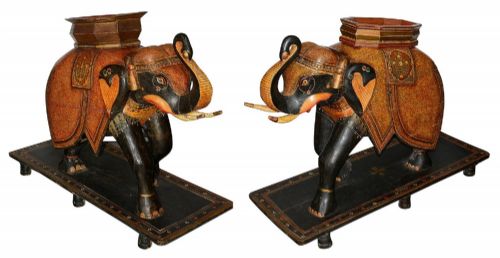
Carved wooden elephants and lacquered figures stand ready to support surfaces alongside more traditional European console bases.
Gradations of quality
The precision and depth of the carving on the figural supports determine the distinction between standard production and superior work.
Timber selection governs visual weight, with highly figured walnut and burr veneers creating greater richness than plain boards.
Integration between the structural table base and the carved figure indicates the competence of the workshop.
Maple & Co·Boothroyd Sons & Rimmer
The Carved Figure Side Table Glossary
- Console table
- A table designed to stand against a wall, frequently supported by carved brackets or figures rather than four independent legs.
- Figured walnut
- Timber cut to reveal intricate grain patterns such as burr or crotch formations, highly prized for table tops.
- Giltwood
- Wood that has been coated with fine gold leaf or powder, commonly seen on nineteenth-century decorative console frames.
- Parcel-gilt
- Partial gilding applied to highlight specific carved details while leaving the underlying wood grain visible elsewhere.
- Sutherland table
- A narrow drop-leaf table with hinged flaps that fold down almost vertically, supported by swinging legs.
Carved Figure Side Table: Frequently Asked Questions
What is a carved figure side table?
A carved figure side table is a small table incorporating human or figural sculpture into its support structure, functioning as a console, lamp, or occasional table.
These pieces combine functional surfaces with decorative carving, originating from periods such as the Regency and Victorian eras.
How were console tables used historically?
Console tables were traditionally placed against drawing room walls beneath mirrors, serving as display surfaces for decorative objects.
Their architectural placement meant attention focused primarily on the front legs and the figural carving beneath the top.
How do I identify a Regency table?
Regency tables often display classical Neoclassical restraint, utilising rosewood, parcel-gilt details, and inset marble tops.
Proportions tend to be formal and architectural, reflecting early nineteenth-century design influences.
How do I care for a walnut table?
Walnut surfaces require protection from direct sunlight and excessive moisture to prevent timber movement or veneer lifting.
Routine dusting with a dry cloth maintains the polish on figured and burr walnut without harming the timber.