


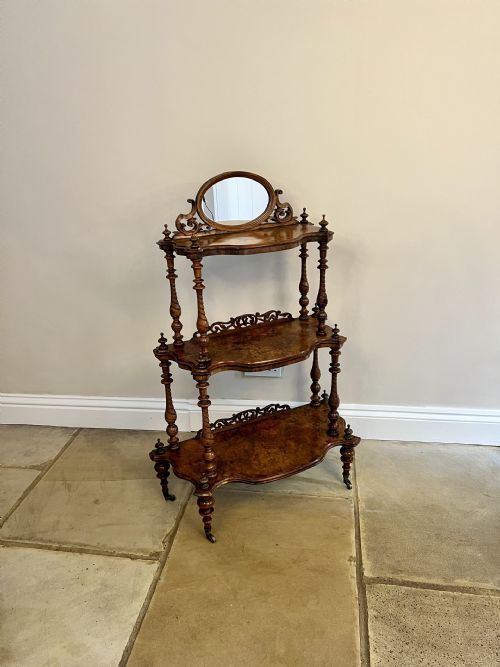
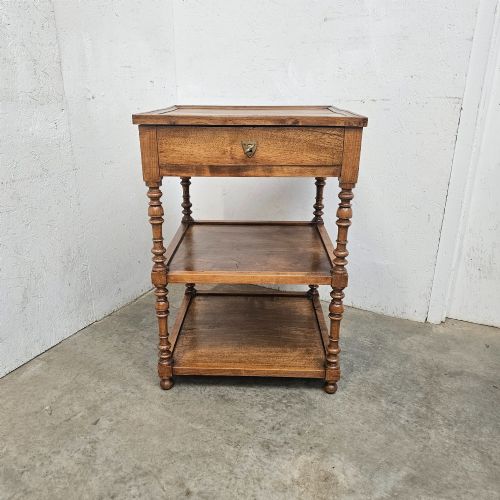

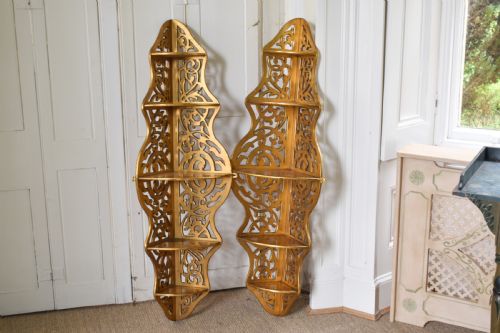
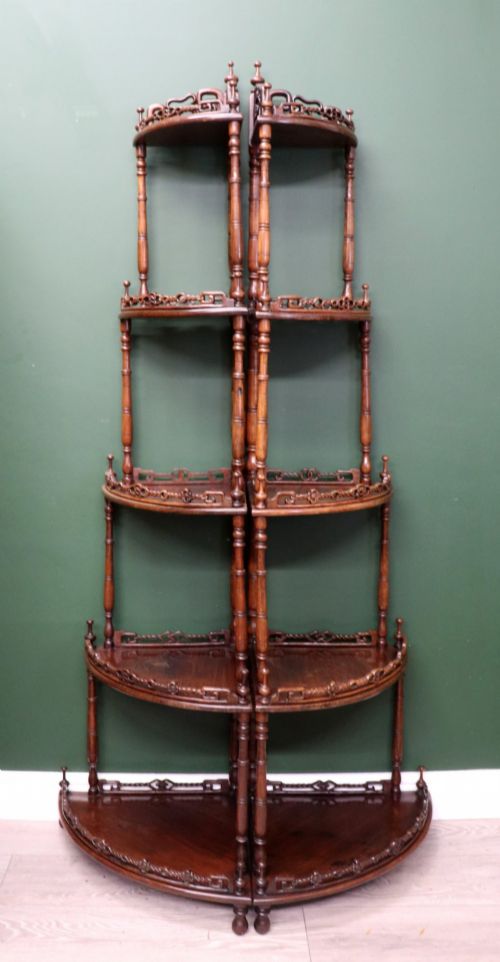
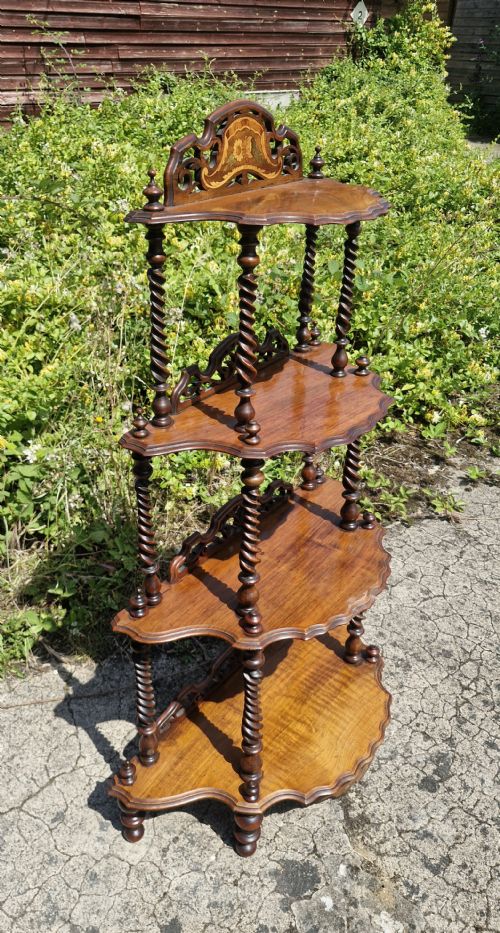
Carved Etagere Shelf
A carved etagere shelf brings open display space and layered timber tiers to a room, holding small collections with architectural grace.
Carved Etagere Shelf
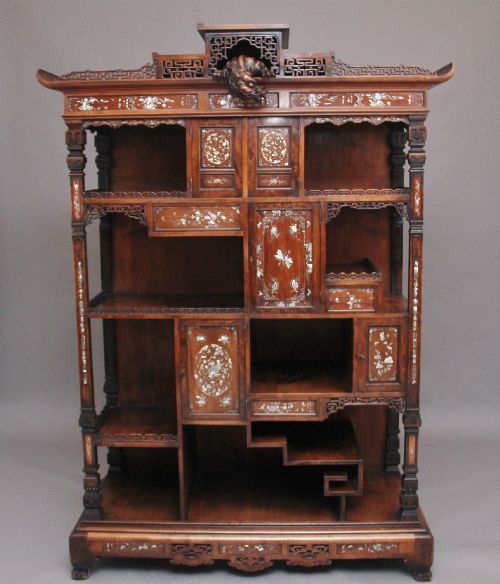
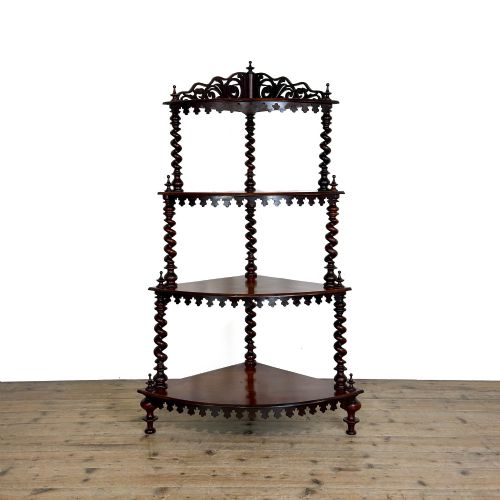
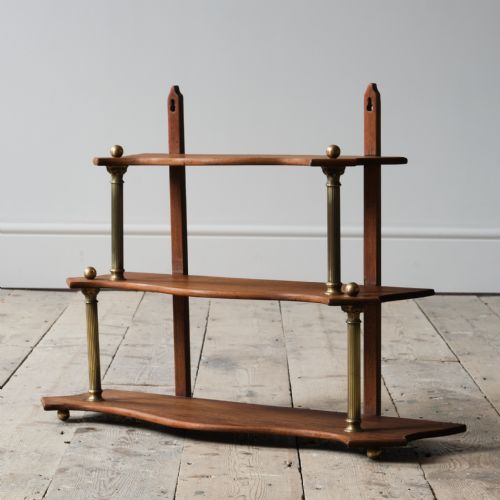
A carved etagere shelf spans multi-tiered display furniture designed to hold small decorative objects, porcelain, and books. These pieces appear in forms ranging from freestanding corner whatnots and music stands to wall-mounted shelves and glass-fronted display cabinets.
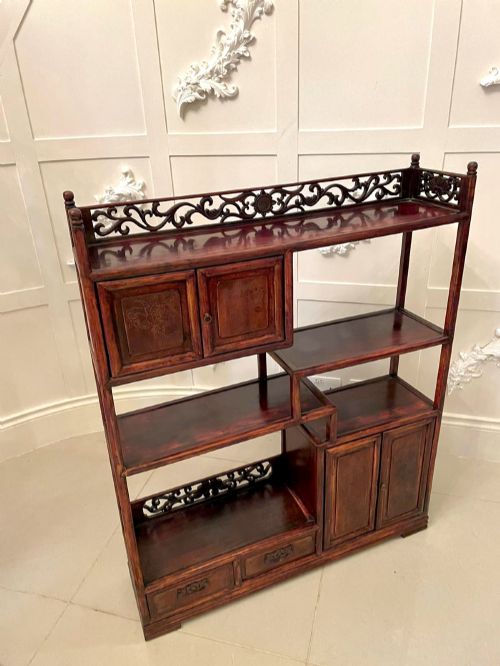
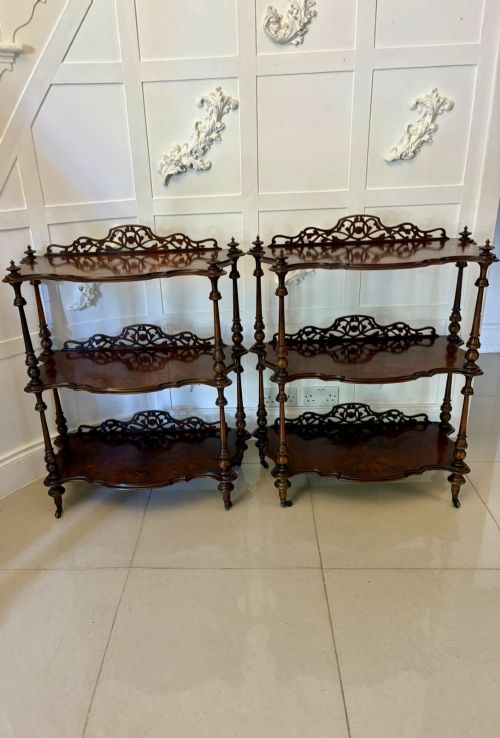
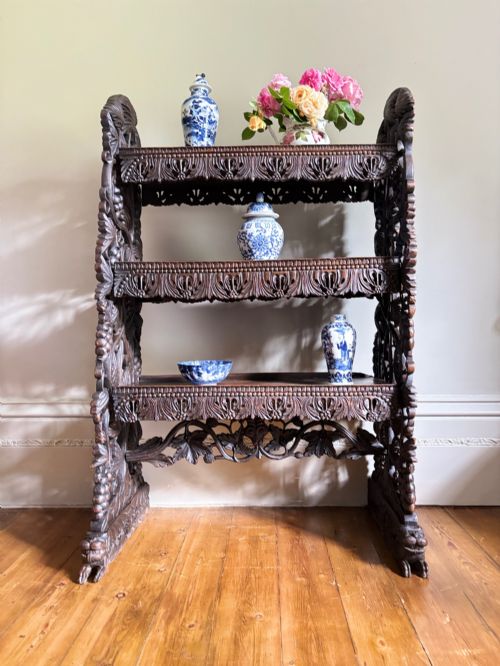
Buyers meet Victorian burr walnut and mahogany examples most frequently on this page, alongside earlier Regency designs and distinct global styles like Anglo-Indian padauk and Chinese hardwood cabinets. The selection includes corner units, central standing buffet shelves, and intricate bamboo aesthetic pieces.
Makers and workshops of the nineteenth century produced these multi-level stands to serve both utilitarian storage and formal display functions in domestic interiors. The surviving objects reflect diverse aesthetic movements, from French Rococo revival to Japanese-inspired shodona cabinets.
How they were made
Makers constructed these tiered units primarily in figured timbers such as walnut, mahogany, rosewood, and burr walnut, selecting richly grained veneers for prominent display surfaces. Secondary structural elements often utilise solid hardwoods, while specialised decorative examples incorporate giltwood frames and brass hardware.
The construction relies on turned supports, carved columns, and precise joinery to bear the weight of multiple stacked shelves without losing stability. Elaborate pieces integrate hand-carved ornamentation, painted accents, marble inserts, and canework panels alongside glazed doors.
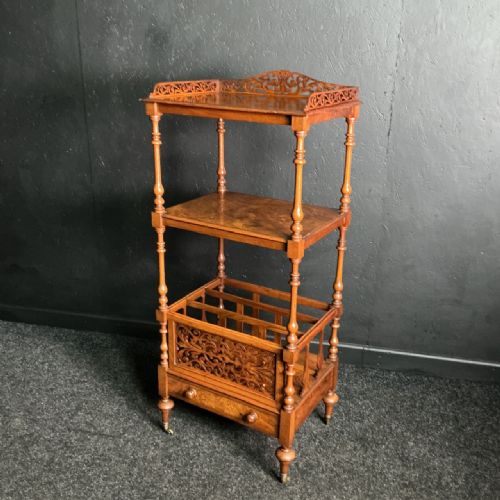
Object forms on this page include corner whatnots, music stands, wall shelves, and Japanese-inspired shodona cabinets.
What varies in quality
The standard of a carved etagere shelf rests upon the choice of timber veneer, the depth and crispness of the hand-carved decoration, and the overall structural integrity of the tiered supports. Superior examples display carefully matched burr walnut figures and robust turned or carved columns that sustain the weight of multiple levels securely.
Design ambition separates standard utility pieces from exhibition-quality works, with finer items incorporating labelled cabinetmaker attribution, complex fretwork, or integrated drawers. The harmony of the proportions across every tier dictates the visual success of the finished stand.
Gabriel Viardot·Edwards & Roberts·Strahan of Dublin
The Carved Etagere Shelf Glossary
- Etagere
- A piece of furniture consisting of a set of open shelves for displaying small objects or ornaments. These multi-tiered stands originated in France during the eighteenth century.
- Whatnot
- A freestanding piece of furniture with multiple tiers used for storing or displaying small items. Victorian examples in burr walnut and mahogany appear frequently.
- Shodana
- A traditional Japanese display cabinet featuring asymmetrical shelving and compartments. Export versions reached European markets during the nineteenth century.
- Padauk
- A heavy tropical hardwood known for its reddish colour and durability. Nineteenth-century Anglo-Indian makers utilised this timber for large shelving units.
- Burr walnut
- A veneer taken from the knotted growth of a walnut tree, prized for its swirling grain patterns. Cabinetmakers applied this decorative wood to the most prominent surfaces of Victorian whatnots.
Carved Etagere Shelf: Frequently Asked Questions
What is the difference between an etagere and a whatnot?
An etagere generally emphasises open display tiers for decorative objects, whilst a whatnot often refers specifically to nineteenth-century British multi-level shelving units with turned supports.
Both terms describe similar multi-tiered furniture, though etagere frequently appears in descriptions of continental European or lighter revival pieces.
How were these shelves used in Victorian homes?
Victorian households placed these tiered stands in parlours and drawing rooms to exhibit porcelain, small sculptures, and bound volumes.
Corner units and wall-hanging shelves maximised display space in smaller rooms without obstructing floor circulation.
Can these shelves hold heavy books?
Freestanding burr walnut and mahogany whatnots suit lighter display purposes rather than heavy library volumes, though portable bookshelves and lower buffet tiers handle greater loads.
Wall-mounted shelves require secure fixing to wall studs to support the weight of stacked timber and ornaments safely.
How do I identify a Regency period piece?
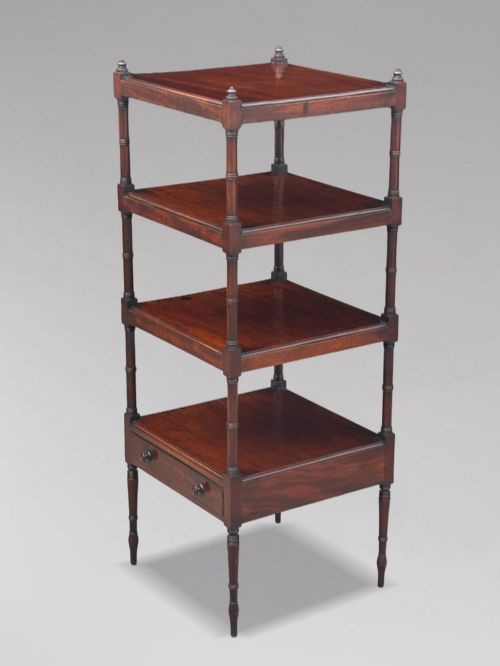
Regency pieces dating from the early nineteenth century feature classical restraint, architectural lines, and dark rosewood or mahogany grains.
They often display brass inlay or restrained reeded supports rather than the heavier carved ornamentation seen on later Victorian examples.