


Walnut Serpentine Shelf
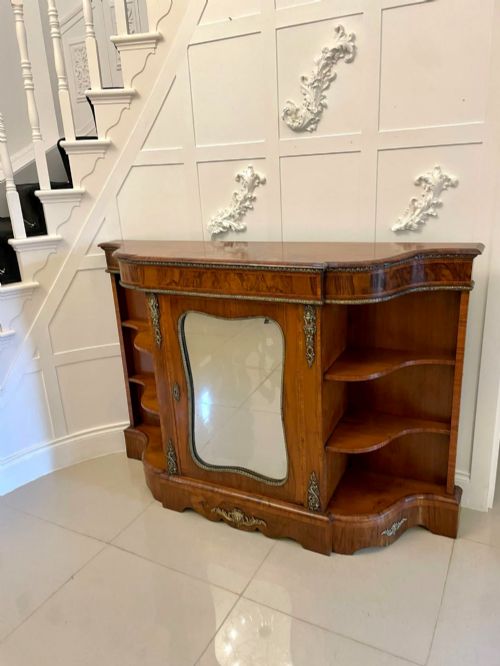
A walnut serpentine shelf brings curving Victorian timber and brass mounts together into a striking display piece that anchors a period interior.
Walnut Serpentine Shelf
When you search for a walnut serpentine shelf, you encounter Victorian display furniture shaped with a distinct undulating front edge. These pieces originate primarily from the nineteenth century, spanning decades such as the eighteen-fifties, sixties, seventies and eighties.
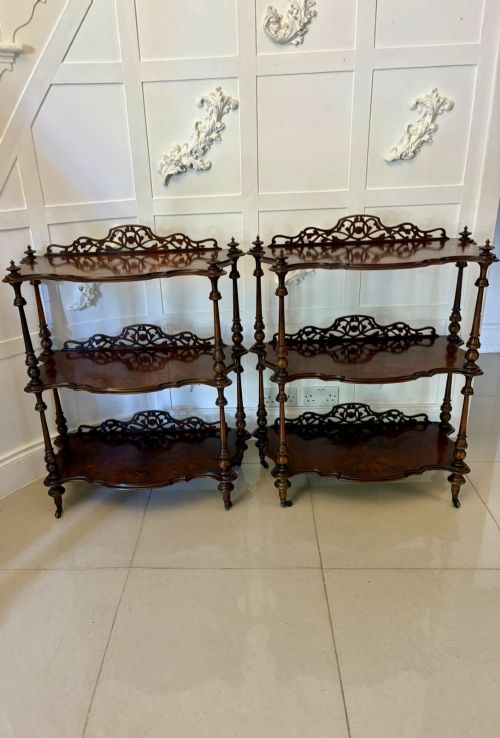
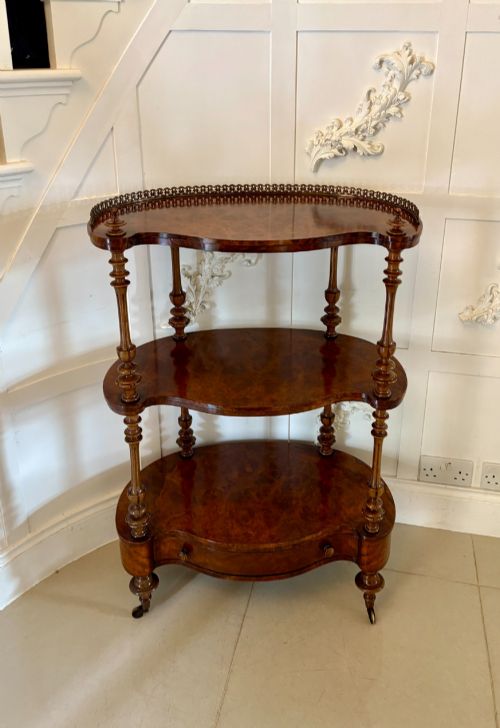
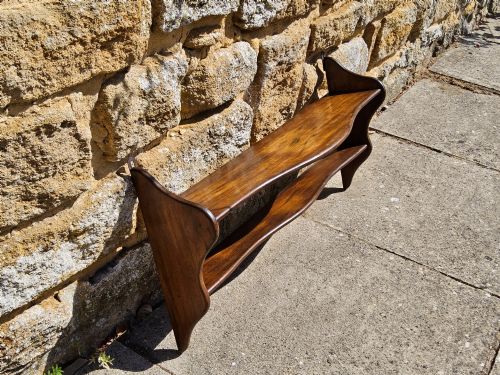
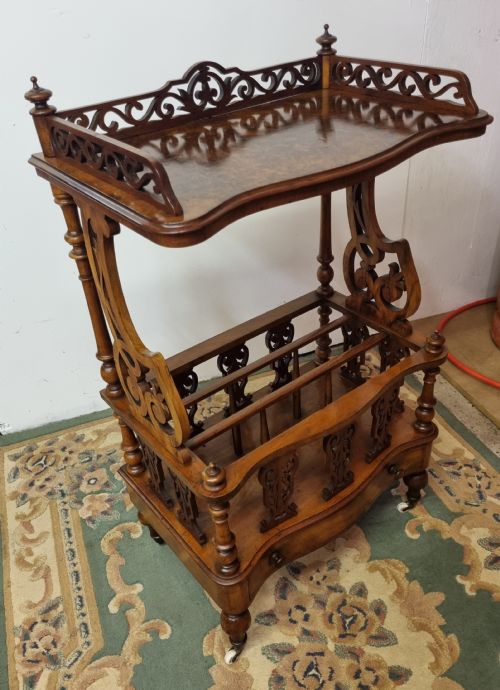
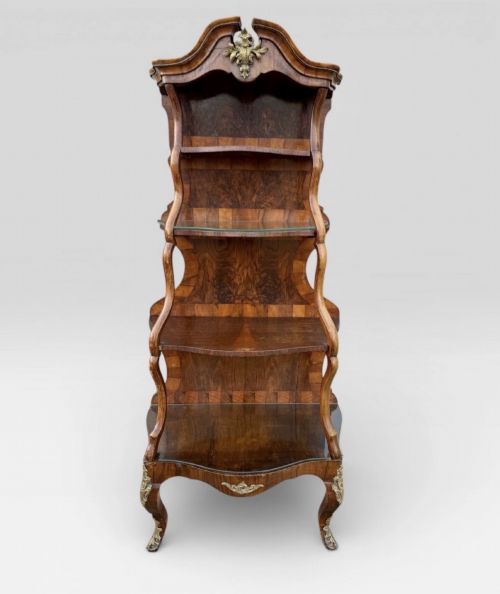
The items matching this search most frequently take the form of whatnots and etageres, alongside wall shelves and related display furniture. They emerge in styles including Victorian, Rococo Revival and French Chateau, reflecting mid-century cabinet-making tastes.
Makers utilised rich timbers to construct these items, giving collectors tiered platforms for displaying porcelain, glass or small ornaments. The serpentine profile softens the room and provides a dynamic counterpoint to straight-lined cabinetry.
How they were made
Cabinet-makers selected finely figured walnut and burr walnut veneers to cover carcases, laying the timber grains to catch the light across the curved shelves. This technique required expert hand-veneering to negotiate the tight sweeps of the serpentine front.
Workers mounted brass, ormolu and gilt metal details onto the timber framework, securing decorative mounts that accent the corners, borders and uprights. Glass elements and ceramic components also appear to complement the walnut structures.
Listings feature Victorian pieces from eighteen-fifty, eighteen-sixty, eighteen-seventy and eighteen-eighty, constructed in walnut, burr walnut and figured walnut.
What varies in quality
Quality rests upon the selection of the burr walnut veneer and the fluidity of the serpentine curve, where superior examples exhibit complex, matching grain patterns across every tier. Lesser pieces rely on plain timber surfaces with less rhythmic shaping.
The integration of ormolu or brass mounts marks the division between standard production and exceptional craftsmanship. Crisp, heavy cast metalwork that sits flush against the walnut elevates a piece above simpler variants.
The Walnut Serpentine Shelf Glossary
- Serpentine
- A shelf or furniture front shaped with a central convex curve flanked by two concave sweeps, creating a wave-like profile. This complex contour requires precise woodworking to execute successfully.
- Burr walnut
- Timber sliced from the growth warts of walnut trees, prized for its swirling, highly decorative grain patterns. It forms the primary visual surface on finer Victorian display pieces.
- Ormolu
- Gilt bronze mounts applied to furniture edges and supports for decorative effect. The technique involves treating metal with a gold amalgam before fixing it to the timber carcase.
- Whatnot
- A set of open shelves supported by slender upright pillars, designed for holding ornaments and books. Victorian makers produced these in tiered formats for corners and walls.
- Credenza
- A low cabinet, frequently featuring glass doors and mounted brass details, used for storage and display. These items often share the walnut construction and serpentine shaping seen in wall shelves.
Walnut Serpentine Shelf: Frequently Asked Questions
What rooms suit a walnut serpentine shelf?
These shelves fit living rooms, studies and hallways where open display space enhances the interior. Their curved profiles soften rigid wall lines.
Position them at eye level to showcase small ceramics, glass or books without overwhelming a compact room.
How do I identify Victorian walnut furniture?
Look for deep, rich walnut grain combined with nineteenth-century construction methods such as hand-cut dovetails and solid timber carcases. Ormolu mounts and turned uprights are typical indicators.
Check for the characteristic burr figuring and serpentine shaping that mark mid-century production.
Can these shelves hold heavy books?
Most pieces serve primarily as display platforms for decorative objects rather than heavy library storage. The tiered structure and slender uprights are engineered for lighter items.
Distribute weight evenly across the shelves to protect the historical timber joints and brackets.
How should I care for burr walnut?
Keep walnut furniture away from direct sunlight and heat sources to prevent the delicate veneers from drying or cracking. Dust regularly with a soft, dry cloth.
Apply occasional appropriate wax feeds sparingly to maintain the natural lustre of the nineteenth-century timber.