
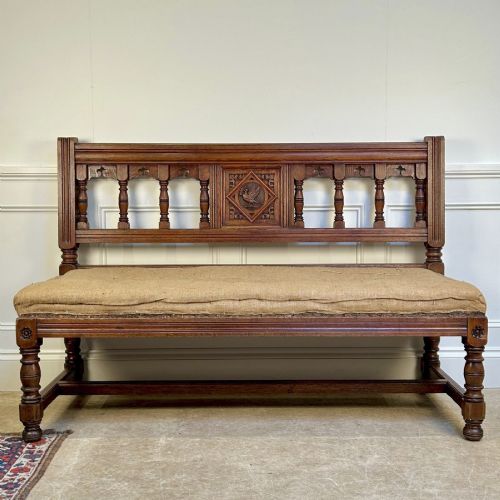
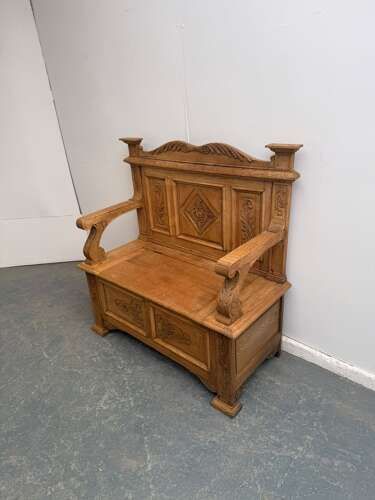
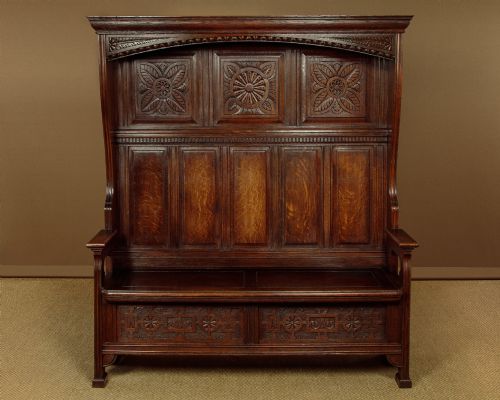
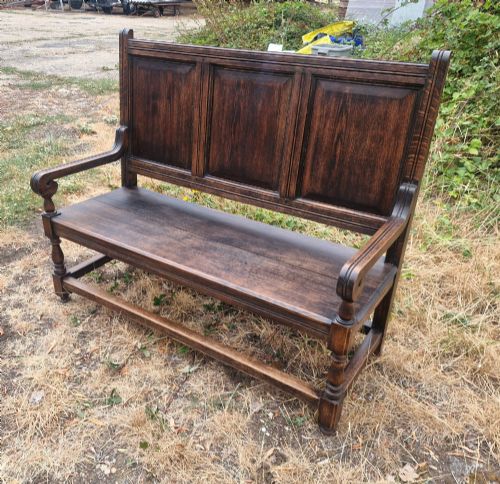
Carved Entryway Bench
A carved entryway bench gathers coats, hats, and boots while anchoring a hallway with solid timber presence.
Carved Entryway Bench
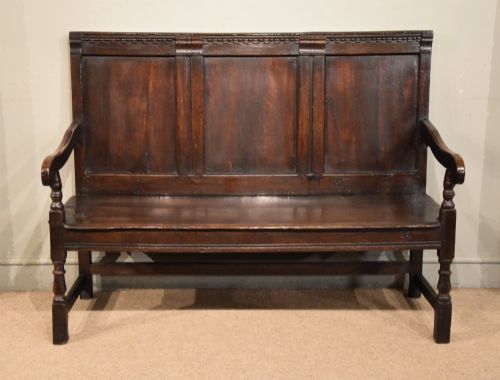
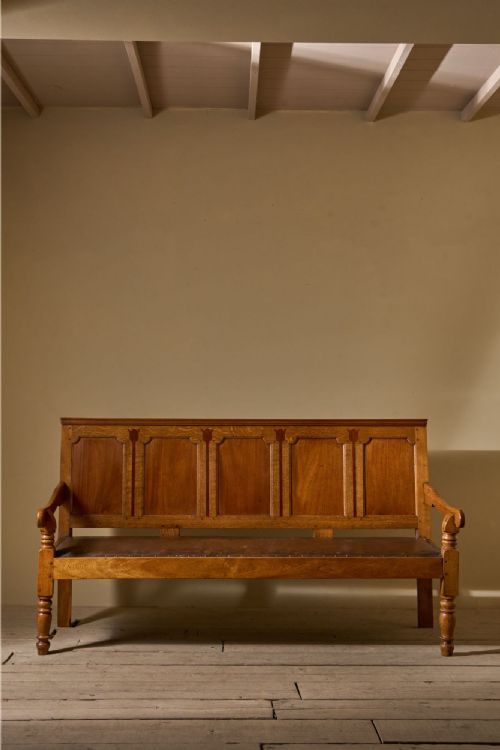
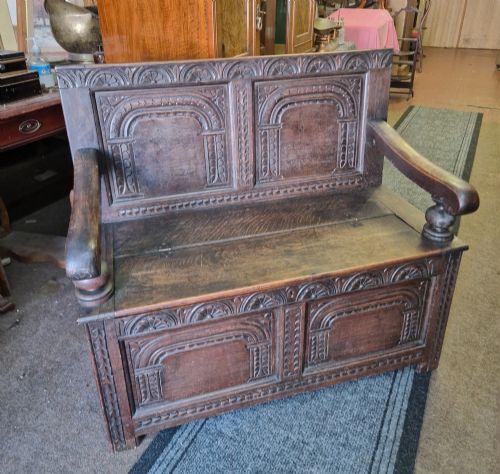
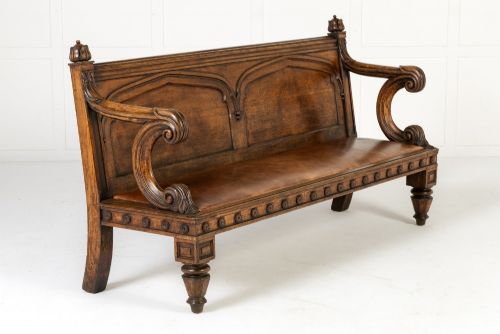
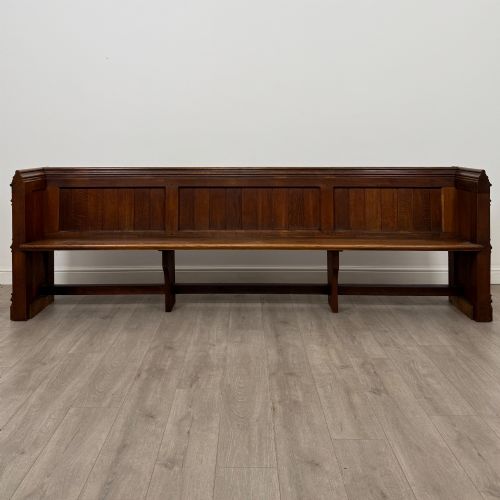
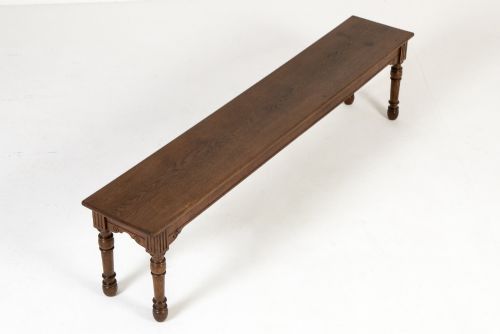
A carved entryway bench serves as practical seating and storage within a hallway, appearing in forms such as hall benches, settles, and monks benches. These items date from the seventeenth century through to the twentieth century, encompassing Georgian, Victorian, and Edwardian periods.
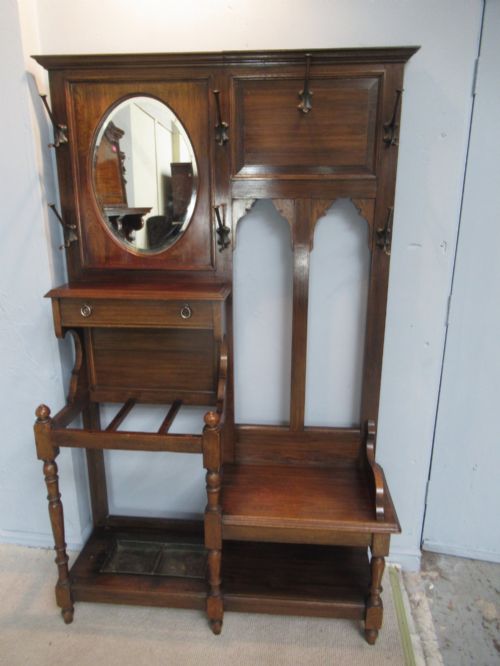
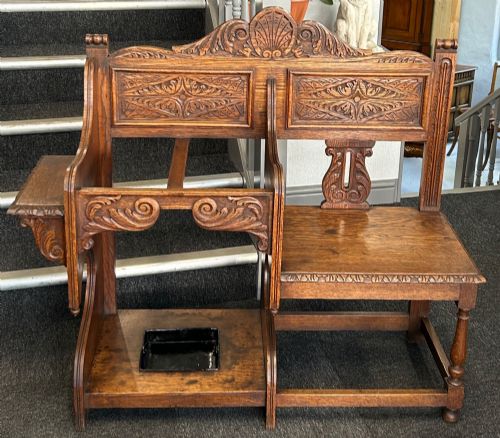
The pieces often incorporate dual functions, including built-in storage boxes beneath the seat, integrated stick stands, or canopy tops. Oak forms the primary material, alongside mahogany, walnut, and elm, reflecting English country and Gothic Revival styles.
How they were made
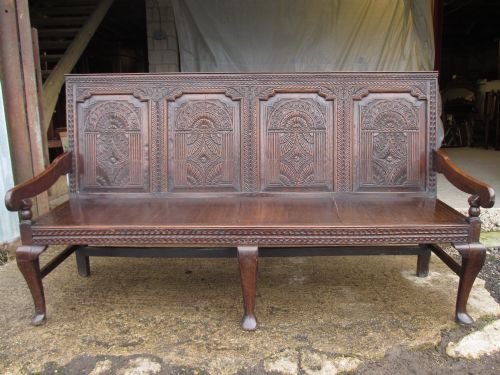
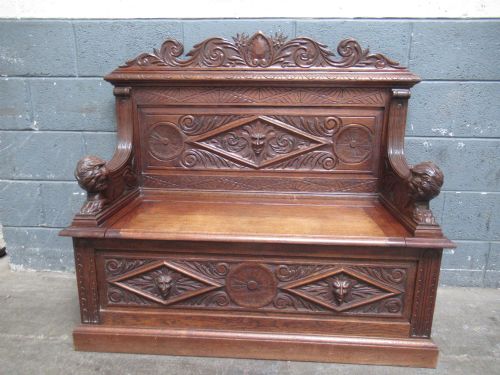
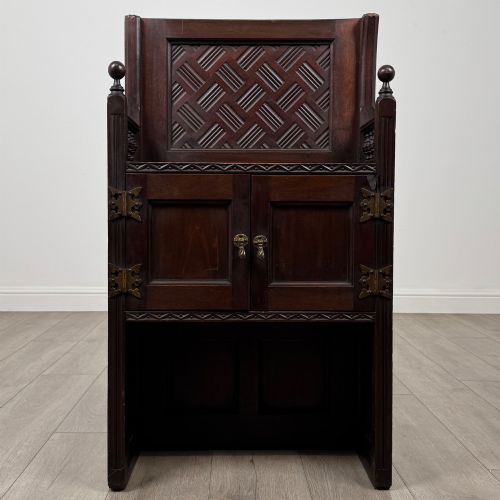
Carpenters constructed these seats predominantly from solid oak using traditional frame and panel joinery to accommodate seasonal wood movement. Surfaces received hand-carved ornamentation, linenfold panels, or incised geometric motifs characteristic of Jacobean and Gothic revivals.
Hardware additions such as brass coat hooks, umbrella wells, and hinge mechanisms complemented the timber construction. Selected examples utilised secondary timbers like elm for seats or incorporated fabric upholstery and leather elements.
Listings feature solid oak most frequently, accompanied by mahogany, walnut, and elm across Georgian, Victorian, and Edwardian periods.
What varies in quality
Quality rests upon the crispness of the hand-carving and the structural integrity of the timber framing. Pieces exhibiting deeply chiselled relief work and well-figured grain display superior craftsmanship compared to simpler utilitarian examples.
The integration of functional elements, such as smoothly operating box seat lids and original brass mounts, distinguishes finer workshops from standard production. Makers documented by stamps or labels also separate standard vernacular items from notable cabinet-maker commissions.
GIllows·James Shoolbred & Co.
The Carved Entryway Bench Glossary
- Settle
- A wooden bench with a high back, solid arms, and often a storage box beneath the seat. This form protected sitters from draughts in entrance halls.
- Monks bench
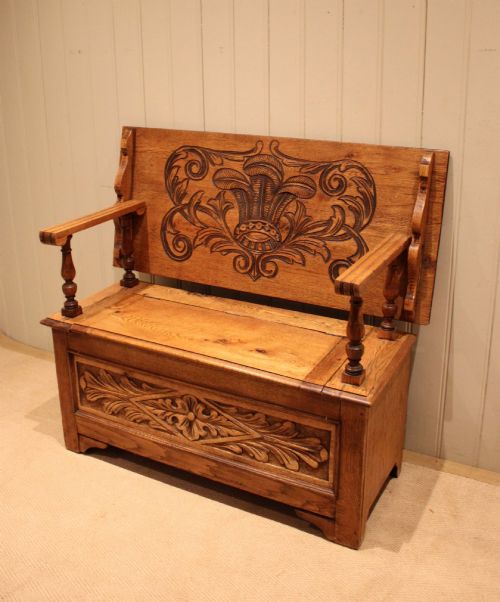
- A convertible form featuring a hinged back that folded down to create a table top. These items combined multi-functional utility with carved decoration.
- Hall stand
- An entryway furnishing combining a bench or seat with a vertical panel containing mirror glass, brass coat hooks, and umbrella stands. They managed outerwear in domestic entranceways.
- Gothic Revival
- A nineteenth-century design style drawing on medieval architectural motifs such as pointed arches, tracery, and linenfold panelling. Furniture in this manner utilised heavy oak timbers.
Carved Entryway Bench: Frequently Asked Questions
Where were carved entryway benches placed?
These pieces stood primarily in entrance halls, vestibules, and corridors of period homes. They provided a designated spot for household members and visitors to sit while removing footwear.
Additionally, their integrated hooks and storage compartments kept outerwear, walking sticks, and umbrellas organised near the front door.
What is a monks bench used for?
A monks bench serves a dual purpose as both a seating bench and a table. The pivoted backrest swings forward onto the armrests to form a flat surface.
This adaptability suited smaller hallways or rooms where space required multi-functional furniture arrangements.
Are these benches suitable for modern hallways?
Solid oak and mahogany construction provides durability for daily heavy use in contemporary entryways. Built-in storage compartments offer practical space for shoes, scarves, and bags.
Care should be taken to measure hallway clearance, as high-backed settles and pieces with integrated coat stands require adequate wall space.