




Chinese Carved Sofa
A chinese carved sofa brings dense hand-carved detail and substantial timber forms straight into a room, offering both history and solid seating.
Chinese Carved Sofa
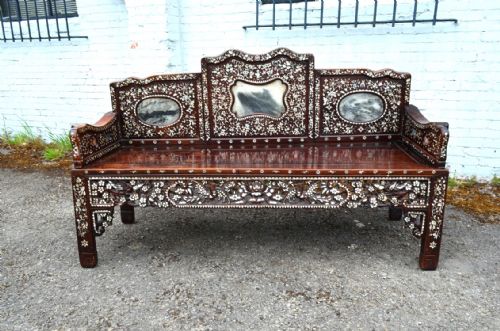
The pieces appearing on this page include hardwood sofas and benches from the nineteenth and early twentieth centuries. Many incorporate decorative carving, inlay work, and lacquer finishes that reflect Qing dynasty and traditional Chinese aesthetics.
How they were made
Construction relies heavily on dense timbers such as hardwood, elm, mahogany, huanghuali wood, and rosewood. Artisans shaped these sturdy materials into frames using traditional joinery methods suited to heavy woods.
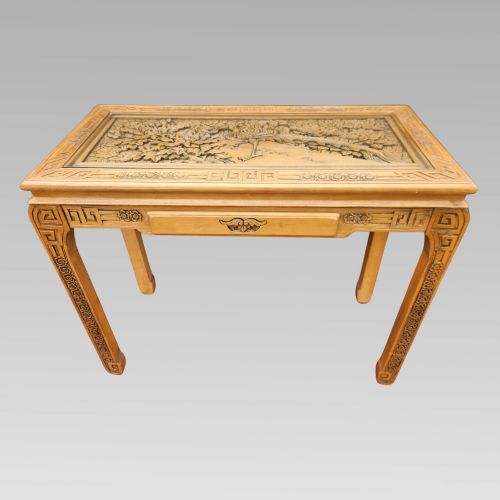
Surface ornamentation involved intricate hand carving, black lacquer work, and delicate inlays of mother of pearl. Certain pieces also integrate marble panels and glass elements to accent the timber structure.
Several benches on this page manage to be both heavily carved dragons and sensible places to put your hat.
What varies in quality
Depth and precision of the hand carving separate simpler items from finer examples. Crisp execution in the wood and secure fitting of inlay materials indicate superior craftsmanship.
The choice of timber underpins the overall grade of the piece, with dense hardwoods and figured rosewood showing greater substance than standard elm or mahogany variants.
The Chinese Carved Sofa Glossary
- Hardwood
- Dense, slow-growing timber used for durable furniture construction. It resists heavy wear and supports intricate hand carving.
- Mother of pearl
- Iridescent inner layer of mollusc shell used for decorative inlay. Artisans cut tiny pieces to form pictorial or geometric patterns on timber surfaces.
- Lacquer
- Protective and decorative coating applied in multiple layers to wood. It creates a smooth, glossy finish often seen in black on traditional Asian furniture.
- Qing Dynasty
- The final imperial dynasty of China, lasting from sixteen forty-four to nineteen twelve. Furniture from this era displays distinct regional carving styles and formal motifs.
Chinese Carved Sofa: Frequently Asked Questions
How do I identify a chinese carved sofa?
Look for dense hardwood construction combined with traditional hand-carved motifs and low profiles. These seating pieces often feature panelled backs and open arms.
Examine the timber closely for weight and grain structure. Genuine period examples utilise heavy woods like rosewood or elm rather than lightweight modern substitutes.
Where should I place a chinese carved sofa?
Position the piece against a large wall in a reception room or hallway where its carved back and timber grain can be appreciated. Ensure it stands clear of direct heat sources.
Because these sofas are visually heavy, they anchor a room well when balanced with simpler surrounding furnishings and neutral walls.
How do I care for a carved timber sofa?
Dust the intricate carvings regularly using a soft brush to prevent dirt accumulation in the crevices. Apply appropriate wood wax sparingly to maintain the finish.
Keep the timber away from rapid temperature shifts and strong sunlight to prevent the wood from drying out or splitting over time.
What styles accompany chinese carved seating?
Related pieces span traditional Chinese designs, export items, and occasional Chinese Chippendale revival forms. These incorporate similar carved wood details and dark finishes.
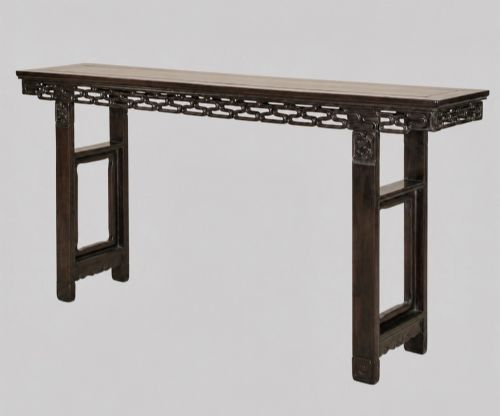
Console tables, altar tables, and matched benches frequently appear alongside these sofas, sharing identical decorative vocabulary and timber types.