


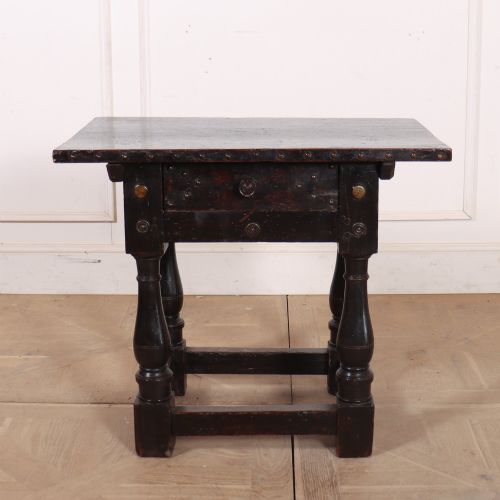
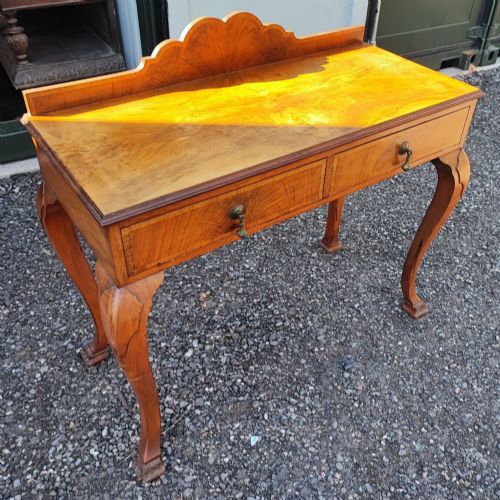
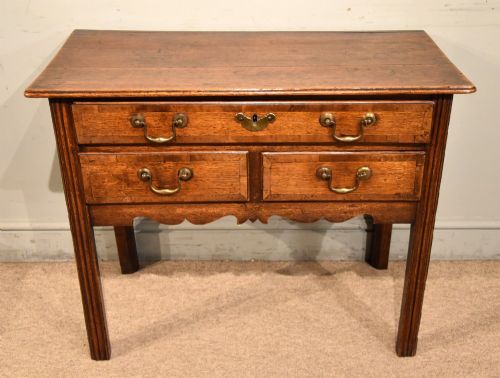
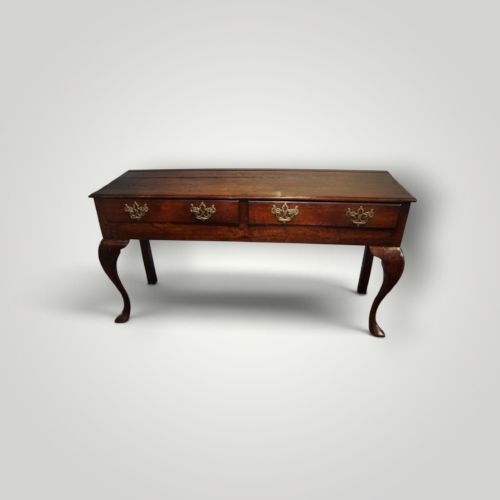
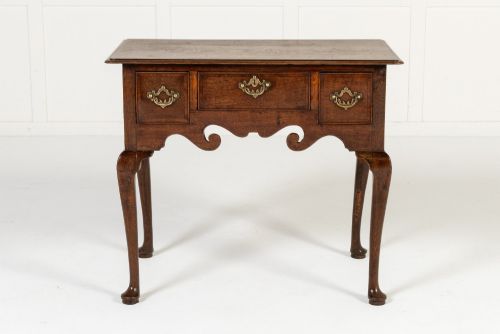
Carved Drawer Side Table
These carved drawer side tables combine practical storage with historical craftsmanship, offering a functional focal point for any hallway or sitting room.
Carved Drawer Side Table
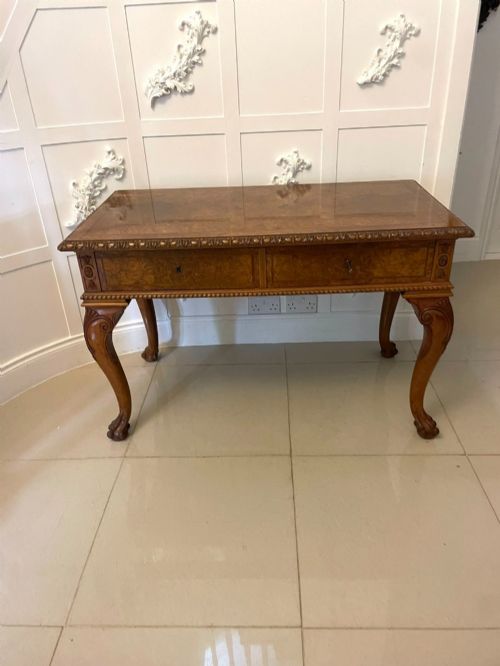
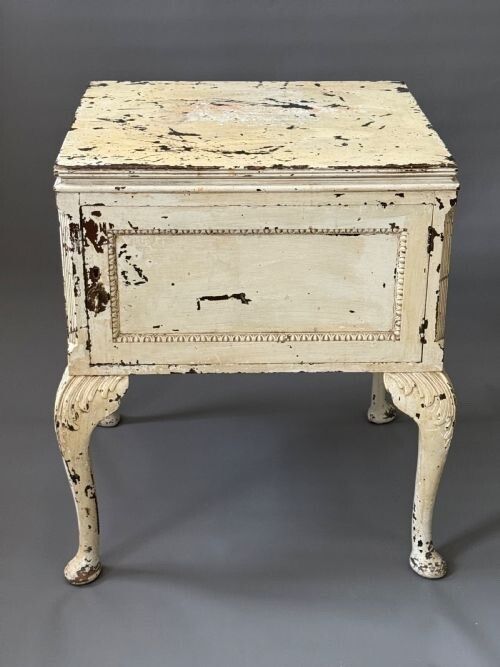
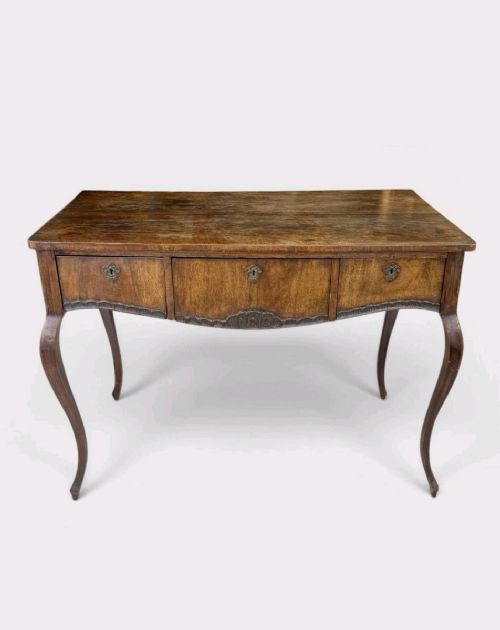
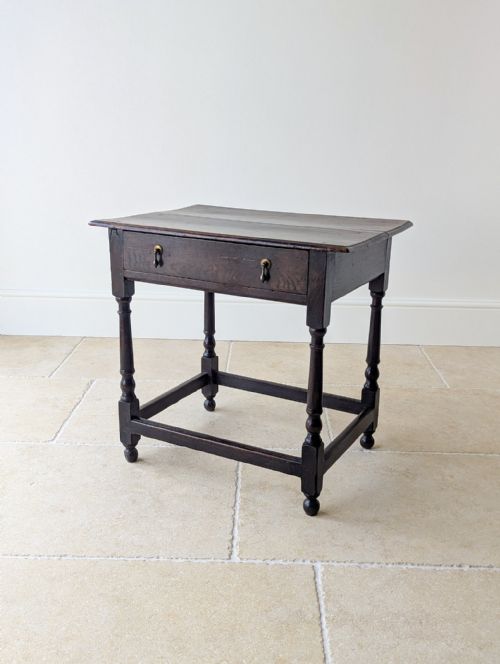
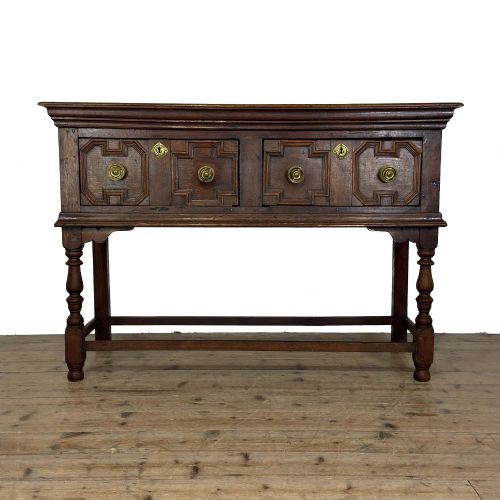
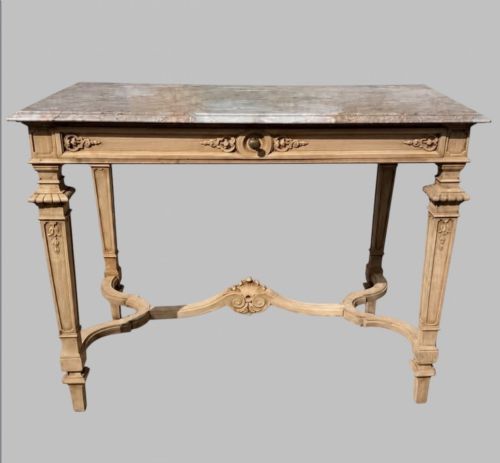
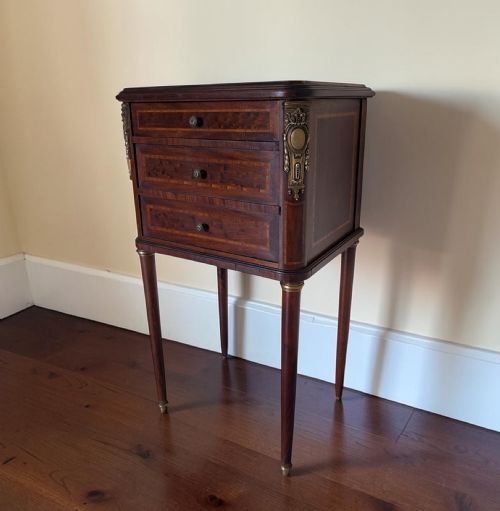
A carved drawer side table provides surface display and concealed storage, appearing in forms such as lowboys, console tables, and compact writing desks across various historical eras.
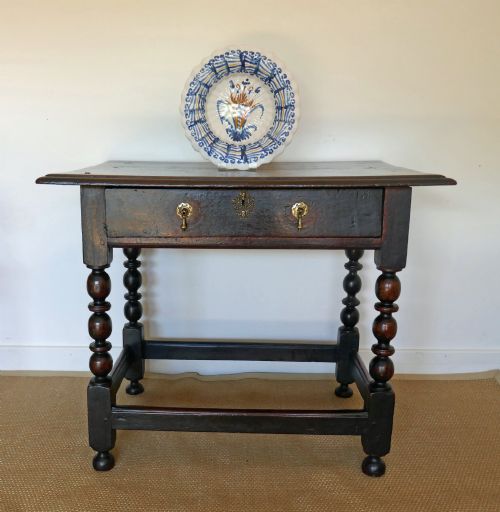
Buyers browsing this selection frequently encounter sturdy oak examples influenced by seventeenth-century styles alongside refined walnut and mahogany pieces from the Georgian and Victorian periods.
These versatile items serve multiple domestic roles, functioning equally well as hallway furniture, bedside cabinets, or occasional writing surfaces in traditional interiors.
Materials and Construction Techniques
Cabinet makers relied heavily on timber such as oak, mahogany, and walnut, often utilising burr walnut veneers or elm to create decorative grain patterns on table tops and drawer fronts.
Carpentry methods visible in these pieces include hand-cut joints and panel construction, paired with detailed relief carving, bobbin turning, or barley twist legs depending on the period.
Several Victorian oak tables secretly incorporate carved stags' heads or traditional Green Man motifs peering out from beneath the drawer friezes.
Distinguishing Factors of Quality
The standard of a piece rests upon the crispness of its hand-carved ornamentation and the selection of figured timbers like burr walnut or quarter-sawn oak for prominent surfaces.
Superior construction shows in the smoothness of the drawer action, the integrity of the underlying timber framing, and the retention of original brass hardware or period-appropriate handles.
Edwards and Roberts·Beresford and Hicks
The Carved Drawer Side Table Glossary
- Lowboy
- A small seventeenth or eighteenth-century dressing or side table featuring one or more rows of drawers beneath a flat top. These tables typically stand on slender cabriole or straight legs.
- Frieze
- The horizontal structural band situated directly beneath the top surface of the table, frequently housing the integrated drawers.
- Jacobean Revival
- A nineteenth-century design movement mimicking the heavy proportions, dark oak timber, and geometric or floral carving characteristic of early seventeenth-century English furniture.
- Cabriole leg
- A furniture leg that curves outward at the knee and tapers inward toward the ankle, often terminating in a pad or claw foot.
Carved Drawer Side Table: Frequently Asked Questions
Where should I place a carved drawer side table?
These tables fit well in entrance hallways for keys and post, or alongside seating areas as lamp tables with useful enclosed storage.
Their modest footprints also allow them to function effectively as compact dressing desks or bedside cabinets in bedrooms.
How do I identify a Georgian lowboy?
Georgian lowboys typically feature solid oak or mahogany construction with multiple small drawers arranged beneath a rectangular overhanging top.
Look for traditional joinery techniques and period-specific leg styles such as straightforward cabriole supports or square-section framing.
Are these tables suitable for daily use?
Solid timber construction and traditional joinery make these antique tables robust enough to handle normal daily domestic demands.
Applying appropriate wax polishes and protecting surfaces from excessive moisture will preserve the finish and structural integrity for years.