
Traditional Oak Writing Table
A traditional oak writing table offers a sturdy workspace built from resilient timber, carrying decades of utility into a modern study.
Traditional Oak Writing Table
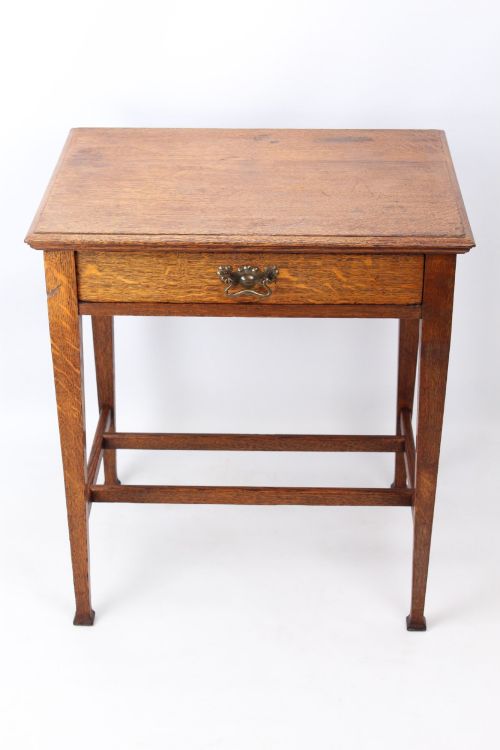
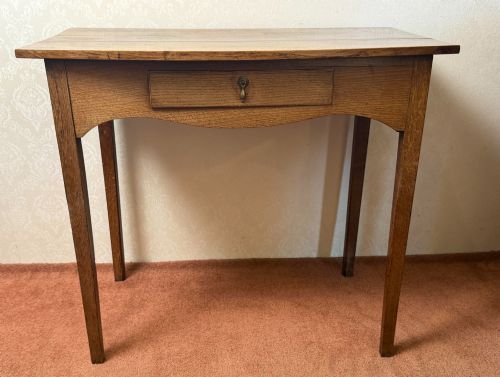
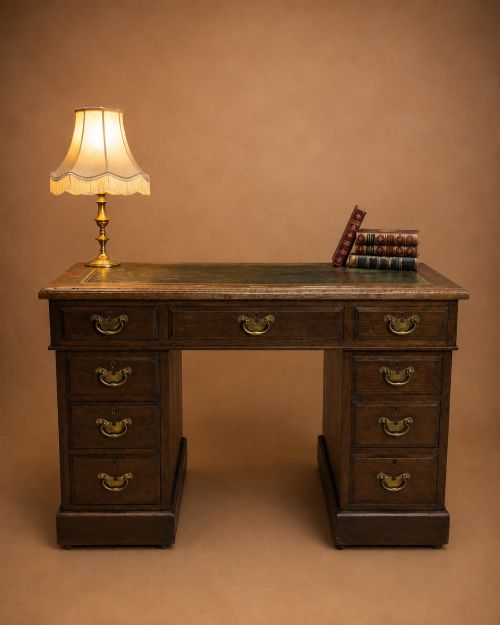
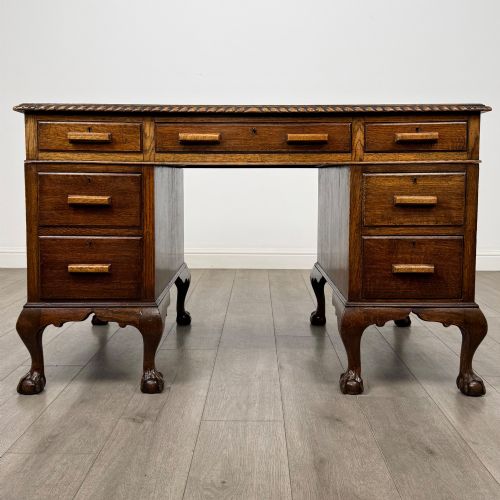
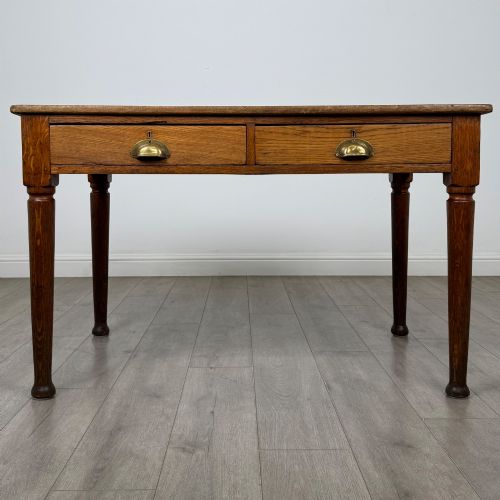
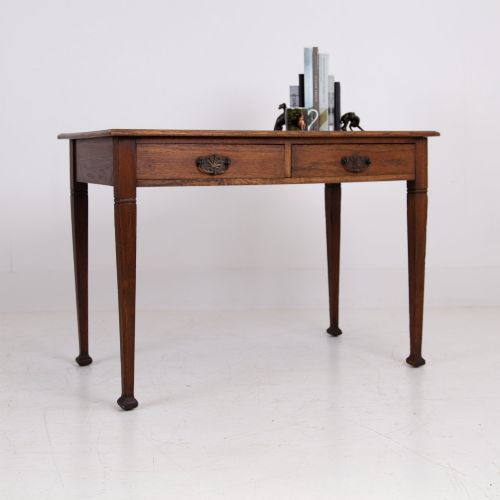
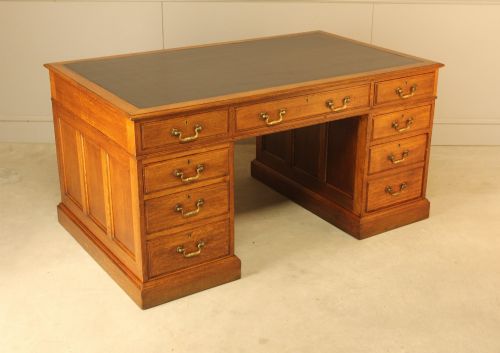
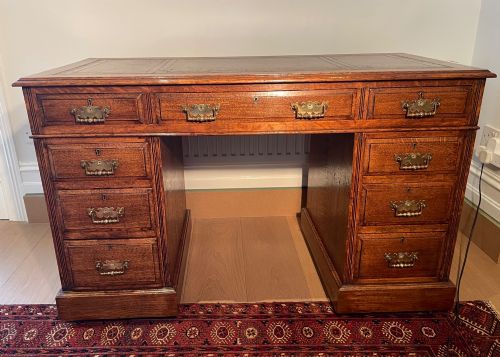
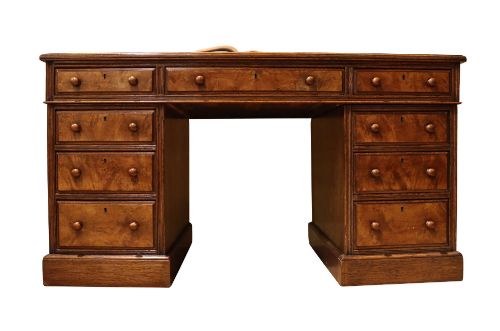
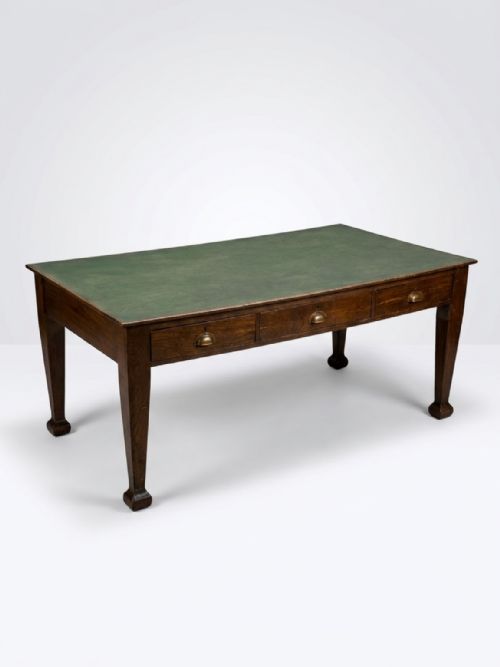
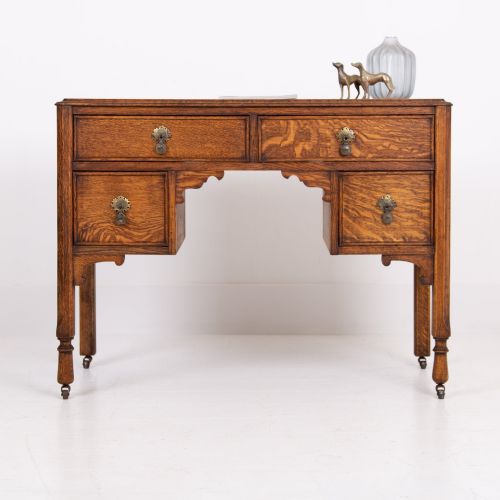
A traditional oak writing table encompasses everything from compact Victorian pedestal desks to simple side tables and early twentieth-century examples. Buyers searching this phrase meet sturdy work surfaces equipped with drawers, leather inserts or drop-side flaps.
The material origin spans eighteenth-century country pieces through to Edwardian and 1930s office desks, reflecting varied domestic and institutional use. Solid construction in golden or pale oak dominates the selection, often accompanied by brass hardware.
Pedestal configurations and partner desks provide larger proportions, whilst lowboys and side tables offer narrower footprints suitable for smaller rooms. Each form serves a practical writing or administrative function developed over centuries of cabinetmaking.
Materials and Technique
Cabinetmakers constructed these pieces primarily from solid oak, sometimes combining secondary timbers like pine or incorporating burr walnut veneers for decorative contrast. Surfaces frequently integrate inset leather writing panels alongside brass drawer pulls and iron fittings.
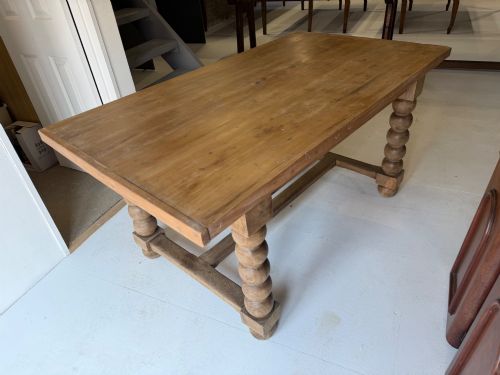
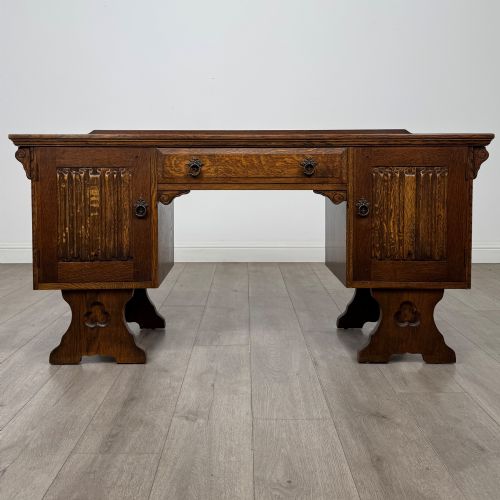
Construction techniques visible across the listings include traditional drawer dovetailing, bobbin turning on legs, and carved ornamentation such as linenfold panels or Jacobean revival motifs. These methods ensured the structural rigidity required for daily clerical labour.
Traditional Oak Writing Table Retail Price Guide 2026
Typical asking prices for traditional oak writing table among the pieces listed under this phrase on Sellingantiques today, from the lower quarter to the upper quarter. They describe what is for sale here now, not the wider market.
One unexpected survivor even includes drop-side flaps for impromptu paperwork expansion.
Judging Quality
Quality rests on the selection of the timber, the crispness of carved details like linenfold motifs, and the integrity of the structural joints. Superior examples employ thick solid oak boards rather than thin veneers over lesser woods, maintaining stability across large writing surfaces.
The refinement of internal drawer construction and the original condition of brass hardware and leather inserts separate standard utility pieces from finer country house or partners desks. Proportion and balance between the legs, apron and top dictate the visual success of each table.
The Traditional Oak Writing Table Glossary
- Pedestal desk
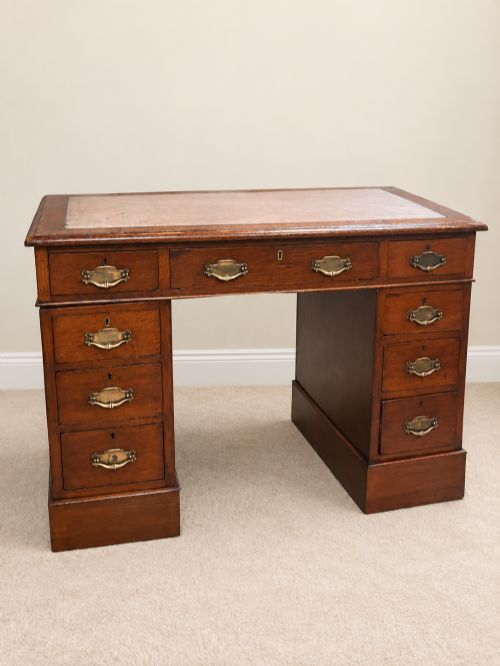
- A heavy freestanding desk comprising two supporting banks of drawers with a central writing surface. These large pieces often feature panelled sides.
- Lowboy
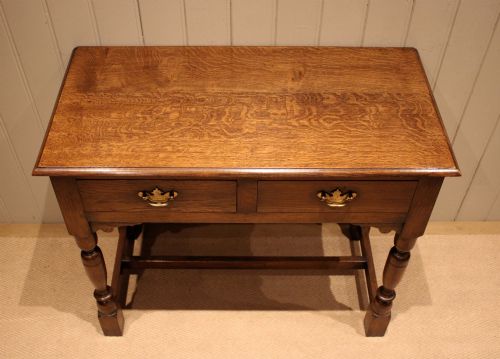
- A small oak or walnut table with drawers, originating in the eighteenth century and commonly used for writing or storage. They stand on relatively tall legs.
- Partners desk
- A large double-sided writing table designed for two people to sit opposite one another, featuring drawers on both longitudinal faces. They are frequently fitted with leather tops.
- Linenfold
- A style of carved wooden panelling that resembles folded fabric, popular during revival periods on cabinet doors and drawer fronts. It adds texture to flat oak surfaces.
- Bobbin leg
- A turned furniture leg shaped to resemble a string of wooden bobbins or spools, seen on seventeenth and nineteenth-century tables.
Traditional Oak Writing Table: Frequently Asked Questions
How do I date an oak writing table?
Dating relies on examining construction methods, timber thickness, and stylistic clues such as hardware and carved motifs. Victorian and Edwardian examples often feature machine-sawn components alongside hand-dovetailed drawers.
Earlier eighteenth-century pieces display entirely hand-worked joinery and simpler, heavier proportions. Comparing the secondary woods inside the drawers provides further evidence of the period.
Were these desks used in offices or homes?
These tables served diverse environments, ranging from grand country house libraries to modest estate offices and urban banks. Large partners desks and pedestal formats typically belonged in professional or institutional settings.
Smaller side tables and writing desks with drop flaps functioned primarily in domestic bedrooms or private studies for correspondence.
How do I care for a leather desk top?
Leather writing surfaces require gentle cleaning with a slightly damp cloth followed by a neutral leather cream to prevent cracking. Avoiding direct sunlight preserves both the colour and the suppleness of the hide.
Hard objects placed directly on the leather can leave permanent impressions, so using a blotter or writing pad is standard practice.
What is the difference between a writing table and a pedestal desk?
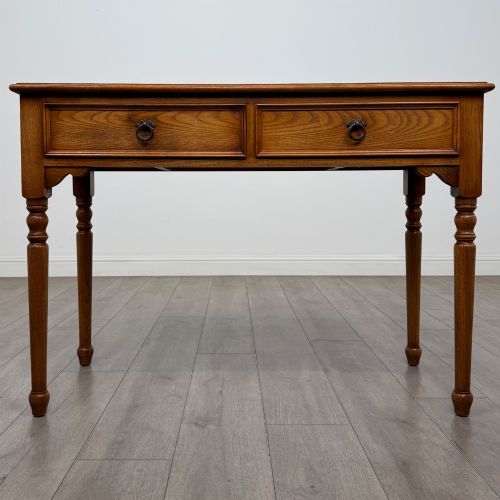
A writing table generally stands on four legs with one or more drawers built into the apron beneath the top. It offers an open, lighter silhouette suited to multifunctional rooms.
By contrast, a pedestal desk rests on two stacked columns of drawers that extend down to the floor, providing significantly more storage capacity and a heavier physical presence.