









Carved Dragon Seat
A carved dragon seat brings fierce mythic presence into a room through deeply worked timber and expressive beast motifs.
Carved Dragon Seat
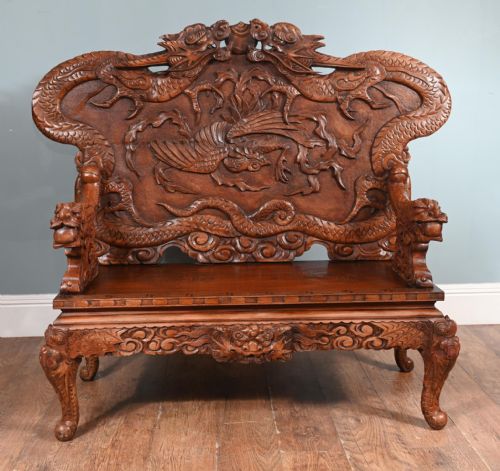
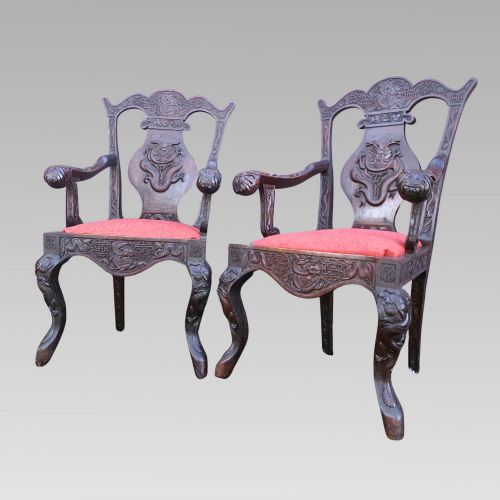
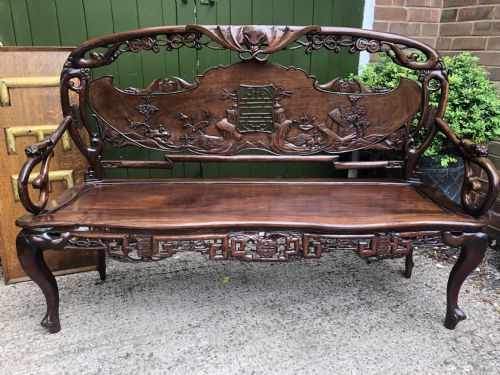
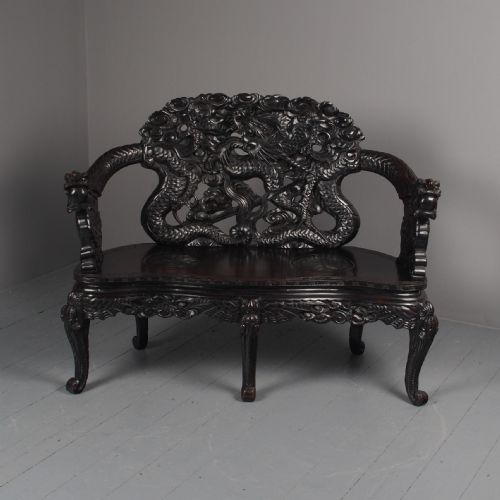
A carved dragon seat encompasses substantial hall benches, settles, corner seats and armchairs originating primarily from China during the nineteenth and early twentieth centuries. These large seating forms display intricate carving centered on traditional dragon motifs, executed within export, Qing Dynasty and traditional Chinese styles.
The version most commonly met on this page is the nineteenth century Chinese hardwood hall bench or settle, often rendered in dense rosewood or dark timber. Alongside these grand benches, buyers encounter occasional armchairs, folding seats, and vernacular interpretations such as Welsh folk art spinning chairs.
Materials and construction
These pieces rely heavily on dense Asian timbers including rosewood, elm, teak and polished hardwood to support deep, sculptural relief work without losing structural integrity. Artisans also utilised cinnabar lacquer and bone inlay to build contrasting texture and colour across the surface of the seat.
Construction techniques combine traditional joinery with painstaking hand carving, allowing intricate scales, claws and coiled dragon bodies to emerge directly from the solid wooden frame. Lacquered variants involve layering and curing natural tree sap over a carved wood base before final polishing.
Carved Dragon Seat Retail Price Guide 2026
Typical asking prices for carved dragon seat among the pieces listed under this phrase on Sellingantiques today, from the lower quarter to the upper quarter. They describe what is for sale here now, not the wider market.
Listings feature items spanning the nineteenth century through the early twentieth century, utilising rosewood, elm, teak, hardwood, bone inlay, and cinnabar lacquer.
Assessing quality in carved dragon seats
Quality rests primarily on the depth and animation of the carving, distinguishing crisp, spirited dragon forms from shallow or mechanical surface work. The choice of material dictates baseline excellence, with heavy rosewood and cinnabar lacquer commanding greater craftsmanship than simpler elm or domestic softwood.
Proportion and scale further separate standard regional pieces from exceptional examples designed for export or high status domestic use. Structural harmony across larger settles and matching armchair suites reveals the maker's mastery over both timber selection and decorative composition.
The Carved Dragon Seat Glossary
- Settle
- A wooden bench with a high back, solid arms, and often a storage box beneath the seat. This form provides substantial seating in hallways and principal rooms.
- Cinnabar lacquer
- A decorative coating made from powdered mineral mercury sulphide suspended in lacquer, applied in multiple layers and carved while semi-soft. It yields a rich red finish with deep relief detailing.
- Rosewood
- A heavy, dense tropical timber prized for its dark grain and ability to hold crisp carved edges. It forms the primary structural material for finer Asian seating.
- Qing Dynasty
- The last imperial dynasty of China, spanning from sixteen forty-four to nineteen twelve. Pieces from this era frequently exhibit formal court iconography including dragons and floral motifs.
- Hall bench
- A long, narrow seat positioned traditionally in entrance halls. These pieces often feature high carved backs and arms to display status to visitors.
Carved Dragon Seat: Frequently Asked Questions
Where should I place a carved dragon seat?
These substantial seating forms work best in spacious entrance halls, grand landings, or large reception rooms where their heavy timber presence and detailed carvings can be fully appreciated.
Because many examples take the form of long benches or high-backed settles, they require adequate wall space and clearance to function properly as focal points within an interior.
How do I care for antique hardwood furniture?
Maintain these pieces by keeping them away from direct sunlight and sudden temperature fluctuations that can cause dense hardwoods or lacquer to split.
Apply a microcrystalline wax sparingly when the timber appears dry, and buff gently with a soft cloth to preserve the natural sheen of the polished wood.
How can I tell a nineteenth-century piece from a later one?
Nineteenth-century examples generally display deeper, hand-chiseled relief work and heavier timbers like rosewood or teak, showing natural wear consistent with age.
Later transitional pieces from around nineteen hundred often incorporate slightly different finishing techniques or lighter elm construction while retaining traditional Qing decorative motifs.