






Antique Chinese Settle
An antique chinese settle offers heavy timber framing and high backs, bringing provincial seating straight from eastern halls into modern rooms.
Antique Chinese Settle
An antique chinese settle provides solid wooden seating configured as benches, hall benches, and corner seats designed for domestic or ceremonial use. These pieces emerge from periods spanning the late nineteenth century through to the early decades of the twentieth century.
Buyers encounter forms tagged as Chinese Export, Qing Dynasty, and Traditional Chinese styles. The listings on this page show standard benches, dining suites combined with armchairs, and horseshoe hall benches intended for grand entryways.
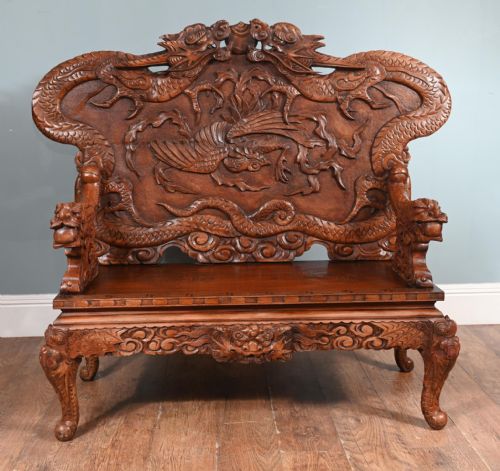
Makers shaped these items using heavy timbers, often integrating carved dragon motifs or plain hardwood surfaces. The structural variety ranges from simple hall seats to intricate lacquer sofas.
How they were made
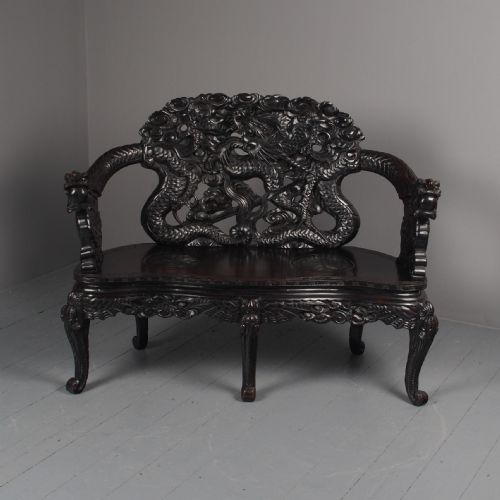
Carpenters constructed these settles using dense hardwoods, rosewood, and ebonised timber joined through traditional woodworking methods. Surfaces frequently received layers of lacquer, such as cinnabar, to build up deep red tones and protective coatings.
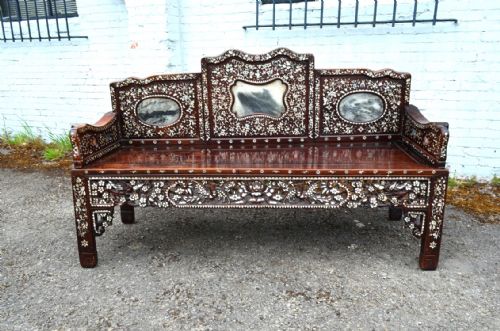
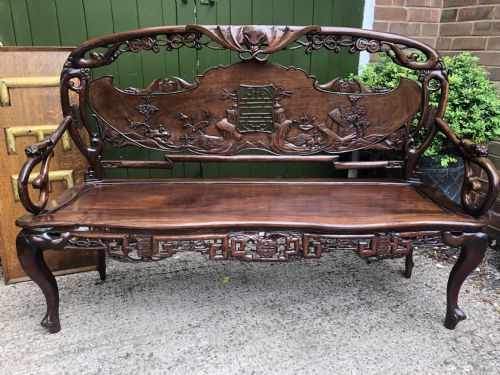
Craftsmen enriched the wooden frames with intricate hand-carvings depicting dragons and traditional scenes. Artisans also applied bone inlay and mother of pearl details directly into the timber panels for textural contrast.
Antique Chinese Settle Retail Price Guide 2026
Typical asking prices for chinese settle among the pieces listed under this phrase on Sellingantiques today, from the lower quarter to the upper quarter. They describe what is for sale here now, not the wider market.
Carved dragons peer out from nineteenth-century seat backs, watching over anyone brave enough to claim the hall bench.
What varies in quality
The refinement of the hand-carved detail sets one settle apart from another, particularly where dragon motifs and figurative panels appear on the backrest. Crisp, deep relief carving demonstrates greater skill than shallow or mechanical shaping.
The choice of primary material influences the standing of the piece, with dense rosewood and layered cinnabar lacquer occupying the higher end of the scale compared to standard hardwoods. Surface embellishments like mother of pearl and bone inlay also indicate higher workshop investment.
The Antique Chinese Settle Glossary
- Hardwood
- Dense timber derived from broad-leaved trees, providing the structural integrity for these benches. These woods resist heavy daily wear.
- Cinnabar Lacquer
- A traditional technique applying multiple layers of vermilion-pigmented tree sap to a wooden core. Artisans then carve intricate designs into the hardened surface.
- Mother of Pearl
- Iridescent inner shell material used to create inlaid decorative motifs across wooden panels. This marine material catches the light against dark timber.
- Qing Dynasty
- The final imperial dynasty of China, spanning from sixteen forty-four to nineteen twelve. Pieces from this era often display formal stylistic conventions.
- Chinese Export
- Objects manufactured specifically for Western markets during the nineteenth and early twentieth centuries. These designs frequently blend Eastern forms with Western functional preferences.
Antique Chinese Settle: Frequently Asked Questions
Where did these settles stand originally?
These wooden seats occupied large entrance halls, reception rooms, and perimeter walls within traditional dwellings. Their high backs helped block draughts in large communal spaces.
Craftsmen also built corner benches and horseshoe variants to fit specific architectural layouts inside domestic interiors.
How do I care for lacquered wood?
Maintain lacquered surfaces by dusting with a soft, dry cloth and avoiding harsh chemical cleaning agents. Direct sunlight can fade pigmented lacquer over time.
Keep the timber away from extreme temperature fluctuations to prevent the wood beneath the lacquer from splitting or warping.
Are bone inlay and mother of pearl fragile?
Both inlay materials are set securely flush into the wooden base but require gentle handling to avoid impact damage. Sudden drops in humidity can cause the surrounding timber to shrink and loosen the adhesive.
Routine maintenance involves checking that individual inlaid pieces remain firm within their carved recesses.