




Dragon Carved Hall Bench
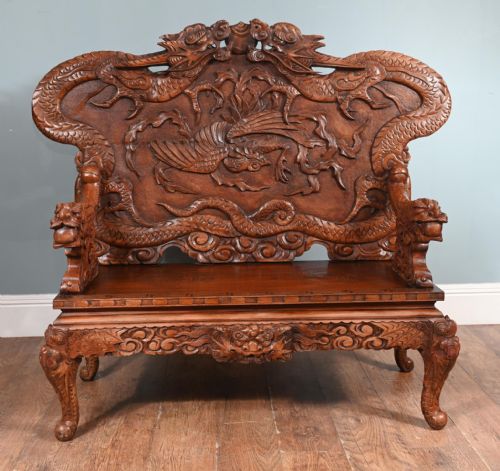
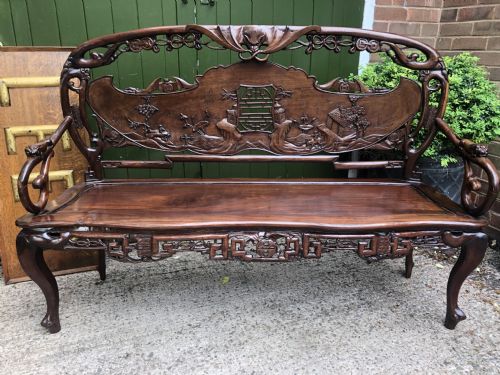
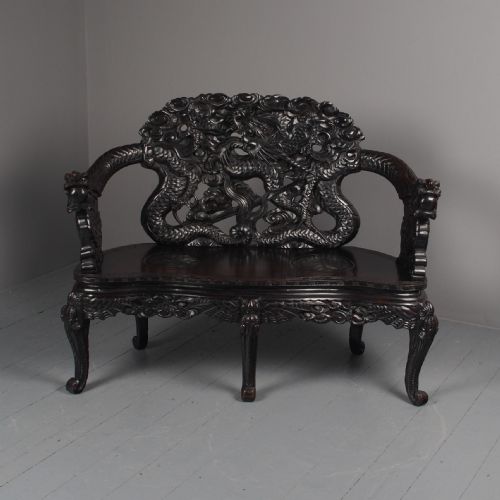
These dragon carved hall bench pieces are substantial seats bearing fierce mythical beasts, offering a striking focal point for an entranceway.
Dragon Carved Hall Bench
A dragon carved hall bench is a commanding seating option designed for an entryway or hallway, drawing upon traditional Chinese aesthetics and craftsmanship. These items emerge from various periods including the nineteenth century and the early twentieth century, spanning Qing Dynasty and Chinese Export styles.
The versions most commonly met on this page include robust hardwood forms and cinnabar lacquer variants. Makers utilised materials such as rosewood, bone inlay, and ebonised hardwood to create substantial seating sets, settles, and corner benches.
Each dragon carved hall bench displays distinct regional interpretations, ranging from traditional Chinese designs to Chinese Qing Dynasty style pieces. Collectors find both simple carved wood constructions and more ornate variants featuring intricate mythological motifs.
How they were made
Carvers shaped dense hardwood and rosewood substrates using traditional joinery and deep relief carving techniques to bring the serpentine dragon motifs to life. Artisans worked the timber to form sturdy frames for hall seats and settles, ensuring structural integrity for daily use.
Surface decoration frequently involved layers of lacquer, pigment, and occasional bone inlay to highlight the intricate details of the carved panels. Workshops applied these finishes to protect the wood while providing a rich, tactile texture to the bench surface.
Several pieces feature intricately carved horseshoes alongside the dragons, reminding us that mythical beasts occasionally need equestrian company in the hallway.
What varies in quality
The depth and clarity of the dragon carving set apart superior examples, where every scale and claw shows deliberate chisel work rather than soft, mass-produced moulding. Greater skill is evident in the balance of the composition and the crispness of the relief against the background timber.
Material selection dictates the underlying prestige of the piece, with dense rosewood and complex cinnabar lacquer finishes representing a higher tier of workmanship than basic hardwoods. The integration of secondary materials like bone inlay demonstrates superior atelier output.
The Dragon Carved Hall Bench Glossary
- Cinnabar lacquer
- A building up of numerous layers of red mercuric sulphide lacquer on a wooden core, which is then carved when dry. This technique allows for deep, intricate relief work on furniture surfaces.
- Hardwood
- Timber derived from broad-leaved trees that offers exceptional density and durability. These woods provide the stable foundation necessary for deep furniture carving.
- Qing Dynasty
- The final imperial dynasty of China, lasting from sixteen forty-four to nineteen twelve. Pieces from this era often exhibit traditional motifs such as dragons and elaborate floral patterns.
- Settle
- A wooden bench with high backs, solid arms, and frequently a storage compartment beneath the seat. In a hallway, this form protected occupants from draughts.
- Rosewood
- A heavy, durable timber prized for its rich colour and fine grain. Furniture makers utilised this material for high-status seating.
Dragon Carved Hall Bench: Frequently Asked Questions
Where should I place a hall bench?
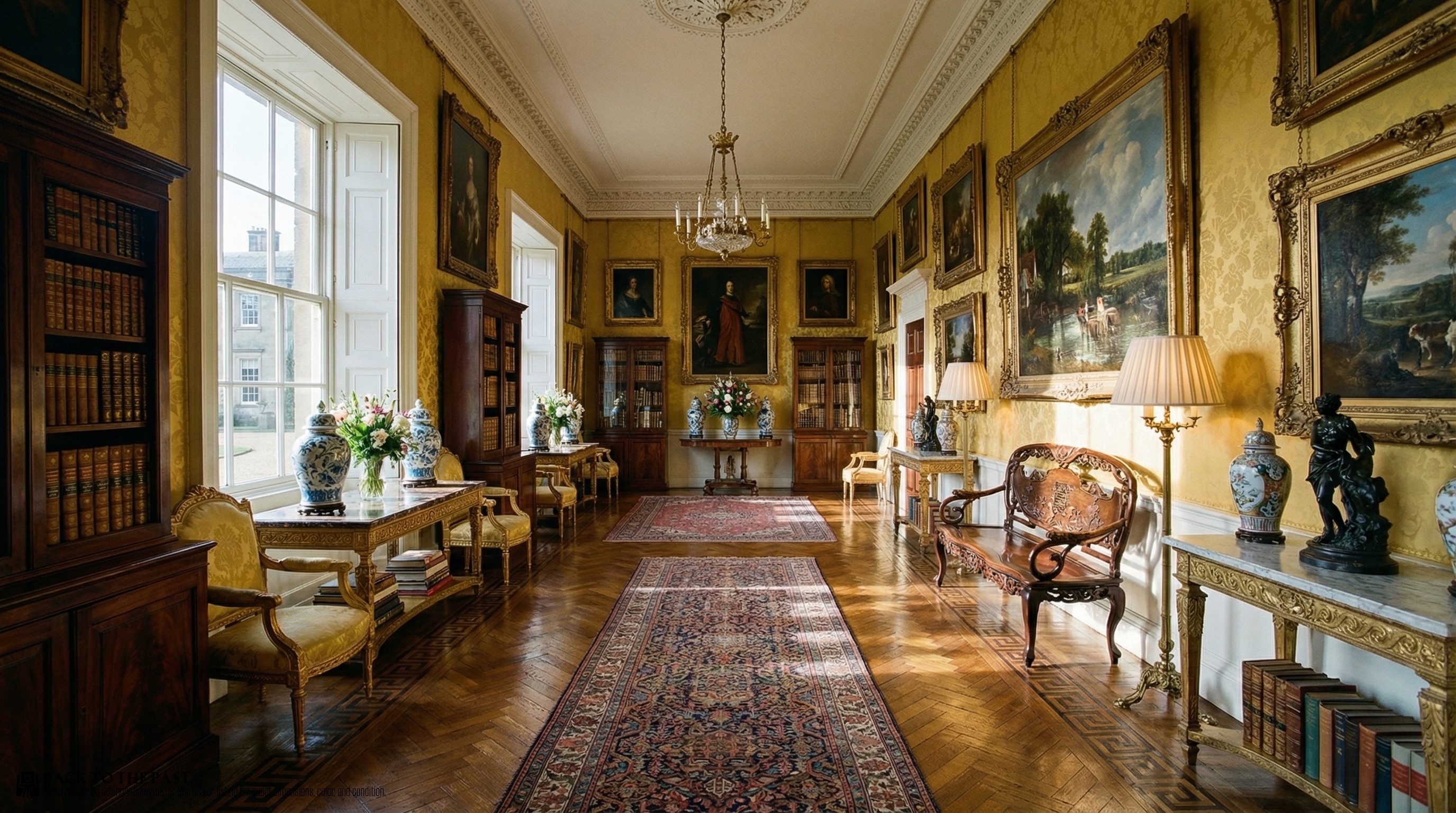
These benches suit large entrance halls, landings, or reception rooms where their substantial proportions and carved details can be fully appreciated.
Because they function as primary seating and decorative statements, ensure the placement allows adequate clearance to view the backrest carving.
How do I clean lacquered wood?
Dust lacquered surfaces gently with a soft, dry microfibre cloth to prevent scratching the delicate finish.
Avoid chemical polishes and moisture, which can degrade old lacquer and pigment over time.
What is a settle?
A settle is a wooden bench featuring a high back and solid arms designed to shield sitters from cold draughts in traditional interiors.
In Asian furniture traditions, these pieces often incorporate elaborate panel carving on the backrest.
How do I date these pieces?
Dating relies upon examining the tool marks, timber shrinkage, and stylistic conventions associated with nineteenth-century and early twentieth-century workshops.
Comparing the carving depth and lacquer application against established period examples helps narrow the era of production.