
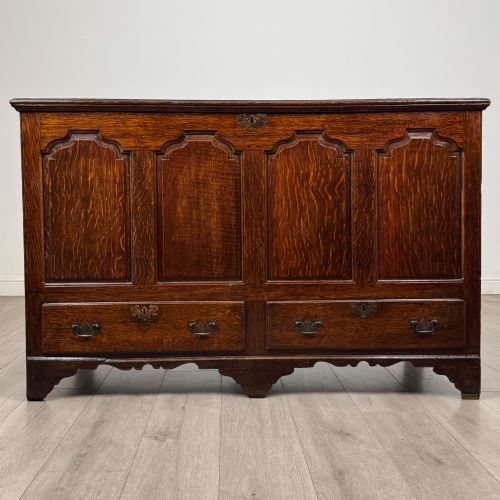
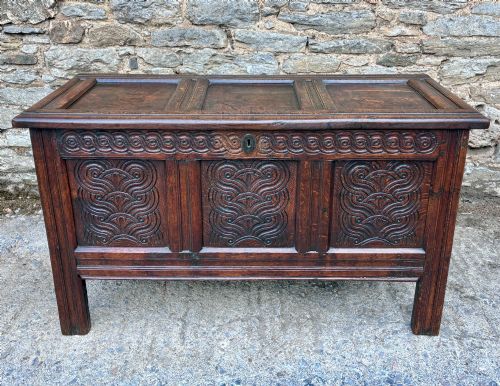
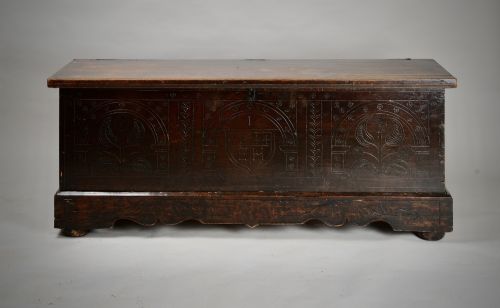
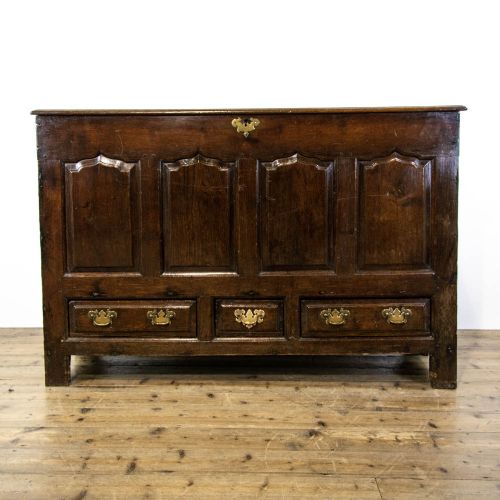




Carved Dower Chest
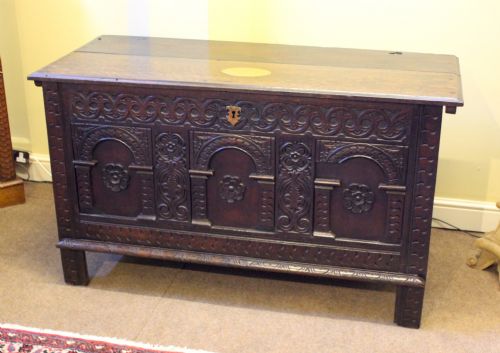
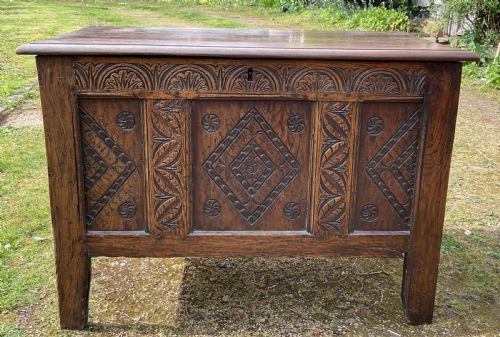
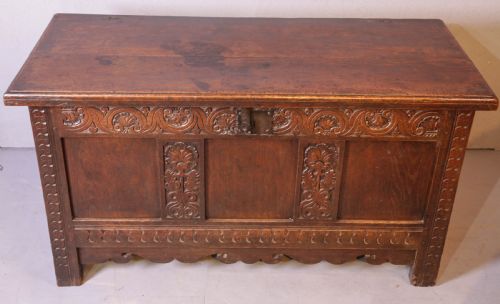
A carved dower chest brings substantial historic storage into a room, fashioned from solid timber to hold household linen and family goods.
Carved Dower Chest
A carved dower chest is a heavy storage receptacle designed to hold household textiles, blankets and personal possessions, often appearing as a coffer, blanket chest or mule chest. These pieces range from seventeenth-century joined oak examples to eighteenth-century regional pieces like Welsh mule chests and Lancashire coffers.
The pieces on this page span several centuries, with a strong representation of seventeenth and eighteenth-century examples alongside nineteenth-century revival items. Buyers encounter forms ranging from cottage-sized coffers to large painted chests originating from English, Welsh and continental workshops.
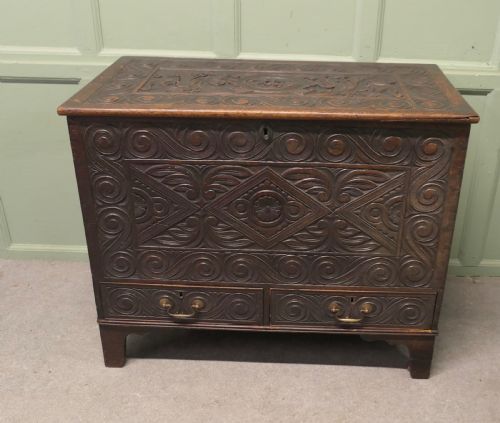
Many variants include drawers beneath the main storage compartment, distinguishing the mule chest from the simple coffer. Regional characteristics emerge clearly across these pieces, showing specific construction traits from Lakeland, Lancashire and Wales.
What varies in quality
The distinction between ordinary and superior pieces rests on the crispness of the timber carving and the integrity of the original construction. Superior examples retain their early brassware, original hinges and unblemished board surfaces without extensive timber replacement.
Proportion and presence separate fine regional chests from utilitarian storage boxes. Pieces featuring well-figured burr elm panels or complex marquetry display a higher grade of craftsmanship than plain vernacular storage trunks.
Regional variants recorded here include Welsh mule chests, Lakeland coffers and Lancashire pieces.
The Carved Dower Chest Glossary
- Mule chest
- A storage chest fitted with one or more drawers beneath the main compartment. This form developed during the seventeenth and eighteenth centuries to provide easier access to stored linens.
- Coffer
- A heavy wooden box with a hinged lid used for keeping valuables and household goods. These items form the foundation of early domestic furniture.
- Marquetry
- Decorative veneer work formed by fitting together thin pieces of wood or other materials to create pictorial patterns on the surface. This technique appears on selected seventeenth-century examples.
- Joined oak
- Furniture constructed using mortise and tenon joints secured with wooden pegs rather than relying solely on nails. This method defines the structural integrity of early pieces.
Carved Dower Chest: Frequently Asked Questions
What is a mule chest?
A mule chest is a storage chest that combines a lift-up lid compartment with one or more drawers situated underneath.
This form emerged as makers sought to improve domestic storage convenience during the seventeenth and eighteenth centuries.
How do I date a carved coffer?
Dating relies on examining the timber species, joinery techniques, tool marks and the style of the carved decoration.
Seventeenth-century pieces typically show joined oak construction with pegged joints, whereas later examples may incorporate mahogany or distinct regional traits.
Where were these chests made?
These chests were produced across various English regions, Wales and continental workshops, with distinct styles arising from places like Lancashire and the Lake District.
Local timber availability often determined whether the maker used solid oak, fruitwood or pine.
How do I use a chest today?
These chests serve as practical storage furniture for blankets, bed linen and household items while functioning as focal points in hallways or living spaces.
The flat top also allows the surface to display lamps, books or decorative objects.