

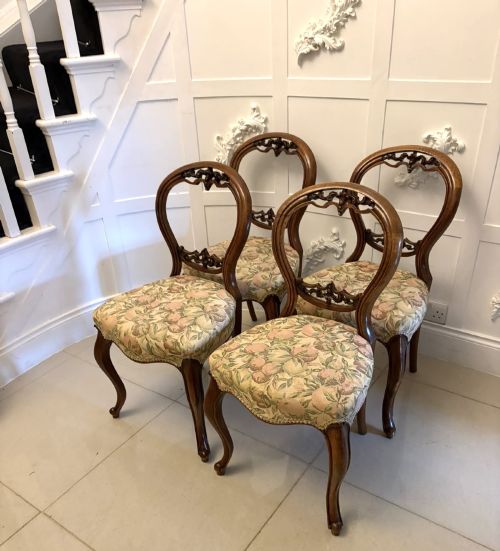
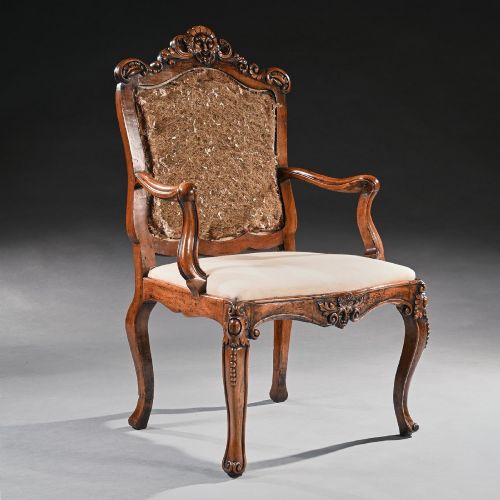
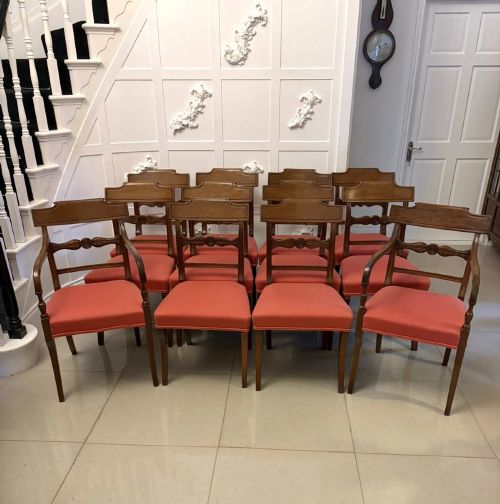
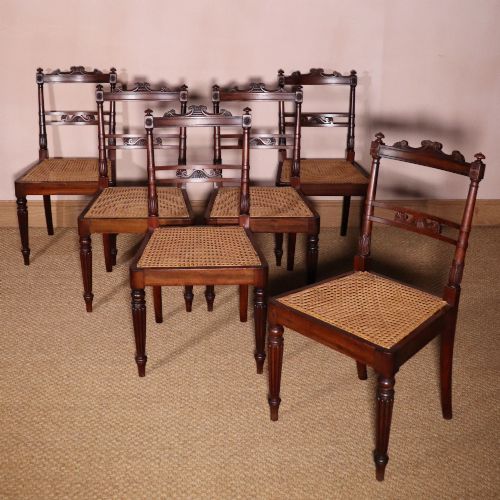




Carved Cresting Rail Chairs
Carved cresting rail chairs bring structural punch and carved top rails to the dining room or hall, exactly what you need for a period interior.
Carved Cresting Rail Chairs
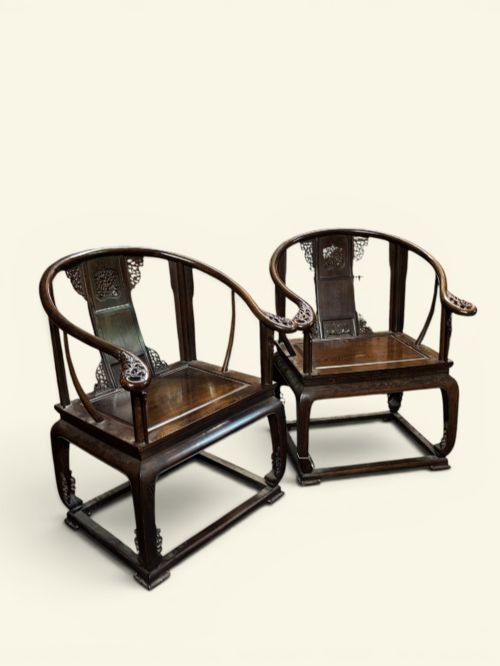
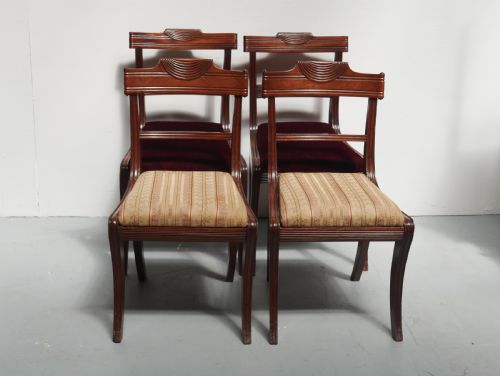
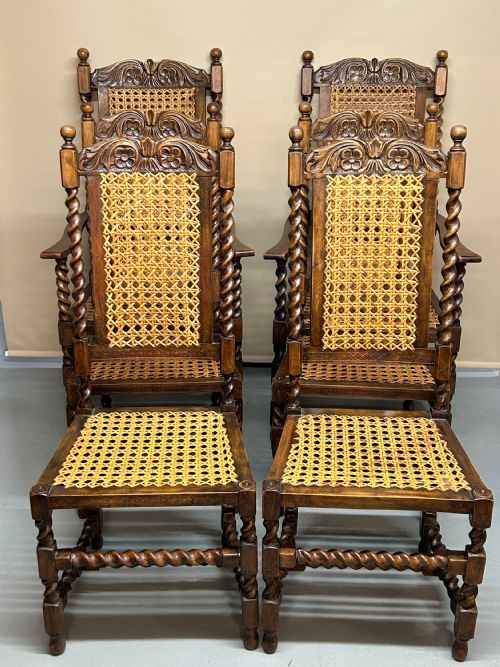
Carved cresting rail chairs are seating forms defined by an embellished top horizontal member, appearing across multiple nineteenth and early twentieth century periods. On this page, you meet dining chairs and hall chairs fashioned in oak, walnut, mahogany, and rosewood. The selection ranges from Victorian walnut and oak sets to Edwardian walnut examples, Regency rosewood pieces, and later oak highbacks.
Makers and workshops produced these forms for formal dining spaces and hallways, varying the silhouette from side chairs to larger dining sets. The styles span Victorian, Edwardian, Arts and Crafts, and Regency or Regency style interpretations. Walnut and oak dominate the current options, alongside single sets in mahogany and rosewood.
How they were made
Cabinetmakers shaped these frames from dense hardwoods like oak, walnut, mahogany, and rosewood, applying hand-carving directly to the top rail. Joinery relied on traditional framing techniques to support daily use in dining rooms and halls.
Upholstered elements utilise fabric, leather, or velvet, secured to the seats using traditional methods. Metal details such as brass appear on certain frames, while the wooden surfaces receive polished or oiled finishes.
Carved Cresting Rail Chairs Retail Price Guide 2026
Typical asking prices for carved cresting rail chairs among the pieces listed under this phrase on Sellingantiques today, from the lower quarter to the upper quarter. They describe what is for sale here now, not the wider market.
Some chairs take carving so seriously the top rail practically waves at you.
What varies in quality
Quality rests in the crispness of the carving along the cresting rail and the choice of primary timber, whether figured walnut, dense oak, or rich rosewood. Sets that maintain uniformity across four, six, or fifteen pieces demonstrate greater workshop discipline than mismatched groupings.
The sophistication of the turning and the structural integrity of the frame separate standard production from superior cabinet work. Upholstery material selection, from plain textiles to fine leather and velvet, also signals the original tier of the commission.
The Carved Cresting Rail Chairs Glossary
- Cresting rail
- The horizontal top member of a chair back, frequently shaped or carved with decorative motifs. This component defines the silhouette of the seating form.
- Highback
- A chair style featuring an elevated vertical back frame, seen in twentieth century oak examples here. It provides a more imposing presence around a dining table.
- Side chair
- An upright chair without arms, designed primarily for dining or occasional use against a wall. These form the majority of multi-piece sets.
- Rosewood
- A dense, heavily figured tropical hardwood utilised in Regency dining chairs. It takes a high polish and displays rich natural grain patterns.
Carved Cresting Rail Chairs: Frequently Asked Questions
What rooms suit carved cresting rail chairs?
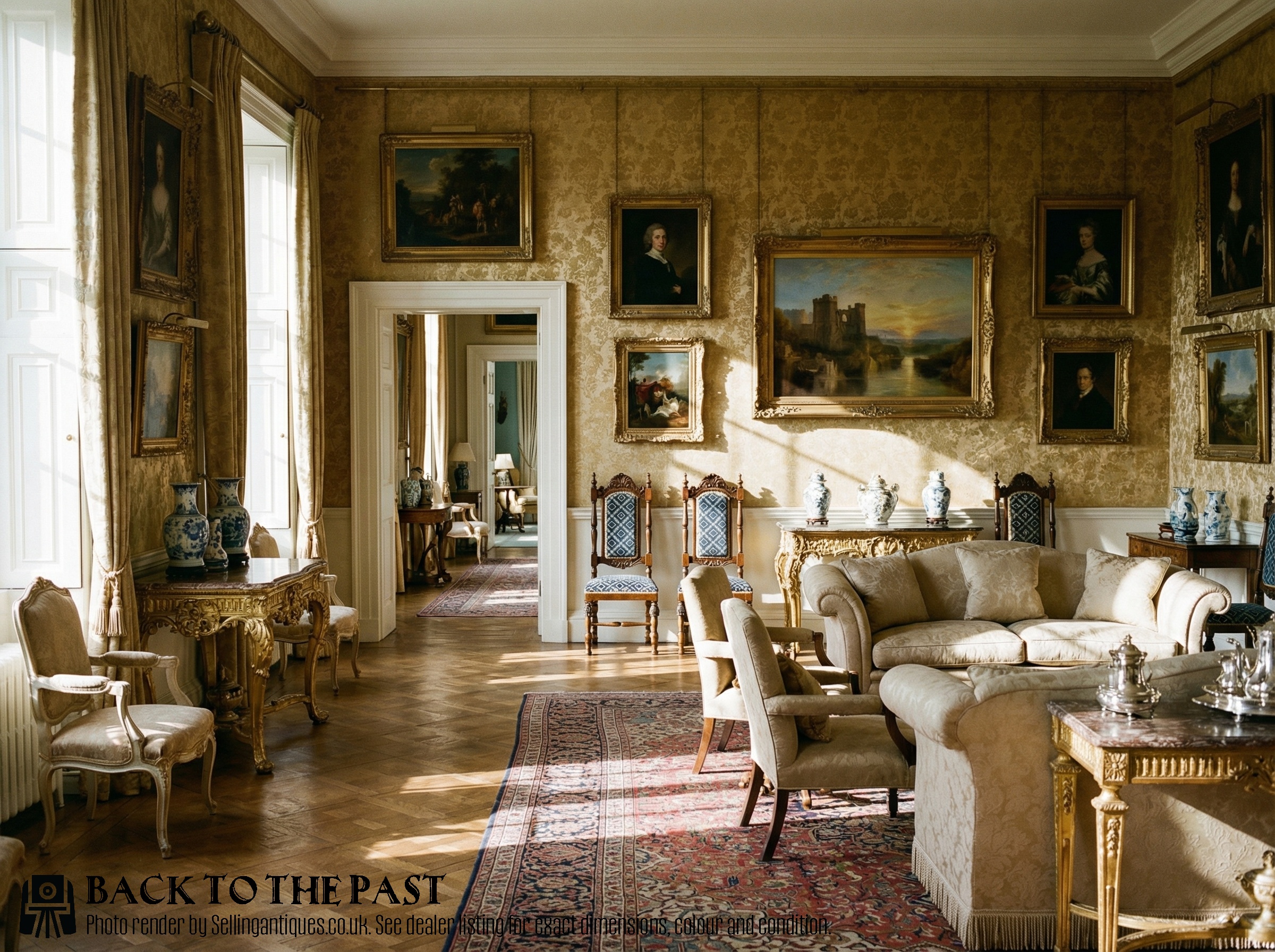
These pieces fit naturally around a dining table or placed against a wall in a hallway as side chairs. Their decorative top rails add architectural interest to formal spaces.
Larger sets serve dining rooms efficiently, while single pairs function well in entrance halls or studies.
Are these chairs sold in sets?
Listings include various configurations, ranging from pairs and sets of four to larger dining sets of six and fifteen pieces. Each set maintains stylistic consistency.
Matching sets provide a unified appearance for a dining room scheme.
What woods were used for these chairs?
Cabinetmakers utilised a range of dense hardwoods including oak, walnut, mahogany, and rosewood. Each timber brings distinct grain patterns and colour variations to the furniture.
Walnut and oak appear frequently across the Victorian and Edwardian periods.