

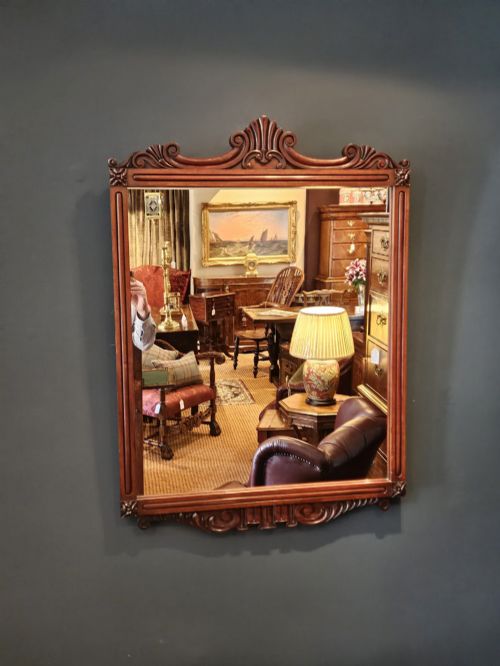


Carved Crest Wooden Mirror
A carved crest wooden mirror brings weight and presence to a room through deep relief work and centuries-old timber frames.
Carved Crest Wooden Mirror
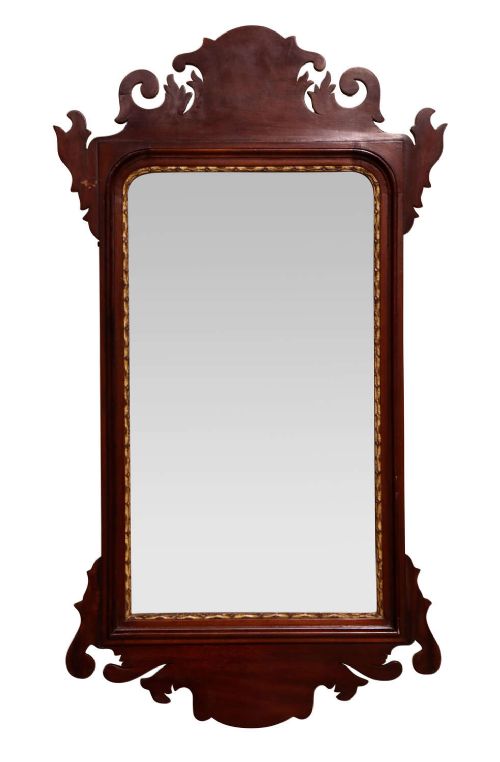
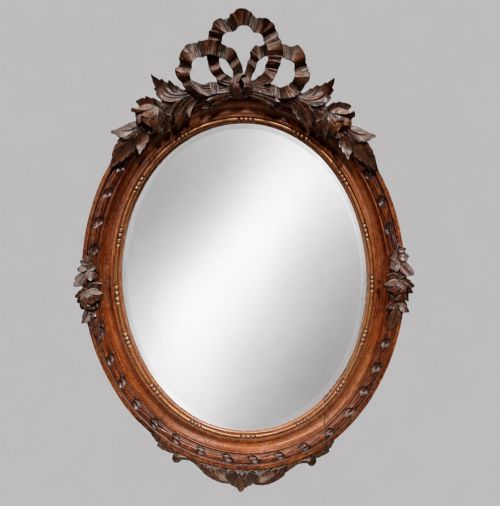
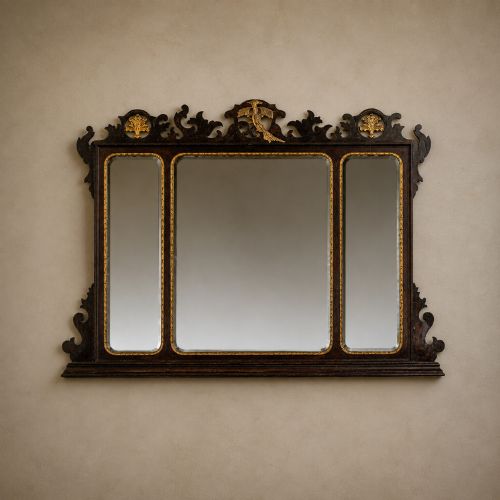
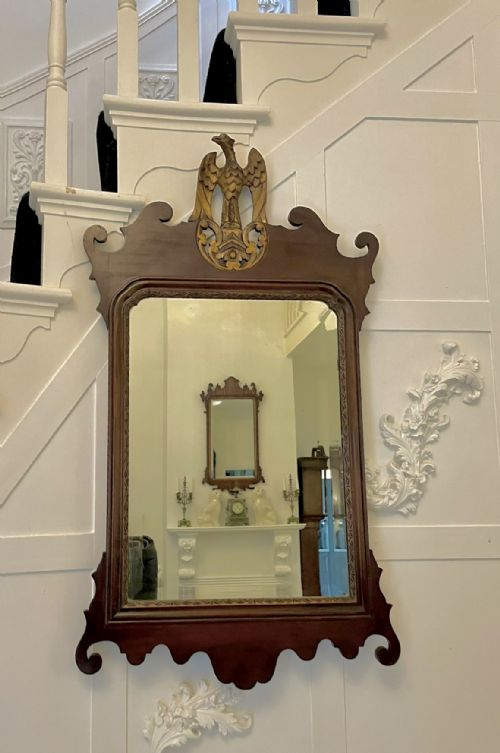
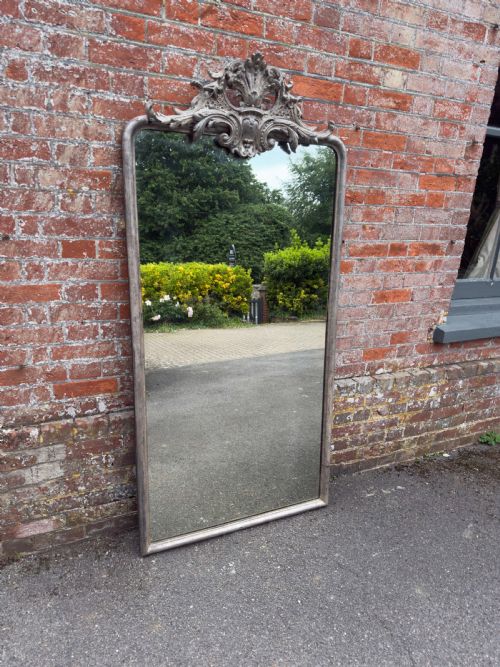
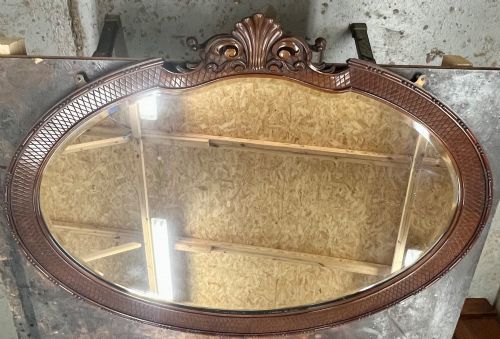
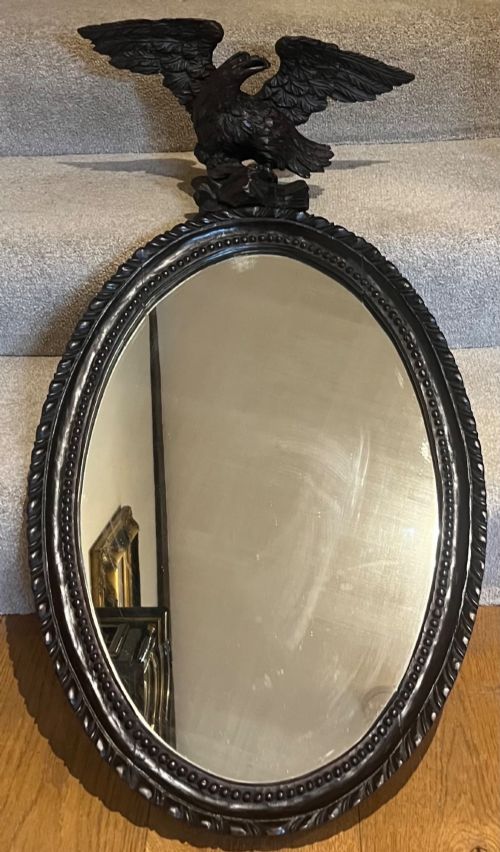
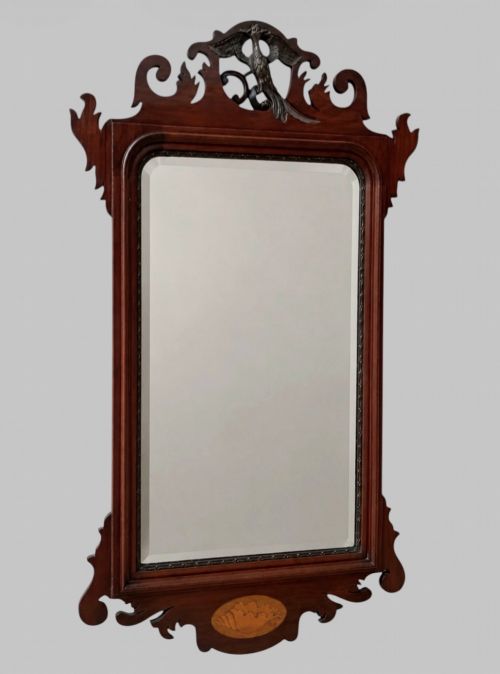
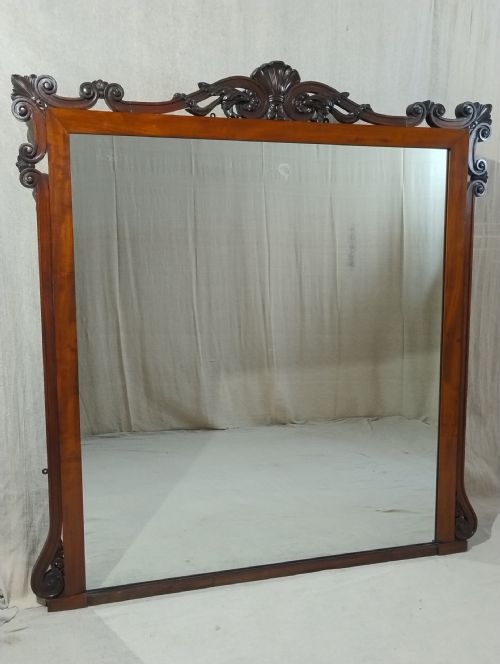
When you search for a carved crest wooden mirror, you encounter pieces spanning the eighteenth century through to the early twentieth century. The selection leans heavily toward Victorian Chippendale revivals, Georgian walnut designs, and substantial French overmantels.
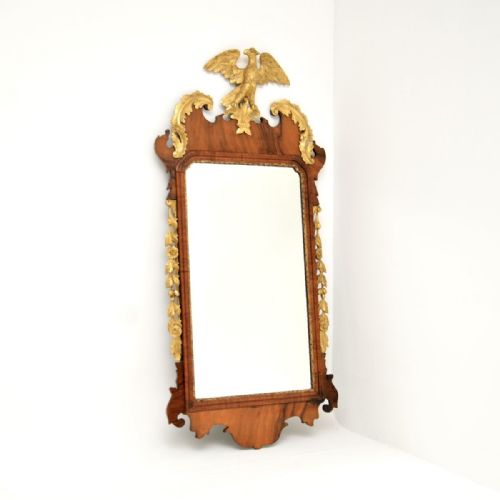
Forms range from compact oval wall hangings and fretwork panels to large triptych overmantels and cheval dressing mirrors. Walnut and mahogany dominate the timber choices, frequently paired with giltwood or gesso crests.
Earlier eighteenth-century examples present refined proportions, while nineteenth-century revivals favour grander scales and elaborate ornamental cresting such as birds or scrolling foliage.
Materials and construction techniques
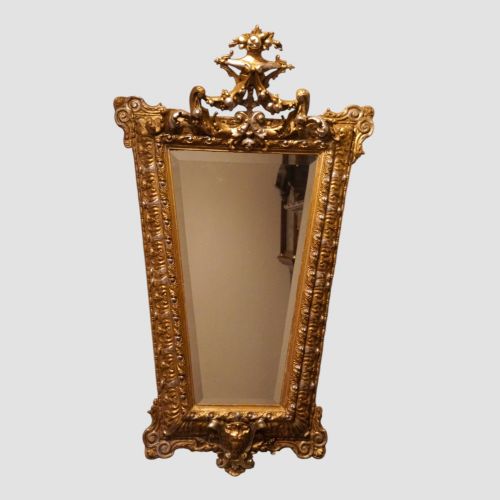
Frames rely on dense cabinet timbers like mahogany and burr walnut, shaped with hand-cut fretwork or solid mouldings. Artisans applied gesso over carved wooden foundations to build up intricate relief details before applying gold or silver leaf.
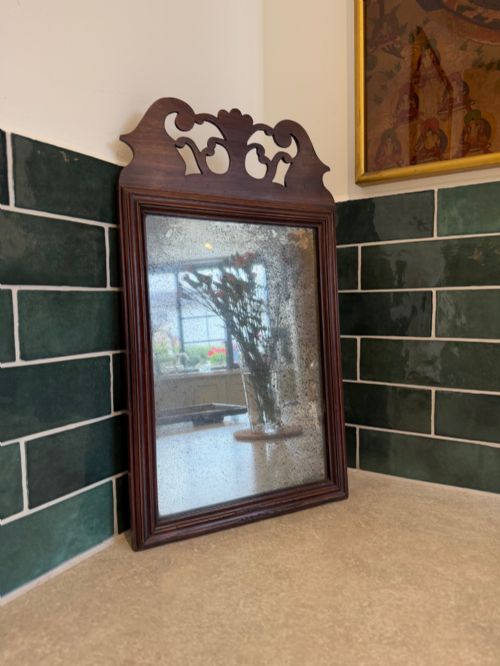
Reflecting plates consist of historic mirror glass, often showing the subtle imperfections and slight foxing characteristic of age. Joinery techniques utilise traditional pegged mortise and tenon joints alongside precise fret-sawn outlines.
Materials recorded across the inventory include silver-leaf, gesso, gold leaf, and mirror glass framed in oak, walnut, and mahogany.
Distinctions in craftsmanship and materials
The sophistication of the hand-carving determines the calibre of the crest, separating flat or mechanical decoration from deep, spirited relief work. The choice of timber also defines the tier, with figured burr walnut veneers and dense old-growth mahogany sitting at the upper end.
The survival of original surface finishes, gilding, and mirror plates preserves the integrity of the piece. Crispness in the fretwork edges and the depth of the parcel gilt detailing further distinguish finer workshops from standard production.
The Carved Crest Wooden Mirror Glossary
- Fretwork
- Openwork ornamentation cut with a fretsaw from thin boards of mahogany or walnut. This technique defines the intricate scroll patterns found on many eighteenth and nineteenth-century frames.
- Parcel Gilt
- A finishing method where selected portions of a wooden frame receive gold leaf while the underlying timber remains visible. It highlights specific carved details such as mouldings and crests.
- Overmantel Mirror
- A large horizontal mirror designed to hang specifically above a fireplace mantelpiece. They frequently incorporate arched tops or elaborate cresting.
- Gesso
- A plaster-like mixture applied to wood and carved to form detailed sculptural elements before gilding. It provides a smooth base for metallic leaf adhesion.
- Cheval Mirror
- A freestanding full-length dressing mirror mounted in a frame with pivoting pivots. They allow the glass to tilt at various angles.
Carved Crest Wooden Mirror: Frequently Asked Questions
How do I date a carved wooden mirror?
Dating relies on identifying the underlying timber species, the style of the fretwork, and the construction methods used in the frame. Eighteenth-century pieces typically display simpler, hand-shaped rebates and native timbers, while Victorian revivals often show machine assistance and heavier proportions.
Examining the mirror plate itself offers further clues. Hand-beveled edges, silvering degradation, and thickness variations point firmly towards antiquity rather than modern reproduction.
Where should I hang an overmantel mirror?
An overmantel mirror belongs directly above a fireplace, anchoring the vertical space of the chimney breast. Its substantial width reflects light across the room and balances the heavy masonry below.
Ensure the wall fixings engage securely with structural studs or brickwork. These wooden frames carry considerable weight due to their dense timber construction and gesso crests.
Are these mirror plates original?
Many surviving pieces retain their historic glass plates, which frequently exhibit minor oxidation, light scratches, and foxing. These natural signs of ageing confirm the antiquity of the object.
Replacement glass does occur over centuries of use. A perfectly clear, flawless reflection in an eighteenth-century frame often indicates a later restoration.
How do I care for giltwood and carved frames?
Maintain giltwood and carved wooden surfaces by dusting them gently with a soft, dry brush. Avoid liquid cleaners and chemical sprays, which can dissolve delicate water-gilding or damage fragile gesso.
Keep the mirrors away from direct sunlight and damp environments. Stable indoor humidity prevents the underlying timber from warping and protects the old joints from loosening.