



Carved Crest Oak Chair
A carved crest oak chair brings solid timber frame construction and prominent relief work together, offering enduring seating with historical presence for a traditional interior.
Carved Crest Oak Chair
A carved crest oak chair is a sturdy timber seat featuring decorative woodwork along its upper rail, combining practical utility with ornamental display. Buyers searching this phrase meet everything from robust seventeenth-century wainscot forms to later Victorian and Edwardian revival interpretations.
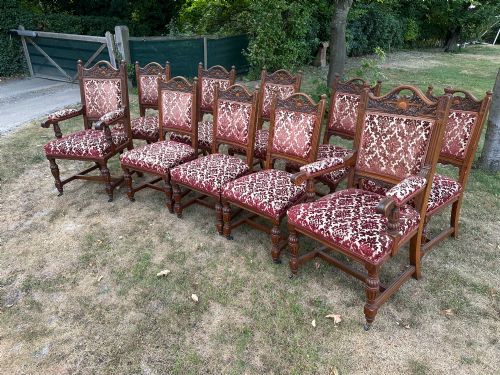
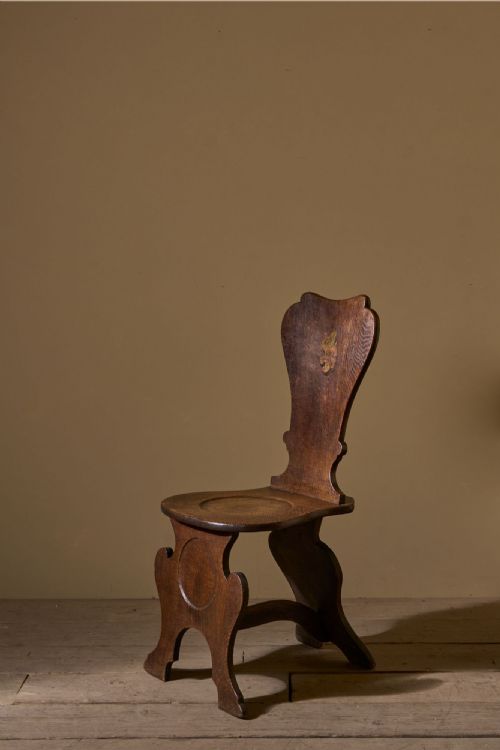
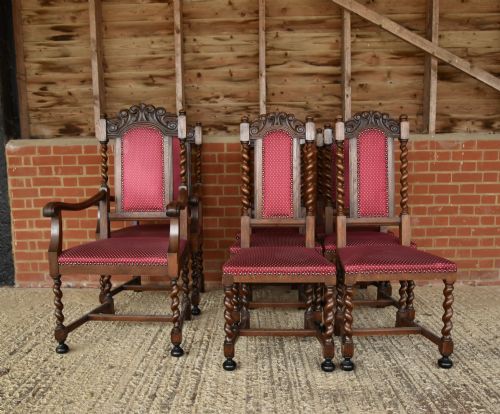
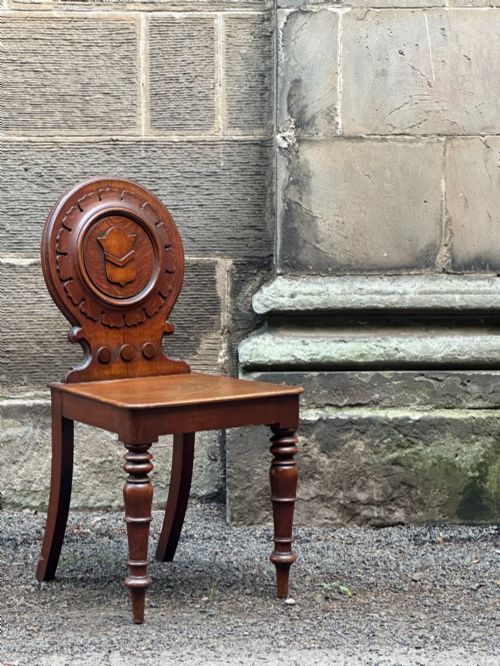
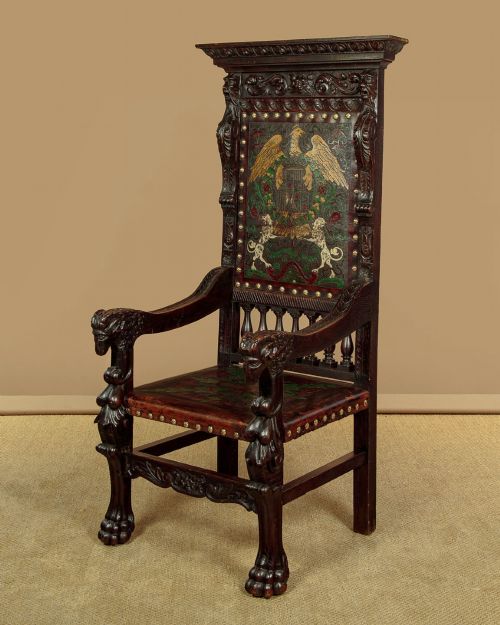
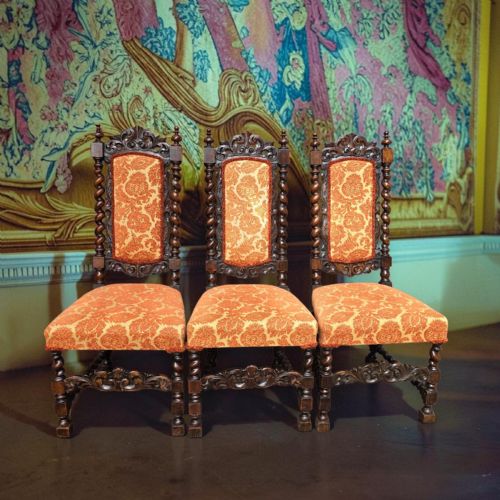
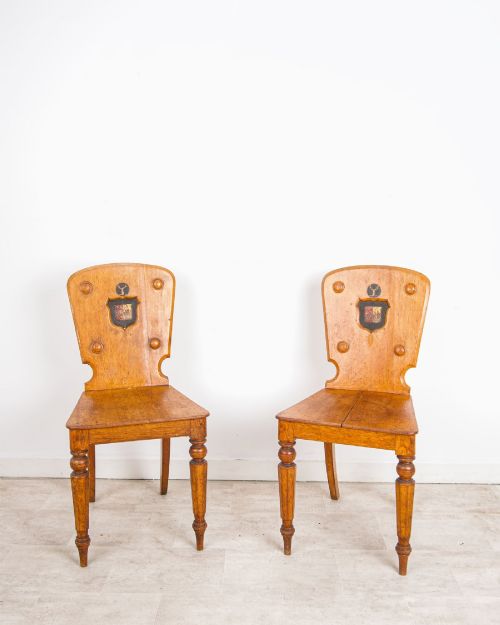
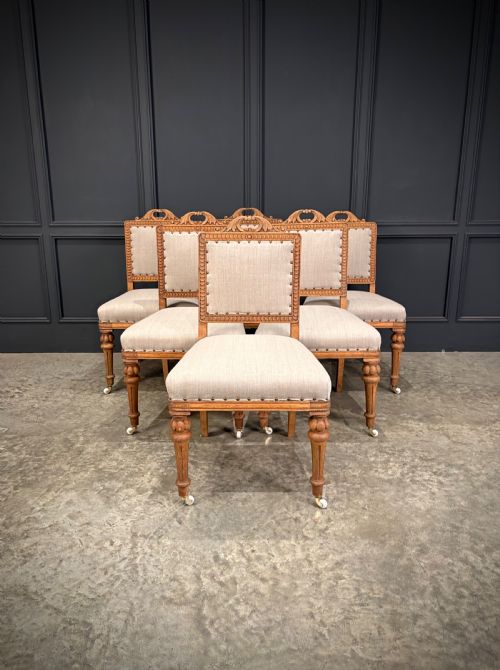
The selection ranges widely across forms such as highback dining chairs, hall chairs with shield backs, and substantial armchairs. Seventeenth-century origins appear alongside nineteenth-century Jacobean and Gothic revivals, providing distinct regional styles from Yorkshire, Lancashire, and Scotland.
How they were made
Cabinet makers constructed these seats predominantly from sturdy English oak, often incorporating beech for secondary framing or turning. Timber was shaped using joined construction methods, pegging frame members together securely without reliance on modern adhesives.
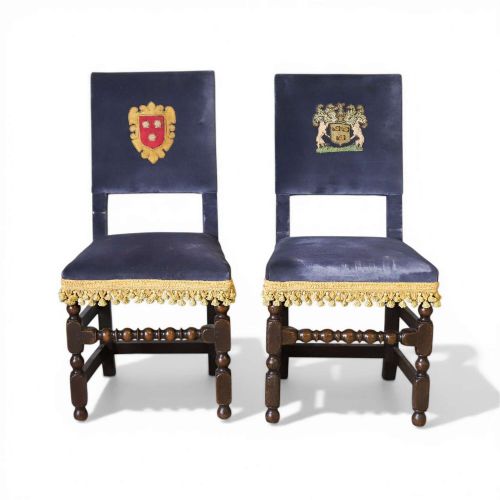
Carvers applied chisel and gouge work directly to the solid wood cresting rails, producing heraldic shields, arched motifs, and figural details like dodo birds. Upholstered variants integrated leather, cane, velvet, or textile panels secured with brass tacks.
What varies in quality
The distinction between standard items and superior examples lies in the depth and sharpness of the hand carving along the cresting rail. Crisp, well-defined relief work executed by skilled hands elevates a piece far above simple mechanical duplication.
Integrity of the timber framing and the proportion of original components dictate the standing of each seat. Surviving early joinery with minimal replacement parts commands greater regard than heavily restored later assemblies.
The Carved Crest Oak Chair Glossary
- Wainscot chair
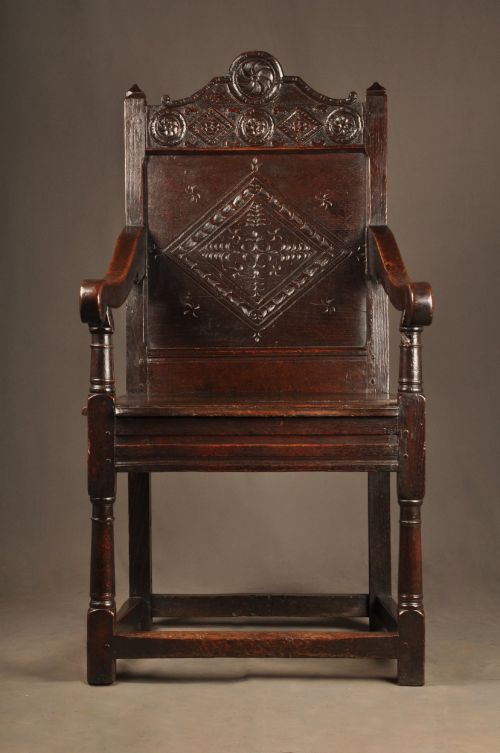
- A heavy wooden armchair from the seventeenth century featuring panelled construction and elaborate carving. These early seats served as principal pieces of furniture in prosperous households.
- Backstool
- An early upholstered or panelled single chair without arms, serving as a precursor to the modern dining chair. They typically display upright backs and sturdy turned legs.
- Cresting rail
- The horizontal topmost member of a chair back, frequently shaped and carved with coats of arms or floral patterns. It forms the focal visual point of the seating design.
- Barley twist
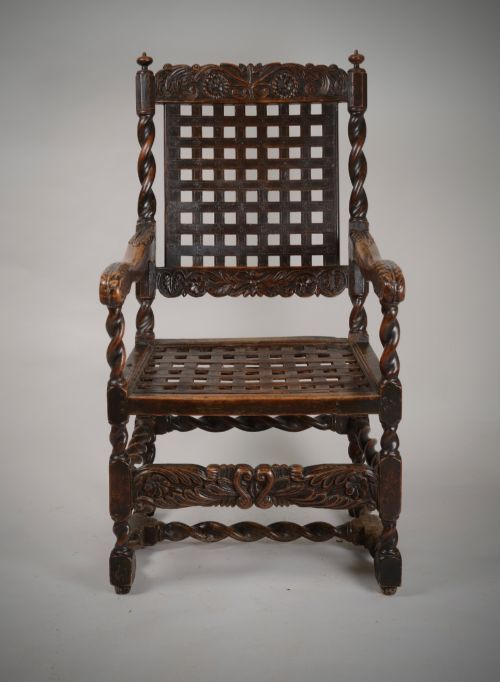
- A type of turning shaped like a spiral rope, popular in seventeenth-century furniture and revived during the Victorian era. It adds vertical visual interest to chair legs and stretchers.
- Armorial chair
- A seat featuring carved heraldic crests, family coats of arms, or shields. These pieces often commemorated specific lineages or important alliances.
Carved Crest Oak Chair: Frequently Asked Questions
How do I identify a 17th century chair?
Examine the construction joints for pegged tenons and note the use of heavy, quarter-sawn oak timber throughout the frame. Hand-carved cresting rails on wainscot or backstool forms typically display the characteristic tool marks of the period.
Look also for proportions designed around older domestic habits, such as lower seat heights and upright backs. Surface patination built up over centuries provides further indication of genuine early origin.
What is a wainscot chair?
A wainscot chair is a heavy, solid oak armchair constructed using panel-framing techniques borrowed from wall panelling. Originating in the sixteenth and seventeenth centuries, it represented a place of status and authority within the home.
These pieces usually feature box frames, solid wooden seats, and deeply carved back panels finished with an arched crest. Their robust build allowed them to survive centuries of domestic use.
Are barley twist chairs comfortable?
Barley twist chairs provide firm, upright support characteristic of historic seating rather than deep cushioning. Their primary function was posture and formal dining rather than relaxed lounging.
Matching sets often include cane or upholstered pads to soften the seat while maintaining the decorative turned framework. Adding loose squab cushions can improve comfort for modern dining use.
How should I care for antique oak?
Maintain antique oak furniture by keeping it away from direct heat sources and sudden humidity changes that cause timber to split. Apply a microcrystalline wax polish occasionally to nourish the wood and preserve its natural sheen.
Avoid using modern silicone-based sprays, which can penetrate open oak pores and damage historic finishes. Gentle dusting with a dry lint-free cloth remains the best daily maintenance.