
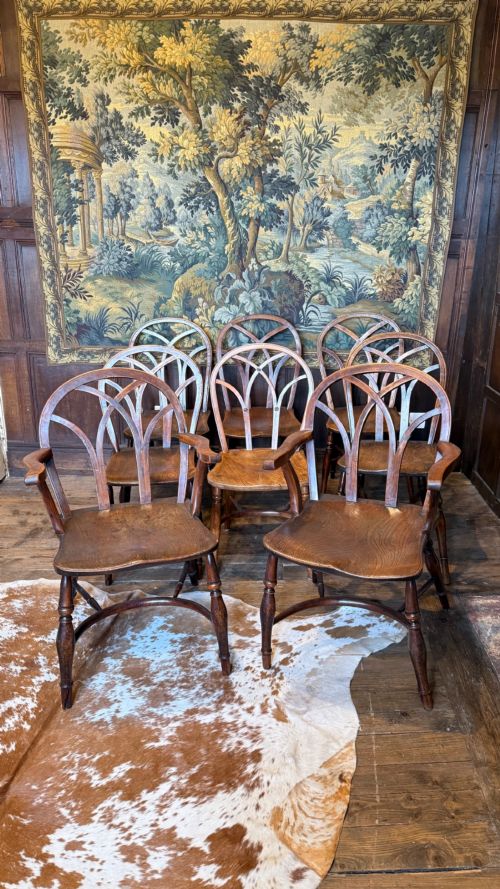
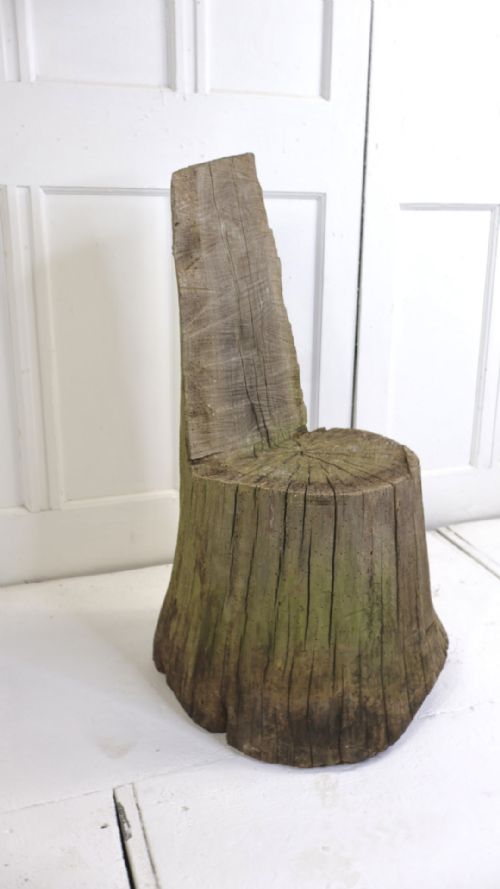
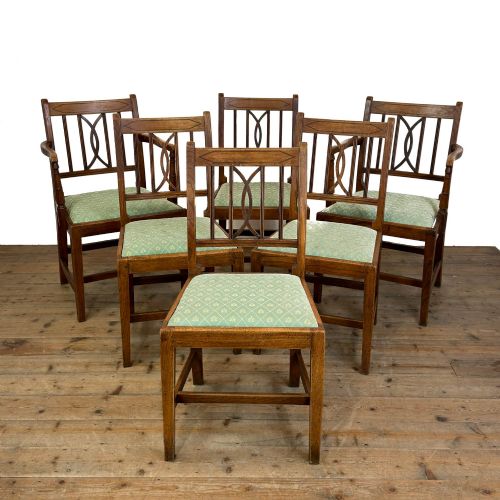
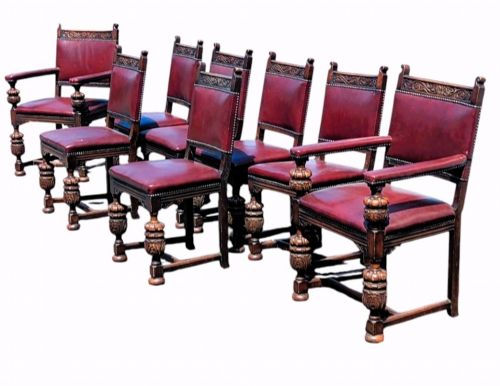

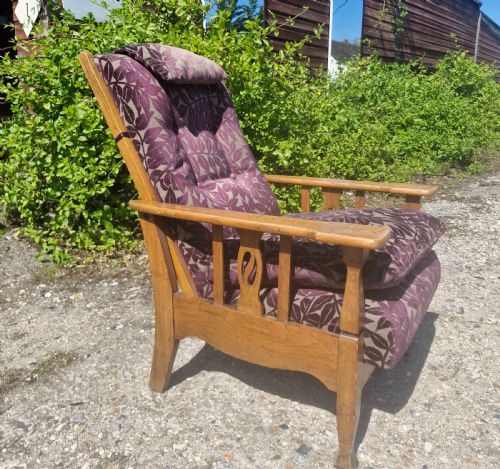


Oak Side Armchair
An oak side armchair brings solid timber framework and upright seating into a room, offering sturdy utility rooted in historic domestic design.
Oak Side Armchair
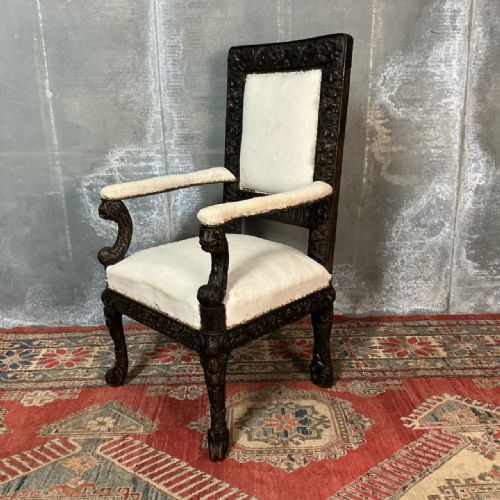
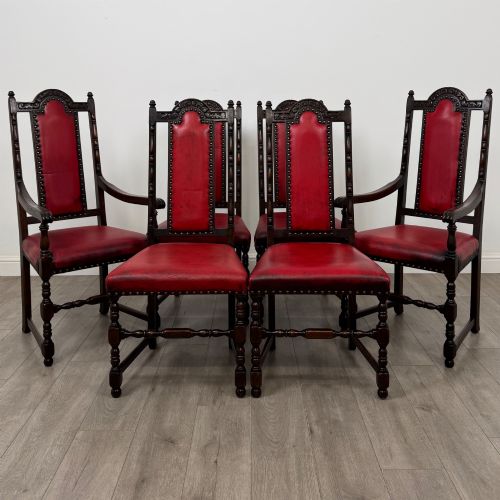
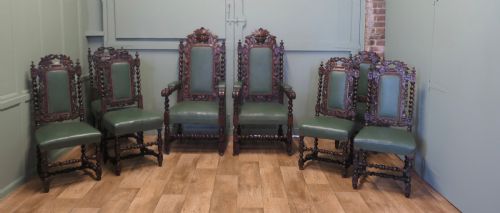
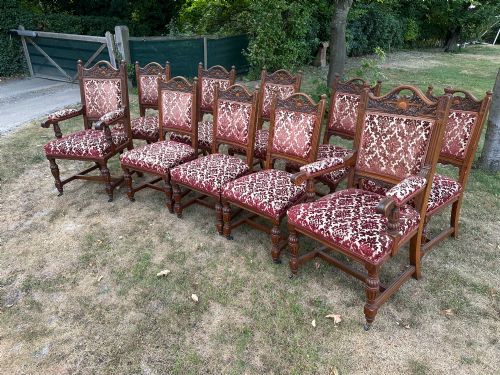
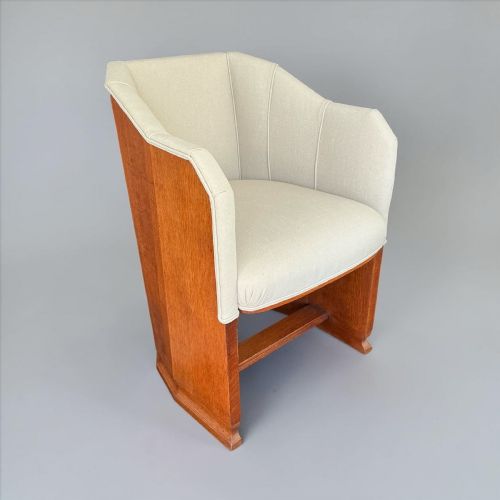
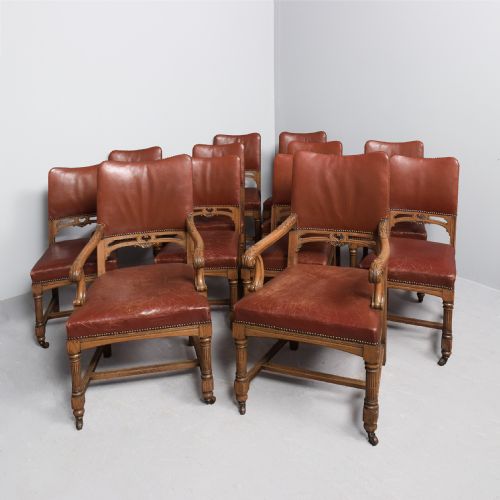
An oak side armchair merges the open-armed support of a fireside seat with the proportions of a dining or hall chair. These pieces appear frequently across Victorian, Edwardian, and early twentieth-century periods, often forming part of larger dining sets or standing alone as hallway furniture.
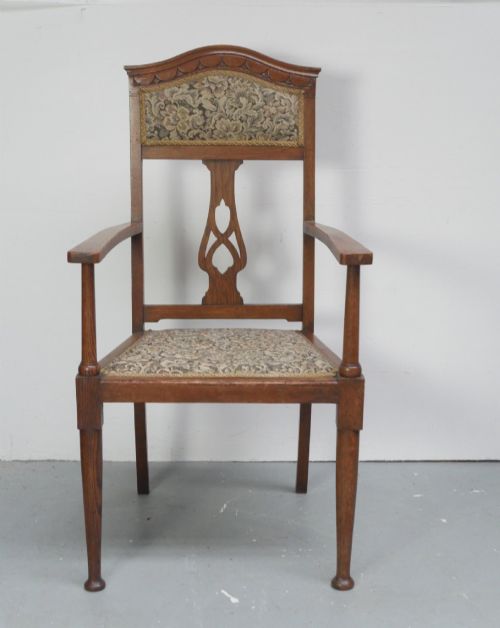
The styles span traditional Jacobean and Gothic Revivals alongside cleaner Arts and Crafts or Art Deco interpretations. Buyers encounter single armchairs, pairs, and matched sets that demonstrate the enduring popularity of oak for heavy seating.
Materials and construction methods
Solid oak provides the primary structural framework for these chairs, chosen for its density and durability. Joinery relies on traditional methods like mortise and tenon joints, sometimes complemented by turned elements and carved ornamentation.
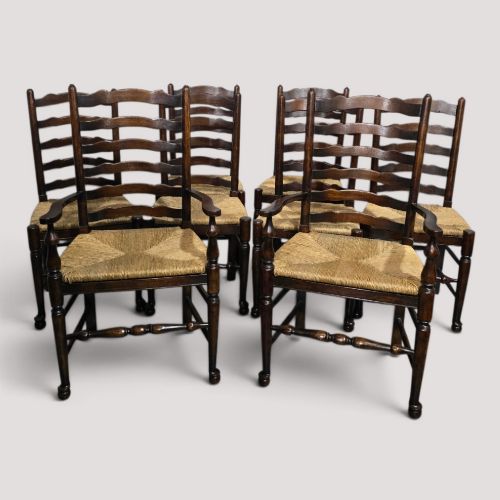
Seating areas incorporate a variety of inset materials depending on the period, ranging from solid timber and rush to woven cane, leather, fabric, and velvet upholstery.
Seat materials recorded across the inventory include leather, rush, cane, fabric, velvet, and solid timber.
Assessing craftsmanship and finish
Quality rests in the crispness of carved detailing, the tightness of the joinery, and the selection of timber grain. Fine examples display well-executed revival motifs or clean, purposeful lines without relying on excessive embellishment.
The integrity of the frame determines longevity, distinguishing robust daily seating from purely decorative items. Original upholstery materials and well-preserved rush or cane work also elevate the standing of a piece.
Liberty s of London·Heals of London·Goodyers of London·Lamb Of Manchester·Adolf Loos
The Oak Side Armchair Glossary
- Oak
- A hard, durable timber with a prominent grain pattern used extensively in British furniture making. It accepts carving well and develops a rich patina over time.
- Armchair
- A chair equipped with side supports for the arms, offering a more relaxed posture than a standard dining or side chair.
- Arts and Crafts
- A design movement prioritising honest construction, handcraftsmanship, and simple forms. Pieces from this tradition often expose structural joinery and use plain oak framing.
- Rush
- Dried marsh grass twisted into cords and used for seat weaving. It creates a flexible, textured surface common on country chairs.
Oak Side Armchair: Frequently Asked Questions
How do I date an oak armchair?
Dating relies on stylistic clues, construction techniques, and the character of the timber. Revival pieces often combine seventeenth-century motifs with nineteenth-century machine tools.
Examining the underside and joints reveals whether screws, nails, or traditional wooden pegs hold the frame together. Secondary woods and upholstery webbing also provide chronological markers.
Where should I place an oak armchair?
These sturdy chairs suit hallways, living rooms, and studies where their wooden frames provide a strong visual anchor. An armchair works well beside a fireplace or paired with a writing table.
Ensure the room's humidity remains stable to protect solid oak panels and any leather or cane inserts from drying out.
How do I care for antique oak?
Maintain the finish by dusting regularly with a soft, dry cloth and applying natural beeswax sparingly when the wood appears dry. Avoid placing timber furniture near direct heat sources or in strong sunlight.
Protect upholstered or cane panels by keeping them clean and avoiding excessive weight on fragile woven seats.
What is the difference between a side chair and an armchair?
A side chair is built without armrests, designed originally to sit along the sides of a dining table or against a hallway wall. An armchair includes integral arm supports for added comfort.
Both types share similar underframes and stylistic details when produced as part of a matched dining set.