

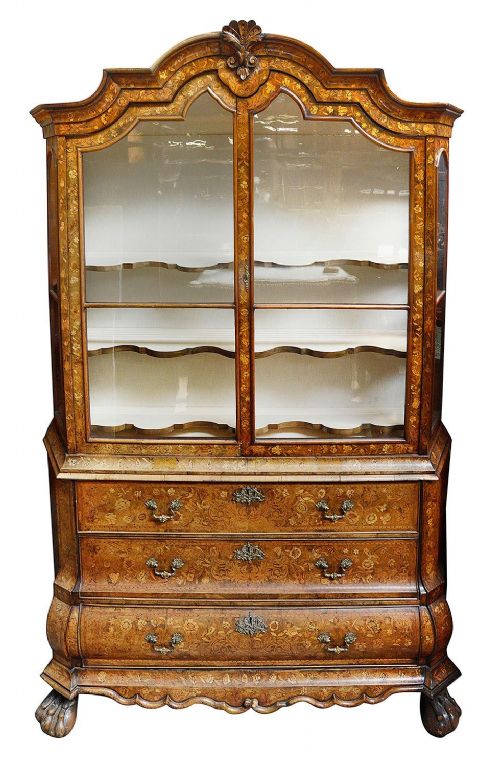


Carved Crest Display Cabinet
A carved crest display cabinet brings timber and glass together to showcase precious collections, ranging from Dutch walnut to Japanese Meiji examples.
Carved Crest Display Cabinet
A carved crest display cabinet brings together glazed enclosures and timber framing designed to hold objects of curiosity and display wares securely. The examples gathered here span wall cabinets, vitrines, and standing display cabinets created to exhibit porcelain, glassware, and small collections within a domestic interior.
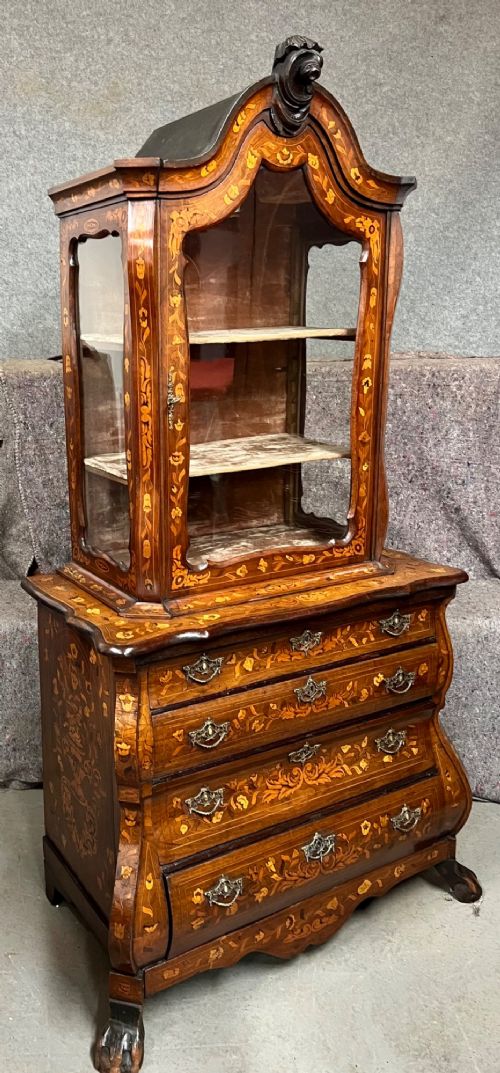
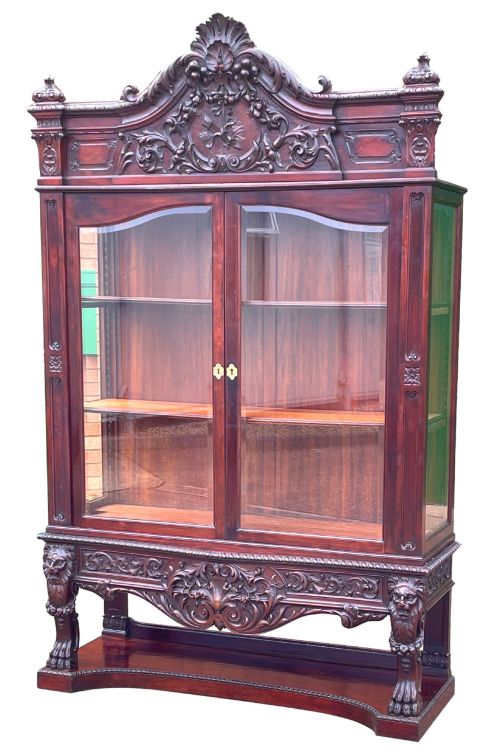
The versions most likely to be met on this page belong to the nineteenth century, including Victorian walnut and mahogany pieces, alongside continental works and Dutch marquetry inlaid designs. These forms rely on glass panels to permit viewing while keeping contents protected from dust.
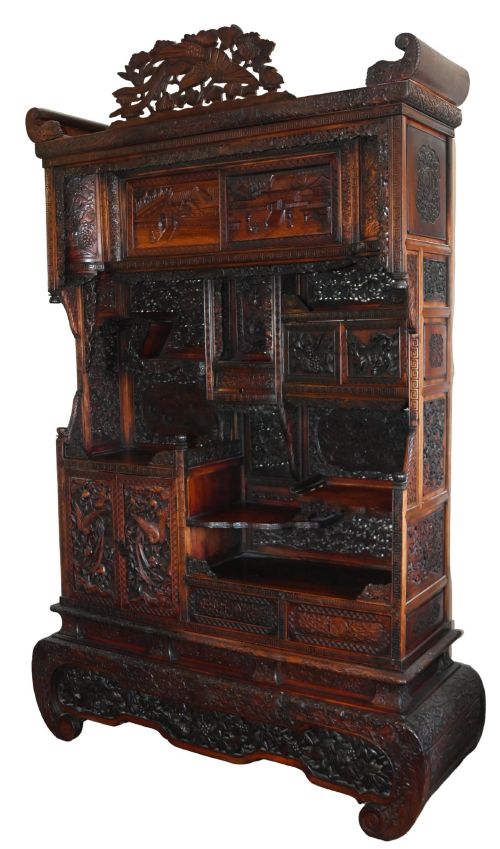
Makers utilised various regional aesthetics, resulting in forms that stretch from Queen Anne style walnut to French style models, Japanese Meiji period carvings, and Chinese hardwood structures. Each piece integrates display space with decorative woodwork, topped by distinct carved crests or pediments.
How they were made
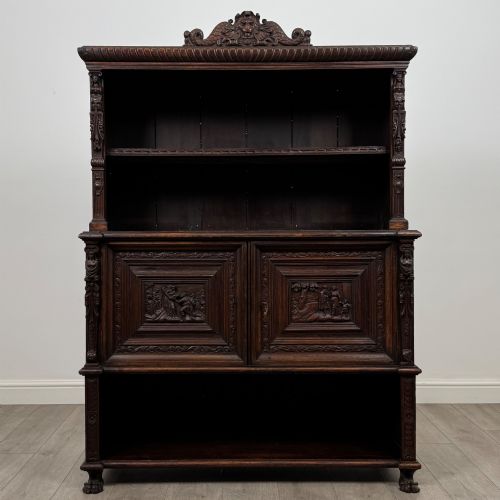
Makers constructed these cabinets using dense timbers such as mahogany, walnut, rosewood, oak, amboyna, and general hardwood, frequently embellished with marquetry inlay to create pictorial surface patterns. Brass hardware supports the functional elements of hinges and locks on doors and compartments.
Carving serves as a primary decorative technique, evident in the detailed scenes on oak cupboards, Japanese Meiji period woodwork, and gilded hanging display cases. Glazing forms the transparent windows that front the display areas, held within timber frames tailored to specific regional styles.
Carved Crest Display Cabinet Retail Price Guide 2026
Typical asking prices for carved crest display cabinet among the pieces listed under this phrase on Sellingantiques today, from the lower quarter to the upper quarter. They describe what is for sale here now, not the wider market.
Some nineteenth-century makers evidently enjoyed hiding tiny shelves behind glazed doors just to make dusting an intricate daily treasure hunt.
What varies in quality
The calibre of timber preparation and the depth of execution in the carved crests and panels distinguish finer cabinets from simpler workshop output. Marquetry inlay executed with varied contrasting woods requires immense skill to achieve clean, sharp geometric or floral motifs that remain flush with the surrounding surface.
Structural integrity depends upon the joinery of the main carcase and the precise fitting of glazed doors, ensuring smooth operation over decades of use. The sophistication of regional styling, whether Dutch Baroque, French Chateau, or Victorian Rococo Revival, dictates the artistic ambition behind each piece.
The Carved Crest Display Cabinet Glossary
- Marquetry Inlay
- Decorative technique of applying small pieces of veneer to a structure to form detailed patterns or pictures. This method utilises various coloured woods to achieve pictorial depth.
- Vitrine
- Glass-fronted cabinet designed specifically for displaying fine porcelain, curiosities, or collections. The term originates from the French word for glass.
- Etagere
- Open piece of furniture consisting of a set of shelves for displaying small objects. These tiered structures often feature delicate supports and rich timber grains.
- Chiffonier
- Low cabinet or sideboard featuring cupboards and sometimes shelves above. This form evolved during the nineteenth century for general domestic storage and display.
- Pediment
- The triangular or decorative upper part of a cabinet above the main body. On these pieces, this area frequently carries carved crests.
Carved Crest Display Cabinet: Frequently Asked Questions
What fits inside a carved crest display cabinet?
These cabinets suit porcelain collections, glassware, small silver items, and curiosities that benefit from glass protection.
Shelved interiors permit organised arrangement while keeping delicate pieces safe from handling.
How do I identify Victorian display cabinets?
Victorian pieces often utilise walnut or mahogany timber alongside characteristic revival styles such as Rococo or Renaissance influences.
Darker wood tones and substantial carved details typically point towards nineteenth-century British or continental workshops.
Where should I place a wall cabinet?
Wall cabinets require secure fastening to structural wall studs capable of supporting the combined weight of timber and glass.
Positioning them at eye level ensures the contents and the carved crests remain visible.
How do Dutch marquetry cabinets differ?
Dutch marquetry examples feature intricate floral or pictorial veneer work using multiple contrasting timber species.
These pieces often display distinct bulbous feet or shaped fronts associated with Dutch Baroque traditions.