



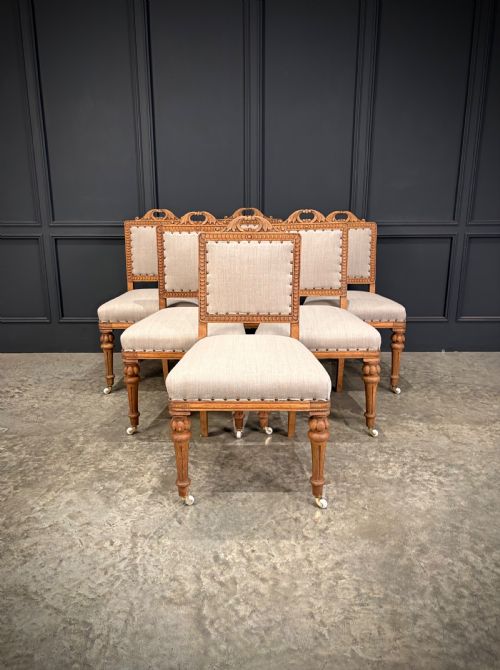

Carved Crest Dining Chairs
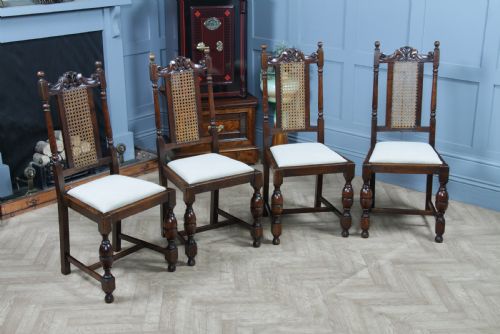
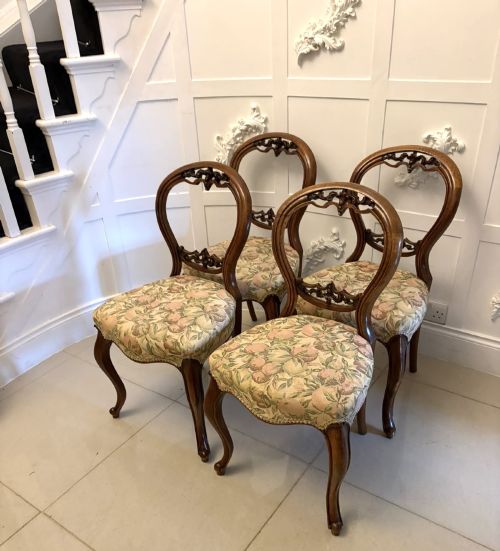
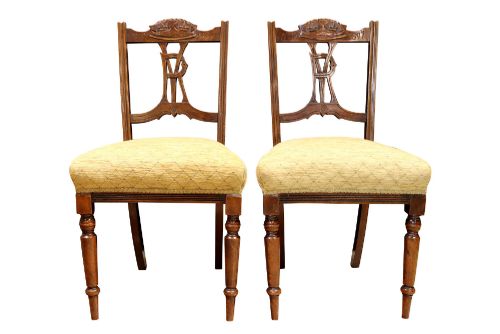
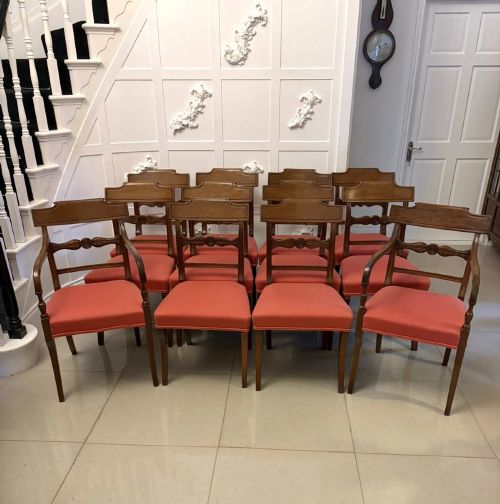
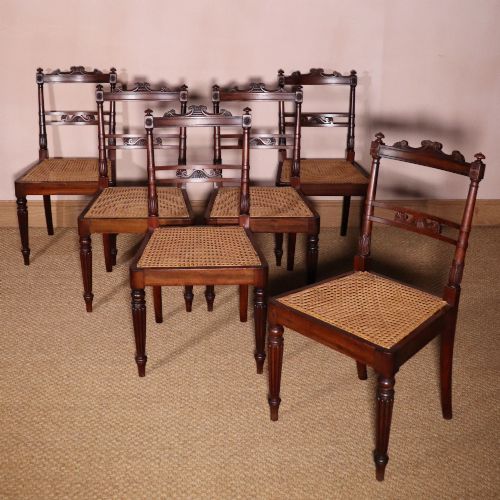
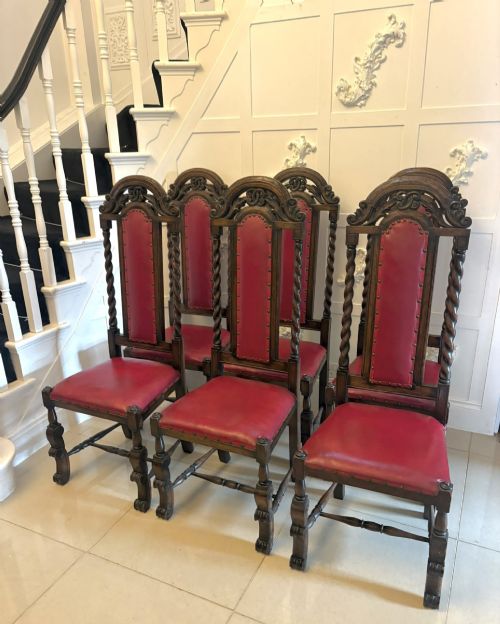
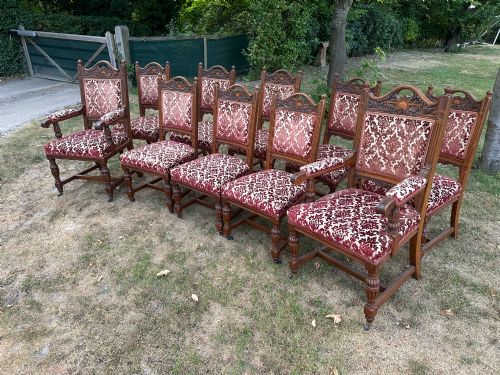
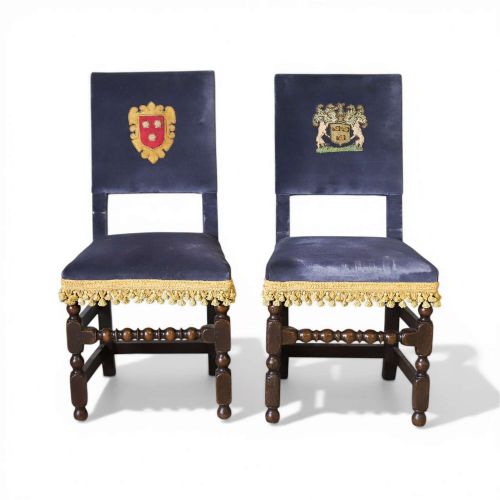
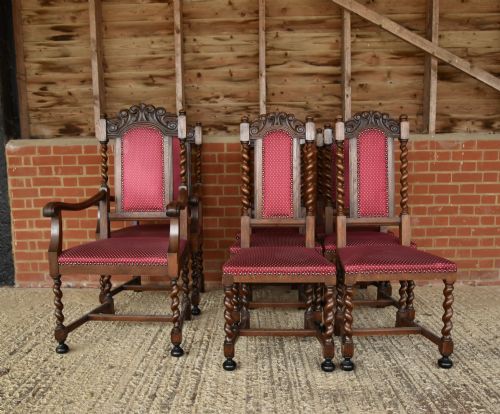
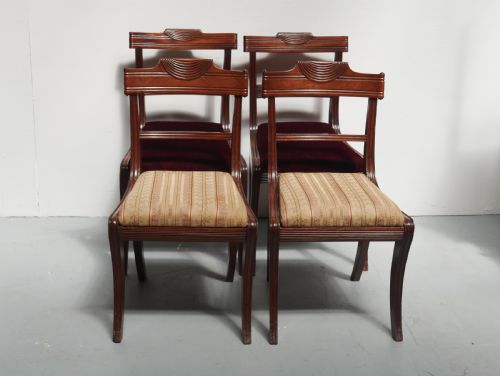
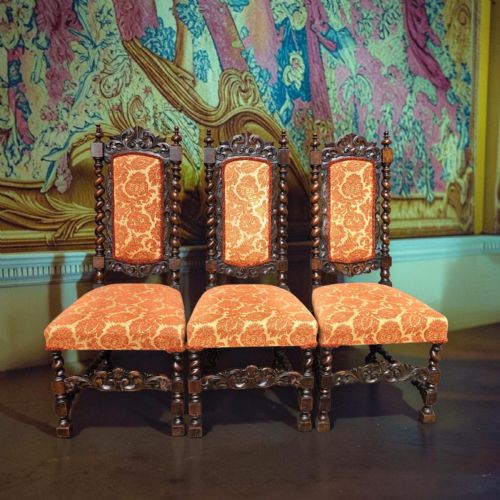
These carved crest dining chairs bring robust timber frames and heraldic detail straight to the dining table.
Carved Crest Dining Chairs
Carved crest dining chairs span centuries of seating design, appearing in formats from single backstools to large matched sets. Buyers seeking carved crest dining chairs encounter robust timber construction ranging from seventeenth-century joined oak to nineteenth-century revival walnut and mahogany.
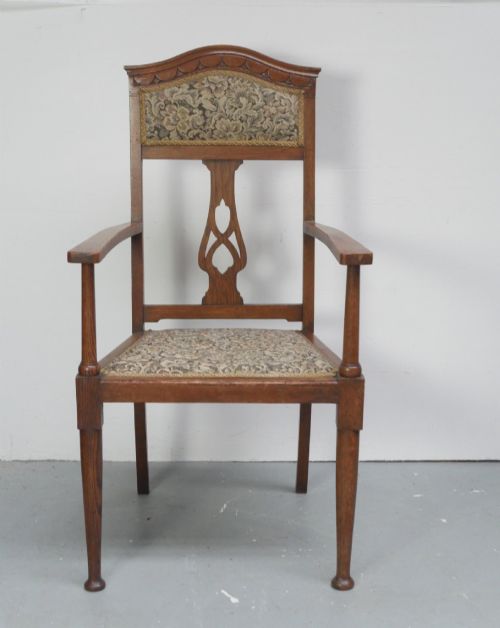
The selection includes side chairs, armchairs, and hall chairs featuring prominent carved top rails, often displaying heraldic motifs, crests, or elaborate scrollwork. Formats vary from high-backed Jacobean styles to Regency brass-inlaid faux rosewood and Edwardian oak productions.
Origin and period dictate the character of these pieces, with regional oak examples sitting alongside refined walnut and mahogany designs. Sets appear alongside pairs and individual armchairs, offering versatility for traditional and eclectic interiors alike.
Materials and construction methods
Makers relied principally on sturdy timbers such as oak, mahogany, and walnut to build these frames, applying deep relief carving directly to the wood. Joinery techniques range from early joined construction and pegged joints to later nineteenth-century framing methods.
Upholstery materials complement the timber structures, incorporating leather, velvet, fabric, and cane panels for seats and backs. Details like brass inlay and turned elements such as barley twist supports further define the execution of these chairs.
Carved Crest Dining Chairs Retail Price Guide 2026
Typical asking prices for carved crest dining chairs among the pieces listed under this phrase on Sellingantiques today, from the lower quarter to the upper quarter. They describe what is for sale here now, not the wider market.
Several chairs feature carved family crests so specific they practically demand a seat at the clan AGM.
Distinctions in execution and grade
The depth and crispness of the timber carving separate standard production from superior examples, with sharp relief work indicating skilled hand execution. The quality of the primary timber grain and the integrity of early joinery directly influence the stature of each piece.
Coherence within sets and the survival of original decorative elements, such as heraldic crests or cane work, elevate certain pieces above standard alternatives. The choice of secondary materials, including fine upholstery fabrics and brass inlay, reflects the original commission tier.
Waring & Gillow·Gillows
The Carved Crest Dining Chairs Glossary
- Backstool
- An early form of upholstered or plain wooden seat without arms, common in seventeenth-century English and Scottish domestic spaces.
- Barley twist
- A decorative turning technique resembling a spiralling rope, frequently utilised on the legs and stretchers of seventeenth-century and revival chairs.
- Bergere
- An enclosed upholstered armchair with a wooden frame and cane back or seat panels, popular in period and revival seating.
- Heraldic crest
- A specific armorial bearing or familial symbol carved into the top rail or back panel of a chair.
- Klismos
- An ancient Greek chair design featuring curved legs and a concave backrest, revived during the Regency and nineteenth century.
Carved Crest Dining Chairs: Frequently Asked Questions
How do I date a carved oak chair?
Dating relies on examining the joinery methods, timber patination, and the specific style of the carved motifs on the crest rail.
Early pieces utilise pegged joints and hand-riven timber, while later revival models from the nineteenth and twentieth centuries display mechanical tool marks and standardised dimensions.
Are these chairs suitable for daily dining?
Many solid timber chairs provide sturdy seating, though historical frames require careful consideration regarding weight and daily wear.
Adding appropriate support or placing them in less intensive settings helps preserve fragile cane panels and antique upholstery fabrics.
What is an armorial clan chair?
These are regional seating pieces featuring carved family crests or heraldic symbols associated with specific Scottish or English lineages.
They often served functional roles in great halls or dining rooms while signifying family heritage and status.
How do I identify a revival style piece?
Revival pieces copy earlier seventeenth-century or Regency aesthetics but are constructed using nineteenth or twentieth-century workshop practices.
Inspect the interior timber surfaces and fasteners to distinguish between original period construction and later interpretive craftsmanship.