






Carved Corner Whatnot
A carved corner whatnot is a tiered display stand designed to utilise awkward angles, bringing rich Victorian timber into your living space.
Carved Corner Whatnot
When you search for a carved corner whatnot, you encounter tiered shelving units built specifically to fit into the angles of a room. These pieces function primarily as display stands or etageres for ornaments and books.
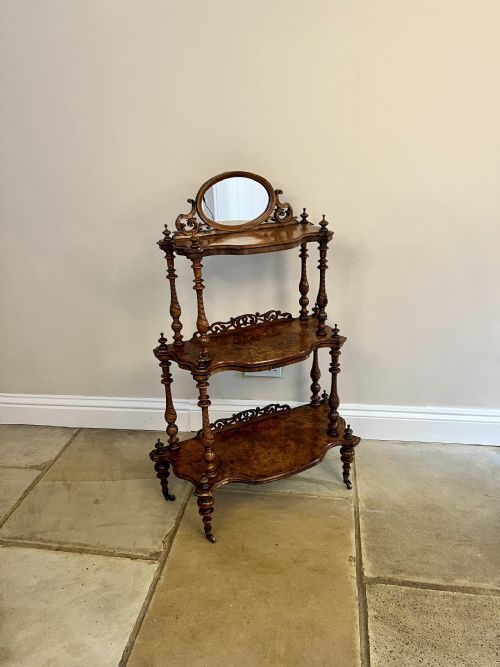
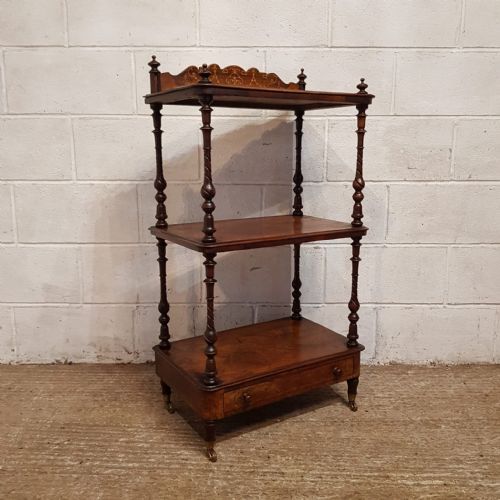
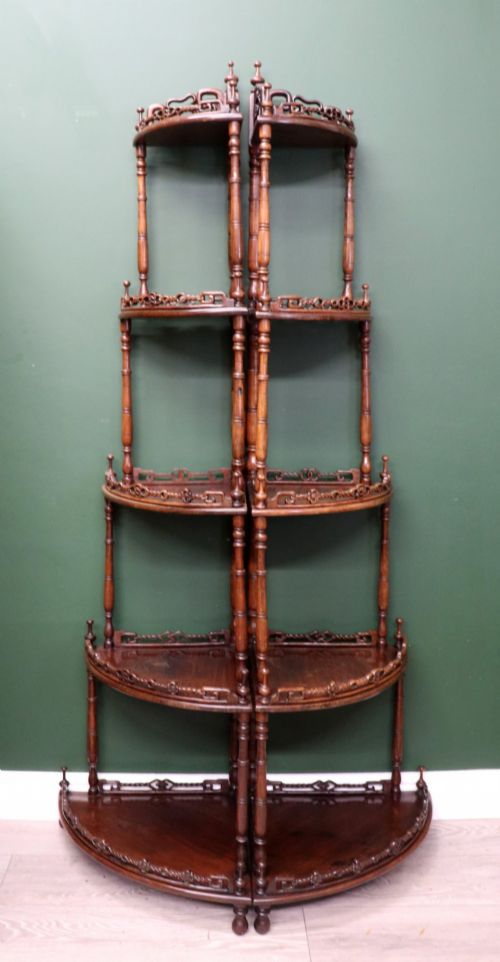
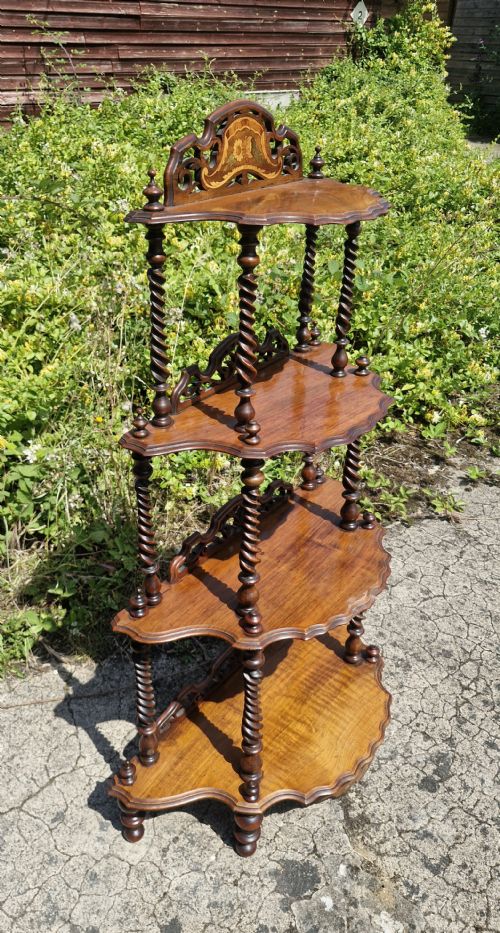
The pieces on this page stem from the Victorian period, spanning the nineteenth century between eighteen fifty and eighteen eighty-five. They take forms such as four-tier and five-tier shelving units, demi-lune consoles, and mirrored side cabinets.
Most examples found here utilise the corner format to save space while providing multiple tiers of display surface. Walnut, burr walnut, rosewood, and mahogany dominate the structural timber choices across these listings.
Materials and construction
Cabinet makers utilised dense hardwoods such as mahogany, rosewood, and walnut for the primary framework of each carved corner whatnot. Burr walnut surfaces frequently showcase distinctive grain patterns across the tiers and doors.
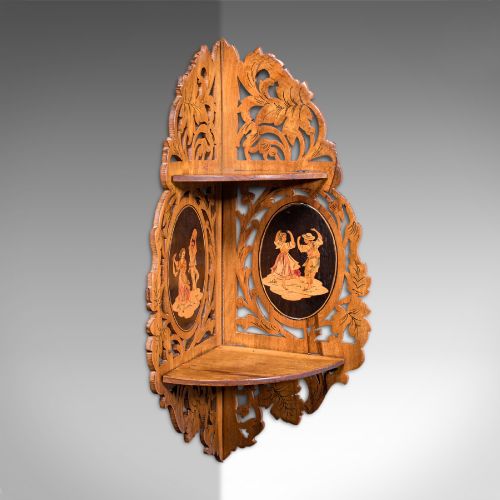
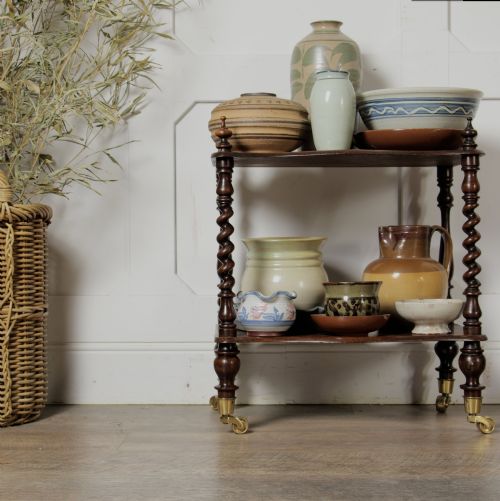
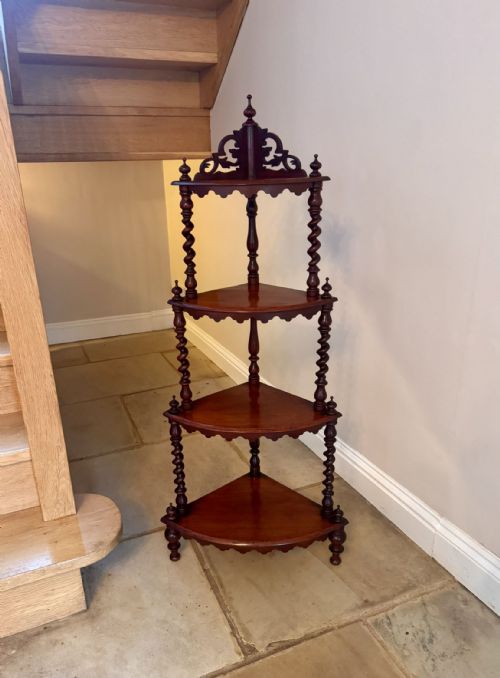
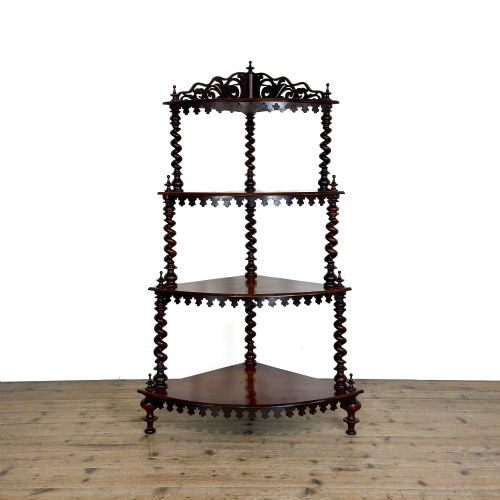
Detailing often incorporates marquetry inlay, ceramic elements, brass fixtures, and glass panels within the cabinet doors or mirrored backs. Turned columns, barley twist supports, and carved wooden motifs connect the horizontal tiers together.
Carved Corner Whatnot Retail Price Guide 2026
Typical asking prices for carved corner whatnot among the pieces listed under this phrase on Sellingantiques today, from the lower quarter to the upper quarter. They describe what is for sale here now, not the wider market.
Materials documented across the listings include walnut, burr walnut, rosewood, mahogany, brass, glass, ceramic, and marquetry inlay.
Judging quality in these pieces
Exhibition quality examples show superior timber selection, particularly in highly figured burr walnut veneers and richly grained rosewood. The complexity of the carving and the precision of the marquetry inlay mark the distinction between standard room pieces and high-end commissions.
The Carved Corner Whatnot Glossary
- Whatnot
- A tiered open shelving unit designed for displaying ornaments, bric-a-brac, and small objects. These pieces became popular in nineteenth-century interiors.
- Etagere
- A piece of furniture consisting of a set of open shelves for displaying small articles. The term is frequently used interchangeably with whatnot in Victorian listings.
- Burr walnut
- A prized timber veneer taken from the warted growth on a walnut tree. It produces intricate, swirling patterns highly sought after by Victorian cabinet makers.
- Barley twist
- A type of turned wooden column resembling the spirals of a barley sugar twist. This decorative support appears frequently on nineteenth-century stands and furniture.
Carved Corner Whatnot: Frequently Asked Questions
What is a corner whatnot?
A corner whatnot is a multi-tiered shelving unit engineered to fit snugly into the ninety-degree angle of a room. Victorians utilised these stands to display ceramics, glassware, and decorative ornaments without sacrificing floor space.
Most examples feature three to five open shelves supported by turned columns, carved uprights, or enclosed lower cabinets. They combine practical storage with decorative display.
How were these stands used?
These pieces served primarily as display furniture in nineteenth-century drawing rooms and parlours. Families placed their finest ornaments, small sculptures, and collected curiosities upon the tiers for guests to admire.
Some variations incorporated enclosed cupboards, drawers, or mirrored backs to hold books and smaller valuables. Their placement in corners allowed rooms to remain open while maximising vertical display areas.
How do I date a Victorian whatnot?
Dating relies on observing the timber choices, construction techniques, and decorative styles recorded in the physical evidence. Pieces from eighteen fifty to eighteen eighty often display burr walnut veneers, elaborate marquetry, or barley twist supports.
Mid-nineteenth-century examples tend toward rich rosewood and mahogany, while later decades introduce specific ebonised details and mirrored backs. Examining the joinery and hardware provides further clues to the exact decade of manufacture.
Where should I place a corner whatnot?
A corner whatnot belongs in an empty wall angle where it can anchor a room layout while holding decorative objects. Living rooms, dining spaces, and hallways benefit most from their vertical tiered design.
Ensure the piece has adequate clearance for its specific tier count and footprint. Keeping them away from direct sunlight protects the delicate walnut and rosewood veneers.