



Carved Corner Display Stand
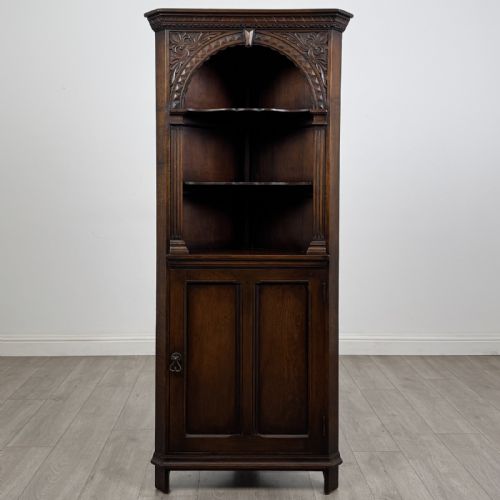
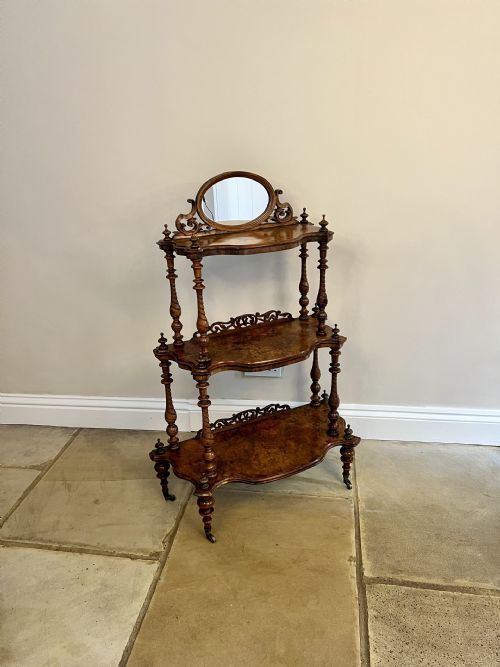
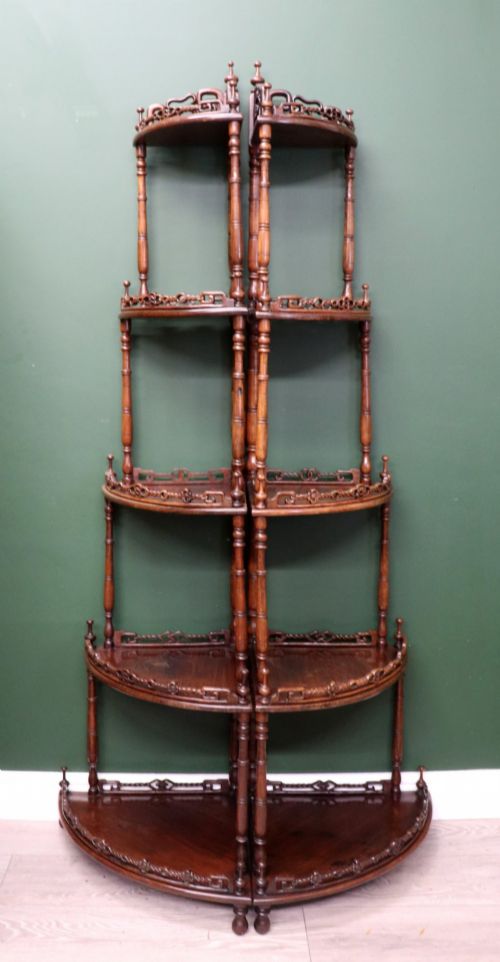
A carved corner display stand organises awkward spaces using vertical tiers of walnut or mahogany.
Carved Corner Display Stand
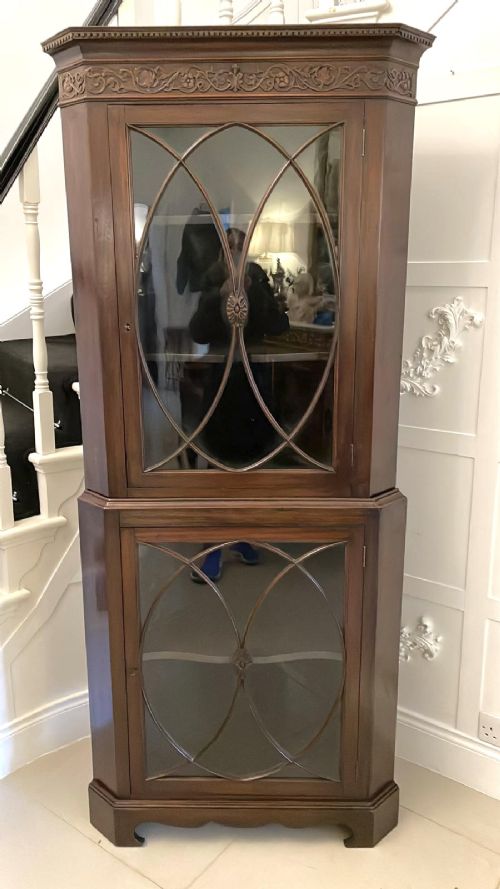
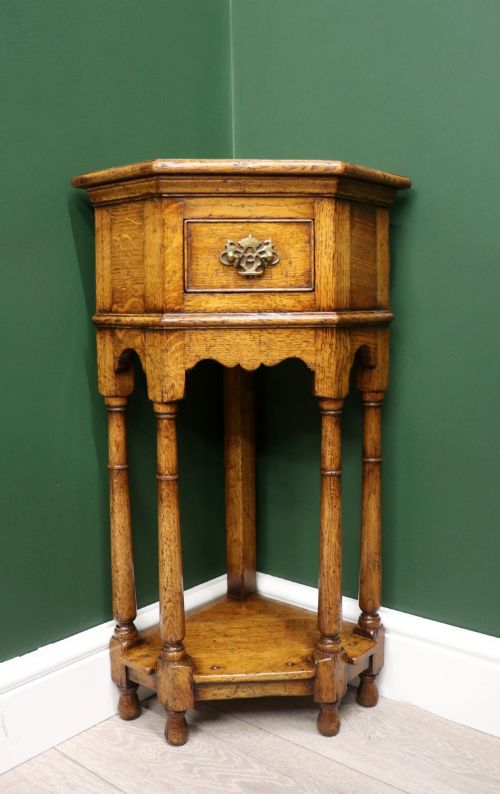
A carved corner display stand sits neatly into room junctions, turning neglected angles into useful display surfaces. When you search for a carved corner display stand, you encounter tall, tiered furniture built to hold ornaments, books, or small collections without blocking the flow of a room.
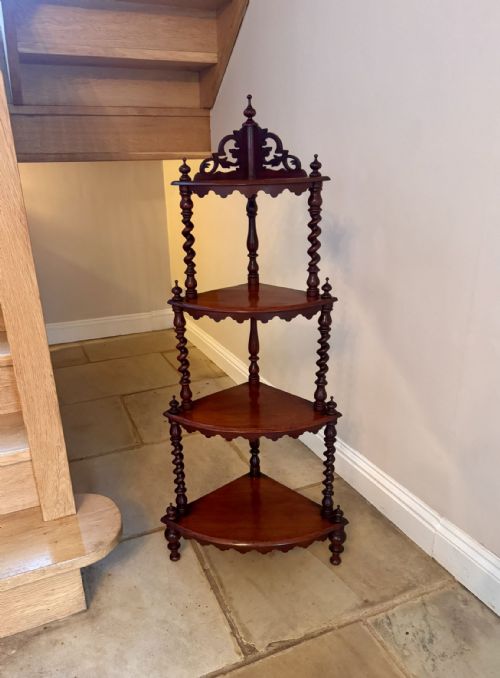
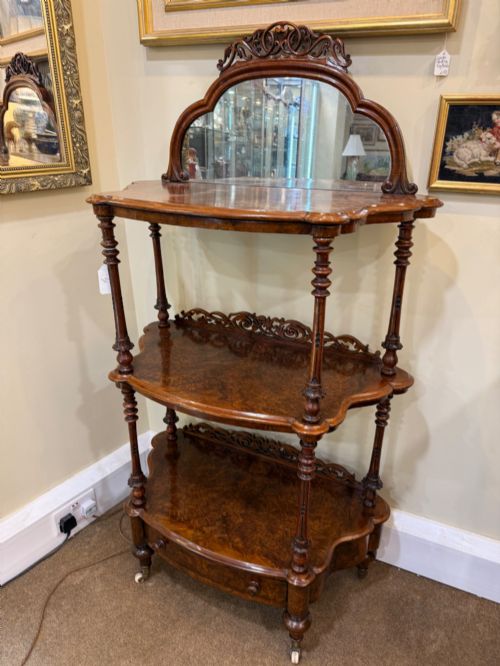
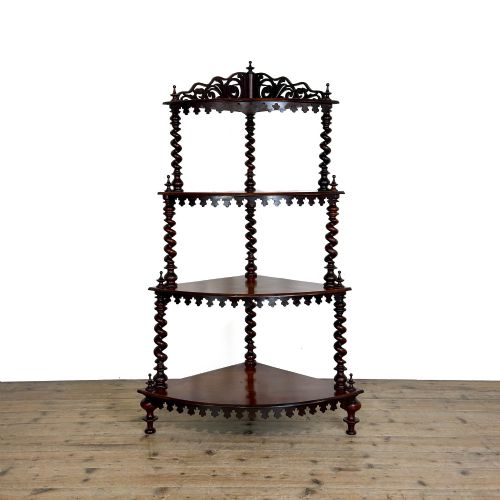
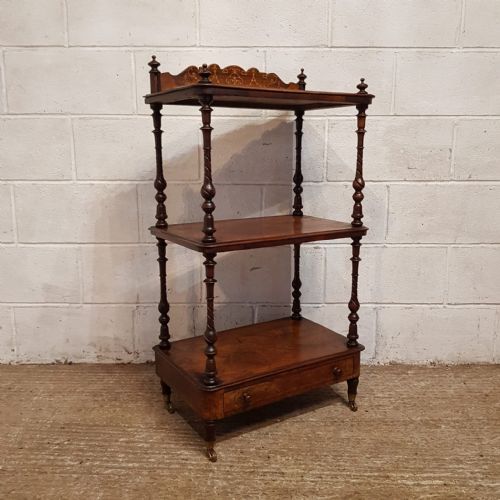
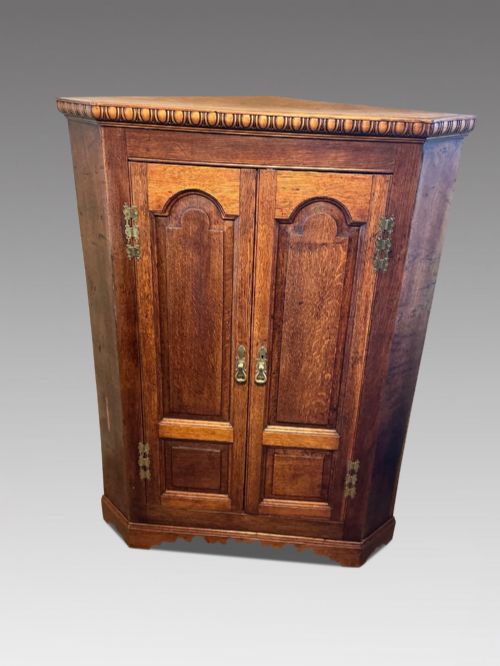
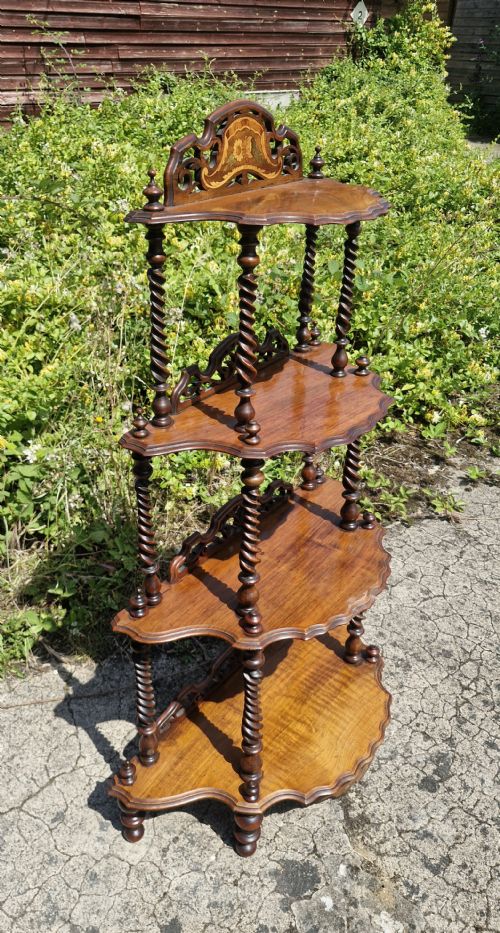
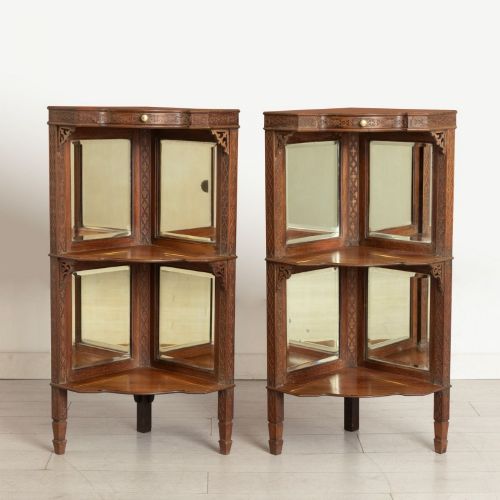
The versions most common on this page date from the Victorian and nineteenth-century periods, constructed from woods like walnut, burr walnut, and mahogany. These pieces take the form of multi-tiered whatnots, open corner shelves, and enclosed corner cabinets.
Makers shaped these stands to maximise British and European interiors, ranging from plain country house utility to exhibition pieces featuring elaborate marquetry inlay and glass doors. They combine practical storage with decorative presence, fitting domestic spaces cleanly.
How they were made
Cabinet makers utilised dense hardwoods such as mahogany, oak, and walnut, frequently selecting burr walnut veneers for rich surface figuring. Marquetry inlay added contrasting geometric or floral patterns across shelves and cabinet doors.
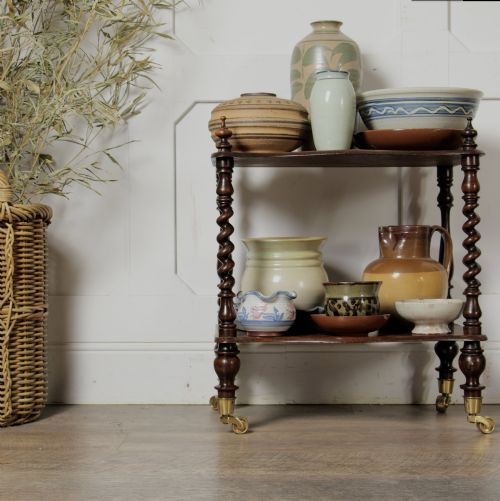
Structural elements relied on precise joinery to support multiple tiers, often incorporating turned barley twist supports or carved uprights. Glass panels, brass hardware, and ebonised wood details completed the construction of these display units.
Carved Corner Display Stand Retail Price Guide 2026
Typical asking prices for carved corner display stand among the pieces listed under this phrase on Sellingantiques today, from the lower quarter to the upper quarter. They describe what is for sale here now, not the wider market.
Some Victorian pieces arrived with alternate spellings in period ledgers, occasionally appearing as a wot-not.
What varies in quality
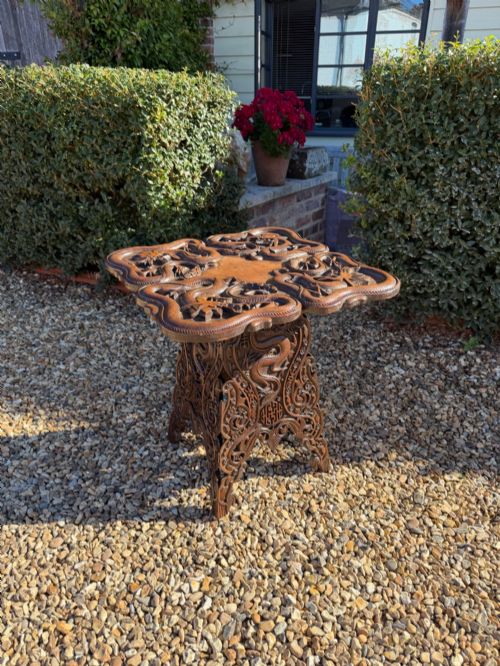
Quality rests upon the selection of timber and the ambition of the carving. Finely figured burr walnut and exhibition-grade marquetry distinguish high-tier examples from simpler oak or pine utility pieces.
Construction depth dictates overall merit. Pieces with crisp hand-carved detailing, robust tiered platforms, and integrated glazed or mirrored components demonstrate superior workshop execution.
Liberty of London·Edwards & Roberts·Liberty & Co.
The Carved Corner Display Stand Glossary
- Whatnot
- An open set of tiered shelves designed for displaying ornaments or books. This form became particularly popular during the Victorian era for corner placement.
- Burr walnut
- A distinctive timber harvested from walnut tree growths, prized for its swirling, highly figured grain patterns. Cabinet makers applied it as a veneer on high-status surfaces.
- Marquetry inlay
- Decorative woodwork where small pieces of contrasting timber, shell, or bone are fitted into a veneer to form patterns. It frequently decorates Victorian cabinet doors and tabletops.
- Astragal glazed
- A glass door or panel divided into smaller panes by wooden strips known as astragals. This technique appeared on nineteenth-century display cabinets.
- Ebonised wood
- Timber treated with a dark stain or finish to imitate ebony. This process gave cheaper woods a dense, black appearance suitable for Victorian and Aesthetic Period furniture.
Carved Corner Display Stand: Frequently Asked Questions
What is a whatnot?
A whatnot is an open-shelved piece of tiered furniture designed specifically to hold and display ornaments, ceramics, or small books. They became a staple of nineteenth-century interiors.
In corner configurations, these shelves make efficient use of unutilised room angles while providing multiple vertical levels of display.
Where should I place a corner display stand?
These stands fit directly into the ninety-degree junctions of a room, making them ideal for smaller spaces or hallways that struggle with bulky rectangular furniture.
They anchor empty corners while drawing the eye upward through their multi-tiered structure.
How do I date a Victorian corner stand?
Dating relies on identifying timber choices, construction techniques, and stylistic markers such as barley twist supports or marquetry inlay. Victorian pieces frequently utilise solid walnut or burr walnut veneers.
Examining the backboards, fixings, and secondary woods helps confirm whether a piece belongs to the mid or late nineteenth century.
Are these stands sturdy enough for heavy items?
Most tier-based display stands and whatnots suit lighter decorative objects, porcelain, and small volumes rather than heavy book collections. The structural integrity depends on the number of upright supports and the soundness of the wall fixings if wall-mounted.
Heavier items are better suited to the lower shelves of floor-standing oak or mahogany cabinets.