


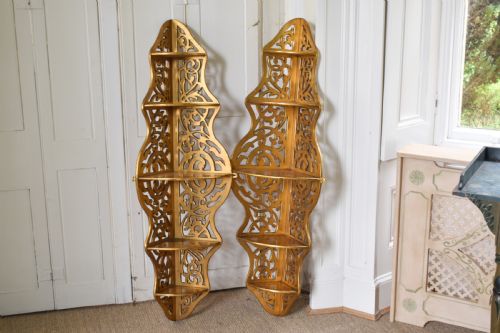


Victorian Fretwork Corner Shelf
These Victorian fretwork corner shelf pieces bring practical tiered display to neglected room angles using rich figured timbers.
Victorian Fretwork Corner Shelf
A Victorian fretwork corner shelf fits neatly into room junctions to hold small ornaments, books and decorative plates without taking up floor space. These pieces serve as functional displays in domestic interiors, utilising dead angles effectively.
The selections available here range from compact wall brackets and pairs of shelves to multi-tiered free-standing whatnots and demi-lune console tables. Most examples date from the nineteenth century and employ rich timber grains to draw the eye.
Makers designed these wall-hanging or floor-standing units to suit drawing rooms and studies where surface area was at a premium. The forms vary from simple triangular brackets to elaborate six-tier display towers.
How these pieces were constructed
Cabinet makers relied primarily on walnut, burr walnut, and mahogany, often selecting timber with striking natural figure for the primary surfaces. Inlaid details and contrasting woods provide decorative borders on finer examples.
Pierced fretwork panels and turned uprights define the aesthetic, alongside carved gesso and giltwood highlights on revival pieces. Structural joints depend on traditional carpentry methods to support the weight of multiple tiers.
Victorian Fretwork Corner Shelf Retail Price Guide 2026
Typical asking prices for victorian fretwork corner shelf among the pieces listed under this phrase on Sellingantiques today, from the lower quarter to the upper quarter. They describe what is for sale here now, not the wider market.
The listings show nineteenth-century pieces constructed from walnut, burr walnut, mahogany, and olive wood, incorporating brass and gesso details.
Judging the quality of these items
The choice of timber underpins the overall grade, with burr veneers and finely figured walnut sitting at the upper end of the scale. Superior pieces display crisp piercing in the fretwork and precise placement of inlay.
Structural integrity matters greatly in multi-tiered stands and wall units, where loose joints or warped shelves detract from the piece. The depth of the polish and the retention of original brass or gilded elements distinguish finer workshops.
The Victorian Fretwork Corner Shelf Glossary
- Whatnot
- A multi-tiered piece of furniture designed for displaying ornaments, bric-a-brac or books. These units appeared frequently in nineteenth-century parlours and drawing rooms.
- Demi-lune
- A half-moon shape used for console tables and corner fitments designed to sit flush against a wall. This profile maximises floor space in smaller rooms.
- Burr walnut
- A prized wood veneer taken from the growth growths of the walnut tree, showing intricate swirling grain patterns. Cabinet makers utilised it on primary display surfaces for visual impact.
- Fretwork
- Ornamental perforated woodwork created by cutting intricate patterns through a thin board. It frequently forms the decorative backplates or galleries of Victorian shelving units.
- Giltwood
- Timber that has been coated with gold leaf or gold paint to simulate solid gold. This treatment appears on decorative brackets and revival frames.
Victorian Fretwork Corner Shelf: Frequently Asked Questions
How do I hang a wall corner shelf safely?
Check the weight of the timber and ensure your wall fixings engage directly with structural studs or use appropriate cavity anchors. Multi-tiered brackets require secure mounting points to bear the load of displayed objects safely.
Distribute heavier items on the lower tiers to maintain stability and prevent undue strain on the upper wall fixings.
What rooms suit a corner whatnot best?
Drawing rooms, hallways and studies benefit most from these units because they transform empty room angles into useful display areas. Their compact footprints allow them to fit where standard rectangular cabinets cannot.
Keep them away from direct heat sources and strong sunlight to protect the walnut or mahogany polishes from fading.
How do I clean nineteenth-century walnut furniture?
Dust the shelves regularly with a soft, dry cloth to prevent particulate buildup in the carved fretwork and crevices. Avoid modern silicone sprays, which can damage old timber finishes over time.
Apply a microcrystalline wax occasionally to nourish the wood and maintain a gentle sheen on the surface.