



Three Tier Corner Stand
A three tier corner stand provides tiered open shelving designed to fit neatly into domestic corners, bringing vertical display space to rooms through various period forms.
Three Tier Corner Stand
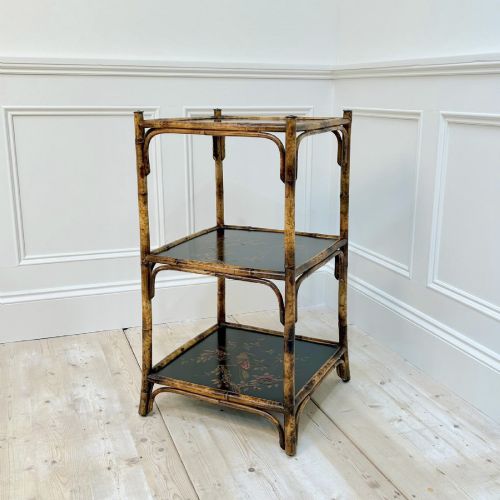
A three tier corner stand meets the search for three tier corner stand variations through multiple historic eras, notably the Victorian and Georgian periods. These pieces appear in forms such as whatnots, etageres, and display shelves, built specifically to utilise unused room corners.
Makers constructed these stands primarily as freestanding display units using woods like mahogany, walnut, and rosewood. The listings demonstrate that these items served a practical function for holding ornaments, books, and small household objects across successive decades.
Materials and Construction
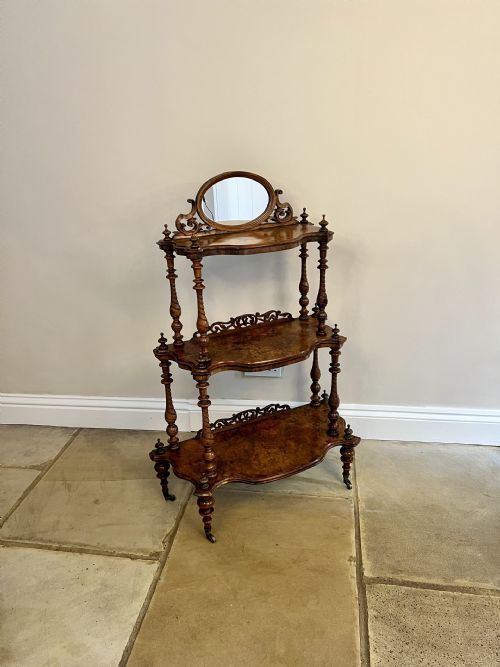
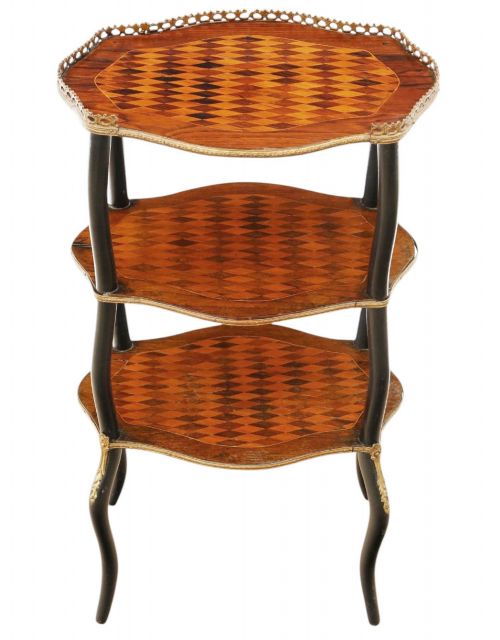
Cabinet makers utilised dense hardwoods including mahogany, burr walnut, and rosewood to build the tiers and upright supports of a three tier corner stand. Inlays, parquetry, and ebonised treatments added decorative contrast to the timber surfaces.
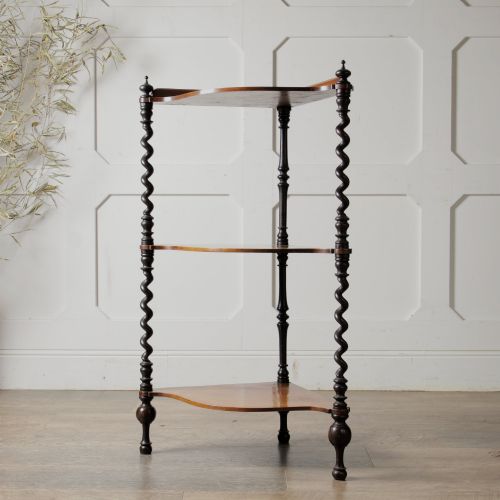
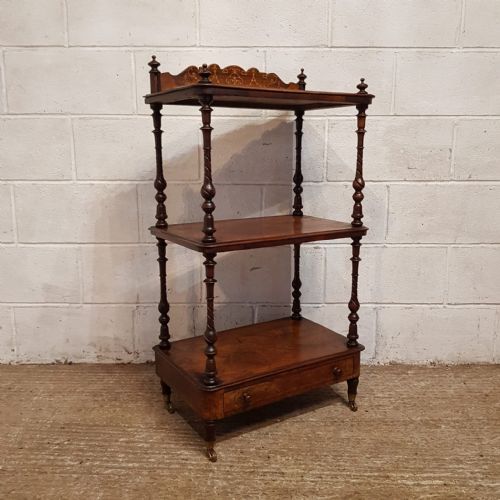
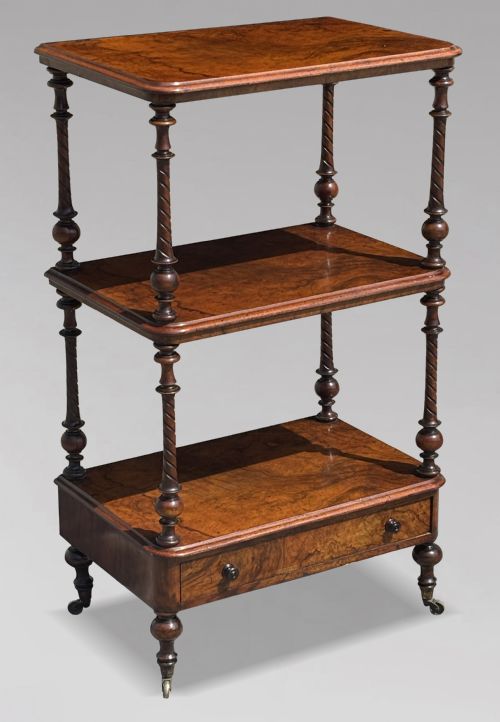
Structural elements relied on turned columns, barley twist supports, and fitted corner brackets to sustain multiple levels of shelving. Joinery techniques ensured each tier remained stable under the weight of displayed porcelain and decorative items.
Three Tier Corner Stand Retail Price Guide 2026
Typical asking prices for three tier corner stand among the pieces listed under this phrase on Sellingantiques today, from the lower quarter to the upper quarter. They describe what is for sale here now, not the wider market.
Some nineteenth century makers even experimented with bamboo for these stands, proving that practical corner storage welcomed botanical whimsy.
Factors Determining Quality
The choice of timber grain defines the visual standard, with figured burr walnut and richly grained rosewood marking superior examples compared to plain woods. Finer pieces incorporate subtle carving, precise inlay work, and balanced proportions across all three tiers.
Execution of the turning on the upright supports and the crispness of the edge mouldings distinguish workshop output. Original finishes and intact structural joints elevate the standing of an individual piece.
The Three Tier Corner Stand Glossary
- Whatnot
- A piece of furniture consisting of a set of open shelves for displaying small objects. These units date frequently from the nineteenth century in various wood types.
- Etagere
- A piece of furniture with a set of open shelves for ornament or display. The term often interchanges with whatnot in period listings.
- Barley Twist
- A type of column turning resembling a twisted rope. This detail appears frequently on the vertical supports of Victorian stands.
- Parquetry
- Geometric mosaic woodwork used for floors and furniture tops. It adds decorative surface pattern to selected shelves.
Three Tier Corner Stand: Frequently Asked Questions
What is a three tier corner stand used for?
These stands functioned historically as open display furniture for china, books, and ornamental objects in principal rooms.
Today, they serve the same decorative purpose, utilising neglected corner space to display modern collections.
How do I identify a Victorian three tier corner stand?
Victorian examples often employ dense timbers like burr walnut, rosewood, or mahogany with characteristic turnings and occasional inlay.
They reflect the period preference for ornamented domestic display surfaces.
Are these stands stable enough for heavy items?
The tiered structure relies on fixed vertical supports and corner attachment to distribute weight evenly across the shelves.
Lighter decorative objects suit the open shelving best, preserving the structural integrity of the joints.
What is the difference between a whatnot and an etagere?
Both terms describe open shelved furniture intended for display, though etagere often implies a French influence or lighter decorative framing.
Period makers applied both labels interchangeably to tiered corner shelving units.